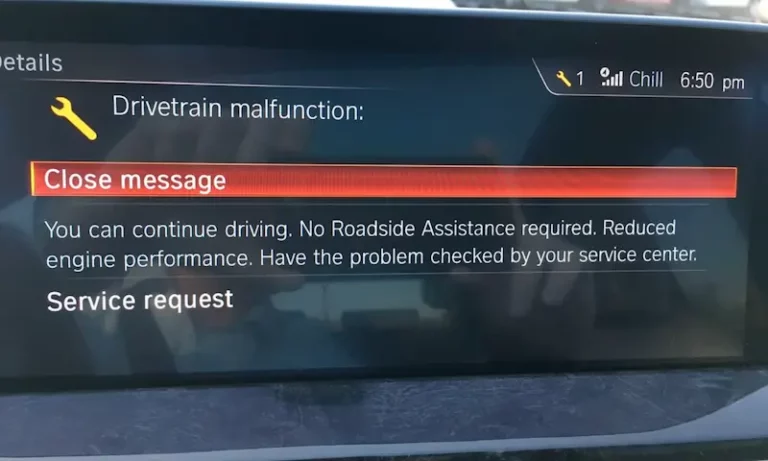
That dreaded dashboard message “Drivetrain malfunction: Drive moderately” can send chills down any Mini Cooper owner’s spine. It’s not just an annoying light – it’s your car telling you something’s wrong with the complex system that transfers power from your engine to your wheels. Let’s break down what this means, why it happens, and what you can do about it.
What Is a Drivetrain Malfunction?
When your Mini Cooper displays a drivetrain malfunction warning, it means the Engine Control Unit (ECU) has detected an issue with the power delivery system. This includes components like your transmission, engine, driveshaft, axle shaft, CV joints, and differential.
The warning typically appears as: “Drivetrain malfunction: Drive moderately. Maximum drivetrain output not available. Consult service center.”
What’s happening behind the scenes? Your Mini is activating “limp mode” – a self-preservation mechanism that limits performance to prevent further damage while still allowing you to reach a safe location or service center.
Common Causes of Mini Cooper Drivetrain Malfunctions
Spark Plug Problems
Despite Mini’s recommendation for 100,000-mile replacement intervals, spark plugs often fail between 60,000-100,000 miles. When they do, you’ll experience:
- Engine misfires
- Rough idling
- Power loss
- Poor acceleration
Most mechanics recommend replacing spark plugs every 30,000-50,000 miles instead of waiting for them to fail. This simple maintenance step can prevent many drivetrain warnings from appearing in the first place.
Ignition Coil Failures
Ignition coils typically last 50,000-100,000 miles, but when they start to fail, your Mini will show symptoms like:
- Lack of engine power during acceleration
- Vibrations throughout the vehicle
- Rough idling
- Loud engine noises
The coil pack creates the electrical field necessary for spark plug ignition and handles communication with the engine control module. When it fails, your drivetrain warning light is almost guaranteed to illuminate.
VANOS System Complications
The Variable Valve Timing (VANOS) system is particularly problematic in Mini Coopers with N14, N18, B38, and B48 engines. When the VANOS solenoids fail, you’ll notice:
- Rough idling
- Limp mode activation
- Reduced power
- Check engine light
Look for fault codes like P1520, P1523, P1397, 2A82, and 2A87, which indicate VANOS issues. Newer VANOS systems have a critical design flaw involving circlip failures within the solenoid assemblies. When these clips detach, the solenoid becomes non-functional, causing “camshaft stuck” error codes.
The Notorious Timing Chain Issues
Mini Coopers manufactured between 2007-2016 (particularly those with N14 and N18 engines) are infamous for timing chain problems. If you hear a “death rattle” sound during startup, your timing chain tensioner may be failing or the chain itself may be stretching.
These issues typically emerge between 80,000-120,000 miles and can lead to catastrophic engine damage if ignored. Timing chain repairs are expensive ($1,500-4,000) due to the extensive labor required, especially since the chain is located at the rear of the engine in many models.
Transmission-Specific Problems
First-generation Mini Coopers (2002-2008) with CVT transmissions suffer from one of the most severe drivetrain problems. The CVT system was so problematic that Mini faced lawsuits and eventually discontinued its use. Symptoms include:
- “EP” (Emergency Program) activation
- Delayed shifts
- Complete transmission failure
Interestingly, some CVT problems stem from electrical issues rather than mechanical failures. Battery problems can trigger CVT malfunctions, as shown in cases where simple battery replacement resolved persistent transmission issues.
Software-related transmission problems affect 2014-2015 F-series models, where dealers sometimes installed incorrect transmission control unit software during service appointments. This could cause drivers to believe the vehicle was in park when it wasn’t, creating rollaway risks.
How to Diagnose a Drivetrain Malfunction
Check for Warning Signs
Before the warning light appears, your Mini might show these symptoms:
- Hesitation during acceleration
- Unusual vibrations
- Strange noises from the engine or transmission
- Rough idling
- Sudden loss of power
Don’t ignore these early warning signs! Addressing problems early can prevent more expensive repairs later.
DIY Diagnosis Steps
- Basic reset procedure: Shift to park or neutral, turn off the ignition completely, wait 5-10 minutes, then restart. This simple process can clear temporary glitches.
- Check battery condition: A weak battery can cause electrical issues that mimic drivetrain problems.
- Look for obvious issues: Check for loose connections, damaged wires, or fluid leaks under the car.
- OBD-II scanner: If you have one, scan for specific fault codes to narrow down the problem.
Professional Diagnosis
For accurate diagnosis, professional OBD-II scanning is essential to retrieve specific fault codes. Drivetrain warnings often present as generalized messages that require deeper investigation through live data analysis and component testing.
Professional diagnostics typically cost $61-90 for powertrain control system analysis. BMW/Mini specialists understand the brand’s specific quirks and common failure patterns better than general automotive technicians.
Generation-Specific Vulnerabilities
Different Mini Cooper generations have distinct drivetrain weak points:
| Generation | Years | Common Drivetrain Issues |
|---|---|---|
| First-Gen (R50/52/53) | 2002-2006 | CVT transmission failures, power steering pump failures |
| Second-Gen (R55/56/57) | 2007-2013 | Timing chain problems, VANOS issues, high-pressure fuel pump failures |
| Third-Gen F-series | 2014+ | Software-related transmission problems, advanced VANOS system complications |
How to Respond to a Drivetrain Malfunction Warning
Immediate Steps
- Reduce speed and drive moderately as the warning instructs
- Find a safe place to pull over if the car is behaving erratically
- Attempt a reset: Turn off the car completely, wait 5-10 minutes, restart
- Check for simple causes: Low fluid levels, loose connections
- Get to a mechanic if the warning persists
What Not to Do
- Don’t ignore the warning: Continuing to drive with persistent drivetrain warnings can escalate minor issues into major failures
- Don’t attempt high-speed driving: Respect the limp mode limitations
- Don’t assume the worst: Sometimes the fix is simpler than you think
Repair Costs for Common Drivetrain Issues
Repair costs vary dramatically depending on the root cause:
| Issue | Typical Cost Range | DIY Possible? |
|---|---|---|
| Spark Plugs | $100-300 | Yes |
| Ignition Coils | $200-500 | Yes |
| VANOS Solenoid | $400-800 | Sometimes |
| Timing Chain | $1,500-4,000 | No |
| Transmission Repair | $2,000-5,000+ | No |
| Software Update | $100-300 | No |
| Fuel System Components | $500-1,500 | Sometimes |
Software and Firmware Solutions
Firmware updates can resolve many drivetrain malfunctions, particularly in newer models experiencing rough cold starts, stalling, and juddering. These software fixes are often overlooked despite being relatively inexpensive compared to hardware repairs.
Always check if your Mini needs a software update when experiencing drivetrain issues. Outdated software can create symptoms that mimic serious mechanical failures, especially in B-series engines manufactured before 2018.
Advanced Diagnostic Techniques
Professional mechanics use several techniques to pinpoint drivetrain issues:
- Live data monitoring: Observing real-time sensor readings during operation
- Component testing: Isolating and testing individual drivetrain components
- Pressure testing: Checking hydraulic and pneumatic systems for proper operation
- Electrical system analysis: Testing for voltage drops and resistance issues
These techniques help mechanics identify the root cause rather than just treating symptoms, potentially saving you from repeat repairs.
Real-World Success Stories
Many Mini owners have successfully resolved drivetrain malfunctions with targeted repairs:
- One owner with a 2009 Mini Cooper S fixed persistent drivetrain warnings by replacing all four ignition coils and spark plugs, costing about $300 in parts.
- Another owner discovered their 2007 Mini’s drivetrain malfunction was caused by a failing battery that was triggering false CVT transmission errors.
- A 2014 F56 owner eliminated drivetrain warnings with a simple ECU software update at the dealership.
Conclusion
While drivetrain malfunction warnings are concerning, understanding the common causes and appropriate responses can save you time, money, and stress. Don’t panic when you see the warning – take methodical steps to diagnose and address the issue.
Remember that preventive maintenance is your best defense against drivetrain problems. Following a proper maintenance schedule and addressing small issues before they become big ones will keep your Mini Cooper running smoothly for years to come.