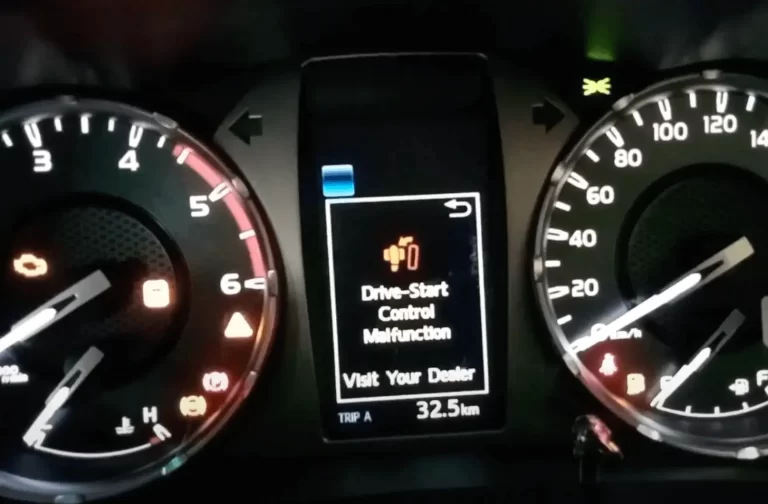
You’re cruising along in your Toyota when suddenly a warning flashes: “Drive-Start Control Malfunction.” Your heart sinks. Is it serious? Can you keep driving? Here’s the truth: this warning doesn’t always mean what you think it does. We’ll break down what’s really happening, why it happens, and how to fix it without emptying your wallet.
What Is Drive-Start Control Anyway?
Drive-Start Control is Toyota’s safety net for one of the most common parking lot disasters—hitting the gas when you meant to hit the brake.
The system watches your every move. When you shift from Park into Drive while mashing the accelerator, it steps in. It cuts engine power through your electronic throttle and might even apply the brakes automatically. This pedal misapplication protection has slashed parking lot accidents by roughly 70% in vehicles equipped with the full safety suite.
Here’s where it gets interesting: Drive-Start Control doesn’t work alone. It’s part of a team with your Intelligent Clearance Sonar (those ultrasonic sensors in your bumper) and the Brake Override System. When one player goes down, the whole team sits out.
How the System Actually Works
Your Toyota uses drive-by-wire throttle control. No cable connects your gas pedal to the engine—it’s all electronic signals. The Engine Control Module constantly calculates how much power your engine is making based on air intake, throttle position, and fuel delivery.
When the system detects you’ve shifted into gear with your foot on the gas, it restricts the throttle regardless of what your right foot is doing. In advanced setups, it’ll also pressurize your brake calipers to stop the car dead.
The catch? This system demands perfect data. One hiccup in engine performance, sensor readings, or electrical stability, and it shuts down completely.
Why Your Warning Light Isn’t What It Seems
Here’s the twist that surprises most Toyota owners: the “Drive-Start Control Malfunction” warning rarely means the safety system itself has failed.
Instead, it’s your car’s way of saying “something’s wrong, and I can’t safely intervene right now.” The system won’t risk making a mistake—like cutting your power when you need to merge into traffic—so it disables itself at the first sign of trouble.
The Real Culprits Behind the Warning
Your Engine’s Running Rough
A misfiring cylinder throws everything off. When your engine isn’t firing on all cylinders, the computer can’t accurately calculate torque. That makes intervention dangerous.
Ignition coils and spark plugs are the usual suspects. High-mileage plugs with worn electrodes stress your coils. Eventually, a coil fails, you get a misfire, and the cascade begins: Check Engine Light, then the Drive-Start Control warning, then possibly cruise control and lane-keeping disabled.
You might not even feel the rough idle. But your car’s computer notices.
The P1604 Code Mystery
This diagnostic code shows up constantly with Drive-Start Control warnings. It’s called “Startability Malfunction,” which sounds ominous but often isn’t.
Your car logs P1604 when the engine cranks too long before starting or stalls right after startup. Common causes include low fuel pressure, a dirty throttle body, or—most often—a weak battery that can’t crank the engine fast enough.
Here’s the kicker: even after you fix the underlying issue, this code sticks around in the computer’s memory, keeping your warning light on until you complete a proper drive cycle or clear the codes.
Your Battery’s Crying for Help
Modern Toyotas are computer networks on wheels. They need stable voltage. A dying 12-volt battery creates voltage drops during cranking that reset sensors and modules.
The Skid Control ECU or Steering Angle Sensor momentarily loses power. When it reboots, it’s lost its calibration—the “zero point” that tells it where straight-ahead is. Without this reference, the system can’t function.
Your battery might still start the car just fine. But if it’s dropping below 9.6 volts during cranking, you’re setting yourself up for phantom warnings.
Muddy Sensors Are Blinding Your Car
In newer models, Drive-Start Control relies heavily on the Intelligent Clearance Sonar. Those little circular sensors in your bumpers? They’re ultrasonic “eyes” that detect obstacles.
When mud, snow, or road grime cakes over them, the system thinks there’s a wall directly in front of you. To prevent phantom braking that could cause a rear-end collision, it shuts down and displays the warning.
Some owners see this warning appear right after a car wash. The high-pressure spray or certain automated wash systems confuse the sensor logic, triggering a temporary shutdown.
The Electrical Gremlins You Don’t See
Brake Switch Circuit Failure
Your Drive-Start Control needs to know when you’re pressing the brake. It monitors this through the brake pedal position switch—the same one that lights up your brake lights.
If the “STOP” fuse blows or the switch fails, the system assumes brake data is missing. Both the Brake Override System and Drive-Start Control shut down together since they share this critical circuit.
Quick check: do your brake lights work? If not, you’ve found your problem.
The Shipping Fuse Mystery
Brand-new Toyotas sometimes arrive with the “D/C CUT” fuse removed for transport. If someone reinstalls it without running the initialization procedure, the system stays in dormant mode. The warning light stays on because the car doesn’t know its own configuration.
Model-Specific Issues You Should Know
Different Toyota models have their own quirks with this warning.
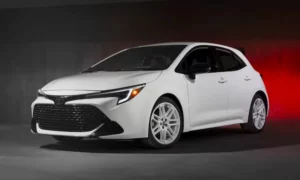
Corolla (2020-2024)
Corolla owners report a tight connection between the warning and water pump failures. When the pump fails, the engine overheats. The computer interprets this as a critical stress event and disables non-essential systems.
Ignition coils fail frequently on these models. Many owners find that strictly OEM Denso parts are required—aftermarket coils often don’t communicate properly with the system.
Tacoma and Tundra
Truck owners face different challenges. Off-road adventures mean more exposure to mud and water. The transmission range sensor wiring and rear sonar sensors are more exposed than in cars.
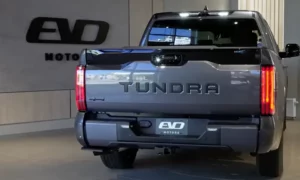
One 2025 Tundra owner discovered a catastrophic camshaft bearing failure that initially presented only as a Drive-Start Control warning. The mechanical damage disrupted valve timing enough to trigger the safety shutdown.
Camry (ICS Sensitivity)
Camry models equipped with Intelligent Clearance Sonar have a software sensitivity issue in car washes. The system improperly activates when the car’s in neutral on the conveyor.
Toyota addressed this with Technical Service Bulletin T-SB-0134-16. The fix is a software update that adjusts detection thresholds during car wash operation.
DIY Fixes You Can Try First
Before you book a dealer appointment, try these steps. They solve a surprising number of cases.
Clean Your Sensors Properly
Walk around your car and locate every circular sensor in your front and rear bumpers. They’re usually about the size of a quarter.
Gently clean them with water and a soft microfiber cloth. Don’t blast them with a pressure washer—you can force water into the piezoelectric element and cause permanent damage.
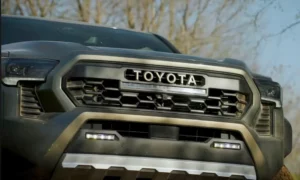
Check your front grille emblem too. On models with Pre-Collision systems, the radar lives behind that Toyota badge. Snow or mud there triggers warnings.
The Battery Reset Procedure
Disconnect your negative battery terminal. Wait 15 to 30 minutes—this lets the capacitors in all the modules fully discharge and clear temporary faults.
When you reconnect it, expect the engine to idle roughly for a few minutes. It’s relearning fuel trim values. Your steering might feel slightly off until you turn the wheel lock-to-lock to recalibrate the steering angle sensor.
One warning: you’ll lose radio presets and clock settings. Modern Toyotas don’t need security codes anymore, so that’s not a concern.
Check the Obvious Stuff
Is your fuel cap clicked tight? A loose cap creates an evaporative emissions leak that triggers the Check Engine Light. Once that’s on, the Drive-Start Control disables as a precaution.
Three clicks when you tighten it. You should hear them.
What the Diagnostic Codes Really Mean
When you scan your car, specific codes point to specific problems. Here’s what matters:
| Code | What It Means | What’s Really Wrong |
|---|---|---|
| P1604 | Startability Malfunction | Engine cranked too long or stalled; usually battery or fuel delivery |
| P0300-P0306 | Cylinder Misfire | Bad spark plug, ignition coil, or fuel injector |
| P1349 | VVT System Problem | Valve timing off; oil pressure issue or cam bearing damage |
| C1A47 | Steering Angle Sensor | Lost calibration after battery disconnect or alignment |
| C1A48 | ICS System Fault | Sonar sensor dirty, damaged, or miscalibrated |
| U0100 | Lost Communication with ECM | CAN bus network error; often from voltage drop |
The freeze frame data matters as much as the code itself. If P1604 shows engine RPM at zero, the fault happened during cranking—likely your battery or starter. If RPM is above 400, it happened during a stall—probably air or fuel delivery.
The Professional Repair Path
Some fixes need a dealer or qualified technician with the right tools.
Zero Point Calibration
After wheel alignments, battery replacements, or any collision repair, your Skid Control ECU might lose its calibration data.
The “zero point calibration” teaches the computer what “stopped and pointing straight” looks like. The car must be on a perfectly level surface—within one degree. The technician uses Toyota’s Techstream software to wipe old memory and record new reference values.
Skip this step, and your car thinks it’s constantly turning or sliding even when it’s not.
Sensor Replacement and Registration
If you’ve had bumper work or replaced a parking sensor, the new configuration must be registered in the computer.
This isn’t plug-and-play. Technicians must physically measure sensor height with a tape measure and angle with a digital gauge. The measurements must match factory specs stored in the ECU.
If a sensor angles too far downward—more than about 5 degrees—it’ll detect the road surface as an obstacle. The system will constantly think there’s a wall in front of you.
The Confirmation Drive Cycle
After repairs involving the startability system, your car needs proof the fix worked. This isn’t just clearing codes and hoping.
The proper drive cycle: let your car sit overnight (cold soak for at least 8 hours). Start it and idle for 2 minutes. Drive at steady highway speed—40 to 55 mph—for several minutes without heavy acceleration. Then decelerate smoothly without touching the brakes.
This allows the computer to run its full diagnostic checks on emissions and fuel systems. If everything passes, the warning often disappears on its own.
What It Costs and What’s Covered
Money matters. Here’s the reality of Drive-Start Control repairs.
A single ultrasonic sensor runs about $200 online. At a dealer, expect $600 to $1,000 because they have to remove your bumper and perform mandatory calibration afterward.
Diagnostic fees hurt too. Since this warning can mean dozens of different problems, you might pay for an hour of labor just to learn your battery’s weak or you need a $20 software update.
In extreme cases—like that Tundra with the destroyed camshaft bearing—persistent warnings despite multiple repair attempts have triggered Lemon Law buyback procedures. Document everything if you’re fighting this battle.
Can You Keep Driving?
Technically, yes. The warning doesn’t mean your brakes or steering have failed.
But you’re driving without a safety net. Your car won’t intervene if you accidentally floor it in a parking garage. Pre-Collision Braking is likely disabled too—you’ve lost your automatic emergency braking.
Many cars enter “limp mode” alongside this warning. Speed gets capped at 40 mph. Your transmission refuses to shift into higher gears. Merging onto highways becomes genuinely dangerous because you can’t accelerate normally.
Get it diagnosed soon. Even if the underlying problem seems minor, driving without these safety systems active isn’t worth the risk.
The Bottom Line
Drive-Start Control Malfunction warnings usually point to basic maintenance issues, not catastrophic safety system failures. A weak battery, dirty sensors, or worn spark plugs trigger it more often than actual electronic malfunctions.
Start with the free fixes: clean your sensors, check your battery voltage under load, tighten your fuel cap. If the warning persists, get proper diagnostics with a scanner that reads ABS and ICS codes, not just generic engine codes.
Modern Toyotas are incredibly interconnected. A $15 spark plug can disable a $2,000 safety suite. That’s frustrating, but it’s also why the system’s so conservative—it won’t risk intervention when it can’t guarantee accuracy.
Your car’s trying to tell you something. Listen to it before a minor issue becomes a major repair bill.