That warning message just popped up on your dashboard, and now you’re wondering if your Toyota is about to fall apart. It’s probably not that dramatic — but a Toyota LTA malfunction does need your attention. This guide walks you through every real cause, what each warning means, and exactly what to do next.
What Is LTA and Why Does It Matter?
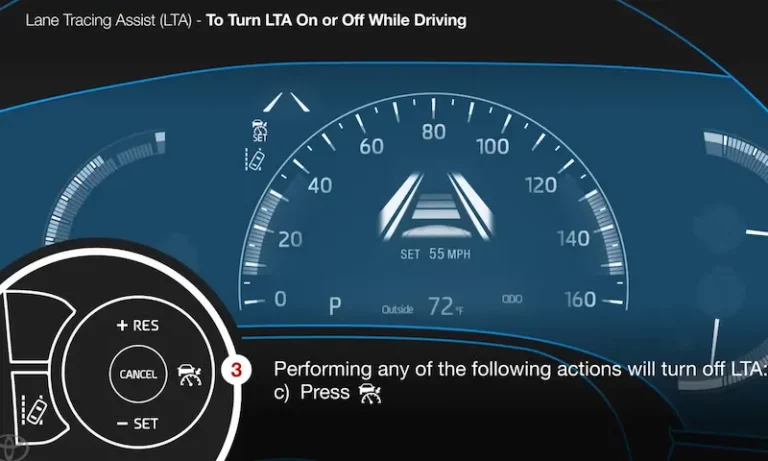
Lane Tracing Assist (LTA) is part of Toyota Safety Sense, Toyota’s driver assistance suite. It uses a front-facing camera and millimeter-wave radar to keep your car centered in its lane. Think of it as a gentle co-pilot that nudges the steering wheel so you don’t drift.
Unlike the older Lane Departure Alert (LDA), which just warns you, LTA actively steers. That’s a big difference — and it’s why a malfunction matters more than a simple warning light.
LTA also works hand-in-hand with Dynamic Radar Cruise Control (DRCC). When both are active, the system handles speed and steering. It even monitors whether you’re paying attention through the Emergency Driving Stop System (EDSS), which can bring the vehicle to a controlled stop if you become unresponsive.
What Your Dashboard Is Telling You
Toyota’s Multi-Information Display (MID) uses color and text to tell you exactly what’s going on. Here’s what each message actually means:
| MID Message | Indicator Color | What It Means |
|---|---|---|
| LTA Malfunction Visit Your Dealer | Yellow/Orange | Persistent hardware or software fault — needs a scan tool |
| LTA Unavailable | Yellow | Temporary sensor blockage or bad environment |
| LTA Unavailable at Current Speed | White/Yellow | You’re outside the speed range for LTA |
| Check the Front Emblem / Windshield | Yellow | Significant sensor obstruction detected |
| LTA Turned ON Steering Assist Active | White | Normal — system is working as intended |
The big one to watch is “LTA Malfunction Visit Your Dealer.” This isn’t a transient error. It points to a hardware fault or a software error that a standard OBD-II scanner won’t fix. You need Toyota Techstream or an equivalent OEM-level diagnostic tool to read what’s actually going on.
The Most Common Causes of a Toyota LTA Malfunction
1. Dirty or Blocked Sensors
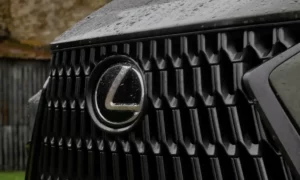
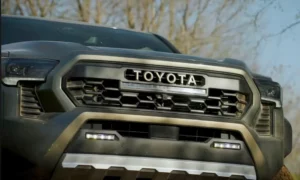
This is the first thing to check — and it’s free. The front Toyota emblem houses the millimeter-wave radar, and the camera sits behind the rearview mirror at the top of the windshield. Mud, ice, insects, or even heavy rain can trigger a temporary malfunction.
Quick fix: Wipe the front emblem and the upper windshield with a soft, non-abrasive cloth. Don’t use rain-repellent glass treatments near the camera — water beading distorts the optical path and can confuse the sensor.
2. Bad Weather Conditions
LTA isn’t magic. Heavy rain, dense fog, direct sunlight glare, and falling snow all degrade sensor performance. When the signal drops below a usable threshold, the system shuts itself off rather than make a bad steering decision.
| Environmental Trigger | What It Affects | How It Resolves |
|---|---|---|
| Heavy Rain | Camera + Radar | Run wipers, use defogger |
| Direct Sunlight Glare | Camera | Change vehicle heading |
| Dense Fog | Camera + Radar | Wait for visibility improvement |
| Extreme Heat | Camera processor | Let cabin cool down with HVAC |
| Surface Condensation | Camera housing | Internal camera heater activates |
If the MID displays “System Stopped Front Camera Out of Temperature Range,” don’t panic. Park in the shade, run the air conditioning, and give the camera time to cool down. It should reset on its own.
3. Weak 12V Battery
This one surprises a lot of people. Your Toyota’s ADAS systems — including LTA — run on high-compute processors that are sensitive to voltage drops. A failing 12V battery causes “Lost Communication” errors across the CAN bus, which can simultaneously trigger LTA, PCS, and radar malfunction warnings.
If you see multiple warning lights come on at once, test the battery first. A battery that shows acceptable voltage at rest might still fail under load. Replace the 12V battery every 3–4 years as preventive maintenance, regardless of how it looks on a meter.
4. Camera Heater Failure (DTC C1AAE00)
This is one of the most common persistent LTA malfunction codes, especially on the 5th generation RAV4 (2019–2022) and the 2018–2020 Camry. DTC C1AAE00 means the front recognition camera heater has failed.
The heater is a small heating element between the camera and the windshield. It keeps condensation and ice off the lens. The problem? The heater filament wires are thin and fragile, and they often get damaged during windshield replacement.
Dealers frequently quote a full camera replacement for this fault. But in many cases, only the heater sub-assembly is broken — a much cheaper fix. Before you approve an expensive repair, ask for a resistance test on the heater circuit. An open circuit (infinite resistance) confirms the heater is dead, not the entire camera unit.
The NHTSA Technical Service Bulletin on DTC C1AAE also highlights that aftermarket windshields can cause this code due to optical distortion and heater damage during installation. Always use OEM Toyota glass when replacing the windshield on a TSS-equipped vehicle.
Troubleshooting steps for C1AAE00:
- Clear the DTC with Techstream and confirm it returns within 10 seconds of ignition-on
- Disconnect terminal P17 (RAV4) or P21 (2022 models) and inspect for corrosion
- Measure heater element resistance — infinite resistance means the heater is dead
- Verify the ECU supplies correct voltage to the heater circuit during activation
- After replacing the heater hood, perform a full axis alignment calibration to restore LTA
5. Aftermarket Modifications
If you’ve lifted your suspension, added oversized tires, or bolted on a bull bar, your LTA system is probably struggling. Toyota calibrates the entire ADAS suite to factory geometry. Change the ride height, and the camera’s view angle shifts — which means its calculated lane center is now off.
This leads to “lane riding,” where the car pulls consistently to one side, or false lane-departure warnings that cause jarring corrections. Toyota Technical Service Bulletin T-SB-0026-20 specifically addresses this for the 4Runner, Tacoma, and Tundra. In some cases, Toyota recommends permanently disabling the radar sensor — a non-reversible software process that requires written owner consent.
| Modification | Risk | Fix |
|---|---|---|
| Suspension lift | Changes camera pitch angle | Recalibrate or disable LTA |
| Oversized tires | Throws off speed calculations | Verify DRCC thresholds |
| Bull bars / grilles | Blocks radar field of view | Remove or relocate |
| Aftermarket windshield | Optical distortion, heater damage | Replace with OEM glass |
| Window tinting near camera | Reduces light transmission | Avoid the 20cm exclusion zone |
6. Uncommanded Steering or Lane Riding
Some drivers report that LTA causes the car to drift toward one side of the lane or that the steering wheel vibrates unexpectedly. If the camera is misaligned by even a few millimeters, its lane-center calculation shifts — and the car follows that offset lane target instead of the actual center.
Failures in peripheral sensors — like the steering angle sensor or wheel speed sensors — can also kill LTA. The ECU needs accurate trajectory data to steer correctly. If that data is compromised, the system disables itself and shows a malfunction message.
| Symptom | Probable Cause | Next Step |
|---|---|---|
| Car drifts left or right | Offset calibration | Perform axis alignment |
| Steering wheel vibrates | Could be normal haptic warning | Check if it’s OEM spec first |
| Sudden steering pull | Sensor glare or blinding | Verify optical path |
| Intermittent LTA toggling | Weak 12V battery | Load test the battery |
Recalibration: When You Need It and What It Costs
Calibration is mandatory after any repair that changes sensor position. That includes windshield replacement, front bumper work, and steering system service. Skipping it is how you end up with a car that pulls sideways at 70 mph.
There are two methods:
Static calibration happens in a controlled workshop. The tech uses laser stands and precision target boards to align the camera and radar to the vehicle’s centerline. It’s time-intensive but geometrically exact. Toyota mandates this method after component replacement.
Dynamic calibration is an on-road process. The system “learns” during a drive at 35–70 mph on a straight road with clear lane markings. A technician monitors confidence levels through a diagnostic tablet. It’s faster but less precise.
| Factor | Static | Dynamic |
|---|---|---|
| Location | Level indoor bay | Straight road, clear markings |
| Tools | Target boards, laser stands | Diagnostic tablet, VCI |
| Time | High | Lower |
| When required | After component replacement | As supplementary verification |
| Cost | Higher | Lower |
Toyota Recalls That Affect LTA
NHTSA actively monitors LTA-related complaints and has pushed Toyota on several fronts. In April 2025, Toyota issued a recall for false alerts within the Safety Sense suite — software bugs causing unexpected steering interventions. In December 2025, a Denso-linked software defect affected over 1 million vehicles including the Camry, Crown, and RAV4, triggering a free software repair at dealerships.
These recalls are free to owners. Toyota must notify registered owners by mail within 60 days of a recall decision and provide a no-cost remedy.
Check if your vehicle has an open recall right now:
- Use the NHTSA VIN lookup tool — just enter your VIN
- Download the SaferCar app (iOS/Android) for mobile recall alerts
- Call Toyota directly at 1-800-331-4331
If your LTA malfunction matches a known software defect, the fix might be a free dealer visit.
Maintenance Habits That Prevent LTA Problems
Most transient LTA malfunctions are preventable. Here’s what to stay on top of:
- Clean the front emblem and windshield regularly — mud, ice, and bugs block the radar and camera fast
- Replace wiper blades every 6–12 months — degraded wipers leave smears right in the camera’s field of view
- Replace the 12V battery every 3–4 years — don’t wait for it to fail during a cold morning
- Inspect the windshield — chips or pitting in the camera’s 20cm viewing window cause optical errors
- Run a full DTC scan at every major service — catch issues before they become warning lights
- Check for software updates — firmware flashes like T-SB-0021-23 fix known bugs for free
A Toyota LTA malfunction can range from “wipe the emblem and you’re done” to “the camera microprocessor is dead and needs replacement.” The key is reading the specific warning message, checking the obvious physical causes first, and using the right diagnostic tools before authorizing any parts replacement. Don’t let a shop replace a $900 camera unit when the actual fault is a $30 heater wire.