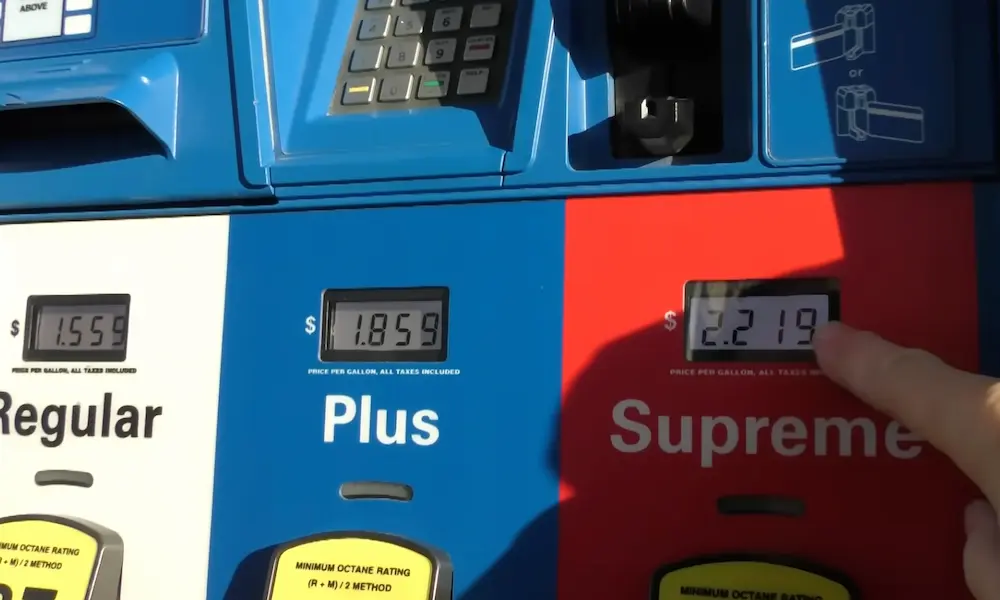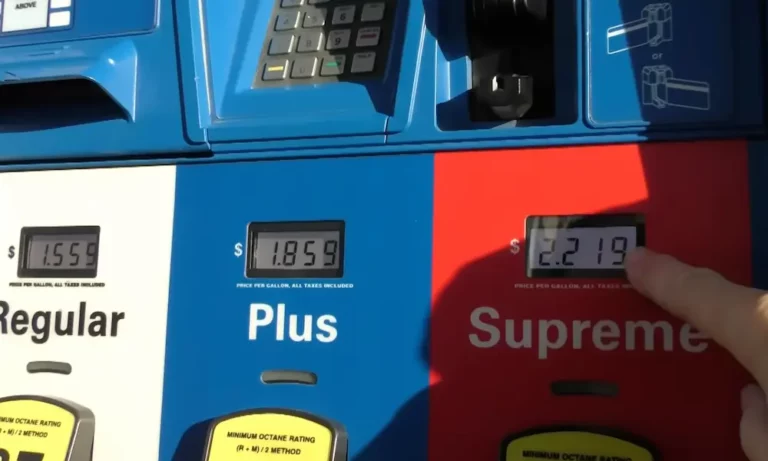
Standing at the pump, staring at three buttons—Regular, Premium, Supreme—you’re probably wondering if that “Supreme” label is just fancy marketing or actually worth the extra cash. Let’s cut through the confusion and figure out what you’re really paying for.
What the Octane Number Actually Means
Here’s the deal: that number on the pump (87, 91, 93) isn’t measuring fuel power. It’s measuring how well your gas resists “knocking”—those annoying pinging sounds that happen when fuel ignites too early in your engine’s cylinders.
Your engine compresses air and fuel, then sparks it at just the right moment. But under high pressure, cheap gas can explode spontaneously before the spark plug fires. That’s knock, and it’s bad news for your engine.
The Anti-Knock Index (AKI) you see at the pump is actually the average of two tests: one simulating gentle driving (RON) and one mimicking hard acceleration (MON). Higher numbers mean the fuel can handle more heat and pressure without self-igniting.
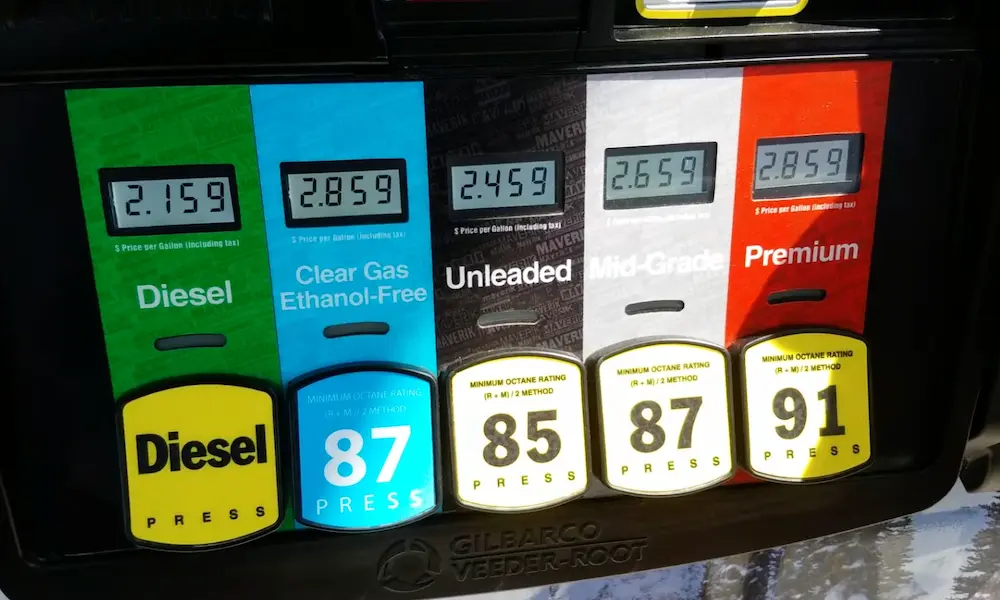
Regular gas sits at 87 octane. Midgrade typically hits 89. Premium starts at 91—but here’s where it gets interesting.
The Legal Answer: They’re the Same Thing
From a legal standpoint, “Supreme” and “Premium” are basically twins.
The Illinois Motor Fuel Standards Act sets the minimum octane requirements, and it treats “Premium” and “Super” (often used interchangeably with Supreme) as the same category—anything 91 octane or higher.
So technically, a gas station can slap “Supreme” on 91 octane fuel and be totally legit. The law doesn’t care about your fancy naming—it cares about that number.
One weird exception: Head to Colorado or other high-altitude states, and the whole scale shifts down. Regular becomes 85 octane because the thinner air naturally reduces cylinder pressure. Premium tops out at 91, and you’ll rarely see 93 anywhere.
The Reality: Supreme Usually Means 93 Octane
While the law says 91 is fair game for either label, the market tells a different story.
In the Midwest and East Coast, most major stations reserve “Supreme” or their top-tier branding for 93 octane fuel. Meanwhile, on the West Coast (especially California), environmental regulations cap “Premium” at 91 octane.
So if you’re filling up in Illinois, that “Supreme” button probably dispenses 93. Drive to California, and “Premium” maxes out at 91.
This matters big-time for performance cars. A Bugatti Chiron calibrated for 93 octane pumps out its full 1,479 horsepower. Feed it 91, and the computer dials back power to around 1,200 horses to prevent engine damage. That’s a 280-horsepower difference just from the octane gap.
Brand Names vs. Generic: The Real Difference
Here’s where Supreme actually becomes different from generic Premium—the additives.
Exxon’s Synergy Supreme+
Exxon markets Synergy Supreme+ as more than just high-octane gas. They claim it contains:
- Double the detergent additives compared to their regular fuel
- Friction modifiers that reduce engine wear by 30%
- Enhanced cleaning agents for fuel injectors
You’re not just buying octane—you’re buying a chemistry experiment designed to keep your engine cleaner.
Shell V-Power NiTRO+
Shell’s V-Power takes a similar approach, focusing on removing deposits from fuel injectors and intake valves. They claim their formula removes up to 100% of performance-robbing gunk.
BP Amoco Ultimate
BP uses the heritage Amoco brand for their top-tier fuel, predominantly offering 93 octane in Midwest markets. Their “Ultimate” designation is BP’s version of Supreme.
Costco Premium
Here’s the plot twist: Costco’s plain-Jane “Premium” is Top Tier certified and contains five times the EPA-required detergent minimum. No fancy name, but the quality’s there.
This proves that Supreme-level quality doesn’t always need Supreme branding.
What “Top Tier” Actually Means
The EPA sets minimum detergent requirements for all gasoline to prevent injector clogging. But automakers found these minimums weren’t cutting it for modern engines.
Enter Top Tier—a higher standard created by car manufacturers. Top Tier gasoline contains significantly more detergent additives than the EPA minimum.
AAA testing showed non-Top Tier gas caused 19 times more engine deposits than Top Tier brands after just 4,000 miles. That’s a massive difference.
Important note: Top Tier certification applies to all grades at participating stations—Regular, Midgrade, and Premium. So buying Supreme at a Top Tier station gets you the enhanced additives, but so does their Regular grade.
The Ethanol Confusion
Many drivers think “Supreme” means ethanol-free. Not true.
Almost all gas in America—Regular through Supreme—contains up to 10% ethanol (E10). Ethanol serves as an octane booster and reduces emissions, but it’s in pretty much everything.
Finding Ethanol-Free Gas
True ethanol-free gas (often labeled “Rec-90” for recreational use) exists, but it’s rare. You’ll typically find it:
- Near marinas and lakes
- In rural areas serving farmers
- At specific pumps labeled “Ethanol Free”
In Illinois, finding ethanol-free fuel requires hunting down specialty retailers like FS Fast Stop that cater to boaters or vintage car owners.
Ethanol-free gas delivers better fuel economy because ethanol has lower energy density than pure gasoline. But don’t confuse it with Supreme—they’re different products.
Watch Out for E15 (Unleaded 88)
Stations like Casey’s now offer Unleaded 88—gas with 15% ethanol and 88 octane. Because 88 is higher than 87, some folks think it’s an upgrade. It’s not.
E15 is cheaper than Regular but not suitable for older vehicles or small engines. It’s definitely not a substitute for Premium or Supreme.
Does Your Car Actually Need Supreme?
This is the million-dollar question. Your owner’s manual holds the answer, but here’s the quick breakdown:
“Premium Recommended”
Luxury cars like the Lexus ES or Lincoln Aviator suggest Premium for maximum performance but won’t die on Regular. Your engine computer detects the lower octane and adjusts timing to prevent knock.
You’ll lose a bit of power, but you won’t damage anything. For these cars, the difference between 91 and 93 is basically negligible.
“Premium Required”
Performance engines—Subaru WRX STI, Corvette, BMW M-series—need high octane to survive. These engines run high compression ratios or turbochargers that create extreme cylinder pressure.
For these cars, the octane difference matters. Enthusiast forums are full of tuners who create specific engine maps for 91 vs. 93 octane. Use the wrong fuel, and your car pulls back power or worse—damages itself.
| Your Car Type | Regular (87) | Premium (91) | Supreme (93) |
|---|---|---|---|
| Standard sedan/SUV | ✅ Perfect | ❌ Waste of money | ❌ Waste of money |
| Luxury (Premium recommended) | ⚠️ Works, less power | ✅ Good | 😐 Minimal benefit |
| Performance (Premium required) | ❌ Don’t risk it | ✅ Safe minimum | ✅ Best performance |
| Highly-tuned/Modified | ❌ Engine damage risk | ⚠️ May knock under load | ✅ Required |
What About Fuel Economy?
Here’s the truth: if your car doesn’t require Premium, using Supreme won’t magically improve your gas mileage.
The energy content of 87 and 93 octane is virtually identical. You’re paying 30% more per gallon for zero mileage benefit in a regular car.
The only scenario where higher octane improves efficiency: performance cars designed for it. These engines can advance timing with premium fuel, squeezing out more power and potentially better MPG. But we’re talking 1-2 MPG at best.
The real mileage killer: ethanol content. E0 (ethanol-free) delivers about 3-4% better fuel economy than E10, regardless of octane rating.
The Price Reality
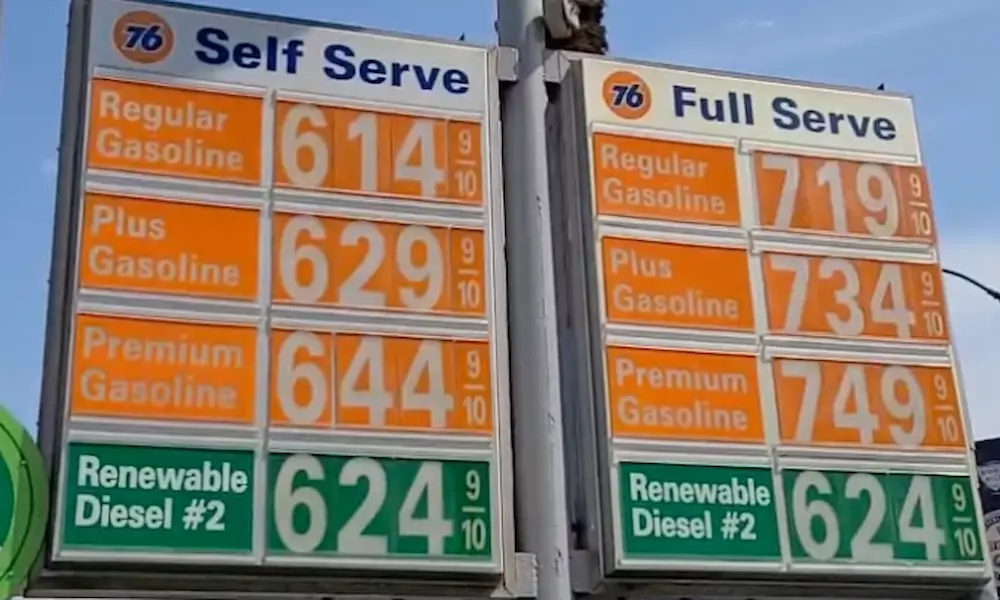
The gap between Regular and Premium has exploded. Illinois currently averages around $3.17 for Regular and $4.21 for Premium—over a dollar difference.
That $1.04 spread means Premium costs 33% more than Regular. Fill a 15-gallon tank, and you’re spending an extra $15.60 every time.
Do the math: if you fill up weekly, that’s $811 per year. For a car that runs fine on Regular, you’re literally burning money.
When Supreme Actually Matters
Supreme gas (typically 93 octane with enhanced additives) makes sense in these scenarios:
You drive a high-performance car that requires it. Check your gas cap or owner’s manual. If it says “91 octane minimum required,” that’s not a suggestion.
Your engine knocks on 91 but you’re in a 91-only market. Some cars tuned for 93 will ping on 91, especially in hot weather or under heavy load.
You’re dealing with carbon buildup. Running a few tanks of Shell V-Power or Exxon Supreme+ can help clean out deposits if you’ve been using bottom-tier gas.
You want Top Tier quality but only Premium is available. Some stations only offer Top Tier certification on their Premium/Supreme grades, not Regular.
When It’s a Waste
Skip Supreme if:
- Your car specifies Regular (87 octane)
- You’re just looking for better MPG in a standard car
- You think it’ll make your Toyota Camry faster (it won’t)
- You’re confusing it with ethanol-free gas (different thing)
The MIT School of Engineering explains that engines designed for Regular can’t take advantage of higher octane. The fuel just costs more without delivering benefits.
Quick Reference: Premium vs. Supreme by Brand
| Gas Station | Premium Name | Typical Octane | Special Features |
|---|---|---|---|
| Exxon | Synergy Supreme+ | 91 or 93 | 2x detergents, friction modifiers |
| Shell | V-Power NiTRO+ | 91 or 93 | Deposit removal, corrosion protection |
| BP/Amoco | Ultimate | 93 (Midwest) | Heritage formula, enhanced additives |
| Costco | Premium | 91 or 93 | Top Tier, 5x EPA detergent minimum |
| Chevron | Techron Premium | 91 or 93 | Techron additive package |
| Casey’s | High Octane | 93 | Standard additives |
The Bottom Line
So is supreme gas the same as premium? It depends who you ask.
Legally: Yes. Both terms describe high-octane fuel (91+) under state regulations.
At the pump: Usually no. Supreme typically means 93 octane in markets where 91 and 93 both exist, or it indicates enhanced additive packages that exceed basic Premium specs.
For your engine: Maybe. If your car needs 93 specifically, Supreme delivers what Premium might not. If your car runs fine on 87, both are unnecessary expenses.
The smartest move? Read your owner’s manual, look at the octane number (not the marketing name), and buy what your car actually needs. That Supreme label might sound impressive, but your engine only cares about chemistry, not branding.
And if you’re driving a regular commuter car? Save your money. The difference between that Supreme button and Regular is about $800 a year with zero performance benefit. Your wallet will thank you.