Got into a fender bender and your insurance is pushing you toward Caliber Collision? Before you hand over your keys, you need to read this. The answer to “is Caliber Collision good?” isn’t a simple yes or no — and what you find out could save your car, your wallet, and honestly, your safety.
What Is Caliber Collision, Exactly?
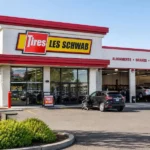
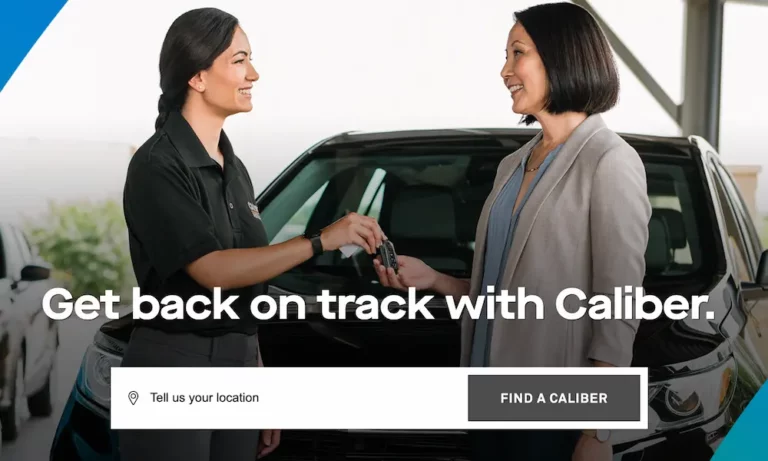
Caliber Collision is the largest collision repair provider in the United States, with over 1,800 locations across 41 states. It’s not just a body shop — it’s a massive corporate machine backed by private equity.
Beyond standard auto body work, they also run Caliber Auto Glass and commercial fleet services. In 2025 alone, they added roughly 300 new locations through acquisitions and new builds. For comparison, their closest competitor, Gerber Collision, added about 62 locations in the same period.
That scale matters — and not always in a good way.
What Do Real Customers Actually Say?
Here’s where it gets interesting. Caliber’s reputation depends heavily on where you look.
The rosier picture:
On Trustpilot, customer sentiment leans moderately positive. Reviews frequently praise friendly service advisors, timely text updates, and smooth rental car coordination. One location in Carmel holds a 4.6 out of 5 rating across 582 reviews.
The uglier picture:
Head over to the Better Business Bureau, and the story flips hard. Caliber Collision is not a BBB-accredited business. Their customer review rating sits at a dismal 1.48 out of 5 stars from over 211 submissions. Over three years, they’ve racked up 670 formal complaints.
Here’s the breakdown of what people complained about:
| Complaint Category | Total Complaints (3 Years) | % of Total |
|---|---|---|
| Service or Repair Issues | 584 | 87.16% |
| Sales and Advertising Issues | 31 | 4.63% |
| Product Issues | 28 | 4.18% |
| Billing Issues | 8 | 1.19% |
| Customer Service Issues | 6 | 0.90% |
Source: Better Business Bureau — Caliber Collision Centers
Over 87% of complaints are about the actual repair work. That’s not a fluke. That’s a pattern.
The Most Alarming Repair Problems Customers Reported
The BBB archives read like a horror novel for car owners. Here’s what keeps coming up:
Cosmetic Failures That Slip Through
Customers regularly receive vehicles with greasy handprints on headliners, sanding dust all over leather interiors, and clearcoat overspray baked onto windshields. In one case, a customer with a pearl-colored Cadillac Escalade got their car back painted standard white instead of the original complex pearl formula — after waiting over a month.
Structural and Safety Failures
This is where “is Caliber Collision good?” stops being a casual question.
- One customer received a truck with loose, un-torqued seat belt bolts and a truck bed that wasn’t bolted to the frame at all.
- A 2014 Dodge Charger owner discovered that suspension components Caliber claimed to replace had simply been spray-painted black to look new. The original damaged parts were still in the car.
- A 2023 Subaru Crosstrek owner suffered $2,300 in secondary electrical damage — including infotainment failure and water leaks — directly caused by a previous Caliber repair.
These aren’t minor inconveniences. They’re safety hazards.
Cycle Time Delays and Billing Surprises
Repairs that should take two weeks can drag past three months. Customers describe being told repeatedly that their car is “going into paint” — only to show up and find it still in pieces.
On the billing side, one customer’s final invoice was 45% higher than the original quote, with over $2,200 in vague “miscellaneous” charges. Another had unauthorized repairs performed that blew past their $25,000 insurance limit by $6,000 — without their consent.
Why Does This Keep Happening? The Flat-Rate Problem
Understanding Caliber’s quality issues means understanding how their technicians get paid.
Most techs work on a flat-rate system. If the estimate says a repair takes 10 hours and the tech finishes in 5, they effectively doubled their hourly rate. Speed gets rewarded. Precision doesn’t.
In a high-volume shop like Caliber, the pressure to “turn cars” is intense. Management focuses on moving vehicles through the production line to hit monthly revenue targets. This creates what the industry calls a “Bondo Billy” culture — fast, careless technicians who out-earn the careful ones.
One independent shop owner put it bluntly: “I really haven’t seen anything good come out of a Caliber repair shop, it’s only about the money and taking care of the insurance profits.”
The Insurance Angle You Need to Know About
Here’s the part your insurance company definitely won’t tell you.
Caliber is deeply integrated with major carriers like Progressive, GEICO, State Farm, and Allstate through Direct Repair Programs (DRPs). Caliber markets itself to these insurers as the “Carrier Easy Button” — handling estimates internally so the insurer doesn’t need to send an adjuster.
This creates a serious conflict of interest. Caliber’s real client is the insurance company, not you. The insurer wants cheap repairs. Caliber is financially rewarded for keeping costs low. That means:
- Heavy use of cheap aftermarket parts that often don’t fit properly
- Skipping expensive but necessary repair steps
- Pressure to avoid OEM (original manufacturer) parts that ensure proper structural integrity
Independent shops, by contrast, fight adjusters for OEM parts and follow factory repair procedures. They answer to you, not to the carrier.
Insurance companies actively steer customers toward Caliber by implying alternatives will cost more or aren’t guaranteed. This practice has sparked lawsuits — including one in Maryland where State Farm allegedly told customers false information to push them away from an independent shop and toward preferred DRP networks.
ADAS Calibration: A Safety Issue Most People Overlook
Modern vehicles are packed with safety tech — forward cameras, radar, lane-keep assist, automatic braking. After a collision repair, these systems need precise recalibration. As of 2026, over 65% of all collision repairs require post-repair ADAS calibration to keep your car safe on the road. NHTSA’s updated NCAP requirements will push that number even higher by the 2027 model year.
Caliber handles this through a subsidiary called Protech Automotive Solutions. The problem? Internal reviews from actual Protech calibration technicians are rough. The company rates a 2.4 out of 5 for work-life balance and 1.7 out of 5 for management on Indeed.
Employees describe quota pressure, disorganization, and management that prioritizes speed over accuracy. One tech warned: “Save yourself the headache and stay away from Protech.”
A radar sensor misaligned by one degree can cause an autonomous emergency braking system to fail at highway speed. That’s not a cosmetic issue.
What About Their OEM Certifications and Lifetime Warranty?
Caliber promotes certifications from Honda, BMW, Mercedes, Porsche, Subaru, and others. They also hold I-CAR Gold Class status, which requires ongoing technician training.
Sounds impressive. Here’s the catch.
Veteran technicians point out that the facility earns the certification — not necessarily the person holding the wrench. As one I-CAR-certified tech with 23 years of experience noted: “Most shops have office staff take online portions of I-CAR tests for the techs. There are techs with no welding certs welding on cars.”
The Lifetime Warranty is real and can be valuable. If you get a bad repair at one Caliber location, industry insiders recommend escalating to corporate — they’ll sometimes authorize a different Caliber location to redo the work. But getting that warranty honored locally often requires persistence, documentation, and sometimes a dealer inspection to prove the shop caused the damage.
Caliber’s Legal History Is Worth Knowing
A few notable legal moments:
- 2004: The California Attorney General secured a $5.8 million settlement after Caliber was found to have billed customers and insurers for parts and services never actually provided.
- Maryland lawsuit: The Whitney Law Firm secured a $140,000 settlement after Caliber released a Toyota Tundra with unrepaired frame damage following a major collision.
- 2025 ERISA lawsuit: A class-action (Fordyce v. Wand Newco 3, Inc.) alleges Caliber misused over $4 million in forfeited employee 401(k) funds to cover corporate matching contributions — while the company preps for a potential IPO.
- NLRB case: An active National Labor Relations Board case was filed in Pittsburgh in 2025.
Also worth knowing: Caliber’s repair authorization includes a mandatory arbitration clause with a class-action waiver. If you sign off on a repair, you’re agreeing to settle disputes individually — not through a class action.
Caliber Collision vs. Independent Shops: The Real Comparison
| Factor | Caliber Collision | Independent Shop |
|---|---|---|
| Who they truly serve | Insurance carriers via DRP contracts | The vehicle owner |
| Parts philosophy | Aftermarket/LKQ parts to control costs | Fights for OEM parts, follows factory specs |
| Technician culture | Flat-rate, high volume, TAP-trained entry-level staff | Often salaried master technicians with years of experience |
| Customer experience | Polished front office, inconsistent back shop | More personal, slower intake, higher structural reliability |
| Best for | Minor cosmetic damage on standard vehicles | Structural repairs, luxury cars, complex ADAS systems |
So, Is Caliber Collision Good?
It depends entirely on what your car needs.
For minor cosmetic damage on a standard, non-luxury vehicle — a dented bumper, a small panel repair — Caliber can be a convenient, rental-integrated option. Their front-office experience is genuinely smooth.
For structural repairs, luxury vehicles, complex electronics, or ADAS recalibration, the data tells a different story. The volume-driven model, the insurance-first mentality, the reliance on entry-level technicians under time pressure — these aren’t random problems. They’re structural features of how the business is designed.
Before you go, do these things:
- Get an independent estimate from a non-DRP shop first
- Ask specifically if OEM parts will be used on your vehicle
- Document your car thoroughly before drop-off (photos and video)
- After pickup, get a third-party inspection if anything feels off
- Know that you can use your Lifetime Warranty at any Caliber location — not just the one that did the work
Your insurance company calling Caliber the “safe choice” doesn’t mean it’s the best choice for your car.