Rust is sneaky. It starts small, hides in places you can’t see, and quietly eats through your car’s frame while you’re busy living your life. If you’re wondering whether undercoating is worth the money — or just a dealership upsell — you’re about to get a straight answer. Stick around, because the truth depends entirely on your situation.
What Does Undercoating Actually Do?
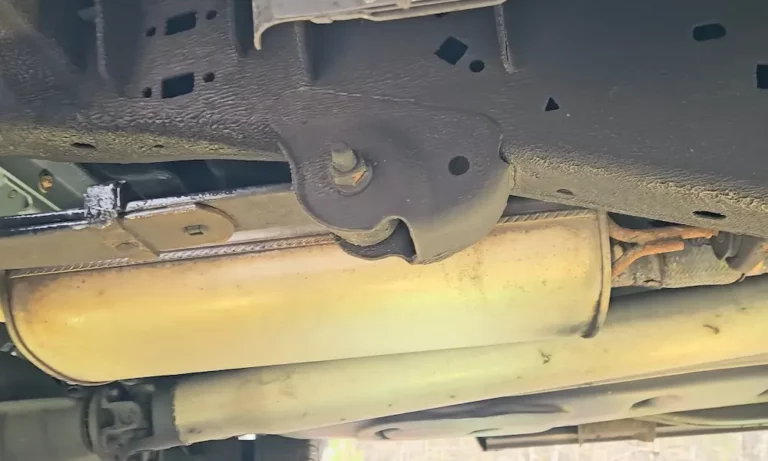
Undercoating creates a protective barrier between your vehicle’s underbody and the stuff that destroys it — road salt, moisture, gravel, and grime.
Here’s the quick version of the science: rust forms when iron reacts with water and oxygen. Road salt and liquid brines — especially magnesium chloride — speed this up dramatically. They cling to your undercarriage, seep into hidden cavities, and turn your frame into a slow-motion disaster.
Undercoating either blocks that moisture from reaching the metal or displaces it when it does.
Types of Undercoating — And Which One Actually Works
Not all undercoating is the same. Pick the wrong type and you could make rust worse.
Rubberized and Polyurethane (Hard Coatings)
These spray on and cure into a solid shell. They block moisture and dampen road noise. Sounds great — until the coating cracks.
Once a hard coating develops micro-cracks from chassis flex, moisture sneaks in behind the barrier. Now it’s trapped against bare metal with nowhere to go. That’s called hidden rust, and it’s worse than no coating at all.
Best for: New, rust-free vehicles only.
Oil and Lanolin-Based (Soft Coatings)
These are the real stars. Products like Fluid Film, Woolwax, and Krown stay tacky and never fully cure. They creep through capillary action into seams, welds, and joints that a hard coating can’t reach.
They’re also self-healing. A rock chip the oil flows back in and fills the gap. No cracking. No hidden rust. And they work on vehicles that already have light surface rust — the oil displaces moisture and cuts off oxygen.
The downside? They wash off faster and need annual reapplication.
Best for: Used vehicles, Salt Belt drivers, or anyone keeping a car long-term.
Asphalt/Bitumen Coatings
Heavy-duty option typically used on commercial trucks. Long-lasting but becomes brittle in cold weather — which creates the same hidden rust problem as rubber coatings. Generally considered outdated for everyday passenger vehicles.
| Coating Type | Longevity | Best For | Hidden Rust Risk |
|---|---|---|---|
| Rubberized | 3–5 years | New vehicles | High (if it cracks) |
| Polyurethane | 2–4 years | Heavy-duty use | High |
| Asphalt/Bitumen | 4–6 years | Commercial trucks | Moderate–High |
| Oil/Lanolin | 1–2 years | Most vehicles | Low |
| Wax/Paraffin | 1–2 years | Moderate climates | Low |
Where You Live Changes Everything
Is undercoating worth it? Your zip code might answer that faster than anything else.
You Live in the Salt Belt (Northeast, Midwest, Canada)
Yes — undercoating is absolutely worth it here. Americans use over 48 billion pounds of road salt annually. Liquid brines are engineered to stick to roads and to your underbody. If you’re in Ohio, Michigan, New York, or anywhere in Canada, your vehicle faces an aggressive chemical environment every winter.
Even modern galvanized steel can degrade significantly within seven years in these conditions. Annual oil-based treatment isn’t a luxury here — it’s maintenance.
You Live Near the Coast (Florida, Hawaii, North Carolina)
Salt air is relentless. Even without road salt, the constant sodium chloride mist penetrates body cavities and attacks panel seams. You won’t see the damage until it’s too late.
Cavity rust inhibitors and wax-based coatings are your best bet here.
You Live in the Southwest or Arid Regions
Low moisture means the electrochemical rust reaction rarely completes. Without water acting as the electrolyte, corrosion risk is genuinely low. Undercoating probably isn’t worth it unless you’re off-roading frequently or visiting snowy regions in winter.
| Region | Main Threat | Risk Level | Recommended Coating |
|---|---|---|---|
| Northeast/Midwest | Liquid brine and rock salt | Extreme | Annual oil or lanolin |
| Coastal Southeast | Salt air and humidity | High | Wax or cavity inhibitor |
| Pacific Northwest | High rainfall | Moderate | Wax or polymer barrier |
| Southwest | Minimal moisture | Low | Not typically needed |
What Does the Science Actually Say?
This isn’t just gut feeling. Real studies back up oil-based undercoating.
The University of Windsor Study used digital imaging software to create a “Corrosion Index” and compared 228 vehicles treated with Krown Rust Control against 141 untreated vehicles:
- Untreated vehicles had 6.8x more visible corrosion on body panels
- Untreated underbodies showed 3.6x more corrosion
- Benefits were most noticeable on vehicles older than six years
The Canadian Military Study tested major products head-to-head in harsh salt environments. Corrosion Free Formula 3000 came out on top with an 83% effectiveness rate in environmental testing — far ahead of competitors.
| Product | Effectiveness | Reapplication Interval | Base Material |
|---|---|---|---|
| Corrosion Free Formula 3000 | 90% | 18 months | Food-grade mineral oil |
| Krown T-40 | 70% | 12 months | Petroleum-based |
| Rust Check | 65% | 12 months | Petroleum-based |
One heads-up: petroleum-based products like Krown can cause some rubber seals to swell. Corrosion Free’s mineral oil base is gentler on rubber — something worth knowing before you choose.
The Real Cost Breakdown
A professional undercoating service runs $250 to $1,000 depending on the product and shop. Annual oil-based applications from services like Krown or Corrosion Free run $130 to $175 per year.
Compare that to what rust actually costs:
- Brake line replacement from corrosion: $300–$1,000+
- Frame rust repair: $1,000–$3,000+
- Structural failure from rust: potentially totaling the vehicle
Over 15 years, consistent annual oil treatment costs roughly $2,250. That’s a fraction of what you’d spend on rust repairs — or a replacement vehicle.
DIY vs. Professional Application
| Application Method | Cost Range | Coverage Depth | Frequency |
|---|---|---|---|
| Dealership | $800–$1,500 | Variable (often barrier-based) | One-time |
| Independent Pro | $250–$450 | High (includes internal cavities) | Annual (oil) / 3–5yr (hard) |
| DIY Aerosol | $50–$150 | Surface only | Annual |
| DIY with compressor/wand | $150–$300 | High | Annual |
DIY aerosol cans cost $25–$55 and work fine for surface protection. But professional shops use high-pressure sprayers with 360-degree extension wands that reach inside frame rails and door panels — places you simply can’t hit with a rattle can.
Will Undercoating Void Your Warranty?
This is the number one fear dealerships exploit. Here’s the truth.
The Magnuson-Moss Warranty Act — passed in 1975 — protects you. A manufacturer can’t void your warranty just because you used an aftermarket product. They’d have to prove the undercoating caused the failure in question.
So if you get your car undercoated and your transmission dies, the manufacturer still owes you warranty coverage. They can’t blame the rust coating for a drivetrain problem.
One real exception: Hybrid and EV owners need to be careful. Toyota, Ford, and others have flagged concerns about undercoating applied over bright orange high-voltage cables. Covering those cables creates safety risks for emergency responders and technicians. If you own a hybrid or EV, use a clear oil-based product and make sure the applicator masks those orange components first.
What About Electronic Rust Inhibitors?
Dealerships love selling these — typically $500 to $1,000 — as plug-in devices that supposedly stop rust with electrical currents.
Traditional cathodic protection is legitimate science. It works on ships and underground pipelines by making the metal act as the cathode in an electrochemical cell. But those systems require a constant electrolyte — like water or soil — to complete the circuit. Your car spends most of its life in air, not submerged in anything.
Laboratory salt spray tests have shown electronic devices performing no better than unprotected control panels. Most independent engineers still consider physical oil-based sprays the gold standard.
If you want to try an electronic module, treat it as a supplement — not a replacement for real undercoating.
So, Is Undercoating Worth It
Here’s the honest summary:
Yes, undercoating is worth it if:
- You’re in the Salt Belt or a coastal region
- You plan to keep the vehicle longer than five years
- You drive a truck or SUV (higher resale value impact)
- The vehicle is already past its factory warranty period
No, undercoating probably isn’t worth it if:
- You’re leasing or trading in within four years
- You live in an arid, low-salt region
- The vehicle is garage-kept and rarely driven in rain or snow
One final tip: apply it in early autumn, right before road salting begins. And if you’re using an oil-based product, skip the undercarriage wash during winter — high-pressure water strips the protection precisely when you need it most.
The math is straightforward. A few hundred dollars a year beats a $3,000 rust repair or trading in a structurally compromised vehicle for pennies on the dollar.