Ever stood at the pump staring at that pricey “ethanol-free” option and wondered if it’s worth the extra cash? You’re asking the right question—but there’s no one-size-fits-all answer. Whether ethanol free gas is better depends entirely on what you’re putting it in. Read on to find out if you should reach for your wallet or stick with regular fuel.
What’s the Deal with Ethanol in Your Gas?
Understanding the “E” Number
That “E” on the pump isn’t just decoration—it tells you how much ethanol (corn alcohol) is mixed with your gasoline.
E0 means zero ethanol. It’s 100% gasoline, often called “pure gas” or “REC-90.”
E10 is what you’re probably pumping right now. It’s 90% gasoline and 10% ethanol. The EPA approved E10 for all gasoline vehicles, and it’s been the standard since the 1990 Clean Air Act pushed cleaner-burning fuel.
E15 cranks it up to 15% ethanol. The EPA only approved this for 2001 and newer vehicles—don’t put it in older cars, boats, or lawn mowers.
E85 (flex fuel) runs 51-83% ethanol and only works in specially designed Flexible Fuel Vehicles.
The Octane-Energy Trade-Off You Need to Know
Here’s where it gets interesting. Ethanol has a stellar octane rating of 114—way higher than gasoline. That’s great for preventing engine knock. But there’s a catch.
Ethanol packs about 33% less energy per gallon than straight gasoline. It’s like buying a lighter that burns brighter but runs out faster.
Gas refiners actually use this to their advantage. They make cheaper, lower-octane “blendstock” (around 84 octane), then boost it to 87 by adding high-octane ethanol. Smart for them, but it means your fuel economy drops 3-4% with E10.
Does Ethanol Free Gas Save You Money?
Running the Numbers
Let’s cut through the marketing hype. That 3-4% fuel economy boost from E0 sounds nice until you check the price difference.
E0 typically costs 20 cents to over a dollar more per gallon than E10. One driver calculated their cost per mile at $0.0995 for both fuels—meaning the price premium completely ate the mileage gain.
For E0 to make financial sense in a modern car, it’d need to cost no more than 20 cents extra per gallon. That rarely happens.
Why Is E0 So Expensive and Hard to Find?
You can thank federal policy. The Renewable Fuel Standard mandates that billions of gallons of ethanol get blended into our gas supply. This re-engineered the entire fuel infrastructure around E10 as the default.
E0 became the oddball. Gas stations need a separate 5,000-10,000 gallon tank just for this specialty product. That overhead drives up the price and makes E0 scarce, especially in cities.
| Fuel Type | Ethanol Content | Energy per Gallon (BTU) | Who Should Use It |
|---|---|---|---|
| E0 | 0% | 112,114-116,090 | Classic cars, boats, small engines |
| E10 | 10% | ~111,836 | All modern vehicles |
| E15 | 10.5-15% | ~110,000 | 2001+ vehicles only |
| E85 | 51-83% | 83,950-95,450 | Flex Fuel Vehicles only |
The Water Problem That Can Destroy Your Engine
Here’s where E10 gets dangerous—but only for certain engines.
How Phase Separation Happens
Ethanol is hygroscopic. That means it sucks up water from humid air like a sponge. This creates a sneaky problem called phase separation.
Stage 1: E10 can hold up to 0.7% water in suspension—way more than pure gas. This masks the contamination. Your fuel-water separator? Useless, because the water passes right through dissolved in the fuel.
Stage 2: When the fuel absorbs too much moisture or gets cold, it hits saturation. The ethanol dumps the gasoline and bonds with the water instead. This heavy, corrosive sludge sinks to the tank bottom.
Stage 3: Your fuel pickup sits at the tank bottom. It sucks up this nasty cocktail and sends it straight to your engine, causing misfires, stalls, and serious damage.
Materials That Can’t Handle Ethanol
Ethanol isn’t just a water magnet—it’s also a powerful solvent that attacks older materials.
In a classic car or old equipment, the first tank of E10 acts like industrial degreaser. It dissolves decades of deposits and rust, sending that debris downstream to clog filters and carburetor jets.
Worse, ethanol chemically attacks materials never designed for it:
- Rubber seals and hoses swell, crack, and leak
- Fiberglass tanks (common in older boats) can dissolve
- Metal components corrode faster when ethanol brings water into contact with them
These aren’t minor issues. They’re preservation-destroying, expensive failures.
Is Ethanol Free Gas Better for Your Car?
Modern Vehicles (2001 and Newer): Skip the E0
The verdict: No, ethanol free gas isn’t better for your daily driver.
Your car was engineered from the factory to run on E10. Every seal, hose, and tank uses ethanol-resistant materials. The EPA even approved 2001+ vehicles for E15, proving how ethanol-compatible they are.
You won’t get more horsepower. Your stock engine’s computer adjusts for whatever fuel you use, so E0 provides zero performance gain at the same octane rating.
The only exception? If you’re storing a car for months, E0’s stability advantage makes sense. But for daily driving, you’re just burning money.
Classic Cars (Pre-1990s): E0 Is Non-Negotiable
The verdict: Yes, ethanol free gas is absolutely better—and essential.
These vehicles are packed with rubber, cork, and untreated metals that E10 destroys. We’re not talking about a repair bill—we’re talking about the destruction of irreplaceable, original components that tank your car’s value.
That extra dollar per gallon? It’s cheap insurance against a $2,000+ fuel system restoration. Using E0 isn’t a premium choice—it’s critical preventative maintenance.
Boats and Marine Engines: E0 Is a Safety Issue
The verdict: Yes, ethanol free gas is critical for boats.
The marine environment is E10’s worst nightmare. You’ve got high humidity, vented fuel tanks that breathe moist air, long storage periods, and engines that run at high RPM under load.
This combination makes phase separation almost guaranteed. When your engine stalls from contaminated fuel, it’s not just inconvenient—it’s a life-threatening safety failure on the water.
That’s why E15 is federally banned for marine use. E0 (often sold as “REC-90” at marinas) is the only safe choice.
Small Engines and Lawn Equipment: E0 Prevents Headaches
The verdict: Yes, ethanol free gas is better for outdoor power equipment.
Your lawn mower, chainsaw, or generator sits unused for weeks or months. During storage, E10 absorbs moisture and forms gummy deposits that clog tiny carburetor passages.
Some manufacturers like Briggs & Stratton say E10 is acceptable—but they assume fresh fuel and regular use. That’s not reality for most homeowners. Others explicitly recommend ethanol-free gas.
The proof? Pre-mixed canned fuel (like TruFuel) sells for $24-27 per gallon. People pay that insane premium because it’s 100% ethanol-free, stabilized, and prevents the $100+ annual carburetor rebuild that stale E10 causes.
| Engine Type | Best Fuel | Risk Level with E10 | Why |
|---|---|---|---|
| Modern cars (2001+) | E10 or E15 | Low | Designed for ethanol; E0 wastes money |
| Classic cars (pre-1990) | E0 only | High | Incompatible materials get destroyed |
| Boats & marine | E0 (REC-90) only | Extreme | Phase separation causes safety failures |
| Small engines | E0 preferred | High | Storage issues clog carburetors |
What About the Environmental Angle?
The “green” argument for ethanol is messy and controversial.
The Pro-Ethanol Side
Studies by the USDA and Department of Energy claim corn ethanol produces 40-50% fewer greenhouse gas emissions than gasoline over its lifecycle. The CO₂ from combustion gets offset by the CO₂ the corn absorbed while growing.
E10 also burns cleaner, reducing carbon monoxide and other pollutants from your tailpipe.
The Anti-Ethanol Arguments
Critics say those studies ignore the bigger picture. Industrial corn farming for ethanol causes:
- Massive water pollution from fertilizer runoff, creating toxic algae blooms and dead zones
- Habitat destruction as farmers plow native grasslands
- Higher food prices from diverting 40% of corn to fuel instead of food
- Potential increases in ground-level ozone, which worsens respiratory problems
The environmental debate is far from settled. If you’re choosing E0 to protect your classic car or boat, you’re not making an anti-environmental choice—the net benefit of E10 is genuinely disputed.
How to Find Ethanol Free Gas Near You
E0 has become a specialty product that’s tough to find, especially in cities.
Finding E0 Stations
Use online locators: The best tool is pure-gas.org, a crowd-sourced database of ethanol-free stations across the U.S. and Canada. Some brand sites, like Sunoco’s station finder, also filter for ethanol-free options.
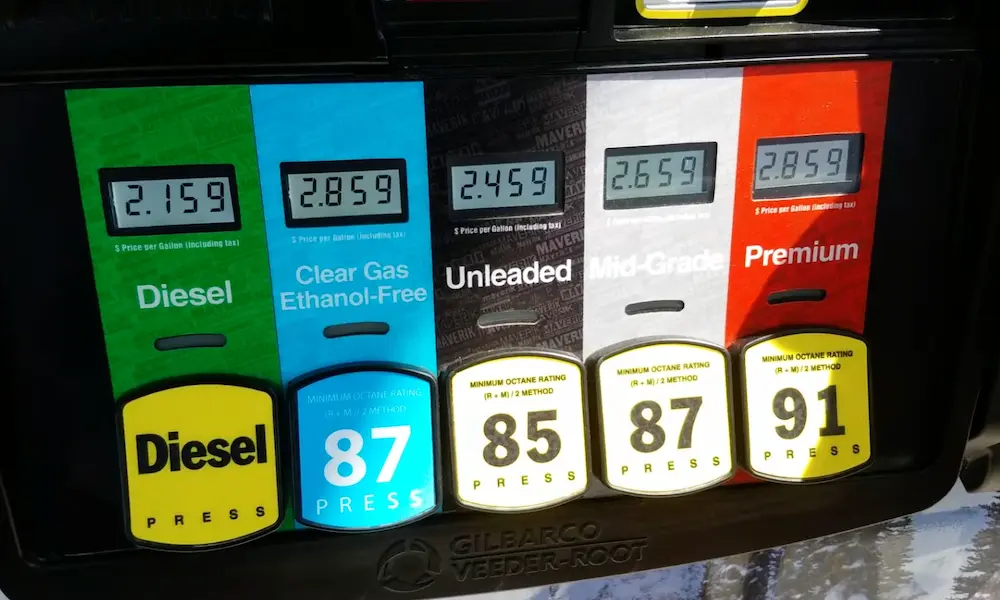
Look for “REC-90”: At the pump, E0 is often labeled as “Recreational Fuel” or “REC-90” (90 octane). It’s marketed to boaters and landscapers.
Check marinas and rural areas: Boating communities and rural gas stations are more likely to carry E0 than urban stations.
The Canned Fuel Alternative
For small engines, pre-mixed canned fuel from brands like TruFuel or Husqvarna offers maximum convenience. It’s 100% ethanol-free, 92+ octane, and shelf-stable for years. Yes, it costs $24-27 per gallon—but for equipment you use occasionally, it’s cheaper than constant repairs.
The Bottom Line on Ethanol Free Gas
So, is ethanol free gas better? It depends entirely on what you’re fueling.
For your modern daily driver: No. E10 is cheaper, EPA-approved, and causes zero harm to your fuel system. Paying extra for E0 provides no benefit and wastes your money.
For your classic car: Absolutely. E0 is essential protection against thousands of dollars in irreversible damage to original, non-ethanol-compatible components.
For your boat: Yes, it’s a safety requirement. The marine environment makes phase separation inevitable with E10, creating dangerous engine failures on the water.
For your lawn mower or chainsaw: Yes, especially for storage. E0 prevents the carburetor clogs and hard starts that plague equipment sitting with stale E10.
Don’t fall for the “pure” marketing. E0 isn’t universally better—it’s chemically better for specific, older engines that weren’t designed for ethanol. Know what you’re fueling, and choose accordingly.