Your engine’s running hot, your oil light’s been nagging you, and you’re standing in the auto parts aisle staring at a wall of bottles. Valvoline or Castrol? Both claim to be the best, but your engine doesn’t care about marketing—it needs real protection. This breakdown cuts through the noise to show you exactly which oil fits your car, your wallet, and your driving style.
The DNA Behind Each Brand
Understanding where these oils come from explains why they’re formulated so differently today.
Valvoline: America’s Original Oil
Valvoline started in 1866 as the first branded motor oil in the U.S. Dr. John Ellis discovered that crude oil beat animal fat for lubricating steam engine valves—and the brand was born from solving real mechanical problems.
That practical, fix-it mentality stuck. Valvoline spent over a century as part of Ashland Inc., a chemical company focused on American vehicles and American driving habits. In 2023, Saudi Aramco bought Valvoline’s product business, giving them access to world-class base oil supplies.
Their engineering philosophy? Keep engines running longer. They pioneered the high-mileage oil category and recently launched Restore & Protect, which claims to actually clean out deposits in neglected engines.
Castrol: Racing Heritage Meets European Precision
Castrol began in 1899 using castor bean oil for racing engines and early aircraft. That extreme-performance DNA never left. Today, they’re owned by BP, which gives them direct access to premium base oils and deep pockets for research.
Their “Liquid Engineering” approach treats oil as a dynamic engine component, not just a fluid. Castrol’s Fluid TITANIUM Technology in their EDGE line uses titanium-based polymers that physically stiffen under pressure to prevent metal-to-metal contact.
They’re the go-to for European luxury brands like BMW and Volkswagen, which means their retail formulations often meet strict European ACEA specifications right off the shelf.
What’s Actually Inside the Bottle
Motor oil isn’t just oil—it’s a carefully engineered chemical cocktail. Understanding the ingredients reveals why performance differs.
Base Oils: The Foundation
Both brands use high-quality Group III base oils in their synthetic lines. These are highly refined mineral oils that can legally be called “synthetic” in the U.S. The difference comes in the blending:
Castrol often adds Group IV PAO (polyalphaolefin) stocks to their premium EDGE formulas, especially in European-spec versions. This boosts cold-flow performance and oxidation resistance.
Valvoline relies more heavily on pure Group III bases with robust viscosity modifiers. This keeps costs competitive while still delivering excellent protection for most applications.
The Additive Battle: Molybdenum vs. Titanium
Here’s where things get interesting.
Valvoline’s Molybdenum Strategy
Valvoline loads their oils with molybdenum compounds (MoDTC). Under heat and pressure, these break down into microscopic sheets of molybdenum disulfide that coat metal surfaces. Think of it like Teflon for your pistons—incredibly slippery and heat-resistant.
Virgin oil analyses show Valvoline formulations carrying 200+ ppm of molybdenum, which is aggressive. This chemistry excels at reducing friction in timing chains and cam lobes.
Castrol’s Titanium Innovation
Castrol EDGE uses proprietary titanium-based polymers. Unlike molybdenum’s coating action, these titanium molecules physically transform under pressure, stiffening the oil film to prevent rupture during extreme loads.
Oil analyses typically show 20-50 ppm of titanium in EDGE formulas—a unique chemical signature. It’s less about friction reduction and more about maintaining film strength when turbochargers are screaming.
Fighting Low-Speed Pre-Ignition (LSPI)
Modern turbocharged engines face a dangerous problem: uncontrolled combustion events at low RPMs that can destroy pistons. Calcium-based detergents were identified as a contributor.
Both brands reformulated to reduce calcium and increase magnesium detergents to meet API SP and ILSAC GF-6 standards. They both pass the critical Sequence IX LSPI test.
But Valvoline’s Restore & Protect goes further, using hyper-aggressive dispersants that can actually dissolve existing carbon deposits—not just prevent new ones.
Product Lines Compared: Who Does What Best
Each brand has carved out specialty niches. Here’s where they shine.
Valvoline’s Lineup
| Product | Best For | Key Technology |
|---|---|---|
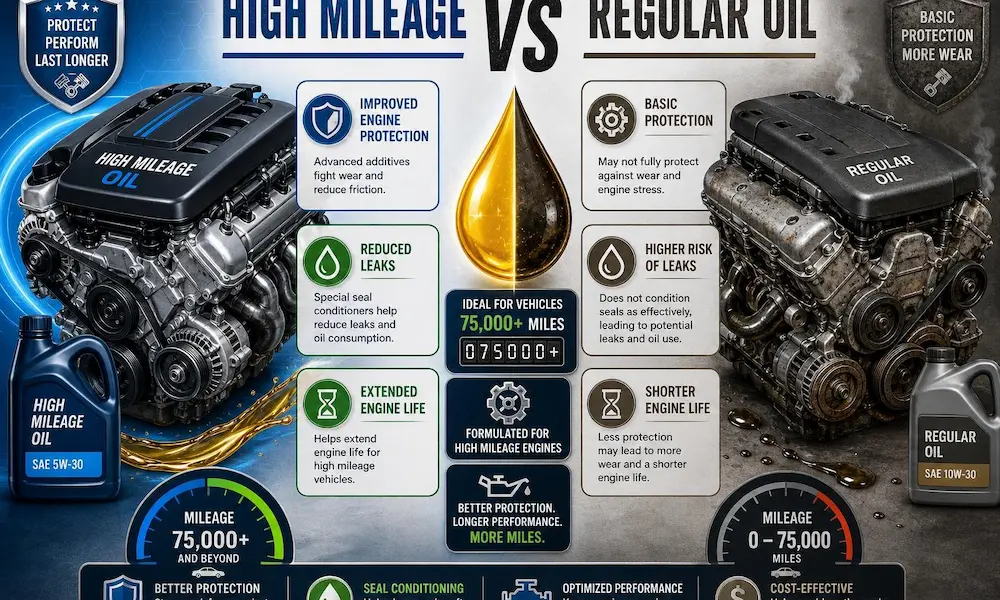
| MaxLife | Engines over 75k miles | Seal conditioners to stop leaks |
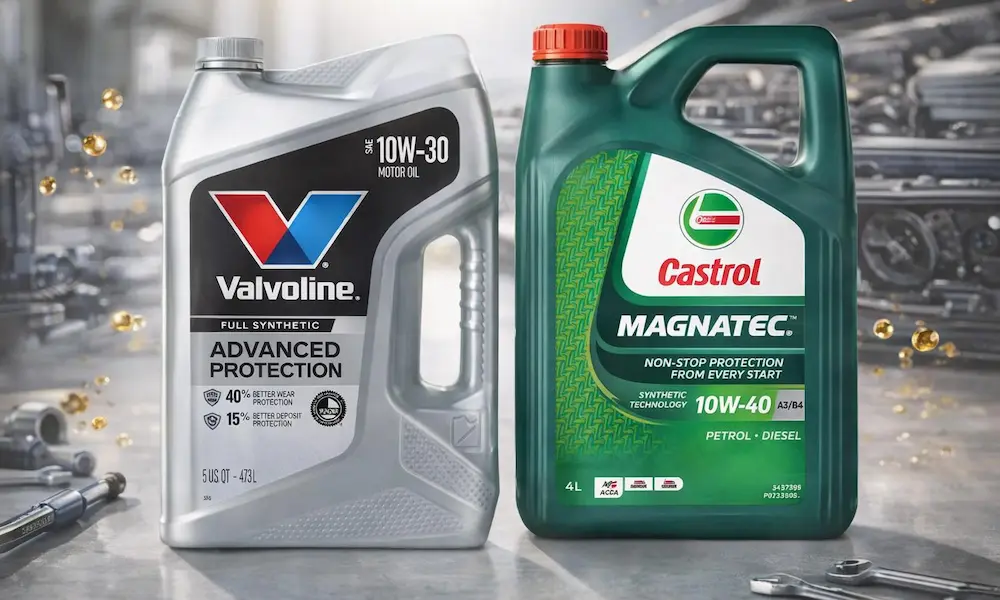
| Advanced Full Synthetic | Daily drivers, fuel economy | 40% better wear protection claim |
| Restore & Protect | Neglected engines, deposit removal | Active cleaning chemistry |
| Extended Protection | Long drain intervals (up to 25k miles) | Dual-defense oxidation control |
MaxLife dominates the high-mileage category. User forums consistently praise its ability to slow oil leaks in aging engines. The seal-conditioning esters swell aging gaskets just enough to reduce seepage without causing damage.
Castrol’s Lineup
| Product | Best For | Key Technology |
|---|---|---|
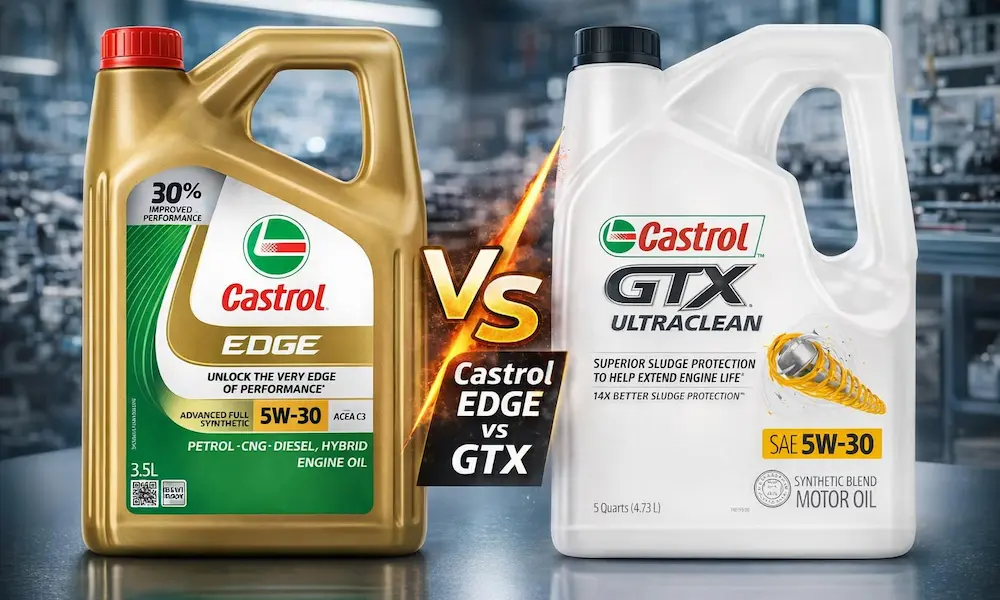
| GTX | Budget conventional protection | Double-action sludge prevention |
| GTX Magnatec | Stop-start urban driving | Magnetic molecules cling during shutoff |
| EDGE | Performance, turbo engines | Fluid TITANIUM Technology |
| EDGE Euro Car | BMW, VW, Mercedes | Meets ACEA A3/B4, C3 specs |
EDGE Euro Car is the secret weapon for European car owners. It’s widely available at Walmart and AutoZone with the OEM approvals already on the bottle—no hunting specialty shops required.
The Numbers That Matter
Marketing claims are noise. Let’s look at measurable performance metrics.
High-Temperature Protection (HTHS)
High Temperature High Shear viscosity measures how well oil resists thinning under extreme heat and pressure—critical for turbochargers and high-load situations.
Castrol EDGE 5W-30: Maintains HTHS around 3.0-3.1 cP in standard formulas. Euro-spec versions push above 3.5 cP, providing a thicker protective film.
Valvoline Advanced 5W-30: Optimized for fuel economy at 2.9-3.0 cP. It’s thinner by design to reduce drag, but compensates with aggressive anti-wear additives (high molybdenum).
The takeaway: If you’re running a turbocharged engine hard, Castrol’s thicker film offers more safety margin. For naturally aspirated engines focused on MPG, Valvoline’s chemistry works smarter, not thicker.
Volatility (NOACK): Burn-Off Resistance
The NOACK test measures how much oil evaporates at high temperatures. High volatility means your engine “burns” oil and you’re constantly topping off.
Valvoline Advanced: Tests around 9.0-10.0% NOACK—well below the 15% API limit and excellent for Group III chemistry.
Castrol EDGE: Often tests at 8.5-9.5% in European formulations, giving it a slight edge in burn-off resistance.
Both are excellent here. But if your Subaru or older BMW is notorious for oil consumption, Castrol’s historically lower volatility gives it a reputation advantage in enthusiast communities.
Total Base Number (TBN): Acid-Fighting Reserve
TBN measures the oil’s ability to neutralize combustion acids. Higher TBN means longer protection as the oil ages.
Valvoline Advanced: Typically 7.0-9.0 mg KOH/g—adequate for standard 5,000-7,500 mile intervals.
Castrol EDGE: Often 10.0-11.0 mg KOH/g, especially in Euro formulations designed for 10,000+ mile drains.
If you’re pushing drain intervals or doing lots of short trips (which create more acid), Castrol’s higher TBN reserve is meaningful insurance.
Certifications and Approvals: Who Passes What
Any quality oil meets basic API standards. The differentiator is which additional specifications they carry.
North American Standards
Both Valvoline Advanced and Castrol EDGE carry:
- API SP (latest gasoline engine standard)
- ILSAC GF-6A (fuel economy and LSPI protection)
- GM Dexos1 Gen 3 (turbo protection and oxidation stability)
They’re equals here. Both pass the same stringent industry tests.
European Standards (ACEA): Castrol’s Advantage
This is where Castrol pulls ahead for import car owners.
Castrol EDGE retail bottles often carry dual ratings like:
- ACEA A5/B5 (extended drain, low viscosity)
- ACEA C3 (compatible with diesel particulate filters)
- BMW LL-01, VW 507.00, Mercedes MB 229.5
Walk into any AutoZone and grab Castrol EDGE Euro—it already has the approvals your German car needs.
Valvoline makes European-spec oils (MST, XL-III), but they’re often relegated to specialty products that aren’t on every shelf. For DIY European car maintenance, Castrol’s retail availability is a massive convenience advantage.
Price Reality Check (2024-2025)
Performance matters, but so does your budget. Here’s what you’ll actually pay.
| Product (5 Quart Jug) | Walmart Price | AutoZone Price |
|---|---|---|
| Valvoline Advanced Full Synthetic | $26.97-$29.97 | ~$37.99 |
| Castrol EDGE Full Synthetic | $27.48-$29.48 | ~$37.99 |
| Valvoline MaxLife (Blend) | ~$26.97 | ~$34.99 |
| Castrol GTX High Mileage | ~$22.00-$24.00 | ~$29.99 |
At big-box retailers, they’re effectively price-matched at the premium level. Valvoline occasionally undercuts by a dollar or two.
The surprise? Castrol GTX High Mileage is often cheaper than Valvoline MaxLife while still offering solid protection. If budget is tight and your car has miles, GTX High Mileage is a strong value play.
What Mechanics and Independent Testing Reveal
Beyond lab specs, what do real-world users and testers find?
The High-Mileage Champion
Forums like Reddit’s r/MechanicAdvice and Bob Is The Oil Guy are unanimous: Valvoline MaxLife is the gold standard for stopping leaks.
Users consistently report that minor rear main seal seepage and valve cover leaks slow or stop after switching to MaxLife. The ester-based seal conditioners genuinely work.
Castrol GTX High Mileage gets respect, but doesn’t command the same cult following for seal conditioning.
The Sludge Question
Older mechanics remember when conventional Castrol GTX developed a reputation for sludging in neglected engines (1980s-90s era). That stigma lingers in some circles.
Modern analysis shows this is ancient history. Today’s Castrol EDGE is exceptionally clean-running. Meanwhile, Valvoline weaponized sludge fears by marketing Restore & Protect as an active remover of deposits.
Independent Testing (Project Farm, PQIA)
YouTube’s Project Farm and the Petroleum Quality Institute of America (PQIA) both subject oils to rigorous testing.
Results? Both brands consistently perform in the upper-mid tier. They’re not always the absolute winner (boutique oils like Amsoil or Redline often top charts), but they handily beat budget brands.
Castrol tends to show slight advantages in high-heat shear resistance and film strength.
Valvoline excels in cold-flow performance and wear protection (thanks to all that molybdenum).
Neither brand fails quality checks. You’re getting legitimate protection from both.
The Hybrid and EV Factor
As powertrains electrify, oil requirements are shifting.
Valvoline aggressively launched Hybrid Vehicle Full Synthetic, specifically marketed for cars where the engine constantly cycles on and off. These engines never fully warm up, leading to moisture buildup and low-temp sludge. Valvoline’s formula addresses water emulsion and corrosion.
Castrol is pivoting toward EV-specific fluids. Their Castrol ON product line focuses on thermal management fluids for direct cooling of electric motors and battery packs—a completely different chemistry game.
For today’s hybrids (Prius, RAV4 Hybrid), Valvoline has the purpose-built solution ready to go.
Which Oil Should You Actually Buy?
The “best” oil is the one that matches your engine’s reality—not the flashiest ad campaign.
Choose Valvoline If:
- Your odometer shows 75,000+ miles: MaxLife’s seal conditioning is unmatched for aging engines. If you’ve got a slow oil leak or slight consumption, start here.
- You bought a used car with unknown history: Restore & Protect’s active deposit-cleaning chemistry can remediate neglect that standard oils won’t touch.
- You drive a Ford, GM, Toyota, or Honda: Valvoline’s ILSAC-optimized, molybdenum-rich chemistry is perfectly tuned for timing chain protection and fuel economy in domestic and Asian engines.
- Budget matters most in the high-mileage category: MaxLife delivers premium protection at a fair price.
Choose Castrol If:
- You own a BMW, Audi, VW, or Mercedes: EDGE Euro formulas carry the OEM approvals on the bottle and are readily available at major retailers. No guessing, no special orders.
- You run a turbocharged performance engine hard: EDGE’s Fluid TITANIUM and higher HTHS viscosity provide superior film strength under extreme loads.
- You want to push drain intervals past 10,000 miles: Castrol’s higher TBN reserves and proven oxidation stability give you more safety margin for extended service.
- Your engine burns oil: Castrol’s historically lower volatility (NOACK) means less top-off between changes.
The Straight Answer
Neither oil will ruin your engine. Both exceed industry standards by comfortable margins. The choice comes down to application fit:
Valvoline is the longevity specialist—built for keeping aging American and Asian engines running, cleaning up past sins, and maximizing seal life.
Castrol is the precision specialist—engineered for high-performance, high-pressure European engines and extreme operating conditions.
Check your owner’s manual for the required specification (API, ILSAC, ACEA, OEM approval). Then pick the brand whose technology philosophy aligns with how you actually drive. Your engine will thank you with thousands of additional miles—no matter which bottle you choose.