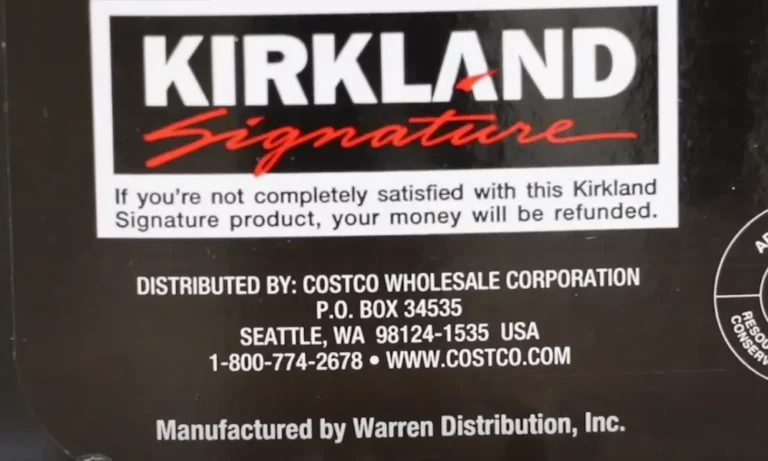
You’re standing in Costco, staring at that Kirkland motor oil priced at half what you’d pay for Mobil 1. Sounds too good to be true, right? After digging through independent lab tests, real-world analyses, and thousands of user experiences, I’ve got answers that’ll surprise you.
What Makes Kirkland Motor Oil Different
Kirkland Signature Full Synthetic Motor Oil comes from Warren Distribution Inc.—the same manufacturer behind Walmart’s SuperTech and Amazon Basics oils. This isn’t some sketchy operation. Warren produces private-label oils for major retailers and knows what they’re doing.
The oil meets API SP and ILSAC GF-6A specifications, which are the current gold standards for gasoline engines. These certifications matter because they guarantee protection against Low-Speed Pre-Ignition (LSPI)—a problem that can destroy modern turbocharged engines. Your GDI engine? It’s covered.
Here’s where things get interesting. Lab analysis shows Kirkland’s 5W-30 maintains 11.6 centistokes at 100°C compared to Mobil 1’s 11.2. That slightly higher viscosity means better film strength when your engine’s running hot. Not worse—better.
How Kirkland Performs Against Premium Brands
Project Farm’s independent testing puts Kirkland through the wringer alongside oils costing three times more. Their results? Kirkland performs nearly identically to premium brands in evaporation loss, wear protection, and post-use condition.
Blackstone Labs analyses tell an even more compelling story. A 10,000-mile comparison between Kirkland and Mobil 1 in a 2015 Toyota Corolla revealed:
Wear metals were virtually identical:
- Aluminum: 7-8 ppm for both
- Iron: 16-18 ppm for both
- Copper: 7-8 ppm for both
But here’s the kicker—Kirkland actually showed superior phosphorus and zinc retention (560 ppm and 683 ppm) compared to Mobil 1. These are your anti-wear additives, and Kirkland held onto them better.
The oil’s Total Base Number (TBN) registered at 3.7 versus Mobil 1’s 3.6 after 10,000 miles. Higher TBN means more acid-neutralizing capacity left in the tank. Translation? The oil still had plenty of life remaining.
Real-World Performance Data
Forum users and fleet operators share thousands of data points about Kirkland oil performance. The pattern’s consistent: this stuff works.
High-mileage vehicles show particularly impressive results. Multiple owners report trouble-free operation past 150,000-250,000 miles with no increase in oil consumption or engine noise. One Toyota owner ran 5,000-mile intervals for years, and used oil analyses kept coming back clean.
Commercial fleet users report cost savings exceeding 60% compared to premium brands without any performance degradation. When you’re maintaining multiple vehicles, that difference adds up fast.
Daily commuter applications show similar success. Users conducting 5,000-6,500 mile oil change intervals consistently report excellent remaining oil condition in lab analyses. The oil’s not just surviving—it’s thriving.
Technical Specifications That Matter
Let’s talk numbers that actually affect your engine:
| Specification | Kirkland 5W-30 | Mobil 1 5W-30 | What It Means |
|---|---|---|---|
| Viscosity at 100°C | 11.6 cSt | 11.2 cSt | Better heat protection |
| Zinc Content | 870 ppm | 868 ppm | Slightly better anti-wear |
| TBN (Fresh) | 7.9 mg KOH/g | ~8.0 mg KOH/g | Equal acid neutralization |
| Flash Point | >230°C | ~230°C | Excellent thermal stability |
| Pour Point | -40°C | -40°C | Identical cold-start performance |
The viscosity index of 170 confirms this oil maintains consistent protection across temperature extremes. Whether you’re starting your car in Minnesota winter or cruising through Arizona summer, it’s got you covered.
The additive package contains 870 parts per million of zinc, providing robust anti-wear protection. Some mechanics argue that more zinc is always better, but these levels exceed what most modern engines need while staying compatible with catalytic converters.
Where Kirkland Falls Short
Nothing’s perfect, and Kirkland oil has legitimate limitations you should know about.
Limited Viscosity Options
Kirkland only comes in three grades: 0W-20, 5W-20, and 5W-30. Need 0W-16 for your new Toyota? You’re out of luck. Require 5W-40 for your performance engine? Look elsewhere. This narrow selection excludes many applications right off the bat.
Ford Vehicle Concerns
Here’s a big one: Kirkland lacks Ford’s WSS-M2C962-A1 specification. While it meets general API standards that satisfy most warranty requirements, Ford specifically calls for this certification. Some Ford owners report no issues, but if you’re under warranty, this missing spec could potentially create problems.
European Vehicle Compatibility
Driving a BMW, Mercedes, or Volkswagen? Kirkland doesn’t carry European OEM approvals like BMW LL-04, Mercedes-Benz 229.5, or VW 502.00/505.00. European manufacturers often require specific formulations, and Kirkland doesn’t check those boxes.
Performance Engine Questions
Some mechanics question Kirkland’s suitability for high-stress applications. Track days, sustained high-RPM operation, and extreme boost levels push oil beyond normal operating conditions. While Kirkland handles street use brilliantly, it lacks the performance credentials for motorsport applications.
Cost Comparison That’ll Make You Think
At roughly $3.00 per quart (often less during Costco promotions), the math gets interesting fast.
For a vehicle requiring 5 quarts per change with 3 annual changes:
| Brand | Cost Per Change | Annual Cost | 5-Year Cost |
|---|---|---|---|
| Kirkland | $15 | $45 | $225 |
| Mobil 1 | $42.50 | $127.50 | $637.50 |
| Royal Purple | $60 | $180 | $900 |
That’s $412.50 saved over five years per vehicle compared to Mobil 1. Got two cars? You’re saving $825. Three vehicles? Now we’re talking $1,237.50 in your pocket instead of going to oil companies.
This isn’t about being cheap—it’s about being smart when independent testing shows equivalent protection.
Quality Control and Manufacturing Consistency
Warren Distribution’s extensive experience manufacturing private-label oils for major retailers provides confidence in production quality. The company maintains API licensing and PQIA testing compliance, ensuring each batch meets specified standards.
Batch-to-batch consistency appears excellent based on multiple independent analyses across different production dates. Users report consistent performance characteristics across years of use, which matters more than many people realize. Some budget oils vary wildly between batches—Kirkland doesn’t.
Warranty Protection Strategies
Here’s where things get tricky. While Kirkland meets or exceeds API specifications required by most manufacturers, proper documentation becomes critical for warranty protection.
Many automotive professionals strongly recommend having oil changes performed at certified facilities. Not because they doubt the oil quality—they’re concerned about documentation if warranty issues arise.
If you’re doing DIY oil changes with Kirkland, maintain meticulous records:
- Keep all receipts
- Log dates and mileage
- Take photos of oil containers and fill levels
- Store everything digitally and physically
Some dealerships try claiming aftermarket oil voids warranties. That’s usually nonsense—the Magnuson-Moss Warranty Act protects your right to use any oil meeting manufacturer specifications. But you’ll need documentation to back yourself up.
Who Should Use Kirkland Motor Oil
Ideal candidates for Kirkland oil:
Daily commuter vehicles with standard naturally aspirated or mildly turbocharged engines get maximum benefit. If you’re driving a Camry, Accord, or Civic under normal conditions, this oil delivers premium protection at budget pricing.
High-mileage vehicles benefit from Kirkland’s cost-effectiveness. When your car’s got 180,000 miles and you’re planning to drive it another 50,000, spending premium prices on oil doesn’t make financial sense if testing shows equal protection.
Budget-conscious consumers who’ve been stretching oil change intervals to save money should switch to Kirkland instead. You’ll save money AND maintain proper maintenance intervals.
Fleet applications with multiple vehicles see the biggest dollar savings. Commercial users report switching entire fleets without any performance issues.
Who should think twice:
Ford owners need to verify warranty implications before switching. The missing WSS certification might not matter, but it’s worth checking with your dealer.
European luxury vehicle owners should stick with manufacturer-specified oils. These engines often require specific formulations, and the cost difference matters less on vehicles with $1,200 brake jobs.
Performance enthusiasts running track days or autocross should opt for oils with proven high-temperature, high-stress credentials. Kirkland works great on the street but hasn’t proven itself under racing conditions.
Extended drain interval fans pushing 10,000+ miles between changes might want oils with better long-term testing data for extreme intervals.
Making the Smart Choice
Is Kirkland motor oil good? For most drivers, it’s not just good—it’s excellent value.
Independent testing consistently shows performance matching oils costing 2-3 times more. Used oil analyses from real vehicles confirm what lab tests suggest: this oil protects engines effectively. The $20-40 annual savings per vehicle might not seem huge, but it adds up without compromising protection.
Warren Distribution’s manufacturing experience, API certification, and consistent quality control provide confidence that you’re getting legitimate synthetic oil, not relabeled conventional juice.
The limitations are real but specific. If your vehicle requires specialized certifications or operates under extreme conditions, factor those considerations carefully. For conventional passenger vehicles operated under normal conditions with regular maintenance, Kirkland delivers.
Here’s my take: I’d run Kirkland in my daily driver without hesitation. My wife’s Subaru? Absolutely. My kid’s first car? Perfect choice. But my weekend track car? I’d stick with oils proven under racing conditions.
The beauty of Kirkland motor oil isn’t that it’s cheap—it’s that it performs like premium oil while costing less. That’s not a compromise. That’s smart shopping backed by independent testing and thousands of satisfied users.
Check your owner’s manual, verify the viscosity matches your needs, and if Kirkland fits your application, you’ll protect your engine while keeping more money in your wallet. Sometimes the store brand really is just as good as the name brand. This is one of those times.