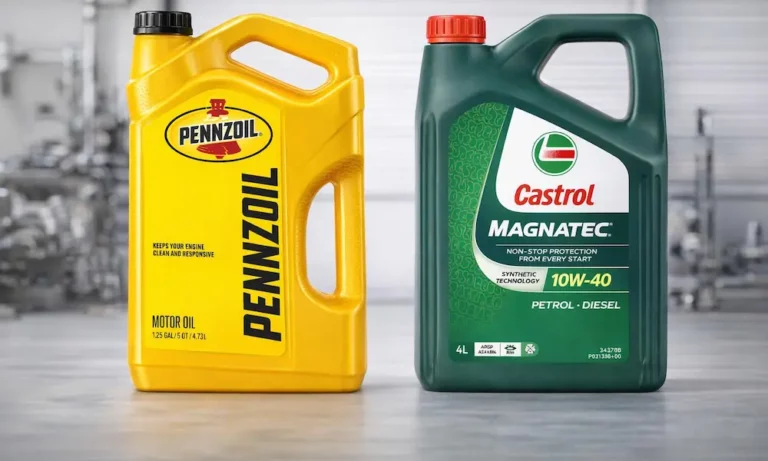
You’re staring at the motor oil shelf, trying to choose between Pennzoil and Castrol. Both claim they’re the best. Both have “full synthetic” plastered on the bottle. And both cost about the same. So what’s the real difference? Let’s cut through the marketing and look at what actually goes into your engine.
What Makes These Oils Different
The biggest difference between Pennzoil vs Castrol isn’t on the label—it’s in how they’re made.
Pennzoil’s Gas-to-Liquid Technology
Pennzoil Platinum and Ultra Platinum use what they call PurePlus technology. Instead of starting with crude oil, they convert natural gas into liquid base oil through a process called Fischer-Tropsch synthesis.
This creates extremely pure base oil. You won’t find sulfur, nitrogen, or the random impurities that sneak through traditional refining. The molecules are uniform isoparaffins—basically, they’re all the same size and shape.
What does that mean for your car? The oil flows faster when it’s cold and stays thicker when it’s hot. It also evaporates less, which matters if you’ve got a direct-injection engine prone to gunked-up intake valves.
Castrol’s Titanium-Reinforced Approach
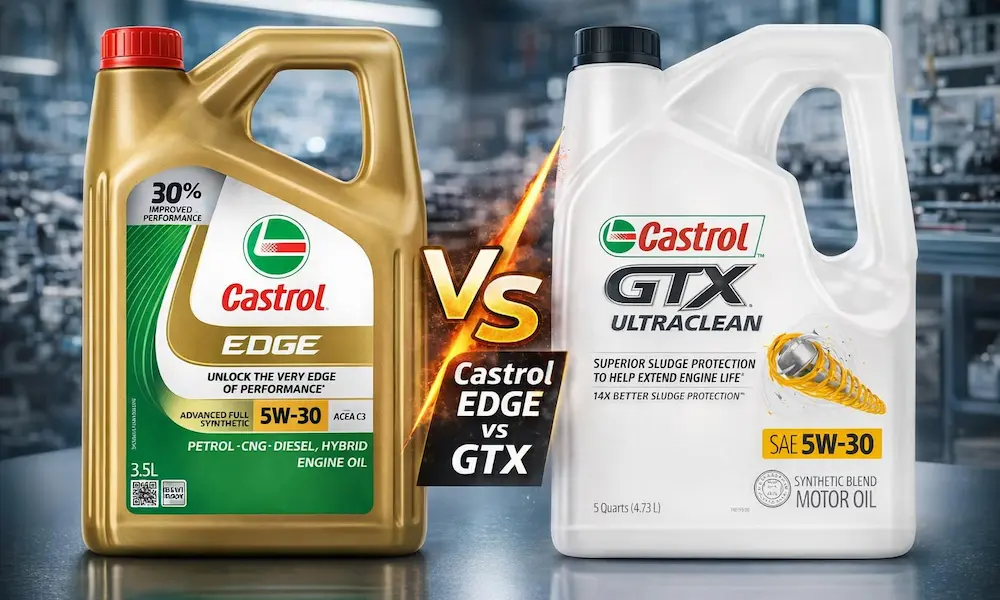
Castrol EDGE takes a different path. They start with highly refined Group III petroleum base oil (the same stuff most “synthetics” use after that famous lawsuit in the 1990s).
Their secret weapon? Fluid Titanium Technology. It’s not marketing fluff—oil analysis shows titanium levels between 20-50 parts per million in EDGE formulas. Under extreme pressure, these titanium compounds strengthen the oil film to prevent metal-to-metal contact.
Think of it this way: Pennzoil wins on purity. Castrol wins on muscle.
How They Perform in Cold Weather
If you live where winter actually means something, this matters.
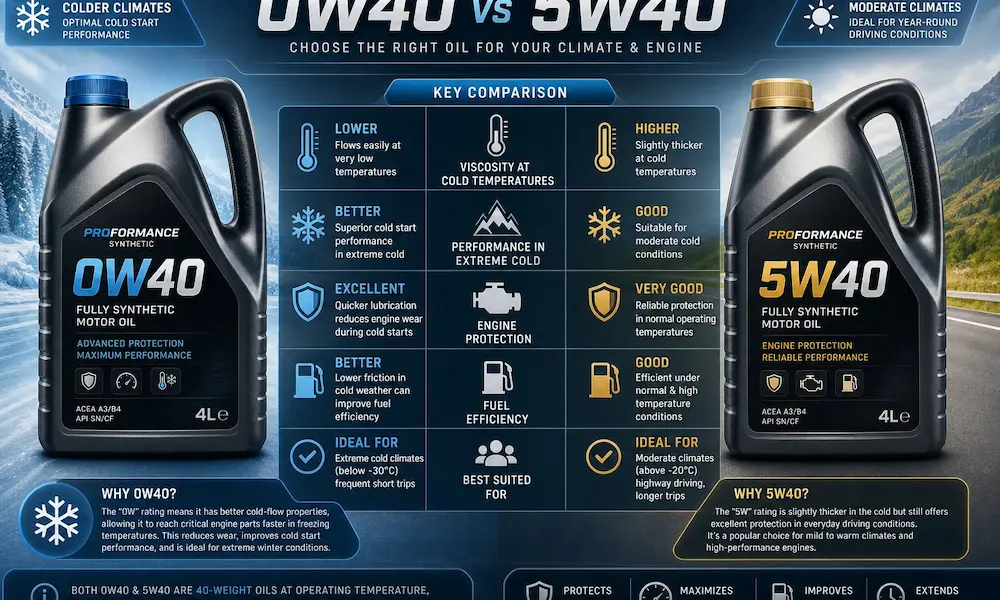
Pennzoil’s gas-to-liquid base oil has a natural advantage here. In independent testing by Project Farm, Pennzoil Platinum flowed significantly faster at -40°F than competitors. The oil reached critical engine parts quicker, which reduces that brutal startup wear.
Castrol EDGE performs fine—it meets all the SAE cold-flow requirements for its grade. But in head-to-head freezer tests, it doesn’t match Pennzoil’s extreme fluidity.
Winner for cold climates: Pennzoil
Which Oil Protects Against Wear Better?
Here’s where the pendulum swings back.
Castrol’s Fluid Titanium technology shines under high loads and shear stress. In wear testing involving metal pins grinding against spinning wheels, Castrol consistently outperforms most competitors in preventing metal scarring.
Pennzoil relies heavily on molybdenum—typically 70-200 ppm in their formulas. Molybdenum is excellent at reducing friction (which helps fuel economy), but Castrol’s titanium-reinforced film appears to offer superior protection when things get brutal.
If you drive a turbocharged car hard, tow heavy loads, or own a performance vehicle, that extra film strength matters.
Winner for protection under stress: Castrol
The Oil Consumption Debate
There’s a persistent internet myth that Pennzoil “burns more” than Castrol.
The data doesn’t support this. NOACK volatility testing shows Pennzoil Platinum 5W-20 loses 8.2% of its mass when heated. Castrol EDGE 5W-20 loses 8.8%. Both are well below the 15% API limit, but Pennzoil actually resists evaporation better.
So why do some people report burning more Pennzoil? Viscosity.
Pennzoil tends to blend their oils toward the thinner end of the allowable range to maximize fuel economy. Castrol formulas often run slightly thicker within the same grade. In older engines with worn piston rings, that thicker oil may slip past less easily—even though it technically evaporates more.
Engine Cleanliness: Who Keeps It Cleaner?
Pennzoil Ultra Platinum has built a reputation as the king of clean.
Their detergent package is aggressive. Owners running Pennzoil exclusively often report exceptionally clean valve covers and pistons during teardowns. Pennzoil claims Ultra Platinum keeps pistons up to 65% cleaner than industry standards.
Castrol focuses more on preventing sludge from forming in the first place rather than actively scrubbing it away. It works, but if you’ve got an engine with existing varnish or you bought a car with questionable maintenance history, Pennzoil will clean it better over a few oil changes.
Winner for cleaning gunked-up engines: Pennzoil
Product Lines: What You Actually Need
Both companies make several tiers. Here’s what matters:
| Product | Type | Best For |
|---|---|---|
| Pennzoil Platinum | Full synthetic GTL | Daily drivers, cold climates, modern engines |
| Pennzoil Ultra Platinum | Premium GTL | High-performance engines (factory fill for Hellcat/Viper) |
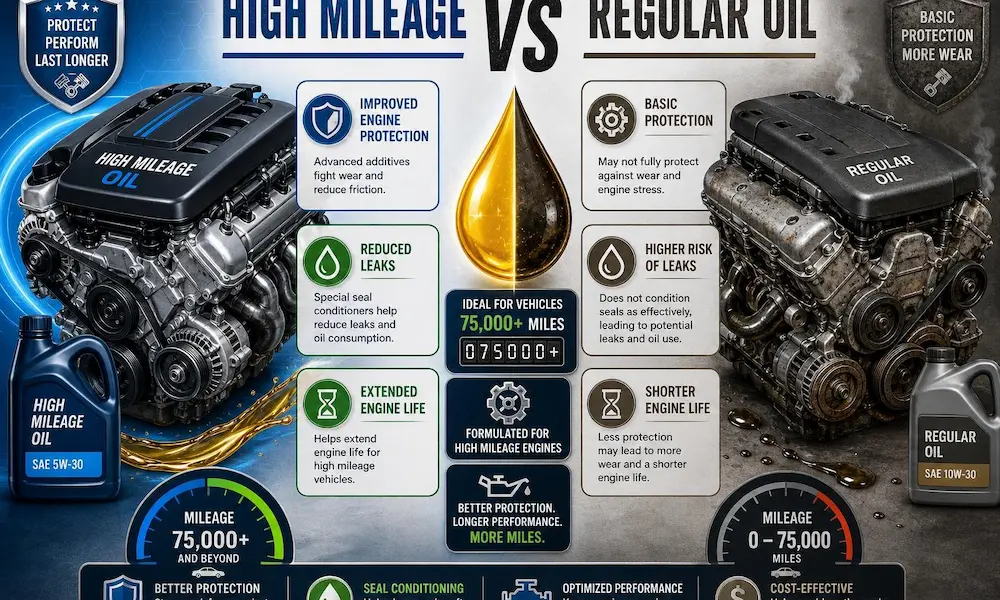
| Pennzoil Platinum High Mileage | GTL with seal conditioners | Vehicles over 75,000 miles |
| Castrol EDGE | Full synthetic | Performance cars, turbos, high-stress driving |
| Castrol EDGE Extended Performance | Long-drain synthetic | 20,000-mile intervals |
| Castrol EDGE High Mileage | Phosphorus-optimized | High-mileage cars that burn oil |
The European Car Exception
If you own a BMW, Volkswagen, Mercedes, or Porsche, pay attention here.
You need oil that meets specific European OEM approvals—BMW LL-01, MB 229.5, VW 502.00/505.00. Both brands make “Euro” formulas that carry these specs.
The catch? Castrol EDGE Euro (0W-40, 5W-40) is on shelves at Walmart and AutoZone. Pennzoil Platinum Euro exists and it’s excellent, but good luck finding it without ordering online.
Winner for European cars: Castrol (availability wins)
High-Mileage Formulas: A Special Case
Both brands make high-mileage versions with seal conditioners. But they take different approaches.
Pennzoil Platinum High Mileage maintains the GTL base oil, so you still get excellent cold-flow and cleaning power. It adds seal-swelling agents to stop leaks in aging gaskets.
Castrol EDGE High Mileage uses what they call Phosphorus Replacement Technology. High-mileage engines often burn oil. When oil burns, zinc and phosphorus go out the exhaust and poison catalytic converters. Castrol’s formula tries to maintain wear protection while reducing catalyst damage.
If your engine leaks, choose Pennzoil. If it burns oil through the rings, choose Castrol.
Price and Rebates: The Real Cost
Let’s talk money because oil changes add up.
Pennzoil runs aggressive rebate programs—often $20-25 back on a 5-quart jug that costs about $24 at Walmart. Do the math and you’re basically getting premium synthetic for free during promotion windows.
Castrol counters with retailer-specific promotions through O’Reilly and AutoZone, typically offering $10-15 gift cards. Good, but not as aggressive as Pennzoil’s national campaigns.
However, Castrol maintains better stock of specialty viscosities. Need 0W-40 or 10W-60? You’ll find Castrol. Pennzoil’s exotic grades require hunting.
What Independent Testing Actually Shows
When Project Farm put oils through tournament-style testing, Pennzoil Ultra Platinum reached the finals based on cold flow, wear protection, and volatility resistance.
Castrol EDGE performed well—particularly in the wear tests—but Pennzoil’s extreme cold-weather performance pushed it ahead in the overall rankings.
That said, we’re splitting hairs here. Both oils massively exceed what your engine actually requires. The difference between them matters most in extreme conditions or specific use cases.
Which One Should You Buy?
Here’s the straight answer based on your situation:
Choose Pennzoil Platinum if you:
- Live in a cold climate
- Drive a modern direct-injection engine
- Want maximum fuel economy
- Need to clean up a neglected engine
- Found a killer rebate deal
Choose Castrol EDGE if you:
- Drive a turbocharged or performance car hard
- Own a European vehicle (BMW, VW, Mercedes, Porsche)
- Tow or haul regularly
- Have a high-mileage engine that burns oil
- Can’t find Pennzoil in the viscosity you need
For most daily drivers? Honestly, flip a coin. Both oils will protect your engine far beyond what it needs when you change them at reasonable intervals (5,000-7,500 miles). The “best” oil is the one you’ll actually change on time.
The Pennzoil vs Castrol debate gets heated online, but it’s mostly enthusiasts arguing over differences that won’t matter in a Toyota Camry running errands. Save your energy for making sure you don’t skip oil changes—that matters way more than the brand on the bottle.