You’re staring at rows of motor oil bottles, wondering if spending double on Amsoil actually makes sense. The hype is loud, the marketing claims are bold, and your wallet’s getting nervous. Let’s cut through the noise with data, not sales pitches, to figure out which oil deserves a spot in your engine.
The Real Difference Between Amsoil and Mobil 1
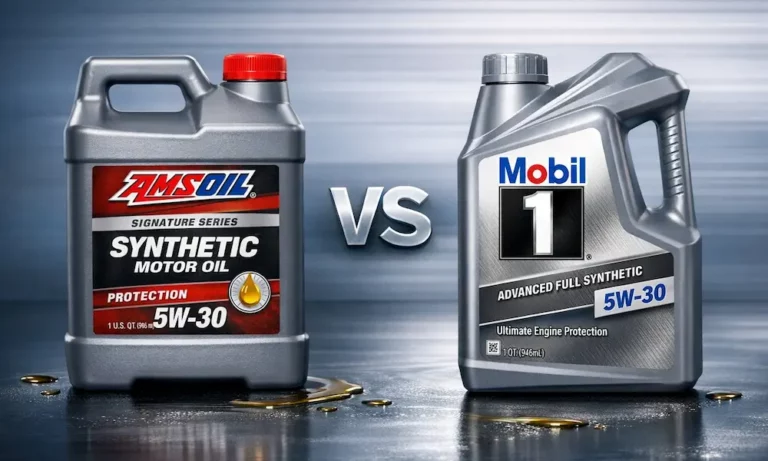
Here’s the truth: both oils are excellent, but they’re built for different missions.
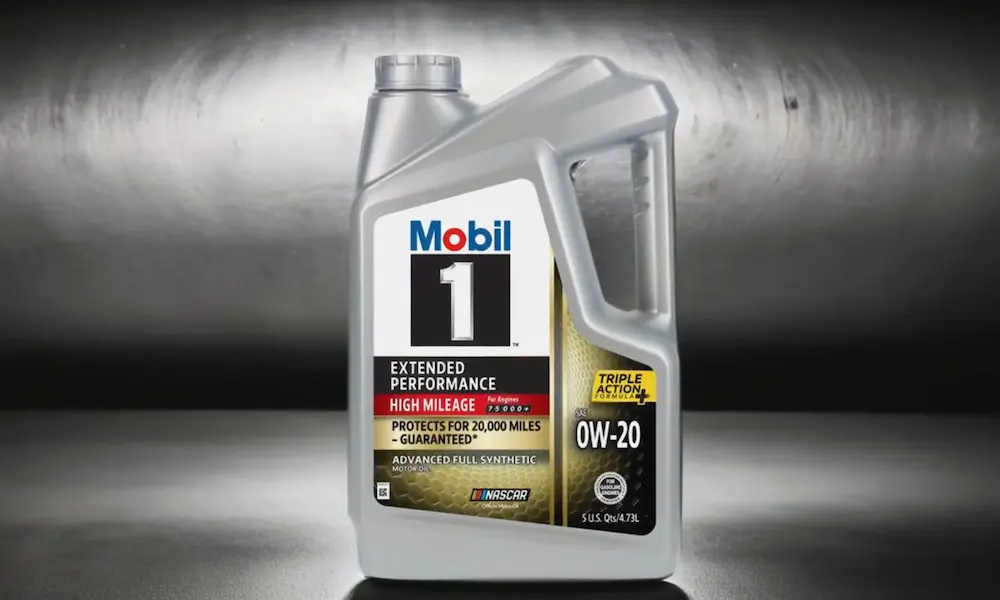
Mobil 1 Extended Performance follows the rules. It’s API-licensed, carries every major manufacturer’s approval, and delivers exceptional protection at a price that won’t make you wince. You’ll find it at Walmart for around $30 per 5-quart jug.
Amsoil Signature Series breaks the rules—on purpose. It skips API licensing to pack in more protective additives than regulations technically allow. You’re paying roughly $60-$85 for that same 5 quarts (depending on membership status and shipping).
The question isn’t “which is better?” It’s “which engineering philosophy matches your needs?”
What’s Actually Inside These Bottles
Base Oil Chemistry: The Foundation That Matters
Motor oil performance starts with base stocks. Think of it like building a house—you can’t fix a weak foundation with fancy paint.
Mobil 1’s approach uses ExxonMobil’s proprietary blend:
- Group IV PAOs (Polyalphaolefins) for cold-weather flow
- Group III+ hydro-processed oils from their advanced Visom technology
- Alkylated Naphthalenes (Group V synthetics) for thermal stability
This “triple synthetic” formula keeps costs manageable while delivering serious performance.
Amsoil’s approach goes old-school synthetic:
- Heavy concentration of Group IV PAO
- Group V Esters that chemically bond to metal surfaces
- Minimal Group III content
Those esters are expensive but act like molecular magnets. They stick to engine parts even when the oil drains down, providing protection during cold starts when most engine wear happens.
Why This Matters to Your Engine
PAO molecules are uniform in size. Mineral oils and even Group III synthetics contain a mix of molecule sizes—the small ones evaporate easily. That’s why Amsoil’s NOACK volatility test shows only 6.7% weight loss compared to Mobil 1’s 9-10%.
For modern turbocharged GDI engines, this isn’t trivial. Oil vapors that evaporate through the PCV system bake onto intake valves, creating carbon deposits that choke airflow. Lower volatility means less coking.
Cold Weather Performance: The Arctic Test
If you live where winter actually means something, this section matters.
Pour point comparison:
- Amsoil flows at -50°C (-58°F)
- Mobil 1 flows at -40°C (-40°F)
Cold Cranking Simulator results:
- Amsoil: 3,968 cP at -30°C
- Mobil 1: 4,930 cP at -30°C
Lower numbers mean easier cranking and faster oil pressure buildup. That 20% difference translates to your engine building protective oil pressure about one second faster on a frigid morning.
Independent cold-flow tests consistently show Amsoil outperforming Mobil 1 in sub-zero conditions. If you’re in Canada, Alaska, or the northern states, Amsoil’s advantage here is measurable and meaningful.
The Additive Package War
Here’s where things get spicy.
Total Base Number (TBN): Acid-Fighting Reserves
TBN measures an oil’s ability to neutralize combustion acids. Once TBN depletes, acids start corroding your engine.
| Oil | Starting TBN | Advantage |
|---|---|---|
| Amsoil Signature Series | 12.5 | 28% more alkaline reserve |
| Mobil 1 Extended Performance | ~8.0-9.0 | Industry standard |
That massive TBN buffer is how Amsoil justifies 25,000-mile drain intervals versus Mobil 1’s 20,000 miles. But TBN retention matters as much as the starting number—oil analysis data shows Amsoil’s TBN depletes more slowly over time.
The API Licensing Controversy
Mobil 1 carries full API SP and ILSAC GF-6A certification. That starburst symbol on the bottle means zero warranty hassles. Dealers can’t give you grief.
Amsoil doesn’t seek API licensing. They claim to “meet or exceed” specifications but skip certification to use additive concentrations that exceed regulatory limits.
What this means practically:
Mobil 1 must limit phosphorus to ~800 ppm to protect catalytic converters per API rules. Amsoil reportedly runs higher phosphorus (from ZDDP anti-wear additives) but argues their lower volatility prevents phosphorus from reaching the catalyst.
It’s a calculated gamble. Amsoil backs it with their own limited warranty, and the Magnuson-Moss Warranty Act protects you—manufacturers must prove the oil caused damage to deny claims. But you might face dealership pushback.
Protection Under Extreme Conditions
Turbocharger Survival
Modern turbos spin at 150,000+ RPM and glow red-hot. Oil coking in the bearing cartridge kills turbos.
Amsoil claims to protect turbochargers 72% better than GM dexos1 Gen 2 requirements. That 6.7% NOACK volatility is the secret—less oil bakes onto the turbo shaft during heat soak after shutdown.
Mobil 1 advertises 20X better heat protection up to 500°F, which is excellent. But independent GM Turbo Coking Tests suggest Amsoil edges ahead in preventing deposits.
Winner for turbo protection: Amsoil, by a technical margin.
High-Temperature Film Strength
High-Temperature/High-Shear (HTHS) viscosity measures oil thickness under extreme load and heat—think main bearings during hard acceleration.
- Amsoil HTHS: 3.11 cP
- Mobil 1 HTHS: ~3.0 cP
Amsoil maintains a thicker protective film under torture. Mobil 1 targets the ILSAC minimum to maximize fuel economy. It’s a philosophical split: Amsoil prioritizes protection, Mobil 1 balances protection with efficiency standards.
Wear Protection Reality Check
Amsoil heavily markets four-ball wear test results where they produce smaller wear scars than Mobil 1. Critics argue this test doesn’t perfectly simulate engine conditions—it measures boundary lubrication under steady sliding contact, not the complex hydrodynamic regimes inside an engine.
Mobil 1 counters that actual API Sequence engine tests matter most. Both oils pass these with flying colors.
Real talk: For normal driving, both provide more than adequate wear protection. Amsoil’s edge appears in worst-case scenarios—severe overheating, shock loading, or neglected drain intervals.
Cleaning Power and Engine Deposits
Mobil 1’s “Active Cleaning Agents” claim to remove sludge in one oil change. The high dispersant content in their Triple Action formula keeps contaminants suspended.
Amsoil advertises 50% more cleaning power versus their own OE line. Those Group V esters act as natural solvents, dissolving varnish and sludge precursors.
For remediation of neglected engines, Amsoil’s solvent action may work faster. For maintaining already-clean engines, it’s a draw.
The LSPI Problem in Turbocharged Engines
Low-Speed Pre-Ignition is catastrophic—the fuel-air mixture ignites prematurely, destroying pistons. Research fingered calcium-based detergents as triggers.
The industry shifted to magnesium or hybrid detergents. Mobil 1, being fully API SP licensed, strictly adheres to formulations proven safe against LSPI.
Amsoil, despite that massive 12.5 TBN (traditionally associated with high calcium), claims 100% LSPI protection. This suggests sophisticated additive chemistry—they’ve apparently balanced high alkalinity without the calcium levels that trigger pre-ignition.
Both oils are safe for modern turbo engines.
Cost Analysis: The Uncomfortable Truth
Let’s do math for a driver averaging 15,000 miles annually.
Mobil 1 Extended Performance Scenario
- Oil: $30 (5 qts at Walmart)
- Quality filter: $10
- Frequency: Once yearly (20k-mile rating)
- Annual cost: $40
Amsoil Signature Series Scenario
- Oil: $60 (5 qts, Preferred Customer pricing)
- Amsoil EA filter: $15
- Shipping: ~$10
- Frequency: Once yearly (25k-mile rating)
- Annual cost: $85
Economic verdict: You’re paying 112% more for Amsoil to get roughly 10-20% better performance in specific metrics.
Is it worth it? Depends on your engine’s replacement cost. For a $3,000 used Corolla? Probably not. For a $40,000 turbocharged BMW? The insurance against wear might justify the premium.
Independent Lab Testing Results
The Petroleum Quality Institute of America confirms both oils meet labeled specifications consistently. No quality control issues, no surprises.
Third-party torture tests show:
- Amsoil wins cold-flow challenges decisively
- Wear protection differences are narrow in lubricity tests
- Both oils perform exactly as their data sheets suggest
Specific Application Recommendations
You Should Choose Mobil 1 If:
- Your vehicle is under factory warranty
- You want zero dealership friction on coverage
- You value widespread availability (road trips, emergencies)
- You’re cost-conscious but still want premium protection
- You drive a mainstream vehicle with normal service
Best for: Daily drivers, fleet vehicles, anyone who values practical economics over maximum technical performance.
You Should Choose Amsoil If:
- You own a high-performance or turbocharged engine
- You live in extreme cold climates (regular sub-zero temps)
- You push extended drain intervals to 20k+ miles
- You want maximum insurance against wear, regardless of cost
- You drive a vehicle with known GDI carbon buildup issues
Best for: Enthusiasts, expensive engines, severe-service applications, extreme conditions.
The Technical Performance Breakdown
Here’s how they compare head-to-head on critical specs (5W-30 grade):
| Property | Amsoil Signature | Mobil 1 EP | Winner |
|---|---|---|---|
| Pour Point | -50°C | -40°C | Amsoil |
| NOACK Volatility | 6.7% | 9-10% | Amsoil |
| TBN (Alkalinity) | 12.5 | ~8-9 | Amsoil |
| Cold Crank Viscosity | 3,968 cP | 4,930 cP | Amsoil |
| HTHS Film Strength | 3.11 cP | ~3.0 cP | Amsoil |
| Flash Point | 220°C | 235°C | Mobil 1 |
| Viscosity Index | 162 | 168 | Mobil 1 |
| API Licensing | No | Yes | Mobil 1 |
| Cost per quart | ~$12-15 | ~$6 | Mobil 1 |
Amsoil wins most technical performance metrics. Mobil 1 wins practical considerations like licensing, availability, and cost.
What Oil Analysis Data Reveals
User Oil Analysis (UOA) communities consistently show:
Amsoil users report:
- TBN retention above 8.0 even at 15k miles
- Minimal fuel dilution in GDI engines
- Excellent wear metals (iron, chromium, aluminum) readings
- Viscosity stays in grade throughout drain interval
Mobil 1 users report:
- Solid TBN retention (typically 5-6 at 10k miles)
- Good wear protection in normal service
- Occasional viscosity shearing in high-stress applications
- Consistent performance batch-to-batch
Neither oil shows red flags. The difference is in the margins.
The Warranty Question Settled
Using Amsoil won’t void your warranty under the Magnuson-Moss Warranty Act. Manufacturers must prove the oil caused damage.
However, reality at the dealership level can differ. Service advisors may flag non-API oils and create hassles. You might need to push back and cite federal law.
Mobil 1 eliminates this friction entirely. That starburst is your shield.
Modern Engine Challenges
GDI Carbon Deposits
Gasoline Direct Injection engines don’t wash intake valves with fuel anymore. Oil vapors from the crankcase bake onto hot valves, creating carbon buildup that restricts airflow.
Amsoil’s 6.7% NOACK volatility directly reduces the amount of oil vapor entering the intake tract. Less vapor = slower carbon accumulation.
For known problem engines (certain VW, Audi, BMW, Hyundai models), this advantage is tangible.
Turbo Longevity
Replacing a turbo costs $1,500-$3,000. Amsoil’s superior thermal stability and low volatility provide measurable protection against bearing coking.
Is it worth the oil premium? If it extends turbo life by even 20,000 miles, you’ve saved far more than the extra $45/year you spent on oil.
What Changed With API SP and ILSAC GF-6
The latest specifications address:
- LSPI prevention (magnesium-based detergents)
- Lower HTHS minimums for fuel economy
- Stricter phosphorus limits for catalyst protection
- Pre-ignition resistance in small turbo engines
Mobil 1 formulated strictly within these boundaries. Amsoil formulated to what they consider optimal performance, exceeding additive limits while claiming their low volatility prevents catalyst poisoning.
Why Mobil 1 Annual Protection Failed
Mobil 1 tried competing directly with Amsoil’s premium pricing with their Annual Protection line at ~$50/jug. It flopped commercially.
Mass-market consumers wouldn’t pay boutique prices at a retail shelf. The product was technically sound but commercially misjudged. Mobil 1 learned their customers value value—so they rolled 20,000-mile capability into Extended Performance at the $30 price point.
This makes Mobil 1 EP arguably the best performance-per-dollar value in synthetic oil today.
The Oxidation Resistance Test
In the Sequence IIIH Engine Test, oil faces high temperatures and viscosity increase is measured.
Amsoil claims to limit viscosity increase to just 0.1%, while standards allow 150% thickening before failure. That’s 46% better oxidation resistance than required.
This extreme resistance to thickening proves Amsoil can genuinely handle extended drains without breaking down.
Mobil 1 performs well within standards but doesn’t advertise the same margin of safety.
Real-World Durability Stories
Both oils have powered engines past 300,000 miles with clean internals. Neither is a bad choice.
The failures attributed to either oil typically involve:
- Missed drain intervals (going 30k+ miles)
- Severe contamination (coolant leaks, fuel dilution)
- Manufacturing defects unrelated to lubrication
Modern synthetic oils are so good that neglect—not oil choice—causes most engine failures.
The Environmental Consideration
Lower volatility means less oil consumption. Engines burning less oil produce fewer emissions.
Amsoil’s 6.7% NOACK means less oil escapes into the combustion chamber and out the tailpipe compared to oils at 10-11% volatility.
For environmentally-conscious drivers, this is a legitimate consideration.
Extended drain intervals also mean fewer oil changes, reducing waste oil generation and packaging waste.
Who’s Right About Synthetic Definitions?
Technically, both companies are correct in calling their products synthetic:
- Mobil 1 uses highly processed Group III+ alongside PAO
- Amsoil uses primarily PAO and Esters
The legal definition allows Group III to be called synthetic. Whether you personally accept that definition is philosophical.
What matters: both formulations deliver synthetic performance in thermal stability, cold flow, and oxidation resistance far beyond conventional mineral oils.
The Bottom Line on Amsoil vs Mobil 1
Mobil 1 Extended Performance is the pragmatist’s choice. It delivers 90-95% of Amsoil’s performance for half the cost, carries full industry certifications, and is available everywhere. For most drivers, it’s the smarter economic decision.
Amsoil Signature Series is the purist’s choice. It wins nearly every technical comparison—cold flow, volatility, TBN, film strength. If you demand absolute maximum protection and cost isn’t the primary concern, Amsoil delivers.
Neither oil will disappoint. Your engine will outlive your ownership with either choice.
The real winner? Whichever oil you actually change on schedule.