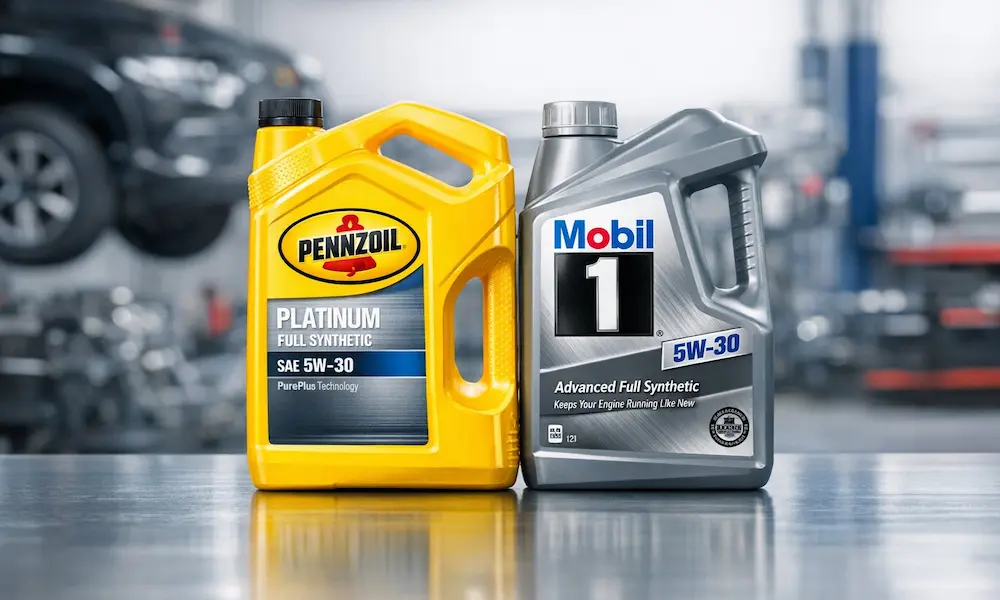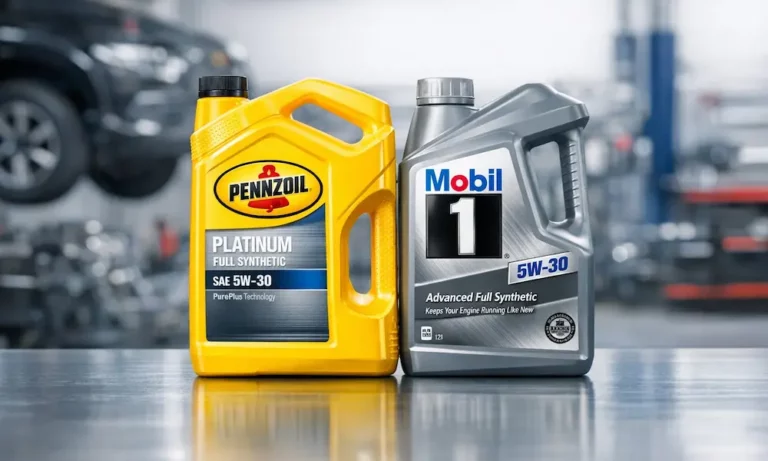
You’re staring at the oil aisle, wallet in hand, trying to figure out which synthetic oil won’t let you down. Pennzoil promises purity. Mobil 1 claims strength. Both cost about the same. This guide cuts through the marketing noise and shows you what actually matters for your engine.
What Makes These Oils Different From Each Other
The biggest difference between Pennzoil and Mobil 1 isn’t the label—it’s how they’re made.
Mobil 1 helped create the synthetic oil category back in the 1970s using Polyalphaolefin (PAO) base stocks. PAO is made by taking crude oil and engineering it at the molecular level. The result? A consistent fluid that works in extreme temps where regular oil would freeze or break down.
Pennzoil took a completely different route with their PurePlus technology. Instead of starting with crude oil, they use natural gas. Through a process called Gas-to-Liquid (GTL), they convert methane into synthetic base oil that’s 99.5% pure. No sulfur. No aromatics. Just clean hydrocarbons.
Think of it this way: Mobil 1 takes crude oil and cleans it up really well. Pennzoil builds their oil molecule by molecule from scratch.
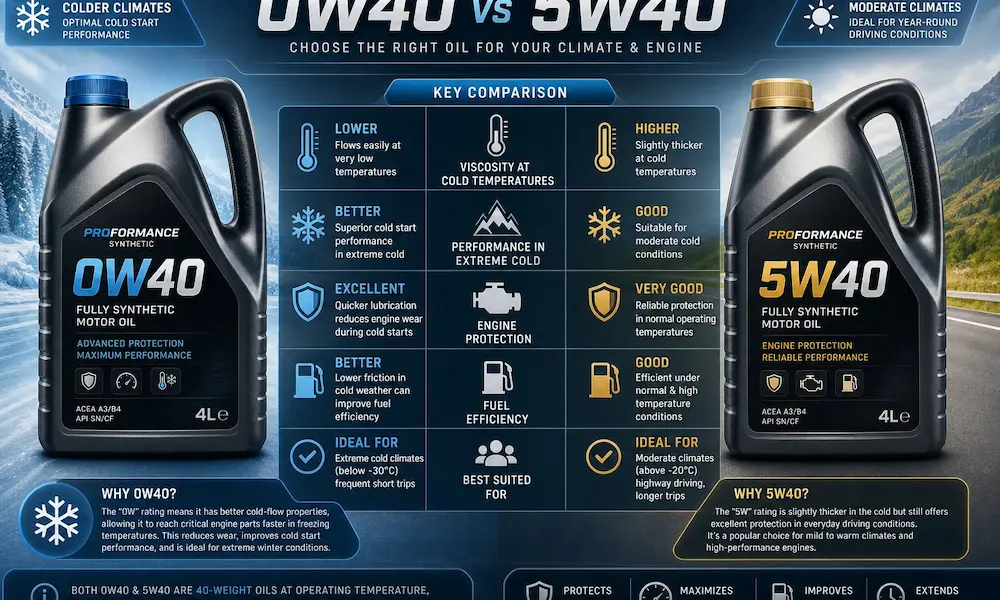
How Each Oil Handles Temperature Extremes
Your oil needs to flow fast when it’s freezing and stay thick when it’s scorching. That’s where viscosity comes in.
Both brands meet the same SAE grades (like 5W-30), but they get there differently. Here’s what the lab numbers show for 5W-30 formulas:
| Temperature Test | Pennzoil Platinum | Mobil 1 Advanced |
|---|---|---|
| Pour Point | -48°C | -39°C to -45°C |
| Cold Crank @ -30°C | 4,000 cP | 4,198 cP |
| Viscosity @ 100°C | 10.3 cSt | 10.3 to 11.1 cSt |
| Viscosity Index | 170 | 157 to 167 |
Pennzoil’s GTL base gives it a higher viscosity index, meaning it changes less as temps swing. That -48°C pour point? That’s exceptional. Your engine gets oil flowing to critical parts faster on brutal winter mornings.
Mobil 1 runs slightly thicker at operating temp. If your engine has worn seals or looser tolerances, that extra cushion can help maintain oil pressure.
The Additives That Actually Protect Your Engine
Base oil is 75-90% of what’s in the bottle. The rest is additives—and this is where things get technical but important.
Modern turbocharged engines face a problem called Low-Speed Pre-Ignition (LSPI). It can literally crack your pistons. The industry figured out that too much calcium detergent was triggering it, so both oils switched to more magnesium-based formulas.
Here’s the additive breakdown:
| Element | What It Does | Pennzoil Platinum | Mobil 1 Advanced |
|---|---|---|---|
| Zinc (ZDDP) | Anti-wear protection | 715 ppm | 950 ppm |
| Phosphorus | Works with zinc | 627 ppm | 831 ppm |
| Boron | Keeps crud suspended | 263-310 ppm | 102-184 ppm |
| Molybdenum | Reduces friction | 80-86 ppm | 85-110 ppm |
Mobil 1 packs more ZDDP, the primary anti-wear agent that forms a protective film on metal surfaces under high pressure. That’s your camshaft and lifter protection right there.
Pennzoil compensates with higher boron levels, which keeps contaminants floating in the oil instead of sticking to your engine parts. It also acts as a secondary anti-wear agent.
Which Oil Keeps Your Engine Cleaner
Oil breaks down over time. It also evaporates, leaving behind thick sludge that chokes your engine.
The NOACK Volatility test measures how much oil evaporates when heated. Lower is better. Pennzoil Platinum typically scores around 10.1%, while Mobil 1 ranges from 8.1% to 11.6% depending on the specific formula.
Both crush the 15% maximum allowed by industry standards.
For piston cleanliness, Pennzoil makes a bold claim: their Ultra Platinum keeps pistons up to 65% cleaner than the toughest industry test. That matters because carbon buildup in the ring lands causes compression loss and oil burning.
Mobil 1 counters with their Triple Action Formula, showing 90% cleaner pistons in Sequence VG testing. Both oils will keep a modern engine clean if you change them on schedule.
Film Strength: The Pressure Test
When your camshaft pushes down on a lifter, pressures get extreme. The oil needs to resist being squeezed out completely.
Independent testing found something interesting: Mobil 1 Advanced Full Synthetic measured 117,799 psi film strength, while Pennzoil Platinum came in at 99,949 psi. That’s an 18% advantage for Mobil 1.
Does that mean Mobil 1 is better? Not necessarily. Film strength is one metric among many. Pennzoil’s cleaner base oil might prevent the wear that happens slowly over time, while Mobil 1’s tougher film handles momentary extreme pressure better.
What Car Manufacturers Actually Approve
Your owner’s manual lists specific certifications your oil must meet. Both brands exceed API SP and ILSAC GF-6A standards, which cover wear protection, fuel economy, and sludge prevention.
For GM’s strict dexos1 Gen 3 specification, both Pennzoil Platinum and Mobil 1 Advanced carry official licenses. Same goes for Chrysler MS-6395, Ford WSS-M2C946-A, and Honda HTO-06 approvals.
Pennzoil Ultra Platinum is specifically recommended for Dodge SRT engines and Hennessey Performance builds. Mobil 1 serves as factory fill for Porsche and Mercedes-AMG globally.
Translation: Either oil meets your car’s requirements unless you’re running something exotic.
How Long You Can Go Between Changes
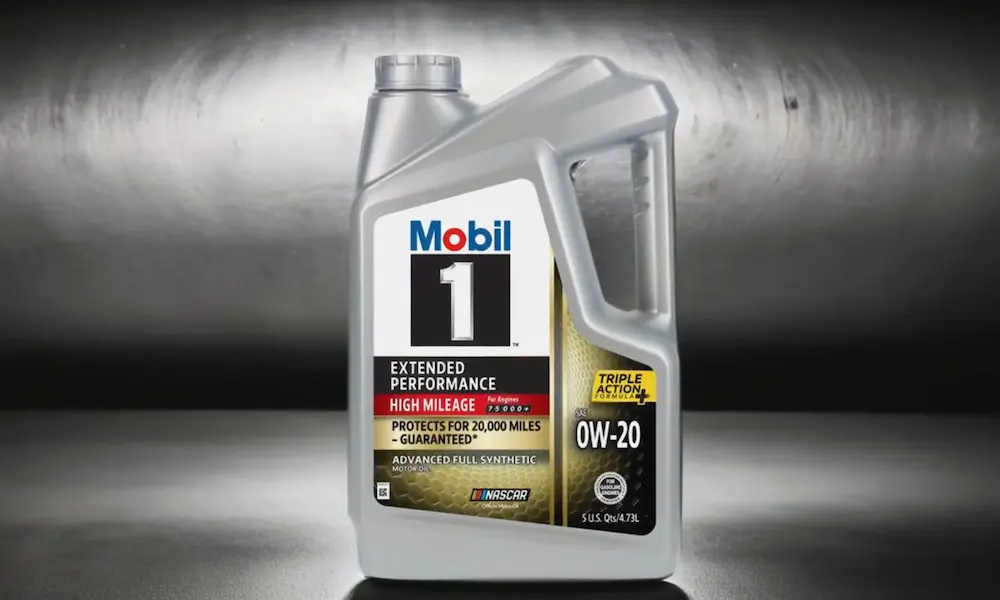
Mobil 1 Extended Performance guarantees 20,000 miles or one year, whichever comes first. Pennzoil Platinum guarantees 15,000 miles.
But here’s the catch: both offer 15-year/500,000-mile warranties if you follow your manufacturer’s service interval, which might be 7,500 miles. So the extended drain is only useful if your car’s oil life monitor actually lets you go that long.
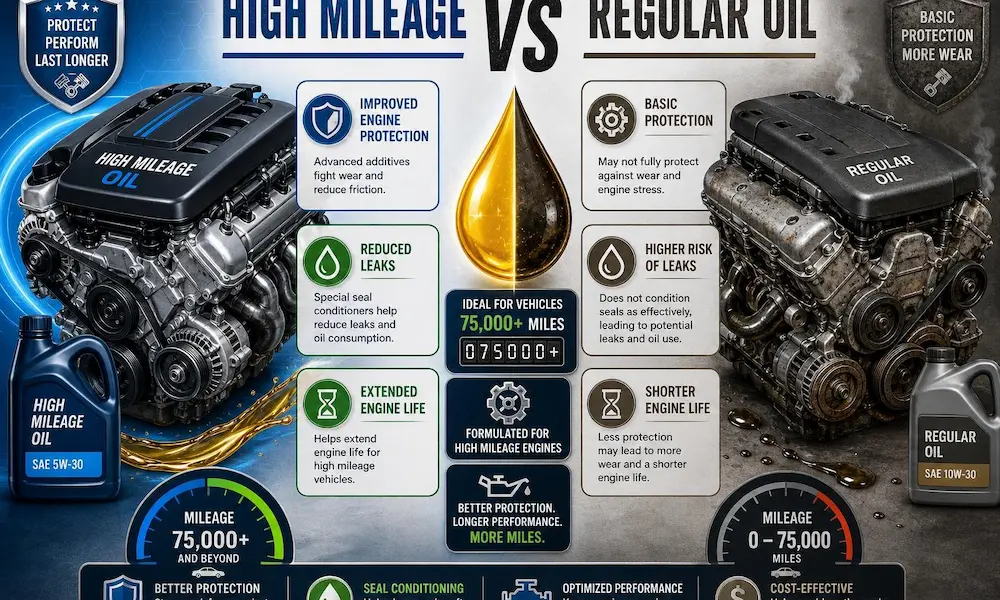
In construction equipment running 500-hour intervals, Mobil 1 High Mileage showed 68% less bearing wear and 72% lower ring wear compared to conventional oil. That translated to $18,000 saved per machine annually through delayed overhauls.
If you’re running extended drains, Mobil 1 has more field data backing up its longevity claims.
What Real-World Testing Shows
Used oil analysis from community forums like Bob Is The Oil Guy reveals what happens inside actual engines.
Users switching from Mobil 1 0W-20 to Pennzoil Ultra Platinum 5W-30 in Chevy V8s reported lower iron and copper wear metals in lab tests. That suggests less internal friction and wear.
Other users note their engines sound “quieter” or “smoother” on Pennzoil. That’s likely due to the GTL base’s different friction properties and higher boron content.
On the flip side, some drivers report Mobil 1 burns off faster in certain engines. This could relate to volatility differences between specific viscosity grades or how the oil interacts with cylinder wall surfaces.
Independent testing by Project Farm consistently ranks Pennzoil Ultra Platinum in the top tier for wear protection and cold-flow performance, often second only to boutique brands like Amsoil.
What You’ll Pay at the Store
At Walmart, a 5-quart jug of Pennzoil Ultra Platinum 0W-20 runs about $40. Mobil 1 Extended Performance in the same grade costs closer to $55.
That price gap narrows during sales. Both brands frequently run rebates that can drop per-quart costs by $5-10.
| Product Tier | Pennzoil | Mobil 1 | Typical 5-Qt Price |
|---|---|---|---|
| Entry Synthetic | Platinum | Advanced Full Synthetic | $26-$32 |
| Premium Synthetic | Ultra Platinum | Extended Performance | $35-$45 |
If you’re doing 7,500-mile changes, Pennzoil offers better value per dollar. If you’re pushing 15,000-20,000 miles, Mobil 1’s higher upfront cost gets offset by fewer oil changes, filters, and labor.
The Future: Ultra-Low Viscosity Oils
The industry is moving toward 0W-16 and even 0W-8 grades to meet fuel economy standards. Both brands are already releasing products for the upcoming ILSAC GF-7 specification.
Pennzoil’s GTL technology has an advantage here. The naturally high viscosity index of their base stock means they can make ultra-thin oils that still protect like thicker grades at high temps.
Mobil 1’s SuperSyn technology ensures their thin oils maintain film strength even when the protective layer is only microns thick.
Making the Right Choice for Your Engine
Here’s the bottom line without the fluff.
Choose Pennzoil if you:
- Live in extremely cold climates where winter temps drop below -30°F
- Want the cleanest possible internal engine condition
- Follow manufacturer-recommended change intervals (7,500-10,000 miles)
- Prefer slightly lower upfront cost
Choose Mobil 1 if you:
- Run extended drain intervals monitored by your car’s oil life system
- Drive a high-performance or turbocharged engine under heavy load
- Want the oil with the longest proven track record in racing and OEM partnerships
- Need maximum film strength for high-mileage engines with wear
For a typical modern car running normal oil change intervals, either oil provides protection that exceeds what your engine actually needs. As long as the bottle shows API SP certification and your car’s specific approval (like dexos1 Gen 3 for GM vehicles), you’re covered.
The real mistake isn’t choosing between Pennzoil and Mobil 1. It’s using cheap conventional oil or running synthetic way past its service life. Both these synthetics represent the top tier of what’s commercially available. Your engine won’t know the difference between them as long as you change the oil when you’re supposed to.
Pick the one that’s on sale when you need it. Your engine will thank you either way.