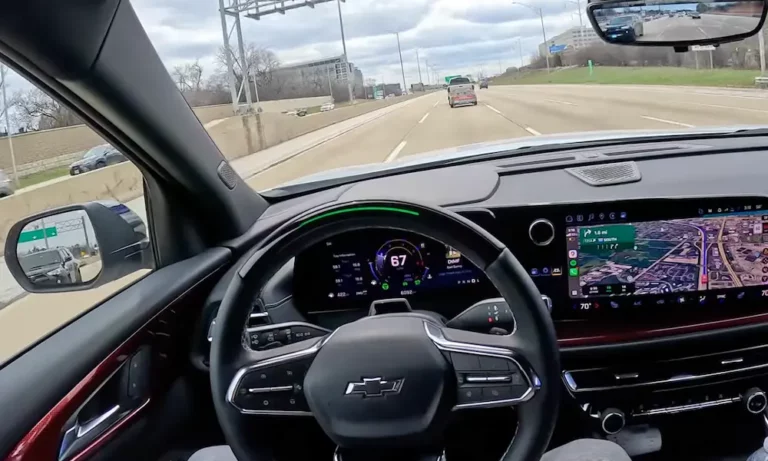
You’re standing at a dealership, staring at a price sheet, and there it is—Super Cruise. That fancy hands-free driving tech everyone’s talking about. The salesperson swears it’ll change your life. Your buddy with a Tesla won’t shut up about Autopilot. You just want to know: is Super Cruise worth the money, or is it just expensive cruise control?
Let’s cut through the marketing fluff and figure out if this tech deserves your hard-earned cash.
What Makes Super Cruise Different from Regular Cruise Control
Super Cruise isn’t your grandpa’s cruise control. It’s GM’s answer to the self-driving hype, but with a crucial difference—it’s honest about what it can do.
Here’s the deal: Super Cruise uses pre-mapped highways scanned with laser precision. Think of it like GPS on steroids. GM sent out survey cars with LiDAR sensors to scan roughly 750,000 miles of North American roads, creating a virtual rail for your vehicle to follow.
The system combines this map data with cameras, radar, and a steering wheel camera that watches you. That last part is key. Unlike systems where you can trick the sensors with a water bottle on the wheel, Super Cruise uses an infrared camera to track your eyes. You can take your hands off, but you’d better keep your eyes forward.
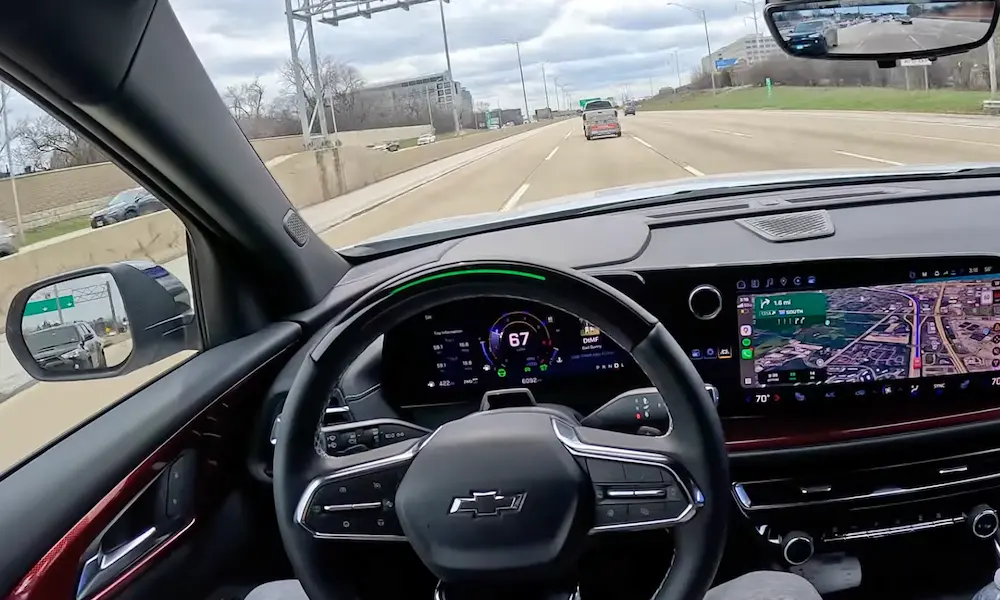
On compatible roads, the green light bar on your steering wheel glows, you’re hands-free, and the car does the work. Lane centering, speed adjustment, even braking in traffic—it handles it all.
But here’s the catch: it only works where GM has mapped the roads. Drive onto an unmapped street? The system shuts off. It’s brilliant where it works, useless where it doesn’t.
The Real Cost: What You’ll Actually Pay
Let’s talk money. GM doesn’t make this easy to figure out.
Upfront Hardware Costs
Super Cruise doesn’t come cheap. It’s usually bundled into premium trim packages that can run you $2,500 to $3,320 depending on your vehicle. You can’t just check a box for “the hands-free thing”—you’re getting it with a bunch of other tech like head-up displays and surround cameras.
Spread that over a five-year loan, you’re adding $40 to $60 to your monthly payment just for the hardware.
The Subscription Trap
Here’s where it gets annoying. Super Cruise needs a data connection to work. GM gives you a three-year trial with new vehicles, then you’re paying.
After your trial expires, you’re looking at:
- $39.99/month for standalone Super Cruise access
- $49.99/month for the full OnStar bundle with Wi-Fi and remote start
That’s $480 to $600 per year. Every year. Forever.
Reddit users report negotiating this down to about $300/year if you threaten to cancel, but you shouldn’t have to play games to get a fair price.
The Used Car Problem
Buying used? Good luck. The three-year trial is supposed to transfer with the vehicle, but second owners report OnStar canceling it anyway. You might spend hours on the phone getting it reinstated. Or you might get hit with a $40/month bill the day you drive off the lot.
Always verify the subscription status before buying a used GM vehicle with Super Cruise.
Where Super Cruise Actually Shines
Despite the costs, there are scenarios where is Super Cruise worth it becomes a resounding “yes.”
Long Highway Commutes
If you’re driving 50+ miles each way on the interstate, Super Cruise pays for itself in reduced fatigue. You’re not micro-adjusting the wheel for an hour straight. Your shoulders relax. You can sip coffee with both hands.
The system anticipates curves hundreds of meters ahead using its map data, adjusting speed smoothly. It doesn’t jerk the wheel or slam the brakes like vision-only systems that suddenly “see” a shadow and panic.
Consumer Reports consistently rates it highly for this exact reason—it’s predictable and comfortable.
Towing Trailers and RVs
This is Super Cruise’s secret weapon. If you tow boats, campers, or work trailers, the system is legitimately game-changing.
When you connect a trailer, Super Cruise automatically adjusts:
- Steering sensitivity to prevent sway
- Following distance to account for extra weight
- Speed management through curves
Hauling a 30-foot camper across three states stops being a white-knuckle endurance test. Your back and neck will thank you at the campground.
No other system—not Ford’s BlueCruise, not Tesla’s Autopilot—handles trailering this well. For truck owners who actually use their trucks for work or play, this feature alone can justify the cost.
Road Trips on Major Routes
Planning a cross-country drive? Super Cruise turns highways into relaxation zones. The expanded network now covers roughly 750,000 miles including many state highways and rural connectors, not just interstates.
That means more of your trip becomes hands-free. You arrive less exhausted, which matters when you’re covering 500 miles in a day.
When Super Cruise Isn’t Worth Your Money
Let’s be honest—this tech isn’t for everyone.
City Driving
Live in an urban area? Super Cruise is basically dead weight. It doesn’t work on city streets, in parking lots, or on unmapped roads. You’re paying for a feature you’ll rarely use.
If your daily drive involves surface streets, traffic lights, and local routes, save your money. Standard adaptive cruise control does 90% of what you need for a fraction of the cost.
The Chevrolet Bolt EUV Problem
The Bolt EUV is often the cheapest way to get Super Cruise. Don’t fall for it.
The Bolt runs on GM’s older “Global A” electrical architecture. It won’t get the 750,000-mile map expansion. It can’t do automatic lane changes. It’s permanently stuck with a 2020-era version of the software while newer vehicles get continuous improvements.
You’re buying a feature that’s already obsolete, then paying a monthly subscription for it. That’s a terrible value proposition.
Budget-Conscious Buyers
If you’re stretching to afford the vehicle, Super Cruise probably isn’t the smart financial move. Between the upfront package cost and the eventual subscription, you’re looking at thousands of dollars over ownership.
That money could go toward a lower interest rate, a better warranty, or simply staying out of debt. Hands-free highway driving is nice. Financial stress isn’t.
Super Cruise vs. The Competition
How does GM’s system stack up against the alternatives?
Tesla Autopilot and Full Self-Driving
Tesla’s approach is the opposite of Super Cruise. Their vision-based system works on virtually any road with lane markings—no pre-mapping required.
But there’s a nasty trade-off: phantom braking. Tesla owners regularly report sudden, violent braking when the cameras misinterpret shadows, overpasses, or oncoming headlights as obstacles. It’s jarring and dangerous.
Super Cruise, limited though it is by maps, doesn’t have this problem. The pre-scanned data provides a “ground truth” that prevents false alarms.
Tesla also requires hands-on-wheel monitoring for standard Autopilot, while Super Cruise is genuinely hands-free. Full Self-Driving costs $8,000 upfront or $99/month—far more expensive than Super Cruise.
Ford BlueCruise
Ford’s BlueCruise is Super Cruise’s closest competitor. Both use map data and driver-facing cameras. Performance is nearly identical, with BlueCruise priced at $495/year or $49.99/month.
The deciding factor? Vehicle preference. If you want a Ford, get BlueCruise. If you want a GM, get Super Cruise. The technology gap is negligible, though GM maintains an edge in trailering features.
The Hidden Frustrations Nobody Mentions
Marketing materials won’t tell you about these annoying quirks.
Sunglasses Defeat the System
Polarized sunglasses can block the infrared camera from seeing your eyes. When that happens, Super Cruise thinks you’re not paying attention and disengages.
Some users report needing to buy specific non-polarized sunglasses just to use the feature. On a sunny day. In a car they paid $50,000+ for. That’s ridiculous.
Sun Glare Blinds the Sensor
Low-angle morning or evening sun can wash out the steering column camera. Even when you’re staring straight ahead, the system flashes warnings that your eyes are off the road.
It’s a design flaw that makes the feature unreliable during golden hour—exactly when you might want it most during a commute.
Construction Zones Are Dangerous
This is the scariest issue. When road construction shifts traffic lanes, Super Cruise may try to follow the old mapped path instead of the actual traffic flow.
Picture this: orange cones redirect you to the shoulder. The map still shows the original lane. Your car tries to steer into the barrier.
You must stay hyper-alert in construction zones, ready to grab the wheel instantly. That defeats the whole “relaxation” promise.
Map Updates Lag Reality
Roads change constantly. New exits get built. Lanes get restriped. There’s a delay—sometimes months—between changes happening and the map reflecting them.
During that gap, Super Cruise won’t engage on affected road sections. You paid for hands-free driving on roads you can’t actually use hands-free.
Which GM Vehicles Make Super Cruise Worth It
Not all GM vehicles are created equal when it comes to this feature.
Best Value: Silverado EV, GMC Sierra, Hummer EV
These trucks run GM’s modern “Vehicle Intelligence Platform” architecture, giving them access to the full 750,000-mile network and automatic lane changes.
Combined with the trailering features, Super Cruise becomes a genuine work tool for these vehicles. When you’re already spending $80,000+ on a truck, the relative cost of the package shrinks.
Verdict: High value for truck buyers who actually use truck capabilities.
Moderate Value: Cadillac Lyriq, Equinox EV, Blazer EV
These modern EVs get the full feature set and regular updates. For suburban families logging serious highway miles, the stress reduction is real.
The subscription cost stings more on these mid-range vehicles, but if you’re financing anyway, another $40/month might be palatable.
Verdict: Worth it if your lifestyle involves frequent highway travel.
Poor Value: Chevrolet Bolt EUV
The Bolt’s older platform means no map expansion, no automatic lane changes, no future improvements. You’re paying for a dead-end version of the technology.
Verdict: Skip it unless you find a deeply discounted used model and the current mapped roads cover your exact commute.
The Subscription Model: Your Biggest Long-Term Cost
This is where GM’s value proposition falls apart for many buyers.
You’re not buying Super Cruise. You’re renting it—forever. After the three-year trial, you either pay or lose the feature.
Over ten years of ownership, that’s $3,000 to $4,800 in subscription fees on top of the initial hardware cost. You could take a nice vacation for that money.
Compare that to buying a car with standard adaptive cruise control that works without monthly fees. It’s less sophisticated, sure, but it’s yours.
The industry is moving toward subscriptions for everything, and consumers are getting tired of it. GM is betting you’ll value the convenience enough to keep paying. Whether that bet pays off depends entirely on your personal driving habits and tolerance for recurring charges.
Should You Actually Buy It?
Here’s the bottom line on is Super Cruise worth it:
Buy it if:
- You drive 500+ highway miles weekly
- You regularly tow trailers or RVs
- You’re purchasing a modern GM vehicle (Lyriq, Silverado EV, etc.)
- The monthly subscription won’t strain your budget
- Your routes fall within the mapped network
Skip it if:
- You mostly drive in cities or on local roads
- You’re considering a Bolt EUV or other legacy platform
- The subscription model bothers you philosophically
- You’re stretching financially to afford the vehicle
- You live in rural areas with limited map coverage
The technology works. It genuinely reduces highway driving fatigue when conditions are right. But “when conditions are right” is doing a lot of heavy lifting in that sentence.
Super Cruise isn’t the autonomous future GM’s marketing suggests. It’s a highly refined, geographically limited driver assistance tool that works brilliantly within its boundaries and frustratingly fails outside them.
If your life fits within those boundaries, and your wallet can absorb the ongoing cost, you’ll probably love it. If not, you’re paying premium dollars for a feature you’ll rarely use.
The choice is yours—just make sure you’re choosing based on your actual driving patterns, not the fantasy of effortless highway cruising that may or may not match your daily reality.