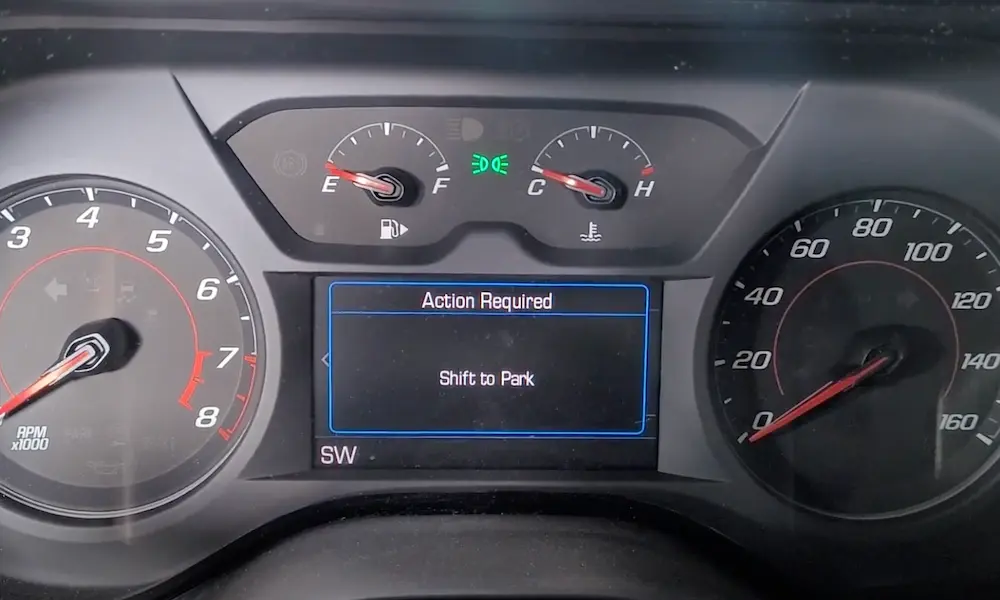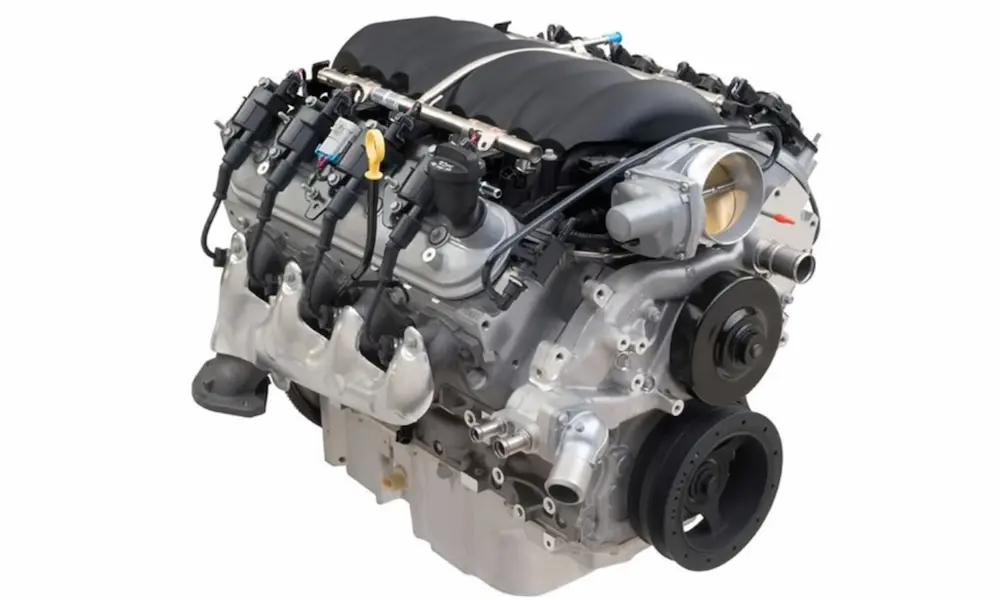
Got a Chevy P1345 code and your truck is cranking hard, idling rough, or randomly stalling? This code points to a timing sync problem between your crankshaft and camshaft — and it’s fixable. Read through this guide and you’ll know exactly what’s causing it, what to look for, and how to sort it out.
What Is the Chevy P1345 Code?
The Chevy P1345 code stands for Crankshaft Position (CKP) to Camshaft Position (CMP) Correlation. It shows up when your Powertrain Control Module (PCM) detects that the cam and crank signals are more than 2 degrees out of sync.
It’s most common on GM Vortec engines — specifically the 4.3L V6, 5.0L V8, and 5.7L V8 found in Chevy and GMC trucks from the mid-’90s to early 2000s.
Here’s the key thing to understand: on these Vortec engines, the distributor doesn’t control spark timing anymore. The PCM does that using the crankshaft position sensor. The distributor’s only job is to route high voltage to the spark plugs and send a single cam pulse to the PCM for fuel injector sync. So when P1345 shows up, it’s almost always a mechanical alignment problem, not just a bad sensor.
| Parameter | Spec | What Happens If It’s Off |
|---|---|---|
| Correlation tolerance | +/- 2 degrees | Anything beyond this triggers P1345 |
| PID update threshold | Above 1,000–1,500 RPM | CMP data won’t refresh at idle |
| CMP sensor type | Hall effect (inside distributor) | Directly linked to cam via drive gear |
| CKP sensor type | Hall effect (timing cover) | Fixed position on crankshaft reluctor wheel |
What Causes the Chevy P1345 Code?
Distributor Installed One Tooth Off
This is the most common cause — especially right after an engine repair or distributor replacement. The distributor drive gear has helical teeth, which means the rotor rotates as you lower the unit into the block. If you don’t account for that rotation, the distributor lands one tooth off.
Even if the truck starts and seems fine, the PCM will immediately see the cam signal sitting 14 to 28 degrees out of position. P1345 fires instantly.
Making it worse — the hold-down clamp only allows a few degrees of physical adjustment. If the gear meshed one tooth off, you can’t rotate the housing far enough to compensate. You have to pull the distributor and reinstall it correctly.
Worn Distributor Drive Gear
High-mileage Vortec engines wear out the distributor drive gear. These gears are intentionally softer than the camshaft gear — they’re the sacrificial part. Over time, the teeth get “knife-edged” and thin, creating mechanical slop in the distributor shaft.
That slop causes the CMP signal to drift and oscillate. You’ll often see an intermittent P1345 that only appears under load or at higher RPMs. As wear progresses, performance drops and stalling gets worse.
Timing Chain Stretch
The timing chain links the crankshaft to the camshaft. On high-mileage engines, the chain stretches. As it does, the camshaft physically retards in rotation relative to the crank — and since the distributor is driven directly off the cam, that retard shows up in the CMP signal.
When chain stretch combines with distributor gear wear, the total error blows past the 2-degree threshold. The P1345 code becomes permanent, and basic adjustments won’t fix it anymore.
You can do a quick check: rotate the crankshaft by hand and watch the distributor rotor. There shouldn’t be more than a few degrees of crank movement before the rotor starts turning. Any more than that, and the chain’s telling you something.
Wiring and Sensor Issues
Corroded connectors or frayed wires at the CKP or CMP sensor can introduce signal noise that the PCM reads as a correlation error. Heat soak, oil contamination, and vibration all take their toll on sensor harnesses in Vortec engine bays.
Always check the wiring before you start pulling the distributor.
Symptoms of a P1345 Code
The symptoms are hard to miss and directly tied to how badly the timing is off.
| Symptom | Severity | What’s Actually Happening |
|---|---|---|
| Hard start or no start | High | PCM can’t identify compression stroke fast enough |
| Rough idle | Medium | Injector timing doesn’t match intake valve opening |
| Misfires above 1,500 RPM | High | Signal drift exceeds PCM’s ability to compensate |
| Engine stalling | Critical | Fuel and spark cut out from loss of sync |
| Ticking or popping sounds | Medium | High-voltage crossfire inside the distributor cap |
The stalling issue is worth taking seriously. Unexpected stalling while driving creates a real safety hazard, especially in traffic. Don’t sit on this one.
How to Diagnose the Chevy P1345 Code
Check the CMP Retard PID First
A basic OBD-II scanner won’t cut it here. You need a bi-directional scan tool that can read manufacturer-specific PIDs. The data point you’re looking for is “Camshaft Retard” or “CMP Offset.”
The factory spec for 4.3L, 5.0L, and 5.7L Vortec engines is 0 degrees, with +/- 2 degrees of acceptable variance.
Here’s the catch: the PCM doesn’t update this PID at idle. You need to bring the engine to operating temperature, then raise RPM above 1,000 — ideally above 1,500 — before the value refreshes. Snap the throttle or hold a steady high idle to force the PCM to update the reading.
Inspect the Wiring and Sensors
Before touching the distributor:
- Check the CKP and CMP sensor connectors for corrosion or damage
- Run a continuity test from the cam sensor to the PCM
- Inspect the crankshaft position sensor for signs of contact with the reluctor wheel — any scuffing means replacement
- Look for cracked insulation on harness wires near the intake manifold
How to Fix the Chevy P1345 Code
Step 1 — Find True TDC on Cylinder #1
Getting TDC right is critical. The crank rotates twice per cam rotation, so the timing marks line up on both the compression AND exhaust stroke. You need the compression stroke.
Here’s how to find it:
- Pull the Number 1 spark plug
- Rotate the crank clockwise while covering the plug hole with your finger
- When you feel compression pushing outward, keep rotating until the timing mark on the harmonic balancer lines up with the pointer on the front cover
- Verify you’re on compression — not exhaust
One more thing: check your harmonic balancer. The outer ring bonds to the hub with rubber. If that rubber deteriorates, the ring slips — and your timing marks no longer reflect actual piston position. If P1345 keeps coming back after a correct distributor install, a slipped balancer might be why.
Step 2 — Install the Distributor Correctly
Once you’ve confirmed TDC, prep the distributor by aligning the witness marks on the gear and housing. These marks account for the helical gear rotation as it seats.
- On the 5.7L V8 — the rotor should point to the molded “8” on the distributor base
- On the 4.3L V6 — the rotor should point to the “6”
If the distributor won’t seat flush against the intake manifold, the oil pump drive tang isn’t aligned. Use a long screwdriver to rotate the oil pump shaft slightly, or gently bump the starter while pressing down on the distributor until it drops into place. Then return to TDC and confirm the rotor still points to the correct mark.
Watch out for aftermarket distributor gear problems. Some aftermarket units have the roll pin drilled 180 degrees off-phase. If you’ve done everything right and the rotor still won’t point to the mark, pull out the roll pin, rotate the gear 180 degrees on the shaft, and re-pin it. Always compare the new distributor’s gear position to the old factory unit before installation.
Step 3 — Fine-Tune With a Scan Tool
This is where you dial it in:
- Start the engine and bring it to operating temperature
- Raise RPM above 1,000–1,500 and monitor the CMP Retard PID
- Loosen the distributor hold-down bolt
- Rotate the housing slowly — clockwise to increase the value, counterclockwise to decrease it
- Snap the throttle after each small adjustment to force the PCM to update the reading
- Tighten the hold-down bolt when the value sits as close to 0 as possible within +/- 2 degrees
Small movements make big changes here. Go slow.
P1345 on Newer GM Engines With VVT
If you’re getting a P1345 on a newer Chevy — like one with a 2.4L, 3.6L, or newer V8 — the diagnosis is completely different. These engines don’t have a distributor. They use coil-on-plug ignition and Variable Valve Timing (VVT) actuators.
On these platforms, P1345 usually points to:
- Dirty oil or sludge clogging the VVT solenoid screens
- A failed VVT solenoid that can’t control oil flow to the cam phaser
- Low oil pressure preventing the phaser from reaching its commanded position
Staying current on oil changes is the single best thing you can do to prevent P1345 on a VVT engine.
Crank Relearn — Do You Need It?
There’s a common mix-up here. The Crank Relearn (CASE learn) procedure is NOT the fix for P1345. The P1345 is a mechanical problem fixed by physical distributor adjustment.
The Crank Relearn is a software calibration needed after replacing the PCM, crankshaft, or CKP sensor. It teaches the PCM the tiny variations in the reluctor wheel’s rotation to prevent false misfire codes (P0300) from appearing later. If you replaced any major components during your repair, run the Crank Relearn as a final step — but don’t expect it to resolve the P1345 on its own.
A Note on Distributor Gear Metallurgy
When you replace a worn distributor, gear material matters. A steel gear that’s too hard will chew up your camshaft instead of wearing itself down — and replacing a camshaft is a much bigger job. For a stock Vortec L31, stick with a high-quality ductile iron or hardened composite gear that matches the factory cam’s hardness. The gear should always be the sacrificial part, not the cam.