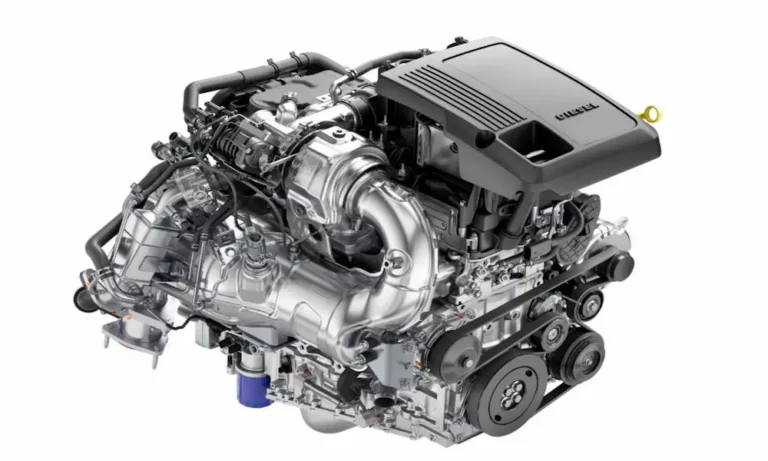
The 2011–2016 Duramax LML is a powerhouse on paper — 397 hp, 765 lb-ft of torque, and a smoother ride than any previous Duramax. But hidden beneath that impressive spec sheet are some expensive landmines. If you own one, or you’re thinking about buying one, this guide breaks down every major Duramax LML problem you need to know — and what you can actually do about it.
The CP4.2 Fuel Pump: The LML’s Biggest Problem
Let’s start with the one that keeps diesel techs in business.
When GM moved from the beloved CP3 pump to the Bosch CP4.2, they chased higher injection pressure — 30,000 psi — to meet Tier 2 Bin 5 emissions standards. The problem? The CP4.2 relies entirely on diesel fuel to lubricate its internal components. In Europe, that works fine. In North America, Ultra-Low Sulfur Diesel (ULSD) strips away the sulfur compounds that naturally lubricate the pump.
Without proper lubricity, the pump’s roller-tappet cam assembly starts to skid instead of roll. Metal grinds against metal. Microscopic steel and aluminum shavings get born — and then they go on a road trip through your entire fuel system.
What a CP4.2 Failure Actually Looks Like
Most owners don’t get much warning. Some notice a slight power loss or a rhythmic metallic ticking. Then the truck stalls. The P0087 code — “Fuel Rail Pressure Too Low” — shows up, and diesel techs call it the LML’s death sentence code. Here’s why that code is so brutal:
| Affected Component | What Happens | Replace It? |
|---|---|---|
| CP4.2 Injection Pump | Internal mechanical destruction | Yes |
| All 8 Fuel Injectors | Shrapnel clogs and seizes them | Yes |
| High-Pressure Fuel Rails | Metal debris fills internal galleries | Yes |
| High-Pressure Lines | Micro-debris lodges in line walls | Yes |
| Fuel Tank | Metallic sediment accumulates | Yes (or deep clean) |
| Lift Pump / Sending Unit | Low-pressure side gets contaminated | Yes |
The total damage? Dealerships routinely charge $10,000 or more for a full fuel system replacement after a CP4.2 grenade. On a truck with 100,000 miles, that bill can exceed half the truck’s value.
A class-action lawsuit alleged that GM and Bosch knew the pump wasn’t compatible with American diesel fuel. While there’s no universal recall, some owners have gotten partial relief through warranty claims or goodwill coverage.
How to Protect Yourself From CP4.2 Failure
You’ve got three solid options, listed from minimum to maximum protection:
- Fuel additive with lubricity booster — This is the bare minimum. Use a quality diesel additive at every fill-up to compensate for ULSD’s poor lubricity.
- Aftermarket lift pump — A FASS or AirDog lift pump feeds positive pressure to the CP4.2 and separates air and water before they reach the pump. This alone dramatically reduces the failure risk and costs between $1,200–$1,800 installed.
- CP3 conversion — The permanent fix. Companies like S&S Diesel and Fleece Performance offer kits that swap in the old CP3 pump. It needs custom ECM tuning, but it ends the CP4.2 problem for good. Expect to spend $3,000–$4,500 total.
If you check your fuel filter and see metallic “glitter,” stop driving immediately. That’s your only early warning sign.
DEF System Failures and Limp Mode Nightmares
The LML was the first Duramax to use Selective Catalytic Reduction (SCR), which injects Diesel Exhaust Fluid (DEF) into the exhaust stream to cut NOx emissions. Smart technology — but the execution has a few weak points.
DEF Tank Heater Failure
DEF freezes at 12°F (-11°C). GM built in a tank heater to handle cold weather, but that heater fails regularly — especially in northern states. GM acknowledged this so broadly that they issued a 10-year/120,000-mile Special Coverage Adjustment for 2013–2015 models. If your truck falls in that range, check whether this coverage still applies to you before paying out of pocket.
NOx Sensor Failures
The downstream NOx sensor (Sensor 2) sits in the harshest part of the exhaust stream. It fails often. When it does, you’ll see a “Service Emissions System” warning and potentially enter a progressive derate cycle:
- First warning: Speed limited to 55 MPH
- Next stage: Reduced power
- Final stage: Idle-only mode until you fix it
These derate modes aren’t suggestions — the truck enforces them. Ignore the warning and you’ll be crawling to a shop at idle speed.
DPF and the 9th Injector: A Smarter Regen System
Here’s some genuinely good news about the LML. Earlier Duramax engines ran diesel fuel through the primary cylinders to heat up the Diesel Particulate Filter (DPF) during regeneration. That process washed fuel past the piston rings and diluted the engine oil — not ideal.
The LML fixed this with a dedicated Hydrocarbon Injector (HCI) — often called the “9th injector” — mounted in the exhaust downpipe. It sprays fuel directly into the exhaust stream, which burns across the Diesel Oxidation Catalyst to incinerate soot in the DPF. No more oil dilution.
The catch? The HCI clogs with carbon over time. If you drive mostly short distances or idle a lot, your exhaust temps never get high enough for passive regeneration, and the DPF fills up faster than the system can clean it. A clogged DPF can eventually become a $1,000+ repair.
Fix: Drive at highway speeds for 30+ minutes regularly to let passive regen do its job.
Allison 1000 Transmission Problems
The Allison 1000 is one of the most respected heavy-duty automatics ever built, but it’s not bulletproof — especially when towing hard or adding power.
| Component | Weakness | What Goes Wrong |
|---|---|---|
| Torque Converter | Thin stator, single clutch | Chatter under load, internal cracking |
| Input Shaft | Reduced volume from oiling circuit | Snaps at 550+ HP |
| C3/C4 Clutch Packs | Inadequate cooling under stress | Slippage during heavy towing |
| C2 Hub / P2 Planetary | Stress concentration points | Snaps during 3-4 upshifts |
The stock torque converter is the weakest link. The stator cracks under high pressure, and the converter cover flexes enough to cause uneven wear on the internal clutch. If you tow heavy or tune your truck, upgrade to a billet triple-disk torque converter.
What Does the P0700 Code Actually Mean?
If your Check Engine Light comes on with a P0700 code, don’t panic — but don’t ignore it either. P0700 just means the Transmission Control Module (TCM) told the ECM to turn on the light. It doesn’t tell you what’s actually wrong.
A technician needs a capable diagnostic scanner to pull the real codes from the TCM. Look for codes like P0735 (5th Gear Incorrect Ratio) or P0776 (Solenoid B Performance) for clutch and solenoid issues. Damaged wiring harnesses from engine vibration also trigger limp mode, which locks the transmission in 3rd gear to protect internals.
Cooling System: The Slow Leaks That Cause Big Damage
The LML’s cooling system holds up well overall, but a few specific components have a habit of failing right around 80,000–120,000 miles.
Water Pump
The LML uses a gear-driven water pump with a plastic impeller. That plastic breaks or slips on its shaft, and coolant flow drops suddenly. By the time you notice the temperature gauge climbing, damage may already be underway. Proactive replacement around 100,000 miles costs $1,000–$1,500 — much cheaper than a cracked head.
EGR Cooler Cracks
The EGR cooler is prone to cracking, which lets coolant leak into the exhaust stream. The symptom — white smoke from the tailpipe — looks exactly like a blown head gasket. Before you authorize a head gasket job (which runs several thousand dollars in labor), ask your tech to pressure-test the EGR cooler first. If the EGR cooler is the culprit, you’ll save a significant amount of money.
Radiator End Tank Leaks
The LML radiator uses aluminum cores crimped to plastic end tanks. Repeated heat cycles loosen those crimps. Small coolant leaks develop, often going undetected until the level drops enough to cause overheating. Check your coolant level monthly and inspect the tanks for seepage at the crimp lines.
For 2015 model year trucks specifically, a TSB addresses engine harness chafing on the EGR stud, which causes intermittent shorts and phantom cooling system codes. Worth checking if you’re chasing ghost codes.
Turbocharger: When the Vanes Stick
The Garrett GT3788VA Variable Geometry Turbocharger does double duty — it builds boost and provides exhaust braking. Closing the internal vanes creates backpressure that helps slow the truck on long descents. That’s the feature. Here’s the problem.
Soot and carbon build up on those vanes over time. When they stick, the turbo can’t respond to throttle inputs properly. You’ll feel a “dead pedal” — no boost response when you mash the accelerator. The P003A code usually accompanies this. On 2015 trucks, the turbo vane position sensor fails at a higher rate than other years. Before replacing the entire turbocharger (expensive), replace the sensor first. It’s a $200 fix that often resolves the issue completely.
Key Recalls and Safety Actions You Should Know About
| Model Year(s) | Action | Issue |
|---|---|---|
| 2011–2016 | Class-Action Lawsuit | CP4.2 incompatibility with US diesel fuel |
| 2013–2015 | Special Coverage | DEF Tank Heater (10yr/120k warranty) |
| 2015 | Safety Recall | Intake air heater FET short circuit — fire risk |
| 2010–2012 | Special Coverage | Glow plug failure, hard cold starts |
| 2015 | TSB | Engine harness chafing on EGR stud |
The 2015 intake air heater recall deserves special attention. When system voltage exceeds 13.5V, the Field-Effect Transistor (FET) can overheat, short, and in rare cases start an engine bay fire. Dealers replace the intake heater assembly to eliminate the risk. If you own a 2015 LML, verify this recall was completed on your truck.
What These Repairs Actually Cost
| Repair | Estimated Cost | Notes |
|---|---|---|
| Lift Pump (FASS/AirDog) | $1,200–$1,800 | Highly recommended preventative |
| CP3 Conversion | $3,000–$4,500 | Permanent CP4.2 solution |
| DEF Tank Heater | $700–$1,200 | Check Special Coverage first |
| Water Pump | $1,000–$1,500 | Replace proactively at 100k miles |
| Transmission Rebuild | $6,000–$7,500 | Usually 150k–200k miles if truck is abused |
| Full Fuel System (CP4.2 failure) | $10,000+ | Worst-case scenario — avoid at all costs |
The LML’s core engine — the rotating assembly, the block, the heads — is a 300,000 to 500,000-mile platform when maintained right. The failures aren’t a bad engine. They’re the cost of integrating high-pressure fuel technology and complex emissions systems into a world where American diesel fuel didn’t cooperate.
Handle the CP4.2 proactively, stay on top of your DEF system and cooling, and this truck will work hard for you for a very long time.