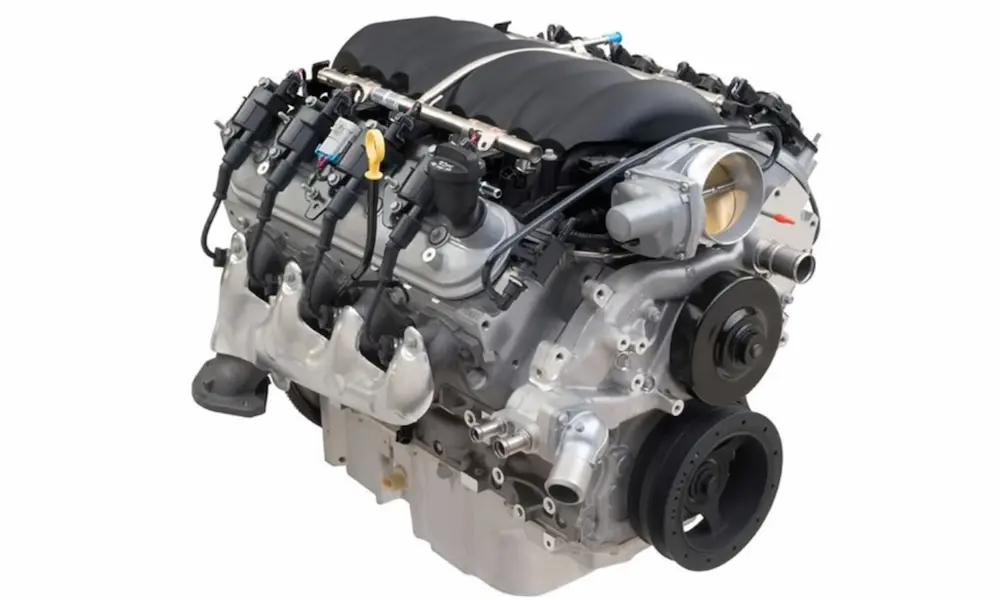
The Chevy 3.6 engine powers millions of trucks, SUVs, and sedans — but it’s also one of the most talked-about engines on mechanic forums. If your check engine light just came on, you’re burning through oil, or you heard a rattle on cold start, this post breaks down exactly what’s happening and what to do about it.
What Is the Chevy 3.6 Engine, Exactly?
The 3.6L V6 — officially called the GM High Feature V6 — shows up in a huge range of vehicles: the Chevy Traverse, Impala, Camaro, Equinox, and more. GM released it in the early 2000s to compete with European and Japanese engines, featuring dual overhead cams, four valves per cylinder, and variable valve timing on both banks.
It went through four main generations:
| Engine Code | Years | Fuel System | Common Vehicles |
|---|---|---|---|
| LY7 | 2004–2010 | Port Injection | Chevy Malibu, Cadillac CTS |
| LLT | 2008–2017 | Direct Injection | Chevy Camaro, Traverse |
| LFX | 2012–2020 | Direct Injection | Chevy Impala, Equinox |
| LGX | 2016–Present | Direct Injection | Chevy Blazer, GMC Acadia |
Each generation fixed some problems and introduced new ones. Here’s what you actually need to watch for.
Timing Chain Problems: The Most Expensive Chevy 3.6 Engine Problem
This is the big one. Timing chain wear is the most common — and most costly — of all the Chevy 3.6 engine problems. The 3.6 uses a three-chain system: one primary chain from the crankshaft and two secondary chains, one per cylinder head. When those chains wear out, your engine’s valve timing goes off, and things get ugly fast.
Why the Timing Chains Wear Out
The chains don’t actually stretch. The pins and bushings inside each chain link wear down, making the chain longer over time. Once it’s too long for the hydraulic tensioners to compensate, valve timing drifts — and the VVT system that depends on precise timing goes haywire.
Three specific habits speed this up:
- Going too long between oil changes. GM’s early Oil Life Monitor allowed intervals up to 12,000 miles. In real-world driving with short trips and cold starts, the oil breaks down well before that. According to mechanic discussions on Reddit, many owners following GM’s OLM guidance were unknowingly trashing their engines.
- Running low on oil. The 3.6 consumes roughly 1 quart every 1,500–3,000 miles in many cases. If you’re on a 10,000-mile oil change schedule and not checking the dipstick, you might be running 2–3 quarts low. The timing chain tensioners are hydraulically actuated — no oil pressure, no tension, rapid wear.
- Clogged tensioner ports. Tiny oil feed holes in the tensioners can clog with sludge. When that happens, the tensioner can’t hold the chain tight, and the chain slaps the guides.
Error Codes That Signal Timing Chain Trouble
Your ECM monitors the correlation between crankshaft and camshaft positions. When they drift more than 5–7 degrees, it triggers a check engine light. Here are the codes to watch:
| DTC | What It Means |
|---|---|
| P0008 | Bank 1 camshafts out of sync with crank |
| P0009 | Bank 2 camshafts out of sync with crank |
| P0016 | Bank 1 intake cam misalignment |
| P0017 | Bank 1 exhaust cam misalignment |
| P0018 | Bank 2 intake cam misalignment |
| P0019 | Bank 2 exhaust cam misalignment |
Before those codes appear, you’ll usually hear a cold-start rattle — a few seconds of chain noise when you first fire it up. Don’t ignore it. That rattle is the tensioners struggling to prime with oil.
Carbon Buildup on Intake Valves: A Direct Injection Side Effect
When GM switched the LLT and LFX to Gasoline Direct Injection, fuel economy and power improved. But GDI created a new problem: carbon coking on the intake valves.
In a port-injected engine like the LY7, fuel sprays directly onto the intake valves. That fuel acts as a constant rinse, washing away oil vapors from the PCV system. In a GDI engine, the valves only see air — and those PCV vapors bake onto the hot metal like carbon varnish.
What Coked Valves Actually Do
- Choke airflow. Carbon physically narrows the intake port, lowering how much air gets in and dropping horsepower.
- Disrupt combustion. The rough carbon surface messes with the precise airflow tumble that GDI engines need to mix fuel and air efficiently.
- Cause misfires. Carbon flakes can break loose, enter the combustion chamber, and foul spark plugs or cause pre-ignition.
Common symptoms include rough idle, hesitation, and misfires — especially at lower RPMs. The fix is either a chemical induction cleaning or a manual walnut blasting of the intake valves. Plan to do this every 30,000 miles if you want to keep the engine performing well.
Oil Consumption Problems and Piston Ring Failures
The 3.6 uses low-tension piston oil control rings to reduce internal friction and meet fuel economy standards. These rings do their job fine when everything’s clean — but they’re vulnerable to carbon sticking. If carbon locks the rings in their grooves, oil slips past them into the combustion chamber and burns.
The Factory Defect GM Acknowledged
In 2018, GM issued Customer Satisfaction Program 18186, covering certain Enclave, Impala, and Traverse models with the 3.6L LFX or LFY engine. The piston oil control rings in some units were damaged during factory installation. GM’s fix requires a borescope inspection — if the cylinder walls show scoring or gouging from a broken ring, the entire engine gets replaced.
If you own one of these vehicles and notice rapid oil loss, check whether your VIN falls under this coverage.
Cooling System Issues: Water Pumps and Crossover Leaks
Water Pump Weep Hole: Not “Normal” Dripping
The 3.6’s externally mounted, belt-driven water pump has a weep hole — a small port that lets coolant escape if the internal shaft seal fails. Mechanics are clear on this: any coolant coming from the weep hole means the seal is gone. There’s no such thing as acceptable seepage. If you ignore it, the bearing fails next — and when the bearing seizes, it shreds the serpentine belt, kills power steering, and the engine overheats fast enough to warp aluminum cylinder heads.
Coolant Crossover Leaks in Traverse and Acadia
Transverse-mounted 3.6 engines — think Traverse, Acadia, and Enclave — have coolant crossover gaskets between the cylinder banks. These develop slow leaks that drip coolant onto hot engine components. Since the coolant evaporates immediately, there’s no puddle on your garage floor. Instead, you get a sweet antifreeze smell and a coolant reservoir that slowly drops. If you notice that, check the crossover gaskets before you assume something worse.
“Reduced Engine Power” Mode: Throttle Body Problems
The 3.6 uses drive-by-wire electronic throttle control. When the ECM detects something off with the throttle system, it throws the engine into Reduced Engine Power mode — sometimes called limp mode — to protect you and the engine.
Three things commonly cause this on the 3.6:
- Carbon on the throttle plate. It makes the electric motor work harder to move the plate, which the ECM flags as abnormal.
- Sensor disagreement. The throttle body has two Throttle Position Sensors. If they disagree with each other or with the Accelerator Pedal Position sensor, the ECM shuts power down immediately.
- Stripped internal gears. The plastic gears inside the throttle actuator wear out, especially when the plate fights against carbon buildup.
Codes P0121, P0507, and P1516 point here. Cleaning the throttle body fixes it most of the time — but GM requires a Throttle/Idle Learn procedure via scan tool afterward to recalibrate the ECM.
EVAP Purge Valve Problems: Hard Starting After Fueling
The purge valve controls when fuel vapors from the charcoal canister enter the intake manifold to be burned. On the 3.6, this valve commonly sticks open — and GM extended warranty coverage on it to 15 years or 150,000 miles for certain 2019–2020 models because of how frequently it fails.
A stuck-open purge valve floods the intake with fuel vapors when you’re filling the tank — making the engine very hard to start right after fueling. It also creates a rough idle and lean-condition misfires. DTC P0496 (“High Purge Flow”) confirms it.
Sensor Failures That Mimic Bigger Problems
Camshaft Position Sensors
The 3.6 has four camshafts and a sensor for each. A failing Camshaft Position Sensor can trigger P0340, cause stalling, hard starting, and erratic shifting — symptoms that look a lot like timing chain damage. Low oil can also make the VVT phasers sluggish, which the ECM initially reads as a sensor fault before it eventually logs a timing code.
Oil Pressure Sensor
The oil pressure sending unit fails frequently across all 3.6 generations. It can read zero pressure when actual pressure is fine. But — and this is important — never assume a low oil pressure warning is just a bad sensor. Always do a physical pressure test first. Actual low oil pressure is what destroys timing chains.
How to Keep Your Chevy 3.6 Engine Running Long-Term
The 3.6 is genuinely maintenance-sensitive. Engines that get strict maintenance regularly hit 200,000+ miles. Neglected ones often don’t make it to 100,000. Here’s what actually matters:
| Service Item | Recommended Interval | Why It Matters |
|---|---|---|
| Oil & Filter Change | Every 3,000–5,000 miles | Prevents timing chain wear and sludge |
| Intake Valve Cleaning | Every 30,000 miles | Removes early carbon on GDI valves |
| Throttle Body Cleaning | Every 50,000 miles | Prevents limp mode and idle issues |
| PCV System Inspection | Every 50,000 miles | Stops sludge and valve coking |
| Spark Plug Replacement | Every 100,000 miles | Reduces coil load and prevents misfires |
Use Dexos 1 Gen 3 Oil
This isn’t marketing — it matters. GM’s Dexos 1 Gen 3 specification includes anti-wear additives specifically formulated for timing chain protection, better thermal stability to reduce carbon blow-by, and Low-Speed Pre-Ignition (LSPI) protection critical for direct-injected engines.
Consider an Oil Catch Can
An aftermarket oil catch can — installed between the PCV valve and intake manifold — traps oil mist before it reaches the intake valves. Many mechanics recommend it as one of the most effective ways to slow down carbon buildup on LLT and LFX engines. It’s not a factory part, but it works.
Does the Newest 3.6 (LGX) Fix These Problems?
Mostly, yes. The LGX was a clean-sheet redesign that tackled the 3.6’s biggest weaknesses:
- Roller timing chains replaced the old silent chains — far more resistant to wear.
- Redesigned cooling system for faster warm-ups and less thermal stress.
- Variable displacement oil pump reduces drag and extends oil life.
- Active Fuel Management (AFM) deactivates two cylinders under light load for better fuel economy.
The LGX isn’t problem-free — some owners report AFM lifter issues and valve cover oil leaks — but the timing chain nightmare that plagued the LY7, LLT, and early LFX is largely gone. If you’re buying used and have a choice, the LGX is the one to pick.
The Chevy 3.6 engine problems are real, but they’re not random. Most of them trace back to oil — not enough of it, wrong type, or changed too infrequently. Treat this engine like it’s high-maintenance (because it is), keep the oil fresh, and watch for the early warning signs covered here. You’ll get a lot of miles out of it.