Your steering wheel feels stiff. A warning light just lit up. Or maybe the assist just cut out completely while you were turning. Electric power steering problems catch drivers off guard — and they’re more common than you’d think. This post breaks down exactly what’s happening, which cars are affected, and what you can expect to pay.
What Is Electric Power Steering (And Why Does It Fail)?
Electric power steering (EPS) replaced the old hydraulic setup in most vehicles built after 2010. Instead of a fluid-filled pump running off your engine constantly, EPS uses an electric motor that only works when you actually turn the wheel. That saves fuel and makes advanced safety features like lane-keep assist possible.
But here’s the trade-off: EPS systems are packed with sensors, circuit boards, motors, and software. More technology means more things that can go wrong — and when they do, the fix is rarely simple or cheap.
Here’s what the system relies on:
| Component | What It Does | What Fails |
|---|---|---|
| Torque sensor | Measures how hard you’re turning | Erratic or absent assist |
| Steering angle sensor | Tracks wheel position | Pulling, drift, ADAS errors |
| Power Steering Control Module | Runs the whole show | System shutdown, error codes |
| Electric motor | Provides the actual assist force | Total assist loss, grinding |
| Wiring and connectors | Carries signals and power | Intermittent faults, CAN errors |
| Battery/alternator | Powers the motor | Random resets, reduced assist |
The Most Common Electric Power Steering Problems
Sudden Loss of Steering Assist
This is the scariest one. The assist disappears — often without warning — and the wheel suddenly feels like you’re turning a truck with flat tires. The control module detected a fault and switched the system into fail-safe mode, cutting motor power to prevent unintended steering movements.
The car is still steerable. But if you’re driving a full-size SUV or truck, that “manual mode” takes real effort — especially at low speeds. It’s not a comfortable situation in a parking lot, and it’s genuinely dangerous on the highway.
Intermittent or Inconsistent Assist
One minute the steering feels normal. The next, it’s stiff. Then it’s fine again. This on-and-off behavior is actually one of the most common early signs of an EPS problem, and it’s often linked to:
- Corroded connectors or wiring
- A loose ground connection
- Voltage fluctuations from a weak battery or alternator
Don’t ignore it because “it went away.” Intermittent problems get worse, and they tend to pick the worst possible moment to become permanent.
Strange Noises While Turning
EPS systems should be quiet. If you’re hearing any of these, something’s breaking down:
- Whining or humming — usually the electric motor wearing out
- Grinding or crunching — often the rack-and-pinion or intermediate shaft
- Clicking during turns — worn inner tie rod ends or a damaged rack
A “notchy” or jerky feeling in the steering wheel points to a failing torque sensor or mechanical binding inside the rack.
Warning Lights and Dashboard Messages
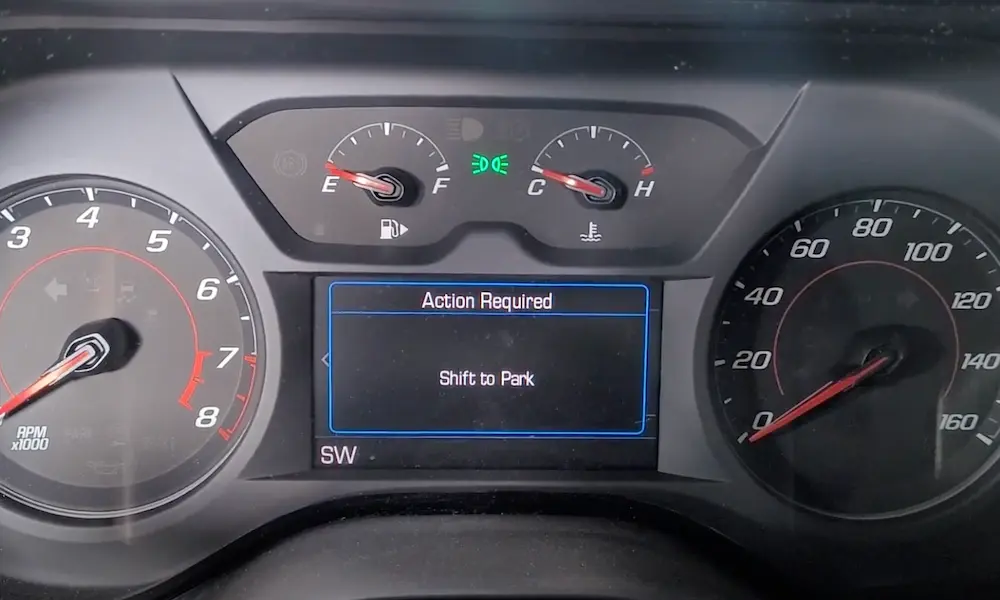
The Power Steering Control Module watches everything. When it sees something it doesn’t like, it tells you — via a steering wheel icon on your dash, or messages like:
- “Steering Assist Reduced”
- “Service Power Steering Now”
- “EPS Malfunction”
These warnings aren’t optional reading. The system may still work in a degraded state right now, but it’s telling you it’s on the way out. Get it checked.
Why EPS Systems Fail: The Real Causes
A Weak Battery or Failing Alternator
This surprises most people, but a weak battery is one of the most common causes of EPS problems. The EPS motor pulls more current than almost anything else in your car. If the charging system can’t keep up — especially when you’re sitting in traffic with the AC and lights running — the PSCM may cut the system temporarily to protect itself.
Before you spend $1,500 on a steering rack, replace your battery and test your alternator. It fixes the problem more often than you’d expect.
Moisture and Corrosion
Water is the enemy of electronics. The steering rack sits low on the chassis, and the motor and control module are usually built right into it. Torn rubber boots or compromised seals let water in. Once it’s inside, you get:
- Short circuits
- Corroded circuit boards
- Bearing failure in the motor
If you live in a northern state or near the coast, road salt makes this dramatically worse. A small leak that might take years to cause damage in Arizona can destroy a rack in a single New England winter.
Manufacturing Defects
Some EPS failures come straight from the factory. A damaged resistor, a misaligned connector pin, or a poorly applied coating — these small defects can take months or years to become visible, but thermal cycling (constant heat-and-cool cycles from driving) makes them worse over time. Toyota’s recall of the 2014-2015 RAV4 and Camry traced sudden assist loss to exactly this: a single resistor on the EPS circuit board damaged during manufacturing.
Which Cars Have the Worst EPS Problems?
Electric power steering problems aren’t limited to one brand. Here’s what the data from the NHTSA and manufacturer TSBs shows:
| Manufacturer | Affected Models | Core Problem | Typical Fix |
|---|---|---|---|
| General Motors | 2021 Tahoe, Yukon, Escalade | Software error causing assist loss | Replace steering gear motor kit |
| Ford | 2015-2016 F-150, Fusion | Motor position sensor signal loss due to conformal coat contamination | Reprogram or replace rack |
| Toyota | 2014-2015 RAV4, Camry, Highlander | Damaged resistor on ECU circuit board | Replace EPS control unit |
| Stellantis (RAM/Jeep) | 2019-2024 RAM 1500 | CAN bus failure + wiring harness corrosion | Harness repair or replacement |
| Jeep | 2021-2023 Grand Cherokee | Steering knuckle separation — mechanical failure | Replace steering knuckle |
Quick tip: Enter your 17-digit VIN at the NHTSA recall database right now. Federal law requires manufacturers to fix recall-related defects for free, regardless of age or mileage. Many owners don’t know they qualify.
GM: Software and Sensor Failures
General Motors has dealt with EPS issues across multiple generations. The 2007-2012 Chevrolet Malibu, Pontiac G6, and Saturn Aura received special coverage adjustments for torque sensor and motor controller failures — essentially an extended warranty covering up to 10 years or 150,000 miles for those components. A more recent software-related recall hit the 2021 Tahoe, Yukon, and Cadillac Escalade. A separate GM technical service bulletin flagged internal interference inside the steering gear on 2020-2021 Acadia and Blazer models.
Ford: Wiring and Connector Issues
Ford’s most significant EPS recall (15S18) traced assist loss in certain F-150 and Fusion models to a manufacturing quality issue — ribbon cable pin misalignment and conformal coat contamination inside the steering gear motor. More recently, 2024-2026 Ranger and Bronco owners got caught up in a separate recall involving improperly routed wiring harnesses that could damage wires connected to steering-related systems.
Toyota: The Single Resistor That Caused a Recall
Toyota’s recall 15V-144 covered about 110,000 vehicles. A single resistor on the EPS ECU — damaged during manufacturing — would degrade over time and eventually trigger an abnormal current shutdown. The whole power assist would disappear mid-drive. The fix was replacing the EPS control unit entirely.
RAM: CAN Bus Communication Failures
On the 2019-2024 RAM 1500, fault codes U0001 and U0002 signal a high-speed CAN bus communication failure that takes the EPS offline. The catch? It’s usually not the steering rack that’s broken. TSBs point to the wiring harness chafing against the frame or corroded connectors at the rack itself. Replacing the rack won’t fix a wiring problem.
What Electric Power Steering Repairs Actually Cost
This is where EPS really stings. These systems are expensive to fix because the electronics are integrated directly into the rack, and the calibration process requires professional-grade tools.
| Vehicle Type | Part Cost | Labor Cost | Total Estimate |
|---|---|---|---|
| Compact/mid-size sedan | $500 – $1,100 | $250 – $600 | $750 – $1,700 |
| Full-size SUV or truck | $850 – $1,800 | $450 – $1,000 | $1,300 – $2,800 |
| Luxury or European models | $1,500 – $3,500 | $700 – $1,500 | $2,200 – $5,000+ |
On top of that, you’re almost always looking at an additional $150–$300 for a four-wheel alignment and electronic calibration. Don’t skip calibration — the system won’t know where “straight ahead” is without it, and your lane-keep assist and stability control will stop working too.
Remanufactured racks from companies like Cardone cost less, but the quality of rebuilt electronics is harder to guarantee on safety-critical systems. Many shops stick with new OEM parts for that reason.
Can You Fix EPS Problems Yourself?
Honestly? Most of it, no. Here’s why the DIY route gets complicated fast:
- No calibration tool, no fix. Even if you swap the rack perfectly, the car won’t operate it correctly until a tech runs a Steering Angle Sensor zero-point procedure. Basic OBD-II readers can’t do this — you need a professional scan tool like the Autel MaxiSYS or Snap-on Apollo to access the PSCM.
- Clock spring risk. Disconnect the steering column and let the wheel spin freely, and you’ll snap the clock spring — the wiring coil that carries airbag and horn signals. That’s an expensive mistake.
- High-current hazards. The EPS motor draws serious amperage. Short something out and you can fry other modules on the vehicle’s data network.
What you can check yourself: inspect the steering rack boots for tears, look for corrosion at the connector where the harness meets the rack, and test your battery and alternator. Those simple checks sometimes solve the problem entirely — or at least point your mechanic in the right direction.
EPS Failures and Your Safety Features
When the EPS system goes down, it doesn’t just affect steering effort. It pulls the plug on everything that relies on it:
- Lane Keep Assist stops working
- Adaptive Cruise Control with steering support shuts off
- Automatic Emergency Steering is disabled
That means an EPS fault doesn’t just make the wheel harder to turn — it removes several layers of the safety net your car normally provides. That’s why addressing warning lights quickly matters.
Warranty Coverage: What’s Included, What’s Not
Bumper-to-bumper warranty (typically 3 years/36,000 miles) covers EPS components. Once that expires, the standard powertrain warranty doesn’t include steering. You’re on your own — unless:
- Your vehicle has a special coverage adjustment (like the one GM issued for Malibu/G6/Aura models, covering torque sensors up to 10 years or 150,000 miles)
- There’s an open recall on your VIN — which manufacturers must fix free of charge under federal law
If you’re buying an extended warranty or vehicle service contract, look for exclusionary coverage — it covers everything except a specific exclusion list. Cheaper “inclusionary” plans only cover what they name, and EPS sensors and modules often aren’t on that list.
Maintenance Habits That Help Your EPS Last Longer
These won’t make a defective part survive, but they’ll reduce your risk:
- Keep your battery and charging system healthy. Test the battery annually if your car is over 3 years old. A healthy charging system is the simplest EPS maintenance step most people skip entirely.
- Check the rack boots regularly. Torn boots let water and road salt into the rack housing. Catching a torn boot early costs about $30. Replacing a flooded rack costs $1,500.
- Inspect connectors at the rack. In high-salt environments, corrosion at the wiring harness connector is a leading cause of early EPS failure. A little dielectric grease on connectors goes a long way.
- Don’t ignore intermittent symptoms. That occasional stiff wheel isn’t going to fix itself.