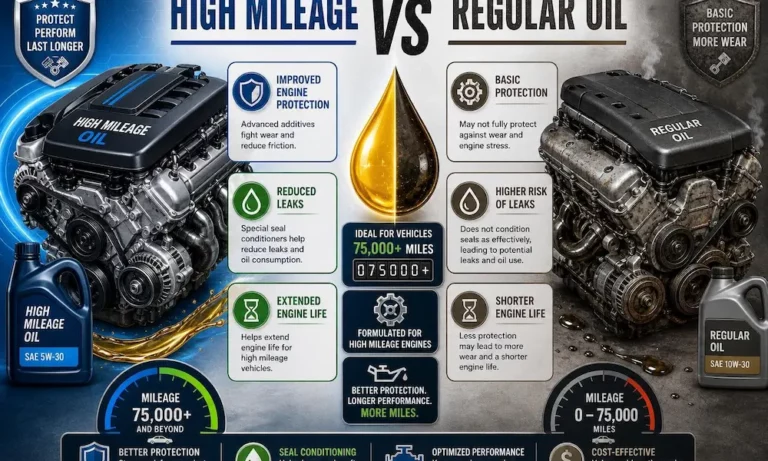
Your car just rolled past 75,000 miles, and now you’re staring at two different oil jugs wondering which one to grab. High mileage oil vs regular — does it actually matter, or is it just marketing fluff? Spoiler: there’s real chemistry behind the difference, and choosing wrong could cost you. Read on, and you’ll know exactly what your engine needs.
What Makes an Engine “High Mileage” Anyway?
The 75,000-mile mark is the industry’s unofficial checkpoint. It’s not a hard rule — your engine doesn’t suddenly fall apart overnight. But statistically, this is when wear symptoms start showing up.
Here’s what’s actually happening inside an older engine:
- Bearing clearances widen as metal slowly wears away
- Piston rings lose tension, letting oil sneak into the combustion chamber
- Rubber seals and gaskets harden, shrink, and become brittle
- Sludge and carbon deposits build up from years of short trips and thermal stress
CARFAX confirms that these mechanical changes alter what your engine needs from its lubricant. A 10-year-old engine with 90,000 miles simply doesn’t have the same needs as a brand-new one fresh off the lot.
The average American car is now 12 years old. That means millions of vehicles are quietly dealing with these exact issues every day.
High Mileage Oil vs Regular: The Core Difference
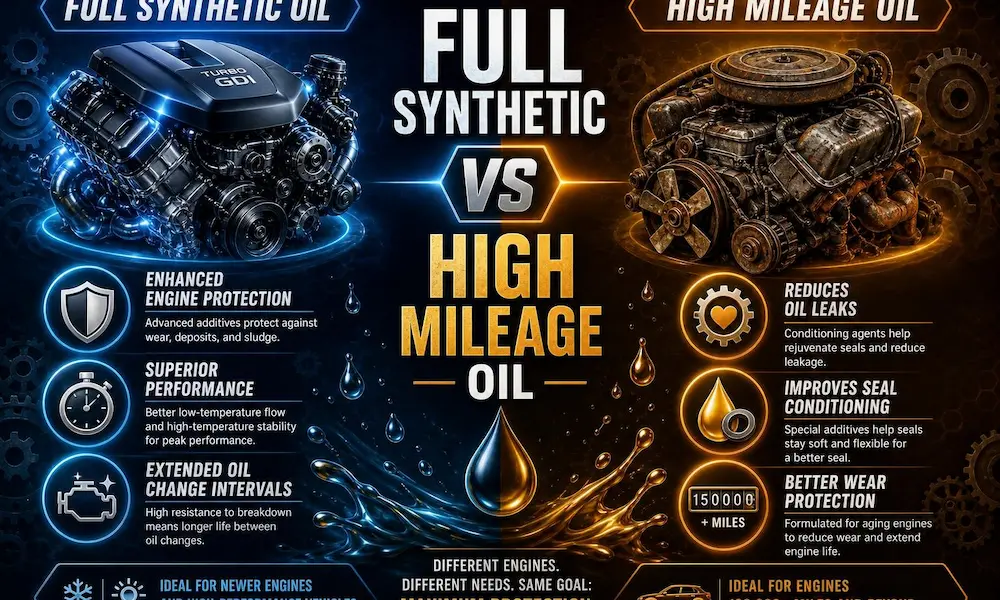
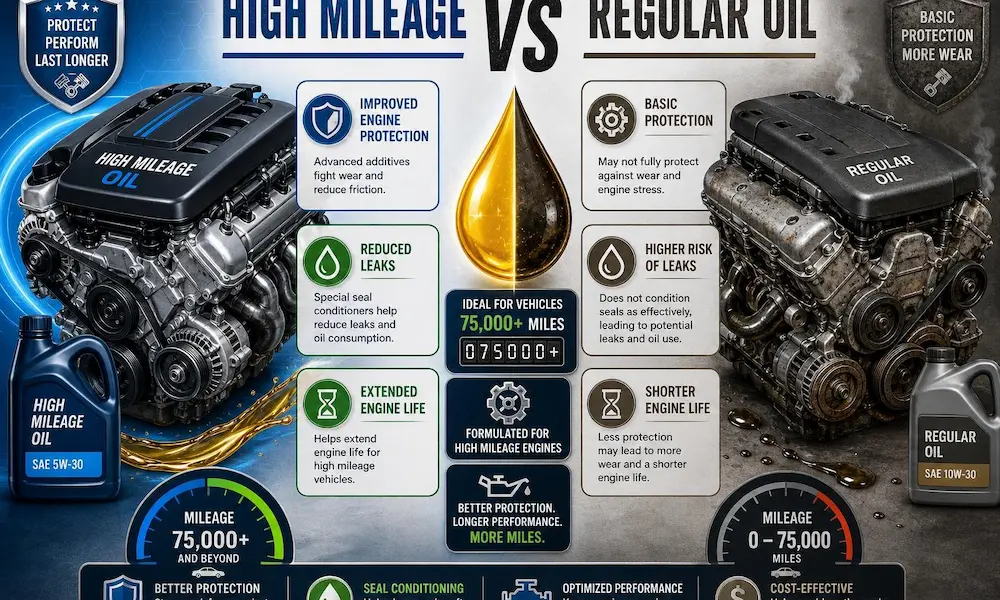
Regular oil is designed to protect a healthy engine. High mileage oil is designed to fix problems in an aging one.
Think of it this way: regular oil is maintenance. High mileage oil is maintenance plus light therapy for a tired engine.
Both types share the same base oil foundation — but high mileage formulations carry a specialized additive package targeting seal degradation, widened clearances, and years of deposit buildup.
Here’s a side-by-side comparison of what each oil actually does:
| Feature | Regular Oil | High Mileage Oil |
|---|---|---|
| Primary goal | Protect new or well-maintained engines | Address wear symptoms in aging engines |
| Seal conditioners | None or minimal | Yes — esters that rejuvenate hardened seals |
| Anti-wear additives | Standard ZDDP levels | Higher concentration + friction modifiers |
| Detergency level | Moderate | Aggressive — targets old deposits and sludge |
| Viscosity at temp | Standard for grade | Slightly thicker within the same SAE grade |
| Best for | Under 75,000 miles | 75,000+ miles or visible wear symptoms |
The Seal Conditioner Difference (This Is Why Leaks Stop)
Notice a small oil spot on your driveway? That’s probably a shrunken seal.
High mileage oils contain ester-based seal conditioners that absorb into hardened rubber gaskets and cause them to swell slightly. This restores some of their original flexibility and seals up small seeps around valve covers, oil pans, and timing covers.
It sounds almost too simple. But it works — for the right kind of leak.
What seal conditioners can’t do:
- Fix a physically torn gasket
- Repair a cracked or structurally failed rear main seal
- Stop a large, active leak
And here’s something worth noting: don’t use high mileage oil in a new engine. The seals in a new engine are already at peak flexibility. Adding swelling agents to them could over-soften the material and cause premature failure. It’s a case of too much of a good thing.
How High Mileage Oil Fights Engine Sludge
Short trips are brutal for engines. If you regularly drive less than five miles at a time, your engine never fully warms up. Moisture from combustion stays in the oil, reacts with it, and forms sludge — a thick, tar-like substance that clogs oil passages and starves parts of lubrication.
High mileage oil fights this with a more aggressive detergent and dispersant package:
- Detergents (calcium or magnesium-based) scrub existing carbon deposits and varnish off internal surfaces
- Dispersants surround loosened particles and keep them suspended in the oil so they drain out at the next change
This is especially useful if you’ve bought a used car with an unknown maintenance history. Switching to high mileage oil acts as a slow, safe clean-up — much safer than an aggressive chemical engine flush, which can dislodge large debris chunks that clog the oil pump.
Viscosity: Why High Mileage Oil Runs a Little Thicker
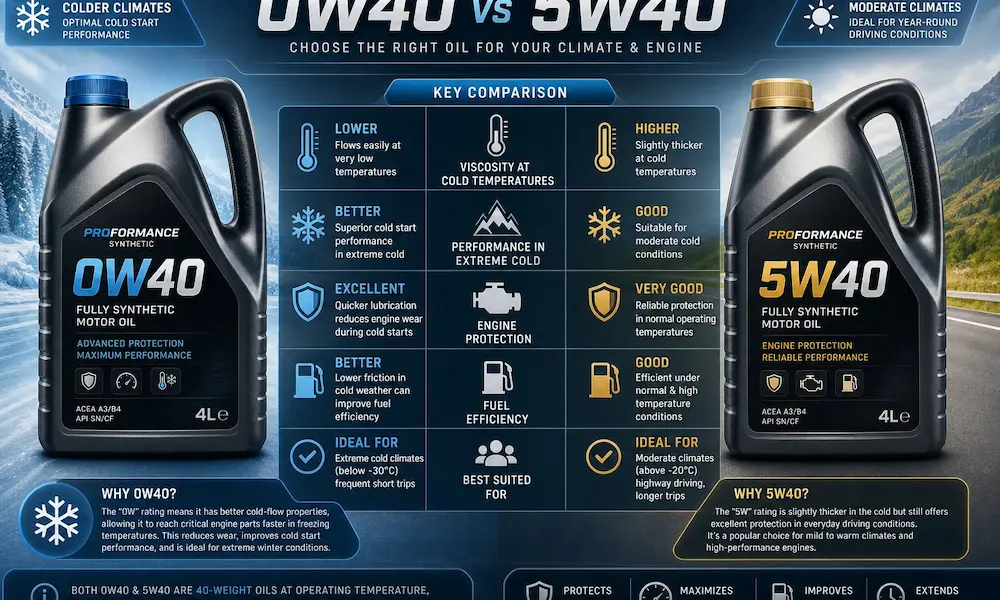
Viscosity is how thick or thin oil is. The SAE grading system uses numbers like 5W-30 to describe this. The first number (5W) indicates cold-weather flow. The second (30) indicates thickness at operating temperature.
High mileage 5W-30 and regular 5W-30 must both fall within the same SAE window. But high mileage versions are typically blended toward the thicker end of that range. Here’s why that matters for older engines:
- Maintains oil pressure in engines with worn bearings where clearances have widened
- Reduces oil burn-off by preventing oil from slipping past worn piston rings into the combustion chamber
- Quiets mechanical clatter with a thicker cushion between worn metal surfaces
One important warning: don’t over-correct by jumping to a much thicker oil. Oil that’s too thick takes longer to reach critical parts during cold starts, strains the oil pump, and hurts fuel economy. Stick within your manufacturer’s recommended range unless a mechanic specifically advises otherwise.
| Viscosity Grade | Best For | Cold Performance |
|---|---|---|
| 0W-20 | Modern hybrids and high-efficiency sedans | Maximum cold flow |
| 5W-20 | Standard modern passenger cars | Fast cold flow |
| 5W-30 | Most SUVs and trucks | Versatile across climates |
| 10W-30 | Older vehicles or warm climates | Slower cold flow |
| 10W-40 | High-wear engines with leaks or heavy loads | Best for warm starts |
Turbo Engines and GDI: Special Considerations
Modern engines are smaller and more complex than ever. To meet federal fuel economy standards, manufacturers shifted to turbocharged and Gasoline Direct Injection (GDI) engines. These run hotter and harder — which creates unique aging challenges.
Turbocharger Coking
Turbos spin at insane speeds and get extremely hot. If oil breaks down thermally, it bakes onto the turbo’s shaft as hard carbon deposits. Synthetic high mileage oils resist this thermal breakdown far better than conventional oils.
Low-Speed Pre-Ignition (LSPI)
GDI engines are prone to fuel dilution — unburned gas washing past rings and thinning the oil. They’re also vulnerable to Low-Speed Pre-Ignition, which can literally shatter pistons.
If you drive a modern turbocharged car with higher mileage, make sure any high mileage oil you pick carries the latest API SP or ILSAC GF-6 certification. An older-formula oil can actually increase your LSPI risk.
What the Labels Actually Mean: Base Oil Groups Explained
Not all “synthetic” oil is created equal. The American Petroleum Institute classifies base oils into five groups:
- Groups I & II — Refined from crude oil; standard conventional oils
- Group III — Highly refined; often marketed as synthetic
- Groups IV & V — True synthetics (polyalphaolefins and esters); best thermal stability and purity
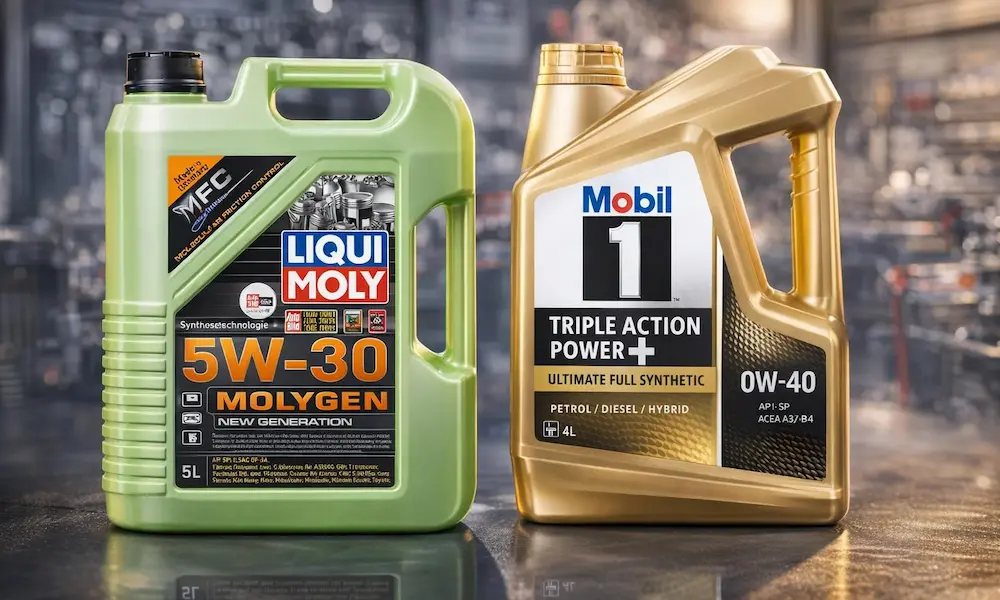
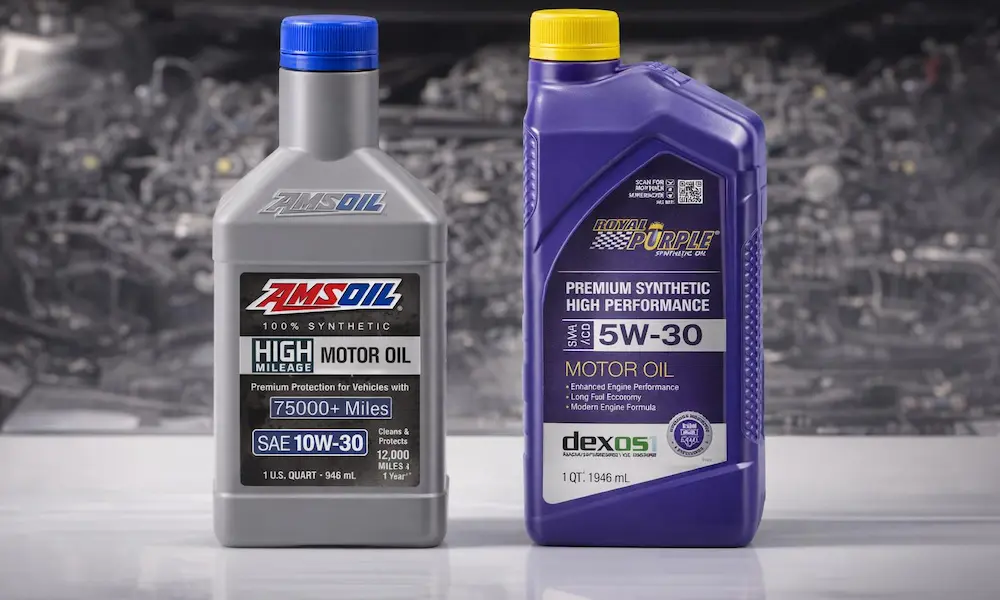
Most high mileage oils blend multiple groups. Here’s how popular brands stack up:
| Brand | Type | Base Oil Groups |
|---|---|---|
| Pennzoil Platinum HM | Full Synthetic | Groups I–V |
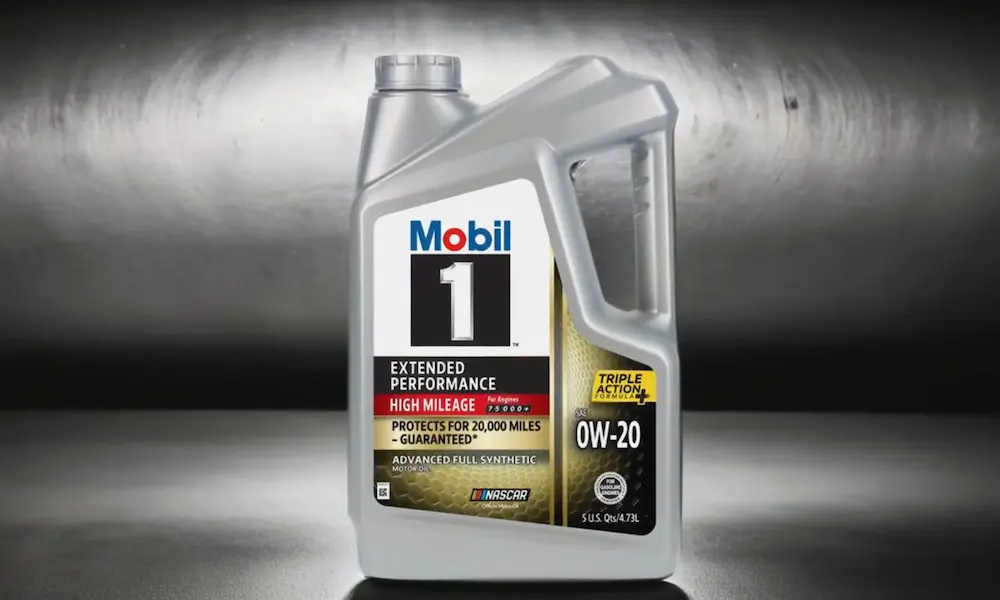
| Mobil 1 High Mileage | Full Synthetic | Groups III, IV, V |
| Valvoline MaxLife | Synthetic Blend | Groups II & III |
| Amsoil Signature | Premium Synthetic | Primarily Groups IV & V |
| Super Tech (Walmart) | Full Synthetic | Meets API/ILSAC standards |
How Much Does High Mileage Oil Actually Cost?
Here’s where it gets practical. You don’t need to spend a fortune to get high mileage protection.
| Retailer | Product | Approx. Price (5 qt) |
|---|---|---|
| Walmart | Super Tech Full Synthetic HM | ~$17.97 |
| Walmart | Mobil 1 High Mileage | ~$24.97 |
| Walmart | Pennzoil Platinum HM | ~$25.97 |
| AutoZone | Mobil 1 High Mileage | ~$40.99 |
| Amazon | Various name brands | $20–$30 |
Walmart consistently undercuts auto parts stores by 40–50% on the same products. And Walmart’s house brand, Super Tech, meets the same API and ILSAC certifications as premium brands. For a high-mileage vehicle owner on a budget, it’s hard to beat.
When to Switch — And When to Stay Put
Keep using regular oil if:
- Your engine is under 75,000 miles and shows zero symptoms
- The vehicle is still under a powertrain warranty (stick to the owner’s manual spec)
- You’ve used quality synthetic oil consistently and have no leaks, no consumption issues, no noise
Well-maintained engines can reach 200,000 miles on regular synthetic without needing high mileage formulations.
Switch to high mileage oil when you notice:
- Oil seepage — moisture or staining around gaskets or seals
- Increased oil consumption — needing a top-off between changes
- Valvetrain noise — ticking or clattering, especially when warm
- Age over 8–10 years — even with lower miles, seals age based on time, not just distance
Valvoline recommends treating these symptoms as your signal, not just the odometer number.
Two Common Myths, Busted
Myth #1: Switching to high mileage oil causes new leaks.
Wrong. High mileage oil doesn’t create leaks — it exposes ones that already exist. If a leak seems worse after a switch, the new oil’s detergents likely dissolved the sludge that was acting as an accidental plug. The leak was always there.
Myth #2: Once you start, you can never go back.
Nope. High mileage oil is just regular oil with extra additives. Switching back won’t harm your engine. The seal-conditioning benefits will gradually fade, but nothing breaks. It’s not a one-way door.
Match the Oil to the Engine’s Condition
The high mileage oil vs regular debate isn’t really a debate — it’s a timing question. Regular oil is excellent at protecting a healthy engine. High mileage oil steps in when that engine starts showing its age.
Watch for the signs: seepage, consumption, noise, or a vehicle that’s simply been around the block a few hundred thousand times. When those show up, high mileage formulations give your engine exactly what it needs — better seal support, stronger anti-wear protection, and more aggressive cleaning power.
And the best part? You don’t need to spend a lot to get it right. Whether you grab a jug of Super Tech at Walmart or spring for Mobil 1 full synthetic, the chemistry is there. Pick what fits your budget, match the viscosity to your owner’s manual, and check that API certification label. Your engine will thank you.