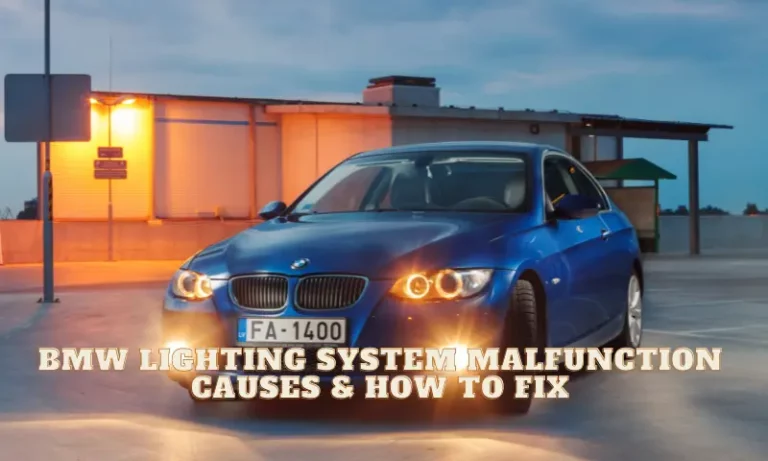
You’re cruising down the highway when that dreaded warning pops up: “Lighting System Malfunction.” Your heart sinks—and your wallet feels lighter already. But hold on. Before you panic or hand over thousands at the dealership, let’s break down what’s actually happening under your BMW’s hood and how you can tackle it without breaking the bank.
What a BMW Lighting System Malfunction Really Means
Here’s the thing: when your BMW throws a lighting system malfunction warning, it’s not always about a dead bulb. Modern BMWs run on complex computer networks where your headlights talk to modules, which talk to other modules, which eventually talk to your dashboard.
The warning could mean anything from a simple bulb failure to a corrupted computer module. Your car’s brain—whether it’s the Footwell Module (FRM), Front Electronic Module (FEM), or Body Domain Controller (BDC)—monitors every lighting circuit constantly. When something’s off, even slightly, it triggers the warning.
The tricky part? The same warning light appears whether you’ve got a $5 bulb problem or a $1,500 module failure. That’s why proper diagnosis matters more than guessing.
How BMW’s Lighting Control Works (The Simple Version)
Think of your BMW’s lighting system like a smart home. You don’t flip a switch that directly turns on a light. Instead, the switch sends a signal to a controller, which then decides whether to power the light.
In E-Series BMWs (2004-2013), the FRM handles this job. It sits in your driver’s footwell and controls headlights, tail lights, windows, and mirrors. The F-Series (2012-2018) upgraded to the FEM system, which combined multiple functions into one super-module. The newest G-Series models (2019+) use the BDC, integrating even more systems.
Each generation brought more features but also new ways to fail. Let’s dig into what actually goes wrong.
The E-Series Problem: When Your Module “Bricks”
E-Series owners face a unique nightmare called “bricking.” Your FRM module doesn’t just fail—it completely locks up, refusing to communicate with anything.
Why It Happens
The FRM stores critical data in something called EEPROM memory. Every time you start your car, lock your doors, or turn on your lights, the module writes tiny updates to this memory. The problem? If your battery voltage drops or spikes during one of these write operations—like when you disconnect the battery to change it—the data corrupts.
The module tries to boot up, can’t read its own memory, and gives up entirely. Game over.
The Tell-Tale Signs
You’ll know you’ve got a bricked FRM when:
- Your headlights stay on permanently, even with the switch off
- Windows won’t roll up or down
- Turn signals (indicators) don’t work
- Diagnostic scanners show “No Communication” with the module
- Your door mirrors won’t fold
The good news? The hardware isn’t dead. The module just needs its memory wiped and reflashed—like rebooting a frozen computer. Specialists can bench-flash a bricked FRM for $150-$300, saving you from a $1,000+ dealer replacement.
The Short Circuit Counter Trap
Here’s where aftermarket LED bulbs bite you. BMW’s lighting modules don’t just turn lights on and off—they actively monitor each circuit for problems.
How the Lockout Works
The FRM sends test pulses through each bulb circuit to check resistance. A halogen bulb has predictable resistance. An LED? Completely different. Every time your cheap LED flickers or doesn’t match the expected resistance, the FRM registers a “short circuit” event.
After 50 of these events, the module permanently locks out that specific light circuit. The light goes dark, and your dashboard lights up with the malfunction warning.
Clearing standard error codes won’t fix this. The counter lives in protected memory that requires BMW’s Tool32 software to reset. You can’t trick it, and you can’t bypass it without proper tools.
The Fix
If you’re installing LED bulbs, you need two things:
- Quality LEDs with built-in error cancellers that mimic halogen resistance
- Coding to disable the monitoring checks using BimmerCode or similar software
Skip either step, and you’re gambling with a lockout that’ll cost you a shop visit.
F-Series: When Physics Fights Electronics
The F30 and F10 generation swapped software problems for physical ones. The most common BMW lighting system malfunction in these cars comes from good old-fashioned melting plastic.
The Melting Connector Issue
Your headlight connector carries serious current—4 to 5 amps for a halogen bulb. Over time, road vibration and oxidation increase the electrical resistance in the connector pins. More resistance means more heat. More heat means melted plastic.
The connector literally melts, losing contact or creating a short circuit. You’ll see charred yellow or brown wires and deformed plastic housings.
Replacing the bulb won’t help. You need to cut out the damaged section and splice in a high-temperature repair pigtail. These cost $15-$40 and prevent the problem from recurring.
The Rear Light Ground Recall
BMW’s rear light assemblies have a dirty secret: they cheap out on ground wires. All your brake lights, turn signals, and running lights share one undersized ground connection.
When you’re braking while waiting to turn (all lights active simultaneously), the current overloads that single ground pin. It heats up, melts, and creates intermittent connections.
This issue triggered multiple recalls, including recall 19V-074 for the X1. The fix involves running an additional, thicker ground wire directly to the chassis, bypassing the faulty connector entirely.
Water: The Silent BMW Lighting System Killer
Adaptive LED and Xenon headlights contain sophisticated driver modules called TMS units. These sit at the bottom of the headlight housing—right where water pools if the seal fails.
How Water Wrecks Modules
Your headlight isn’t hermetically sealed. It’s vented to prevent pressure buildup. Normal condensation is fine and usually evaporates. But if the lens seal cracks or the vent clogs, water gets in and can’t get out.
Gravity pulls moisture down onto the TMS module’s circuit board. The board corrodes rapidly—you’ll see green crusty deposits on the connector pins. The module sends garbage signals onto the network, triggering “Adaptive Headlight Malfunction” warnings.
BMW’s service bulletin SI B63 05 16 distinguishes between normal mist (acceptable) and standing water (requires replacement). If you see large droplets or streaks inside the lens, you’ve got a problem.
The fix requires addressing both the leak (reseal or replace the housing) and the damaged module. Just replacing the module without fixing the leak guarantees you’ll be back in six months.
G-Series: The Thermal Time Bomb
The newest BMWs pack incredible technology—laser headlights, ultra-bright DRLs, active cooling fans. They also pack new failure modes you’ve never seen before.
The Yellow DRL Problem
Walk past a G20 3-Series or G30 5-Series parking lot, and you’ll spot them: headlights with sad, yellow-brown daytime running lights instead of crisp white.
This isn’t dirt or oxidation. The acrylic light tubes are literally burnt. The LED modules overheat, scorching the tip of the plastic waveguide that creates the iconic corona rings. The burnt plastic filters out blue light, leaving only yellow-brown wavelengths.
BMW claims the light tubes aren’t serviceable and wants $4,500+ per headlight for replacement. The enthusiast community disagrees. You can carefully disassemble the headlight, grind away the burnt section of the tube, and replace just the LED boards for $200-$500.
It’s finicky work, but it beats writing a check with four digits.
Laser Headlight Safety Shutdowns
BMW’s laser headlights are Class 3B laser devices—powerful enough to damage eyesight if misaligned. Because of this, they’re covered in safety protocols.
The system monitors the cooling fan speed, lens integrity, and vertical aim constantly. If any parameter’s wrong, the Body Domain Controller assumes there’s a risk of stray laser radiation and shuts down the laser module.
You’ll get warnings like “Headlight Vertical Aim Control Failure” or “Right Low Beam Malfunction.” The headlights aim sharply downward to keep any light on the road surface only.
Diagnosis requires checking not just electronics but physical components: the leveling motor, ride height sensors, and lens condition. A cracked lens alone will disable the laser system.
How to Actually Diagnose Your BMW Lighting System Malfunction
Stop throwing parts at the problem. Start with information.
Consumer-Level Tools
BimmerLink is your first stop. This $30 app reads BMW-specific fault codes that generic OBD2 scanners miss. It’ll tell you whether you’re dealing with a bulb issue, a module communication failure, or a lockout.
BimmerCode lets you modify module settings. Installing LED bulbs? Disable the voltage monitoring to prevent the short circuit counter from incrementing. It’s preventative medicine.
What the Codes Mean
Here’s a quick decoder for common faults:
9CBB: Short circuit detected—could be a bad bulb or a locked-out circuit requiring counter reset
800FC8: Communication lost with headlight driver—usually water damage to the TMS module
8041A8: Welcome light repeat lock—your battery voltage is too low during starts
CD9437: FlexRay communication failure—serious module or wiring harness problem
Each code points you in a specific direction. Don’t guess; read the code first.
Dealer-Level Diagnostics
If you’ve got serious issues, ISTA+ (BMW’s dealer software) is the gold standard. It provides network topology maps, guided test plans, and interactive wiring diagrams.
For example, if your laser headlight shows a “Fan Speed Deviation” fault, ISTA can command the fan to run at specific RPMs while you verify operation. You can’t do that with a $20 code reader.
The Real Cost of BMW Lighting System Malfunction Repairs
Let’s talk money. Dealer quotes can shock you, but independent shops and DIY repairs offer alternatives.
| Issue | Dealer Cost | Independent Shop | DIY Cost |
|---|---|---|---|
| Bricked FRM Module | $1,000-$1,500 | $150-$300 (bench repair) | $50 (if you own BDM tools) |
| Short Circuit Counter Reset | $200-$300 | $100-$150 | Free (with Tool32 access) |
| Melted Headlight Connector | $300-$500 | $100-$200 | $15-$40 (repair pigtail) |
| Water-Damaged TMS Module | $600-$1,200 | $300-$600 | $150-$400 (aftermarket module) |
| Yellow DRL Light Tube | $4,500+ (full headlight) | $800-$1,500 | $200-$500 (grind & replace LEDs) |
| Rear Ground Recall Fix | Free (if recall applies) | $100-$200 | $20 (wire and terminal) |
The pattern’s clear: knowledge saves you thousands. Understanding what’s actually broken lets you choose the right repair level.
Preventing BMW Lighting System Malfunctions
An ounce of prevention beats a pound of expensive repairs.
Battery Changes: Do It Right
Never disconnect your E-Series battery without a memory saver. The voltage drop during disconnection is prime bricking territory. Use a 12V adapter plugged into the cigarette lighter or a proper OBDII memory saver to maintain clean power to the modules.
LED Retrofits: Quality Matters
Cheap Amazon LED bulbs are lottery tickets. Sometimes they work. Often they trigger lockouts or flicker annoyingly. Invest in quality units with built-in CAN-bus adapters and proper resistors.
Then code out the monitoring functions. The module can’t lockout circuits it’s not monitoring.
Connector Inspections
Once a year, pop your headlight housings and check the connectors. Look for:
- Discolored plastic (browning or melting)
- Green corrosion on pins
- Loose or wobbly connections
- Oxidation on metal contacts
A $2 bottle of dielectric grease and five minutes of inspection prevents $500 wiring harness repairs.
Moisture Checks
After car washes or heavy rain, glance at your headlights. Fine mist that clears after driving is normal. Standing water droplets or persistent fogging means a failed seal.
BMW’s service bulletin says you can try running high beams for 30 minutes to dry minor condensation. If it comes back, you need resealing or replacement.
Rodents: The Unexpected Enemy
BMW switched to soy-based wiring insulation years ago. It’s biodegradable and eco-friendly. It’s also delicious to rodents.
The Damage Pattern
Rats and mice chew through wiring harnesses in predictable spots: the headlight harness behind the bumper and the knock sensor harness under the intake manifold.
You’ll get bizarre error clusters—like “Left High Beam Malfunction” plus “Ambient Temperature Sensor Failure”—because the rodent severed a specific harness branch.
Prevention
If you park outdoors or in a garage with rodent activity:
- Use ultrasonic rodent repellers in the engine bay
- Spray wiring harnesses with rodent deterrent tape or coating
- Check for nesting materials (shredded paper, acorns) during oil changes
Rodent damage isn’t covered by warranty. It’s expensive and completely preventable.
Generation-Specific Quick Reference
Your BMW’s model year determines what can go wrong.
E-Series (2004-2013): Watch for FRM bricking after battery changes and short circuit counter lockouts from LED retrofits. Permanent low beams and dead windows scream “bricked module.”
F-Series (2012-2018): Inspect headlight connectors for melting and rear light grounds for corrosion. Water damage to TMS modules is common—check for condensation in adaptive headlights.
G-Series (2019+): Yellow DRL discoloration and laser headlight thermal issues dominate. Cooling fan failures trigger safety shutdowns. These are the most expensive repairs—choose your battles wisely.
The Bottom Line on BMW Lighting System Malfunctions
That dashboard warning doesn’t have to mean financial disaster. Modern BMW lighting is complex, but the failure modes are well-documented and predictable.
Start with proper diagnosis. A $30 BimmerLink app tells you more than hours of guessing. Match your fault code to the actual problem—don’t let someone sell you a $1,200 headlight when you need a $40 connector.
Understand your car’s generation and its weak points. E-Series owners need voltage stability during battery work. F-Series owners need to watch physical connections. G-Series owners face thermal challenges requiring different approaches.
The dealers aren’t trying to rip you off (usually), but they’re stuck with BMW’s repair procedures: replace entire assemblies, no exceptions. Independent specialists and informed DIYers can often repair individual components for 20-30% of the dealer cost.
Your BMW’s lighting system is engineered brilliantly—when it works. When it doesn’t, knowledge is your most valuable tool. Now you’ve got it.