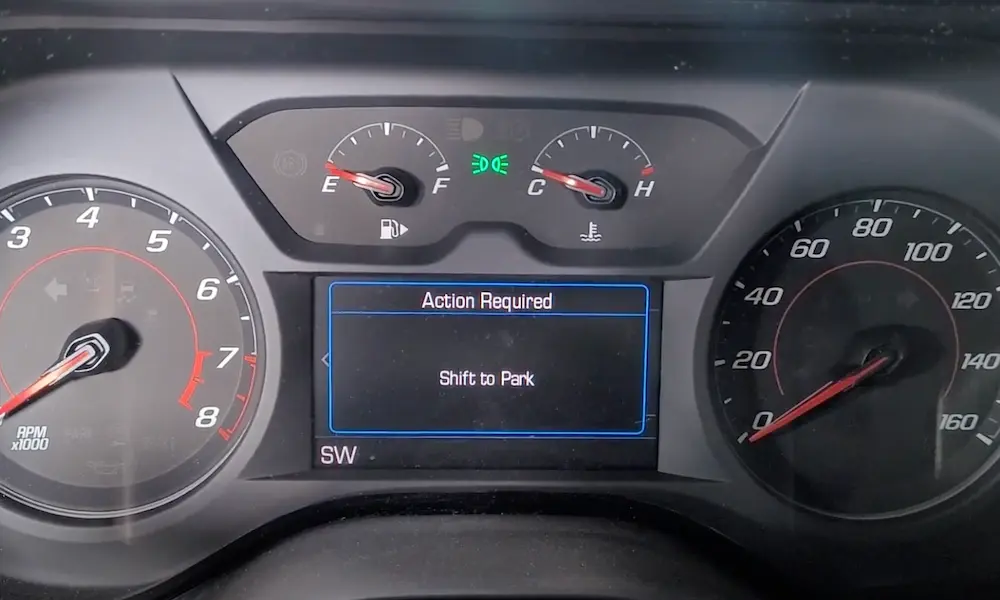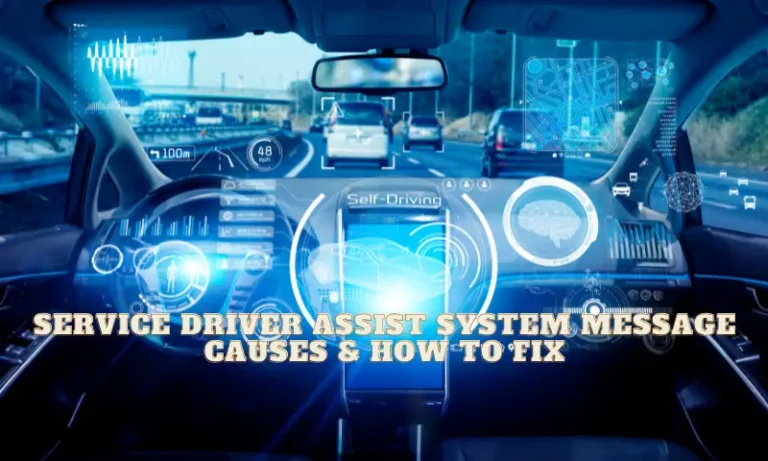
That “Service Driver Assist System” warning just lit up your dashboard. Your adaptive cruise control won’t work, lane-keeping is gone, and you’re wondering if it’s safe to drive. Don’t panic—this warning is common, and in most cases, it’s fixable. Let’s break down exactly what’s happening and what you should do next.
Understanding Your Driver Assist System
Your vehicle’s driver assist system isn’t just one part—it’s a network of cameras, radar sensors, and computers working together. These systems create a 360-degree view around your car using:
Front-facing cameras mounted near your rearview mirror that watch lane markings and detect pedestrians. Radar sensors hidden behind your front grille that measure distance to vehicles ahead. Ultrasonic sensors in your bumpers for parking assistance.
This technology operates through a sophisticated human-machine interface that provides two types of support. Passive warnings alert you to dangers—like lane departure warnings or blind spot indicators. Active interventions actually control parts of your vehicle, including automatic emergency braking and lane-keeping assist.
Here’s the critical part: even with these features active, you’re fully responsible for driving. According to NHTSA, these are assistance tools, not autopilot systems.
What the Warning Actually Tells You
The “Service Driver Assist System” message is a catch-all alert. Your car’s computer detected something wrong within the sensor network—a blocked camera, failed component, or conflicting data from multiple sources.
When this fault triggers, your vehicle plays it safe by shutting down affected systems. It won’t risk erratic behavior like phantom braking or incorrect steering inputs.
Features That Stop Working
Once that warning appears, expect these systems to go offline:
- Adaptive cruise control won’t maintain distance from cars ahead
- Lane-keeping assist stops providing steering corrections
- Blind spot monitoring indicators won’t illuminate
- Forward collision alerts and automatic emergency braking may be disabled
- Parking sensors and 360-degree cameras often fail
- Heated steering wheels sometimes stop working (yes, really)
Some failures cascade unexpectedly. GM vehicles have experienced complete driver assist shutdowns from a broken wire in the driver’s seat vibration motor—a component that seems completely unrelated.
Can You Still Drive Safely?
Your car is mechanically safe to drive. The engine runs fine, steering works manually, and your brakes function normally.
But here’s where it gets tricky. You’ve lost your electronic safety net. If you’ve grown accustomed to blind spot monitoring for lane changes or rely on forward collision warnings to manage following distance, you’re now operating without those aids.
The most dangerous scenario happens before the system fully shuts down. Drivers report alarming phantom braking incidents where the collision system detected non-existent obstacles and slammed the brakes. Others experienced sudden cruise control disengagement in heavy traffic.
You can drive to a service center, but stay extra alert. Your automated safety features are offline.
Why This Warning Appears
Four main categories cause this fault, ranging from simple fixes to expensive hardware failures.
Dirty or Blocked Sensors (Easy Fix)
This is the most common culprit. Your sensors need a perfectly clear view to function.
Dirt and grime on your windshield or front grille blocks camera and radar signals. Honda owners frequently resolve this by simply cleaning sensors.
Winter weather creates havoc. Snow and ice accumulation on your grille, bumpers, or windshield will trigger the warning. Road salt is equally problematic—dried salt spray blocks sensor lenses just like snow.
Heavy rain or fog can temporarily disable camera-based systems. Subaru’s EyeSight system is particularly sensitive to visual obstructions.
Software Glitches (Frustrating)
These intermittent faults drive owners crazy because they come and go randomly.
A control module can simply “lock up” like your computer freezing. Owners report success by turning the vehicle off, waiting 5-10 minutes, and restarting to force a system reboot.
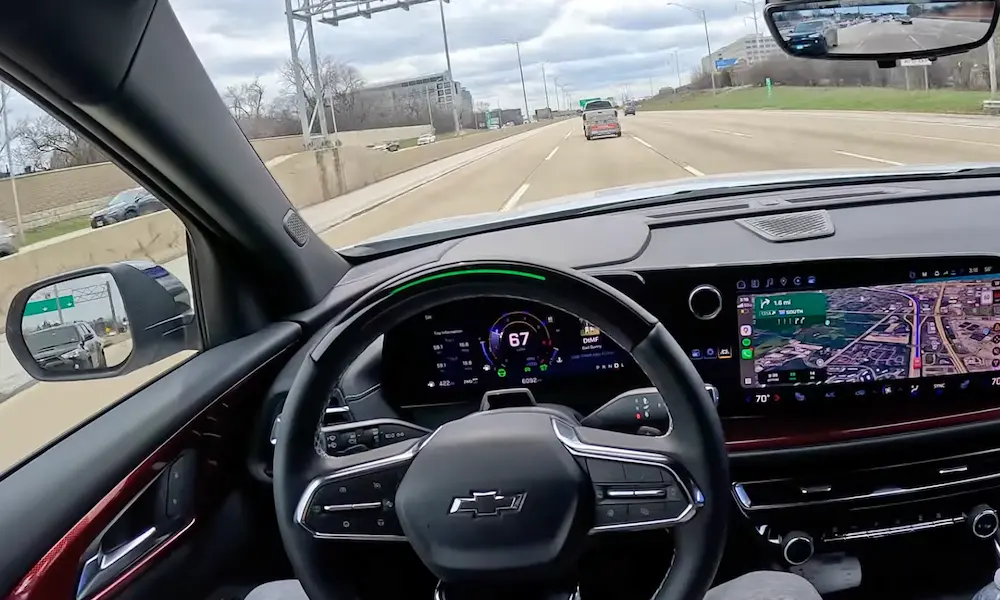
Software bugs plague newer vehicles. GM Super Cruise owners consistently report dealers acknowledging it’s a “common problem” requiring a software update that isn’t available yet.
OnStar-equipped vehicles have a “watchdog” function that automatically reboots when it detects errors. If the error persists, you’ll see the warning light flash on and off as the system repeatedly tries to reset itself.
Sensor Misalignment (Technical)
Your ADAS sensors require millimeter-perfect precision. If alignment is off even slightly, the system “sees” threats in the wrong place or misses them entirely.
Minor fender benders that leave no visible damage can knock sensors out of alignment. A parking lot bump is enough.
Windshield replacement requires camera recalibration. If the shop skips this step, you’ll get the service warning.
Mechanical issues like hitting a pothole or suspension problems can affect sensor positioning relative to the vehicle’s centerline.
Component Failure (Expensive)
Sometimes the hardware just breaks.
Cameras or radar units fail from extreme heat or manufacturing defects. Wiring gets damaged by rodents, corrosion, or vibration.
Here’s a weird one: GM Technical Service Bulletin PIT5445B addresses 2014-2018 Silverados, Tahoes, and Sierras where the fault isn’t a camera or radar—it’s the driver’s seat haptic motor. A broken wire in the seat’s vibration system triggers the entire driver assist shutdown.
Brand-Specific Issues You Should Know
Different manufacturers use different systems, each with unique failure patterns.
General Motors Problems
GM owners face the most widespread issues. The “Service Driver Assist System” warning is prolific on Silverados, Sierras, Tahoes, and Blazer EVs.
Super Cruise failures are common. Dealers often can’t fix the problem—they find no error codes, replace cameras with no improvement, or admit parts are backordered with “no fix available.”
On 2014-2018 models, check that haptic seat motor first.
Ford Co-Pilot360
Ford’s system includes Pre-Collision Assist, BLIS (Blind Spot Information System), and Lane-Keeping. Advanced packages add Adaptive Cruise Control with Stop & Go. Faults in the forward radar or windshield camera trigger service messages.
Toyota and Honda
Toyota Safety Sense includes Pre-Collision System, Dynamic Radar Cruise Control, and Lane Departure Alert. Honda Sensing typically shows a more specific message: “Some driver-assist systems cannot operate.”
This message is usually environmental—dirt, snow, or ice on the windshield camera or front radar.
Subaru EyeSight
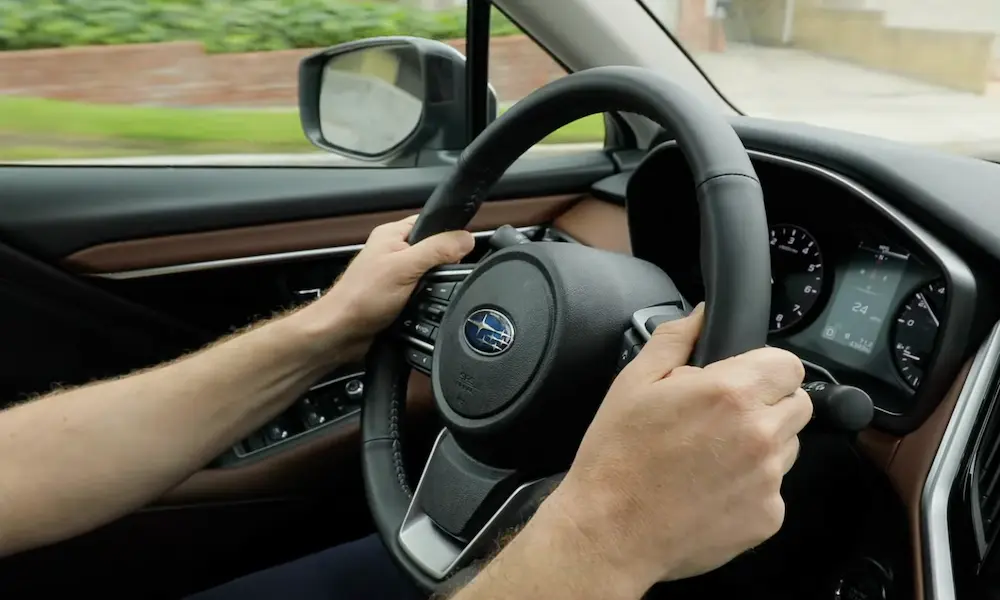
Subaru’s system relies almost entirely on dual-color cameras behind the windshield. This makes it highly effective but uniquely sensitive to visual obstructions. Heavy fog, high humidity, or a dirty windshield frequently triggers the “EyeSight Off” warning.
What You Can Try First
Before booking a service appointment, try these two steps.
Clean every sensor thoroughly. Use a soft cloth and appropriate cleaners on:
- Your windshield, especially the area in front of the rearview mirror (inside and out)
- The brand emblem on your front grille (radar hides behind it)
- Small circular sensors on your bumpers
- Camera lenses under side mirrors
Restart your vehicle completely. If it’s a software glitch or module lockup, turning the car off, waiting 5-10 minutes, and restarting might clear the error.
Professional Repair Costs (The Hard Truth)
If the warning persists, you need professional help. ADAS has fundamentally changed vehicle repair economics.
A technician will scan for diagnostic trouble codes to identify the failing component. Repair involves either replacing the part or recalibrating it.
The Recalibration Process
This isn’t a simple computer reset. Recalibration requires specialized equipment and trained technicians using two methods:
Static calibration happens in the shop using specific targets placed at precise distances and angles from your vehicle. Dynamic calibration requires driving on well-marked roads for a set period so the system relearns its environment.
The process takes 15 minutes to several hours depending on how many systems need recalibration.
What You’ll Actually Pay
Here’s the financial reality based on AAA’s research and industry data:
| Repair Type | Calibration Only | Part + Labor + Calibration |
|---|---|---|
| Windshield Camera | $250 – $700 | $1,150 – $2,600 |
| Front Radar | $300 – $400 | $800 – $1,959+ |
| Blind Spot Monitor | $300 – $400 | $1,040 – $2,000 per sensor |
| 360-Degree Camera | $350 – $450 | Varies widely by camera |
| Parking Sensor | Usually not required | $300 – $1,000 per sensor |
Here’s something shocking: AAA found that a front radar sensor for a 2023 Nissan Rogue costs $928.82 if assembled in the United States. The identical part costs $1,559.95 if the car was assembled in Japan—a 68% price difference based solely on where your specific vehicle was built.
A minor fender bender now includes hundreds or thousands in electronic repair costs beyond traditional bodywork.
The Bigger Picture
The “Service Driver Assist System” warning exposes a fundamental contradiction in modern vehicles. These technologies demonstrably save lives, yet they’re remarkably fragile.
While NHTSA promotes ADAS as critical to reducing traffic fatalities, real-world testing shows limitations. Studies reveal systems “ping-ponging” within lanes or failing to react to stationary vehicles.
The known failures—when the system recognizes a fault and shuts down—are safer than unknown failures. Misaligned or faulty sensors providing incorrect data cause phantom braking or improper lane-keeping without warning.
The technology’s vulnerability to dirt, weather, and minor impacts contradicts the robust reliability required for primary safety systems.
Most concerning is the “diagnostic gap.” Technology complexity is outpacing service capabilities. Brand-new vehicle owners are told fixes aren’t available yet and persistent errors are “common problems.”
As ADAS transitions from luxury option to standard equipment, manufacturers must invest as heavily in diagnostic transparency and serviceability as they do in feature development. Until then, you’ll need to understand these systems’ limitations and be prepared for the “Service Driver Assist System” warning to eventually appear on your dash.
Clean those sensors regularly, drive attentively without over-relying on automation, and budget for the reality that modern vehicle repairs now include expensive electronic recalibration. That’s the price of driving a computer on wheels.