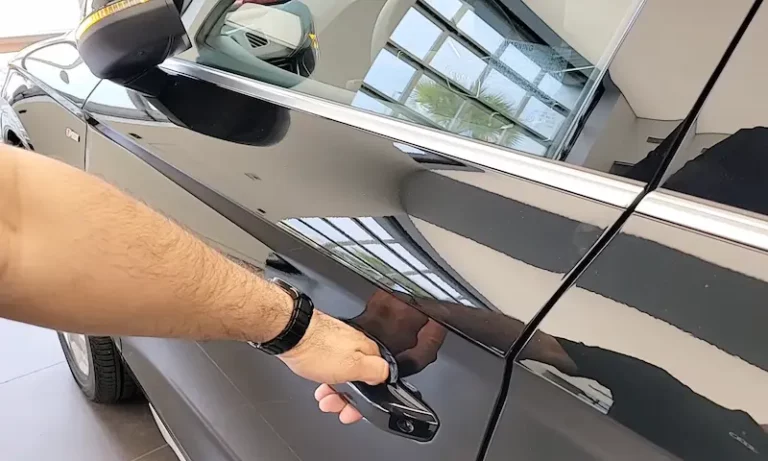
Your Audi’s locks are acting up — doors refusing to open, a warning flashing on the dash, or the alarm going off at 2 AM for no reason. There’s almost always a fixable cause behind an Audi central locking malfunction. This guide walks you through every layer of the problem — from dead key fobs to soaked control modules — so you can stop guessing and start fixing.
What’s Actually Controlling Your Audi’s Locks?
Most people assume central locking is simple. It’s not — especially in an Audi.
Modern Audi vehicles run their locking system through a network of control modules that talk to each other over a CAN-Bus and LIN network. The brain of the operation is the Comfort System Central Control Module (J393). It coordinates everything: remote signals, door handle sensors, alarm monitoring, and trunk release.
Each door has its own dedicated module:
| Module | Location | What It Controls |
|---|---|---|
| J393 | Luggage compartment (B8/Q5) or driver-side floor (B6/B7) | Master locking logic, alarm, remote authorization |
| J386 | Driver’s door | Lock actuator, mirror, window |
| J387 | Passenger door | Lock actuator, mirror, window |
| J388 | Rear left door | Actuator, window, child lock |
| J389 | Rear right door | Actuator, window, child lock |
When the J393 receives your key fob signal, it sends a digital command to J386–J389, which physically power the actuators. Every step in that chain is a potential failure point.
The Most Common Causes of Audi Central Locking Malfunction
1. Dead or Weak Key Fob Battery
Start here — it’s the easiest fix and the most overlooked cause. A weak CR2032 battery might still flash the fob’s LED, but it won’t send a strong enough signal to reach the vehicle’s antenna (usually built into the rear glass or C-pillars).
Other things that kill your fob signal:
- Nearby cell towers or high-voltage power lines
- Aftermarket dashcams or electronics causing radio frequency interference
- A fob that’s drifted out of sync after a long period with a dead battery
Replace the battery first. If that doesn’t work, the fob likely needs resynchronization.
2. Broken Wires in the Door Bellows
This one’s sneaky. Every time you open your door, the wiring harness flexes through a rubber bellows between the door and the body. Over time — especially on the A3 (8P/8V) and A4 (B7/B8) — those wires work-harden and snap.
When a wire breaks in the driver’s door bellows, you don’t just lose the lock. You can lose windows, mirrors, and communication to the entire door module. In some cases, a front harness break causes secondary failures in the rear doors because rear modules route signals through the front ones.
The tricky part? The break isn’t always visible through the insulation. You need continuity testing under load to catch high-resistance points.
3. Worn-Out Door Lock Actuators
The actuator is a small DC motor with plastic gears and microswitches. When it fails, you’ll typically hear:
- Clicking or grinding — stripped internal gears
- Slow or sluggish movement — dried-out lubricants or internal wear
Audi actuators also include a “Safe Lock” (deadlock) mechanism that physically disconnects the inner door handle from the latch. If that motor fails, a door can become permanently locked from the inside — a genuine safety hazard, not just an annoyance. This failure typically triggers an “Implausible Signal” fault code.
4. Water Ingress and a Soaked Control Module
This is where an Audi central locking malfunction gets expensive fast.
Blocked sunroof drains are a classic culprit. Each sunroof has four drain tubes — one per corner. Pine needles and debris block the rubber “nipples” at the exit points, water backs up into the headliner, and it runs straight down the A or C-pillars — often landing directly on the fuse panels or the J393 module.
On the A4 (B6/B7), the J393 sits under the driver-side carpet. When the cowl drains under the battery tray clog with leaves, the footwell floods and the module gets submerged.
Symptoms of a water-damaged J393:
- Alarm triggering randomly at night
- Windows rolling down by themselves
- Green corrosion on connector pins causing “phantom” signals
A clogged sunroof drain fix involves cutting the tapered tip off the drain nipples so debris passes through instead of blocking. But once water’s already in the cabin, you’re looking at a full interior strip, carpet drying, and likely a new module.
Reading the Error Codes: What Your Audi Is Actually Telling You
A quality diagnostic scan with VCDS or ODIS doesn’t just show fault codes — it shows history data from the last 10–20 locking events. That data reveals how the system last locked or unlocked: remote, door handle sensor, auto-lock, or interior button.
Here are the most common fault codes tied to an Audi central locking malfunction:
| Fault Code | Component | Likely Cause |
|---|---|---|
| 00928 | Front Driver Locking Module (F220) | Broken bellows wire or faulty actuator microswitch |
| 00929 | Front Passenger Locking Module (F221) | Faulty actuator or door harness short |
| 01334 | Rear Right Door Module (J389) | Broken CAN-Bus wire in B-pillar bellows |
| B122D29 | Central locking unit | Software logic error — fixed by SVM update 42A021 |
| B122B13 | Central locking motors | Open circuit — burnt actuator or disconnected plug |
If the history data keeps showing “Source ID 6” (driver door handle sensor) as the trigger for repeated locking events, that points to a shorted capacitive sensor in the handle — common on Advanced Key models.
The Software Fix: TSB 2055932/9 and SVM Update 42A021
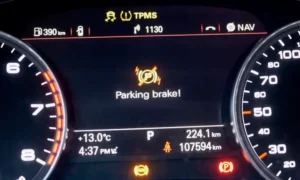
Not every Audi central locking malfunction involves broken hardware. Audi has confirmed a software bug affecting the Q7, A6, A7, and A8 (2017–2021). The symptom is a “Central locking malfunction!” message in the instrument cluster, sometimes paired with the alarm triggering when you open the door with the Advanced Key.
The root cause: door control modules misreading the state of the door contact switch. The fix is a Software Version Management (SVM) update using action code 42A021. According to the NHTSA technical service bulletin, technicians must “wake up” the modules by cycling the windows before the update will apply correctly.
| TSB | Affected Models | Fix |
|---|---|---|
| 2055932/9 | Q7, A6, A7, A8 (2017–21) | SVM Update 42A021 |
| 2063236/5 | A6, A7, A8, Q8 (2019–24) | Actuator inspection/replacement |
| 72K6 | A6, A6 Allroad, A7 | Campaign-specific software update |
Key Fob Won’t Work? Here’s How to Re-Sync It
Losing key fob pairing is more common than people think — it often happens after a vehicle battery replacement. The re-sync procedure depends entirely on your generation:
| Generation | Method | Summary |
|---|---|---|
| Early flip keys (A4 B6, A3 8P) | Manual (2-key) | Lock door manually; press Unlock; wait 10s; press Unlock again |
| Mid flip keys (A4 B7) | Manual (ignition) | Press Unlock; turn ignition ON 2s; turn OFF; remove key |
| Advanced Key (A4 B8, Q5 8R) | VCDS/ODIS required | Access Address 46; match remotes via adaptation channels |
| Proximity Smart Key (B9, 4M) | ODIS Online only | Requires SVM authorization and secure gateway access |
From the B8 generation onward, new keys can’t be programmed by the user. These vehicles use Audi’s FAZIT database, which requires a live server connection to authorize the new transponder ID.
Advanced Key fob battery dead? Place the fob against the symbol on the steering column or center console. The car’s immobilizer coil will energize the transponder chip through induction — enough to start the car even with a completely dead fob.
How to Get In When Everything Fails
If the whole electrical system is dead, you still have options.
Driver’s door: Pull the door handle and look for a plastic cap at the rear of the handle. Pop it off with the emergency blade stored inside the fob. Turn the blade anticlockwise to unlock mechanically.
Passenger and rear doors: These usually have no external keyhole. On the inner edge (end face) of each door, near the latch, there’s a small rubber cap. Remove it, insert the emergency blade, and turn it as far as it goes — clockwise for right-side doors, anticlockwise for left-side doors. Once the door closes, it can’t be opened from outside.
Fixing a Broken Door Harness the Right Way
If diagnostics confirm a broken wire in the bellows, a “twist and tape” fix won’t last. Here’s how to do it properly:
- Remove the door card with a T25 Torx driver and plastic trim tools
- Unplug the multi-pin connector at the A-pillar
- Thread the harness through the door frame into the door cavity
- Slide the new rubber bellows onto the wires before making any connections — you can’t stretch it over a completed harness
- Use solder sleeves instead of traditional soldering — these heat-shrink tubes melt solder and seal moisture simultaneously, avoiding the “hard spot” that causes new breaks
- Wrap the finished repair in amalgamating tape or Tesa cloth tape for abrasion resistance
This approach — documented in detail by real-world Audi repair guides — gives a lasting fix rather than a repair that fails again in six months.
Digital Keys Are Next — And They Bring New Problems
The 2025 Audi A5 and latest e-tron models now support smartphone-based digital keys using Ultra-Wideband (UWB) and NFC. UWB lets the car detect your approach automatically. NFC requires physically tapping your phone to the door handle.
New failure modes to know about:
- Privacy Mode toggled ON disables smartphone access entirely — easy to accidentally activate
- Mobile Data must be enabled in vehicle settings for the digital key to function
- A Valet Key Card (silver NFC card) can grant temporary third-party access without handing over your phone
The system’s smarter, but the diagnostic variables just got more complex.
Quick-Reference: Symptoms and Fixes
| Symptom | Most Likely Cause | First Step |
|---|---|---|
| Fob unresponsive | Dead battery or lost sync | Replace CR2032; try re-sync |
| One door won’t lock/unlock | Failed actuator | Check fault codes; test actuator |
| “Central locking malfunction!” on dash | Software bug (B8/B9 era) | SVM update 42A021 |
| Random alarm at night | Water-damaged J393 | Check sunroof drains; inspect module |
| All locks + windows + mirrors dead on one door | Broken bellows wire | Continuity test harness; solder sleeve repair |
| Car won’t detect key at all | Dead fob or RFI | Replace battery; move away from interference source |
An Audi central locking malfunction rarely has one cause in isolation. It’s usually a combination of worn hardware, environmental damage, or software aging — and the fix almost always starts with a proper diagnostic scan before touching any parts.