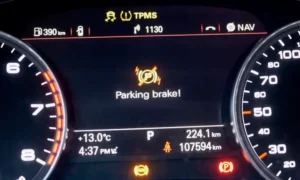
Seeing “Drive System Malfunction” flash across your Audi’s dashboard is never fun. Your car might lose power, refuse to accelerate properly, or even shut down completely. The good news? This warning isn’t one specific problem—it’s your car’s way of saying something in the powertrain needs attention. We’ll break down what’s actually going wrong and how to fix it without the dealer runaround.
What the Drive System Malfunction Warning Actually Means
Your Audi’s drive system malfunction warning isn’t a single failure—it’s an umbrella alert. Think of it as your car’s computer raising a red flag when the engine, transmission, or all-wheel-drive system detects something operating outside normal limits.
Unlike a simple “low oil” light, this warning covers everything from spark plugs to turbochargers. When it appears, your car often enters “limp mode”—a protective state that limits power to prevent catastrophic damage. You’ll notice reduced acceleration, lower top speeds, or gear restrictions.
The system triggers this alert when sensor readings don’t match what the computer expects. If your engine control module requests a specific amount of torque but doesn’t get it, the warning lights up your dash.
The 48-Volt System Failure That’s Plaguing Recent Audis
If you own a 2019-2024 Audi, there’s a strong chance your Audi drive system malfunction stems from the 48-volt Belt Starter Generator (BSG). This water-cooled component handles engine start-stop functions and charges the 48V battery.
Why the BSG Keeps Failing
The BSG units from Continental have a nasty habit of overheating. High electrical currents during rapid engine restarts cause the internal inverter boards to fail. When the BSG dies, your 48V battery drains, which then kills the 12V system through the DC/DC converter.
You’ll see a cascade of warnings: steering system faults, electrical failures, sport differential issues—then complete shutdown. Your car won’t restart, leaving you stranded.
The Fix and What It Costs
Audi released Service Action 27BQ to address this nightmare. They’re replacing failed BSG units with improved hardware and updating the Gateway and Engine Control Module software. Better yet, Audi extended the warranty on these components to 7 years with unlimited mileage.
If you’re experiencing random shutdowns, flickering dash lights, or the dreaded “Drive System Malfunction” paired with electrical gremlins, get your BSG checked immediately.
The Water Pump Problem Destroying EA839 Engines
Owners of Audi S4, S5, RS5, and SQ5 models with the 2.9T or 3.0T V6 engine face a different beast: coolant migration through the vacuum system.
How Coolant Gets Where It Shouldn’t
These engines use a vacuum-operated water pump with a slide valve that stays closed during cold starts. When the internal seal degrades, pressurized coolant leaks into the vacuum chamber. The engine then “sucks” this coolant through vacuum lines to critical components.
The coolant destroys the N649 switch valve and turbocharger boost control solenoids. Once these fail, your turbo can’t build boost properly, triggering underboost codes (P0299) and the drive system warning.
Spotting the Problem Early
Check your vacuum lines for wet spots or coolant residue. If your car shows reduced power during acceleration or you smell coolant near the engine bay, don’t wait. The fix requires replacing the water pump (look for the newer 6-bolt pulley design), all vacuum hoses, the reservoir, and contaminated solenoids.
Transmission Mechatronic Failures You Need to Know About
Audi’s S-Tronic and DSG transmissions combine hydraulics with electronics in a single mechatronic unit. When it fails, you’re looking at serious money.
What Goes Wrong Inside
The mechatronic unit contains tiny solenoid valves that control clutch engagement. Over time, transmission fluid breaks down from heat and friction, creating sludge that clogs these valves. You’ll feel delayed shifts, harsh engagement, or sudden lurches.
Heat also damages the circuit board inside the mechatronic housing. In stop-and-go traffic or during heavy towing, temperatures spike high enough to cause solder joints to crack. These failures often come and go—the warning appears when hot, disappears after cooling down.
| Repair Option | Cost Range | What You Get |
|---|---|---|
| OEM Dealer Replacement | $2,500 – $6,000 | New factory unit, fluid, coding, warranty |
| Remanufactured Unit | $1,600 – $3,100 | Refurbished with core exchange |
| Component-Level Repair | $600 – $1,200 | Targeted solenoid or board fixes |
| Used/Salvage | $400 – $800 | High risk, unknown history |
Diagnostic Clues
A proper scan tool will show “clutch adaptation” values. If these have reached maximum limits, your clutches are worn. If “solenoid response time” is out of spec, you’ve got a mechatronic problem.
Turbocharger and Boost Control Issues
Modern Audis pack turbos across the lineup, and the wastegate actuators controlling boost pressure are common failure points.
Wastegate Problems That Trigger Warnings
The wastegate valve controls how much exhaust bypasses the turbo. In EA888 2.0T engines (A4, A5, Q5), the pivot arm and bushings wear out from heat cycles. This creates a rattling sound and prevents the wastegate from sealing completely, causing underboost (P0299).
Worse yet, the wastegate can seize closed. This creates dangerous overboost conditions that can detonate your engine. The computer immediately cuts power when it detects this through the manifold pressure sensor.
Electric wastegate actuators use plastic gears that become brittle in extreme heat. When these gears strip, you’ll get an open circuit fault (P0045). Audi released software updates for RS3 and S4 models to prevent false-positive warnings from minor voltage fluctuations.
Engine Misfires and Ignition System Failures
A flashing check engine light paired with the drive system malfunction warning signals a serious misfire that can destroy your catalytic converter.
Why Misfires Trigger Major Warnings
Audi’s high-performance engines need intense spark energy under extreme cylinder pressures. As spark plugs wear, resistance increases and loads the ignition coils harder. A coil might work fine at idle but fail under full throttle.
The computer detects lost power on a cylinder instantly and triggers the drive system warning to protect the catalytic converter from raw fuel damage.
Variable Valve Timing Complications
The Audi Valvelift System (AVS) uses engine oil pressure to adjust camshaft timing. If your oil level is low or you’re using the wrong viscosity, the camshaft phasers can’t reach their target angles quickly enough.
This triggers code P0011 (Camshaft Position Timing Over-Advanced) and immediate power reduction to prevent valves from hitting pistons.
| Trouble Code | What It Means | Common Fix |
|---|---|---|
| P0300 | Random cylinder misfire | Replace spark plugs and coils |
| P0011 | Cam timing over-advanced | Check oil level, clean VVT solenoid |
| P0299 | Turbo underboost | Fix vacuum leaks or wastegate |
| P0045 | Boost control circuit open | Replace electric wastegate actuator |
The Audi A3 Fuel System Fire Hazard
If you own a 2015-2020 Audi A3, you might have a fuel tank suction pump problem covered under Safety Recall 20YF.
What’s Actually Failing
A seal inside the fuel tank suction jet pump can fail, allowing liquid fuel to bypass the purge valve and flood the charcoal canister. This doesn’t just trigger drive system warnings—it creates a genuine fire hazard.
Warning Signs
You can’t fill your tank normally—the pump keeps clicking off. Fuel spills back from the filler neck. You smell raw gasoline inside the cabin or near the right rear wheel. The engine stumbles as it tries to burn liquid fuel instead of vapor.
Audi will replace the suction pump assembly free under the recall. Until you get the fix, keep your fuel level below 1/4 tank to reduce pressure on the faulty seal.
How to Actually Diagnose the Problem
Generic code readers don’t cut it with Audis. You need proper diagnostic software like ODIS (Offboard Diagnostic Information System) to read the extended data your car records when faults occur.
The Right Diagnostic Process
Start with a complete system scan. Look at “freeze frame” data showing exactly what the car was doing when the warning triggered—engine speed, coolant temperature, load values, and more.
Check your 12V battery first. A weak battery causes voltage sags that trigger false warnings even when everything else works perfectly. Test it under load and inspect main ground connections for corrosion.
Don’t forget rodents. Modern Audi wiring uses soy-based insulation that mice love to chew. A single damaged wire in the CAN bus network can trigger warnings across completely unrelated systems.
Software Updates Before Parts Replacement
Before replacing anything mechanical, check for pending software updates. Many “drive system malfunctions” are software bugs that Audi has already fixed through revised ECM or TCM calibrations.
For example, TSB 24FG addresses specific drivability issues in 2019 S4/S5 models that dealers were misdiagnosing as hardware failures.
Understanding Dashboard Warning Light Colors
Not all warnings demand the same urgency. Here’s what the colors actually mean:
| Light Color | Severity Level | What to Do |
|---|---|---|
| Green/Blue | Info only | Normal operation, no action needed |
| Yellow (steady) | Warning | Schedule service soon, avoid hard driving |
| Yellow (flashing) | Urgent | Reduce load immediately, active misfire detected |
| Red | Critical | Stop safely, shut down engine, call for tow |
A steady yellow warning light means something’s out of spec but not immediately dangerous. A flashing yellow indicates active damage happening right now—usually a misfire that’s destroying your catalytic converter.
What Repairs Actually Cost
Dealer labor rates vary wildly by location, and diagnostic fees can shock you if you’re not prepared.
Urban Audi dealers charge $180-$325 per hour for labor. The diagnostic fee alone runs $200-$665, and that’s before they fix anything. Independent “VAG specialist” shops typically charge 30-40% less while using the same diagnostic tools and procedures.
If you’re facing a major repair like mechatronic replacement or BSG failure, get quotes from both the dealer and independent specialists. The parts are often identical, but labor costs differ significantly.
Your Legal Options for Repeat Failures
If your Audi has been in the shop multiple times for the same drive system malfunction and they can’t fix it, you might have a lemon law case.
Building Your Case
Document everything. Record every date and time the warning appears, what the car does (stalling, power loss, complete shutdown), and how it affects drivability. Take photos or videos of dashboard warnings and MMI screen messages.
Keep copies of every repair order. Make sure each one specifically details your complaint and what the dealer found, even if they claim “no fault found.”
Track downtime. If your car has been in the shop for 30 cumulative days or has had three to four repair attempts for the same safety-related issue, you may qualify for a buyback or replacement under state lemon laws.
What’s Coming for Future Models
Audi’s push toward electrification and “software-defined vehicles” will change how these warnings work. Over-the-air updates will fix more issues remotely, but the legacy problems with 48V systems and EA839 water pumps will haunt the used car market for years.
The engineering response includes more durable seals in cooling components, stronger 6-bolt pulley designs instead of 4-bolt, and better cooling for inverter boards. But if you’re shopping for a used Audi from 2019-2024, factor potential BSG and water pump replacements into your budget.
The Audi drive system malfunction warning protects your car’s expensive components through active monitoring and electronic intervention. Understanding what triggers it—from a $30 spark plug to a $6,000 mechatronic unit—helps you move past the dashboard panic and toward a real solution. Whether it’s the 48V system, EA839 cooling issues, or transmission problems, knowing the specific failure patterns means you can ask the right questions and avoid unnecessary repairs.