You’ve popped the hood and noticed your Audi’s coolant is looking low. But here’s the thing—grabbing any old antifreeze from the parts store could cost you thousands in engine repairs. Your Audi needs specific coolant, and we’re breaking down exactly which type keeps your engine happy and healthy.
What Makes Audi Coolant Different from Regular Antifreeze
Audi doesn’t mess around with cooling system specs. While you might see a rainbow of coolant bottles at auto parts stores, your Audi’s engine was engineered for specific formulations that protect against corrosion, prevent overheating, and keep your warranty valid.
Here’s what sets Audi coolant apart: it’s not just about freeze protection. The right Audi coolant type contains precise additive packages that protect aluminum engine components, maintain proper pH levels, and prevent the kind of galvanic corrosion that can eat through your cooling system.
Generic coolants? They’re formulated for average cars with cast-iron engines. Your Audi’s sophisticated aluminum block needs specialized protection that meets Volkswagen Group’s TL 774 specifications.
G13 Coolant: The Current Standard for Most Audis
If you’re driving an Audi built from 2008 to present, G13 coolant is what you’re looking for. This purple-colored formula meets the VW TL 774 J specification and represents Audi’s most widely used coolant formulation.
What makes G13 special:
- Uses ethylene glycol with a 20% glycerin additive
- Produces 11% lower CO2 emissions during manufacturing
- Features Si-OAT technology (Silicate-enhanced Organic Acid Technology)
- Marketed as a “lifetime” coolant when used exclusively
The purple color is your visual confirmation you’re looking at G13. But don’t rely on color alone—always check the specification on the bottle. G13 coolant is also used in Porsche, Lamborghini, Bentley, Skoda, and Seat vehicles, since they’re all part of the Volkswagen Group family.
One thing to know: G13’s glycerin content makes it slightly more environmentally friendly than older formulations. It’s a small detail, but it shows how Audi’s coolant specs evolve with environmental considerations.
G12 EVO: The Latest Evolution in Audi Coolant Technology
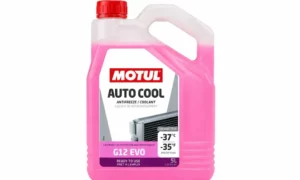
Introduced in 2019, G12 EVO represents Audi’s newest coolant technology. This pink-to-purple formulation meets the VW TL 774 L specification and comes with a significant advantage: it’s backward compatible with all previous Audi coolant types.
G12 EVO highlights:
- Uses PSi-OAT technology (Phosphated Silicate-Organic Acid Technology)
- Standard fill for 2019+ Audi models
- Recommended for all Audi vehicles regardless of year
- Can mix with any older coolant specification without issues
Here’s the cool part: if you’re not sure what coolant is currently in your system, G12 EVO takes the guesswork out. You can top off or flush your system with G12 EVO no matter what was in there before.
Some experts raise eyebrows at the phosphate content in older engines, but Volkswagen Group officially approves it across the board. It’s their newest formula, and it’s designed to work in everything from classic Audis to the latest models.
Understanding Older Audi Coolant Specifications
If you’re driving an older Audi or maintaining a classic, you’ll encounter different coolant types. Here’s what you need to know about legacy specifications.
G12++ Coolant
This pink or red coolant (VW TL 774 G spec) was used from 2008 onwards alongside G13. It features Si-OAT technology and was often the alternative to G13 in certain markets. G12++ is still widely available and works great in compatible vehicles.
G12+ Coolant
Running an Audi from 1997-2008? G12+ (VW TL 774 F) was the standard coolant type during this era. It’s pink or red and uses OAT (Organic Acid Technology) without silicates. While older, it’s still the correct spec for many beloved Audi models from this period.
G11 Coolant
The original Audi coolant type from 1980-1997, G11 (VW TL 774 C) is blue or green and uses IAT (Inorganic Acid Technology). Unlike newer formulations, G11 isn’t a lifetime coolant—it needs replacement every 2-3 years.
If you’ve got a classic Audi from this era, don’t try updating to newer coolants without doing your homework. G11 served these engines well when maintained properly.
Can You Mix Different Audi Coolant Types?
Short answer: you can, but you shouldn’t make it a habit. Let’s talk about what actually happens when you mix coolant types.
G13 can technically mix with G12++, G12+, and even G11, but mixing reduces the corrosion protection effectiveness. When G11 mixes with newer coolants, it turns brown—that’s normal and not a sign of catastrophic failure.
G12 EVO changes the game. This formulation is compatible with all previous specs in any ratio. That’s intentional engineering to make your life easier.
Best practice for mixing:
- Match what’s already in your system when topping off
- If you’re uncertain about existing coolant, do a complete flush
- Never mix Audi coolant with generic store-bought antifreeze
- When in doubt, drain and fill with fresh coolant
If your coolant looks brown, orange, or green when it should be pink or purple, something’s wrong. Immediate flushing is required because incorrect coolant may have been added.
How Much Coolant Does Your Audi Hold?
Coolant capacity varies significantly by model and engine. Here’s what common Audi models require:
| Model | Year | Capacity (Liters) | Capacity (Quarts) |
|---|---|---|---|
| A3 | 2017 | 10.0 | 10.5 |
| A4 | 2016+ | 9.0-9.5 | 9.5-10.0 |
| Q5 | 2016 | 12.0 | 12.7 |
| Q7 | 2016+ | 11.5 | 12.2 |
Always verify your specific model year and engine configuration in your owner’s manual or expansion tank markings. Different engines in the same model year can have different capacities.
Don’t overfill or underfill your cooling system. Your expansion tank has minimum and maximum marks for a reason—stay between them when the engine is cold.
The Truth About “Lifetime” Coolant
Audi markets G13, G12++, and G12 EVO as “lifetime” coolants. But here’s the reality: nothing in your car actually lasts forever.
Automotive experts recommend changing coolant every 5-6 years or 150,000 miles, regardless of the “lifetime” claim. For high-performance Audis (S and RS models), consider changing every 3-5 years.
Why the discrepancy? Coolant degrades over time. The additives that prevent corrosion get depleted. Heat cycles break down the chemical composition. Contamination from small leaks or component degradation affects performance.
Regular testing matters:
- Check freeze point protection annually
- Monitor pH levels to catch degradation early
- Look for contamination or discoloration
- Test more frequently in older vehicles
Think of “lifetime” as marketing speak. Your Audi will thank you for more conservative maintenance intervals.
Concentrate vs. Ready-to-Use: What You Need to Know
Walk into a parts store and you’ll see two options: concentrate and ready-to-use. Here’s the difference and when to use each.
Coolant concentrate requires dilution with distilled or deionized water. The standard ratio is 50/50, which provides protection down to -37°C (-34°F). Never use tap water—it contains minerals that cause deposits and corrosion in your cooling system.
Ready-to-use formulations come pre-mixed and ready to pour. They’re convenient but cost more per gallon. If you’re just topping off, ready-to-use prevents mixing mistakes.
For full system changes, concentrate gives you flexibility and better value. You’ll need roughly 5 liters of concentrate mixed with 5 liters of distilled water for most Audi models.
Here’s a pro tip: buy distilled water from the grocery store, not the auto parts store. It’s the exact same thing for a fraction of the price.
How to Identify What Coolant Type Is in Your Audi
Not sure what’s currently in your cooling system? Here’s how to figure it out.
Check your expansion tank. The coolant specification is typically marked right on the tank. Look for markings like “VW TL 774 J” (G13) or “VW TL 774 L” (G12 EVO).
Grab your owner’s manual. It contains specific part numbers and specifications for your exact model year and engine.
Use color as a clue, not confirmation:
- Blue or green suggests G11 (older vehicles)
- Pink or red indicates G12+, G12++
- Purple or violet means G13
- Pink-to-purple points to G12 EVO
Color isn’t definitive because coolants fade over time and contamination changes appearance. If your coolant looks murky, rusty, or off-color, that’s a sign you need to flush and fill with fresh coolant.
Why OEM-Approved Coolant Matters for Your Audi
Here’s where some Audi owners get into trouble: they grab whatever’s on sale at the auto parts store. Don’t do this.
Generic coolants don’t meet Audi’s precise specifications. They’re formulated for average engines with different metallurgy and cooling system designs. Your Audi’s aluminum components need specific corrosion inhibitors that generic coolants don’t provide.
Stick with OEM-approved brands:
- RAVENOL
- Febi Bilstein
- Motul
- Genuine Audi/VW coolant
These brands meet or exceed Volkswagen Group specifications. Yes, they cost more than the green jug at Walmart. But compare that price to replacing a water pump, thermostat, or worse—repairing internal engine damage from corrosion.
Your warranty might depend on it too. If you’re still under factory or extended warranty, using non-approved coolant can void coverage for cooling system failures.
Proper Coolant Changing and System Bleeding
Changing Audi coolant isn’t just a drain-and-fill operation. The cooling system needs proper bleeding to remove air pockets that cause overheating.
Audi cooling systems require thorough air bleeding during coolant changes. Air trapped in the system prevents proper circulation and can cause hot spots that damage your engine.
The proper process includes:
- Draining the old coolant completely
- Flushing with distilled water if changing coolant types
- Using vacuum fill equipment to remove all air
- Running the engine with the heat on to circulate coolant
- Burping the system at bleeder screws
Most DIYers don’t have vacuum fill equipment. If you’re doing this at home, plan on multiple heat cycles and careful monitoring to get all the air out. Watch your temperature gauge religiously during the first few drives.
When changing coolant types or performing major cooling system work, complete system flushing is essential. Residual old coolant can react with new formulations and reduce protection.
Finding the Right Coolant for Your Specific Audi Model
Your exact Audi coolant type depends on your model year and sometimes your specific engine. Here’s how to nail it down.
For 2019+ Audi models: G12 EVO is your best bet. It’s the latest specification and works across the board.
For 2008-2018 Audis: G13 is the standard choice. Purple coolant meeting VW TL 774 J specification is what you want.
For 1997-2007 models: G12+ or G12++ depending on your exact year. Check your owner’s manual for the specific recommendation.
For classic Audis (1980-1997): G11 is the original specification, though some owners update to newer coolants with a complete flush.
When in doubt, call your Audi dealer with your VIN. They can tell you exactly what coolant specification your car requires. It’s free information that prevents expensive mistakes.
The Bottom Line on Audi Coolant Type
Getting the Audi coolant type right isn’t complicated once you know what you’re looking for. Match your coolant to your model year, use OEM-approved brands, and don’t trust the “lifetime” marketing—change it every 5-6 years.
Your Audi’s engine is a precision-engineered machine. The right coolant protects that investment and keeps you on the road instead of in the shop. Spend a few extra bucks on proper coolant now, or spend thousands on repairs later. The choice is pretty clear.