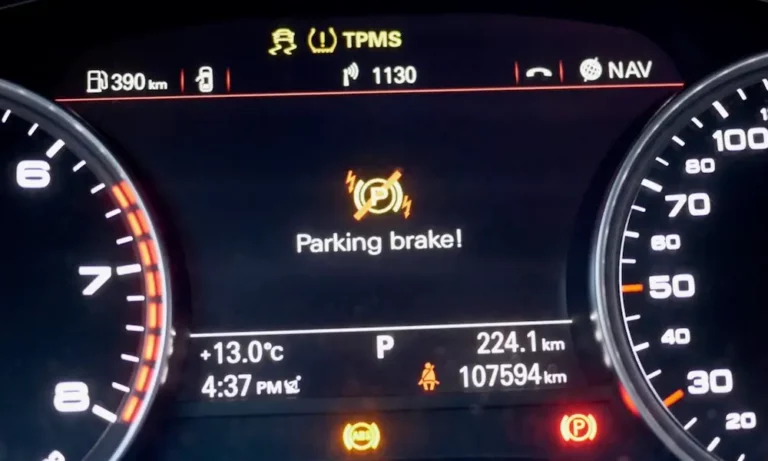
Is your Audi displaying a dreaded “Parking Brake Malfunction” message? That little warning can quickly turn your day upside down. Your sophisticated Electronic Parking Brake (EPB) system might be failing, but don’t panic just yet. This guide will walk you through everything from understanding why it’s happening to fixing it without breaking the bank.
What Is an Audi Electronic Parking Brake?
Audi’s Electronic Parking Brake represents a major leap from traditional hand-lever parking brakes. Instead of pulling a lever that tensions a cable, you simply press a button that activates electronic actuators at your rear wheels.
How the System Works
Your Audi EPB system consists of several interconnected components:
- A dashboard control switch (the button you press)
- A parking brake control module
- Electronic actuator motors built into the rear brake calipers
- Multiple sensors and wiring harnesses
- Integration with your ABS and other vehicle safety systems
When working properly, the system engages automatically when you turn off your vehicle and releases when you start driving. But this electronic complexity means more potential failure points compared to traditional mechanical parking brakes.
Warning Signs You Shouldn’t Ignore
Your Audi will typically let you know when something’s wrong with the parking brake. Watch for these warning signs:
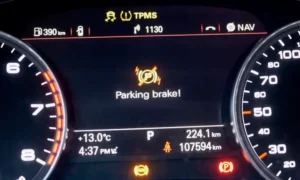
- Dashboard messages like “Parking brake: malfunction! Please contact Service”
- Yellow or red warning lights (red indicates more serious issues)
- Parking brake failing to engage or release when activated
- Unusual grinding or clicking sounds from the rear wheels
- Unexpected brake engagement while driving
- Complete unresponsiveness of the parking brake system
If you’re experiencing any of these symptoms, your EPB system requires attention before the problem worsens.
Common Causes of Audi Parking Brake Failures
Electrical System Problems
The most frequent culprits behind EPB failures are electrical issues:
- Relay 465 Failure: This crucial relay in the driver-side ECU compartment controls power to your EPB system. When it fails, your entire parking brake can shut down.
- Battery Issues: A weak or failing battery can’t provide enough voltage for the EPB motors. Even minor battery degradation can trigger warning lights in voltage-sensitive Audis.
- Wiring Problems: Damaged, corroded, or disconnected wiring can interrupt critical signals between components.
As this diagnostic video demonstrates, electrical issues are often the first place technicians look when troubleshooting parking brake malfunctions.
Mechanical Component Failures
When it’s not electrical, these mechanical issues often cause parking brake troubles:
- EPB Actuator Motor Failures: These small motors inside your rear calipers physically engage and release the brake. They contain about 70 tiny ball bearings and various springs that can wear out or break. Failed motors often produce grinding noises or fail to hold position.
- ABS Sensor Malfunctions: Since your EPB system relies on wheel speed data, faulty ABS sensors can trigger parking brake warnings and malfunctions.
- Brake Caliper Wear: Damaged pistons, corroded housings, and worn seals can prevent proper EPB operation even when the electrical components work fine.
Caliper and actuator issues are particularly common in models with higher mileage.
Environmental and Maintenance Factors
Your environment and maintenance habits play a surprising role in EPB reliability:
- Temperature Extremes: Many owners report malfunctions during the first heavy frost or in extremely cold weather. Cold temperatures can cause brake components to contract, creating binding conditions that prevent proper operation.
- Poor Maintenance Practices: Attempting to service rear brakes without properly retracting the EPB actuators can destroy the motor assemblies. This type of damage often requires complete caliper replacement.
- Road Salt and Debris: In winter climates, salt and road grime can accelerate corrosion of electrical connections and mechanical components.
Diagnosing Your Audi’s Parking Brake Problems
Understanding Error Messages and Warning Lights
When your dashboard lights up with a parking brake warning, it’s trying to tell you something specific:
- Yellow warning light: Indicates a malfunction that needs attention but isn’t immediately dangerous
- Red warning light: Signals a serious problem requiring immediate service
- Messages with specific error codes: Provide clues about the exact nature of the malfunction
The exact wording varies by Audi model, but all aim to alert you to potential safety issues with your parking brake system.
Professional Diagnostic Equipment and Procedures
For accurate diagnosis, professionals use specialized equipment to communicate with your Audi’s electronic systems:
- VCDS (VAG-COM Diagnostic System): The gold standard for Audi diagnostics, providing comprehensive access to EPB control modules.
- Professional Scanners: Tools like the Autel MX808 and Foxwell NT710 can also diagnose EPB issues effectively.
The diagnostic process typically begins by connecting a scanner to your vehicle’s OBD2 port and accessing either the parking brake control module (address 53) or the ABS control module (address 03). Professional technicians can interpret specific fault codes like:
- C10E129: “Parking Brake Motors – Implausible signal”
- C10E254: “Control module for Parking Brake – No basic setting”
- C10BCF2: “Left parking brake motor – Upper activation time limit exceeded”
DIY Diagnosis Methods
Without professional equipment, you can still gather valuable information:
- Visual Inspection: Check rear brake calipers for obvious damage, loose wiring, or signs of leakage.
- Listen for Sounds: When activating the parking brake, listen for motor operation. Grinding noises suggest mechanical problems; no sound at all points to electrical issues.
- Basic Function Test: Try engaging and releasing the brake while observing dashboard indicators. Complete unresponsiveness typically indicates electrical failures.
- Battery Check: Test your battery’s voltage under load, as many EPB issues stem from insufficient power supply.
While these methods won’t pinpoint exact faults, they can help you determine whether you’re dealing with an electrical issue, mechanical problem, or both.
Emergency Release Procedures
What to Do When Your Parking Brake Is Stuck
If your Audi’s parking brake won’t release and you need to move your vehicle, you have several options depending on your tools and expertise:
Professional Service Mode Method
The safest approach requires professional diagnostic equipment:
- Connect a battery charger to maintain stable voltage
- Use VCDS or similar equipment to access basic settings (function 04)
- Select “Start lining change mode” from the menu
- Wait for actuators to fully retract (20-30 seconds)
This procedure puts the EPB system in service mode, allowing the calipers to fully release. After moving the vehicle, the process must be reversed using “End lining change mode” to restore normal operation. This instructional video demonstrates the complete procedure.
Manual Release Techniques (Emergency Only)
When diagnostic equipment isn’t available, these methods can provide emergency mobility:
- Direct Power Method: Disconnect the EPB actuator electrical connectors and apply 12-volt power directly to the motor terminals (typically positive to right terminal, negative to left). This manually retracts the actuator.
- Actuator Removal: Some vehicles allow actuator motor removal by unbolting three small fasteners and using a specialized tool to manually wind back the brake mechanism.
⚠️ SAFETY WARNING: These manual methods should only be attempted with the vehicle properly supported on jack stands, never on uneven surfaces, and never start the vehicle with actuator connectors disconnected. The National Highway Traffic Safety Administration emphasizes that improper brake service can create serious safety hazards.
Emergency Override Sequences
Some Audi models have built-in emergency override procedures:
- Place the vehicle in neutral
- Apply and hold the foot brake
- Operate the parking brake switch in this pattern: two clicks up, one click down, two clicks up, one click down
This sequence may need several attempts and doesn’t work on all models, but it’s worth trying before resorting to more invasive methods.
Repair Options and Cost Breakdown
Component Replacement Costs
Fixing your Audi’s parking brake can vary widely in cost depending on what’s broken:
| Component | Cost Range | Labor Hours | Notes |
|---|---|---|---|
| Control Module | $350-650 | 1-2 hours | Includes programming and calibration |
| Complete Brake Caliper | $550-650 per side | 3-5 hours | Includes integrated EPB motors |
| EPB Actuator Motor Kit | $200-450 | 2-3 hours | Not available for all models |
| Relay 465 | $20-60 | 1 hour | Requires ECU removal in some models |
| Brake Switch | $50-175 | 1-2 hours | For intermittent engagement issues |
| Battery Replacement | $150-350 | 0.5-1 hour | Often resolves voltage-related problems |
Control module replacement represents one of the most comprehensive repair options, addressing issues with multiple fault codes and communication failures.
DIY vs. Professional Repairs
While DIY repairs can save money, the parking brake system affects your vehicle’s safety:
DIY-Appropriate Repairs:
- Battery replacement
- Relay 465 replacement (if comfortable with automotive electrical systems)
- Basic diagnostic scanning
- Emergency release procedures
Professional-Only Repairs:
- Control module replacement and programming
- Actuator motor or caliper replacement
- System calibration and reset
- Any repair requiring specialized diagnostic equipment
The National Highway Traffic Safety Administration recommends professional service for safety-critical brake components. Improper DIY repairs can cause additional damage, void warranty coverage, and create serious safety hazards.
Cost-Effective Repair Strategies
If you’re on a budget, consider these approaches:
- Start with the Basics: Have a diagnostic scan performed first (typically $75-150) to identify the exact problem before replacing expensive components.
- Battery First: If your vehicle is over 4 years old, test and potentially replace the battery before attempting more complex repairs. This often resolves intermittent EPB issues.
- Repair Kits: For some models, EPB actuator motor repair kits offer significant savings compared to complete caliper replacement. This repair demonstration shows how repair kits can save hundreds of dollars.
- Independent Specialists: Audi-specialized independent shops often charge 30-40% less than dealerships while maintaining expertise in these systems.
Understanding Audi’s Warranty Coverage for EPB Issues
Audi’s warranty coverage for parking brake problems depends on several factors:
- Standard Warranty: New Audis typically include a 4-year/50,000-mile basic warranty covering EPB components.
- Extended Warranty: Audi’s extended warranties often cover electronic parking brake components, sometimes with specific provisions for these systems.
- Certified Pre-Owned Coverage: CPO Audis include warranty coverage that typically encompasses parking brake systems.
- Known Issues: In some cases, Audi has extended coverage for specific EPB problems recognized as design or manufacturing defects.
If you’re experiencing EPB issues within your warranty period, contact your Audi dealer immediately to document the problem and determine coverage eligibility.
Taking Action: Your Next Steps
If you’re facing an Audi parking brake malfunction, here’s what to do:
- Safety First: If your parking brake won’t release, don’t drive the vehicle until the problem is resolved.
- Get a Professional Diagnosis: Have an Audi specialist or dealer perform a complete diagnostic scan to identify the exact cause.
- Review Your Options: Based on the diagnosis, review repair options considering cost, your vehicle’s age, and how long you plan to keep it.
- Preventive Measures: After repairs, implement the preventive maintenance practices described above to avoid future failures.
Remember that parking brake issues directly impact your vehicle’s safety. While cost considerations are important, compromising on proper repairs can lead to more expensive problems or unsafe driving conditions down the road.