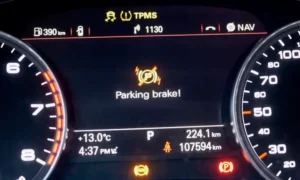
That “Electrical System Malfunction” warning just lit up your Audi’s dashboard. Your stomach drops. Is it serious? Could it leave you stranded? The short answer: it depends on which system triggered it — and the differences matter a lot. Read through this, and you’ll know exactly what’s failing, why it’s failing, and what options you have.
What the Warning Actually Means
The Audi electrical system malfunction message isn’t one single fault. It’s a broad alert that covers everything from a dying 48V battery to a coolant leak inside your electric motor.
Modern Audis run two or three separate voltage networks at once. When any one of them falls out of range, the whole car notices — and tells you about it loudly.
Here’s a quick breakdown of the different electrical architectures Audi uses:
| System Type | Primary Energy Source | Key Roles |
|---|---|---|
| Standard 12V | 12V Lead-Acid Battery | Engine start, lighting, basic modules |
| 48V Mild-Hybrid (MHEV) | 48V Lithium-Ion + BSG | Recuperation, torque fill, start-stop |
| PHEV (e quattro) | HV Traction Battery | EV mode, hybrid assistance |
| BEV (e-tron) | High-Voltage Pack | Full propulsion, regenerative braking |
Each system has its own failure points. Let’s go through the big ones.
The 48V Belt Starter Generator: The Most Common Culprit
If you drive a 2018–2023 Audi A6, A7, A8, Q7, or Q8 with a mild-hybrid badge, the 48V Belt Starter Generator (BSG) is your most likely suspect.
The BSG replaces the traditional alternator and starter motor. It handles energy recuperation during braking, fills in torque during acceleration, and powers extended start-stop cycles. That’s a lot of work — and the inverter inside the unit runs hot.
Why the BSG Fails
The BSG’s internal inverter converts 48V DC to three-phase AC during engine restarts, then flips back to DC during recuperation. During high-demand cycles, the current can exceed the thermal limits of the power transistors on the inverter board. The board “blows,” or the internal connections to the PCB degrade from constant vibration and heat cycles.
Manufacturing quality issues with poor PCB connections accelerate this process. Some early European recalls pointed to moisture as the cause, but independent technical analysis consistently identifies thermal breakdown as the real problem.
What Happens When It Goes
When the BSG stops working, the 12V battery takes over. Unlike an old-school alternator failure — where you’d get dimming lights as a warning — a failed BSG in an Audi MHEV triggers an immediate critical warning with no gradual buildup.
Worse, if the 48V battery discharges too far, its battery management system locks it into permanent protection mode. Even installing a brand-new BSG won’t fix it at that point. You’d need specialized ODIS diagnostic software to reset the 48V network.
Diagnostic Codes to Know
| DTC Code | What It Means |
|---|---|
| U046900 | Full communication failure between BSG inverter and ECM |
| P065C00 | Inconsistent BSG mechanical operation |
| P0CA700 | 48V battery current spike triggered protection mode |
| P0A7D00 | 48V battery critically discharged — cell damage risk |
The 27BQ Service Action: Free BSG Replacement
Audi hasn’t ignored this problem. The 27BQ Emissions Service Action covers free BSG replacement across multiple model years. It’s officially an “emissions” fix — because a failed BSG kills the start-stop system, which raises CO2 output — but it’s essentially a recall.
The replacement unit is a revised version with improved thermal resistance. Audi rolled it out in waves through 2024:
- Wave 1 (April 30, 2024): C8, A8, 4M, SC, S8, and RQ models
- Wave 2 (August 19, 2024): Criteria 21–27
- Wave 3 (October 10, 2024): Criteria 31–37
- Wave 4 (TBD): Remaining VIN ranges
Key replacement parts include updated units like the 4N0-903-028-P and a required sealing gasket for the water-cooling interface. If your VIN falls under this action, your dealer handles it at no cost.
The Steinhardt Class Action Settlement: What You’re Owed
Beyond the service action, the Steinhardt v. Volkswagen Group of America class-action lawsuit produced a settlement with real financial benefits.
If you own a 2018–2023 Audi A6, A7, A8, Q7, or Q8, here’s what you could claim:
- Extended BSG warranty — 7 years or unlimited mileage
- Reimbursement for past towing, rental cars, and battery replacements
- Lemon Law eligibility if your vehicle had multiple failed repair attempts
California owners also get an extended emissions control warranty of 7 years or 70,000 miles on related components.
Audi e-tron Electrical System Malfunction: A Different Beast
On the fully electric e-tron platform, the Audi electrical system malfunction warning gets more serious fast. Red warnings telling you to “safely stop vehicle” are common — and the root causes are different from MHEV issues.
Coolant Leaking Into the Drive Motors
The most damaging e-tron fault involves coolant breaching the seals inside the drive motors. The motors use liquid cooling, but those seals degrade over time. When conductive coolant reaches the stator or resolver area, isolation resistance drops below the safe threshold and the system shuts down immediately to prevent electric shock or fire.
Some owners and technicians suspect that “burnt coolant” — where the fluid’s chemistry changes under extreme heat during frequent fast-charging — accelerates seal degradation. Audi has issued Technical Service Bulletins with guidance on acceptable leakage levels, but many cases end in full motor replacement.
The SX6 Module Problem
The SX6 module controls the high-voltage contactors that connect the battery to propulsion and charging circuits. When it fails, your e-tron won’t enter “Ready” mode or start a charge cycle.
Fixing it means removing the entire HV battery assembly in a clean-room environment — labor-intensive and expensive. Many owners face dealer quotes between $6,000 and $12,000, with ongoing disputes about whether the 8-year/100,000-mile battery warranty actually covers it.
| Component | Failure Symptom | Out-of-Warranty Cost | Repair Time |
|---|---|---|---|
| Front Drive Motor | Red warning, isolation fault | $6,000–$9,000 | 1–4 weeks |
| Rear Drive Motor | Limp mode, gear noise | $7,000–$10,000 | 2–5 weeks |
| SX6 Module | Won’t charge or start | $5,000–$12,000 | 1–3 weeks |
| 12V Battery (BEV) | Phantom sensor errors | $1,000–$1,200 | 1 day |
Legacy 12V Problems Still Cause Audi Electrical System Malfunctions
Don’t overlook the basics. A weak 12V battery in a modern Audi doesn’t just cause a slow start — it triggers cascading ghost errors across every CAN and LIN bus module. You’ll see faults in the air suspension, power steering, and MMI infotainment, all tracing back to low voltage.
Audi vehicles also have high parasitic loads — alarms, telematics, and central locking all draw power when the car is parked. A 12V battery can sulfate within two to four years because of it.
Water damage is another frequent trigger. Blocked sunroof drains or leaking windshield seals let water collect under the carpet, where critical communication gateways sit. The MMI module lives right under the center console cup holders — one spilled drink can take it out completely.
How to Reduce Your Risk
These steps won’t make your Audi bulletproof, but they meaningfully lower the odds of a sudden Audi electrical system malfunction leaving you stranded:
- Replace the 12V battery every 3 years — don’t wait for symptoms. Modern Audis are brutally sensitive to even slight voltage drops.
- Check your e-tron’s coolant drip containers at every service interval for early signs of motor seal failure.
- Keep firmware updated — BSG control module and gateway software updates often contain critical logic changes that prevent thermal overload.
- Clear sunroof drains regularly and immediately clean any liquid spills near the center console.
- Take longer highway drives occasionally if you drive an MHEV short-distance most of the time. Full 48V recharge cycles keep those lithium-ion cells healthier for longer.
Dealer vs. Independent Shop: Which Makes Sense?
For anything covered under the 27BQ action or the 8-year HV battery warranty, go to the dealer — it’s your only shot at a no-cost fix. Outside of warranty situations, the math changes.
Independent Audi specialists typically charge less per hour than dealerships, which bill anywhere from $122 to $300 per hour. Some specialists now offer remanufactured BSG units with updated firmware that lowers operating current — addressing the thermal root cause more thoroughly than a straight parts swap. Independent shops can also source OEM parts at roughly 20% below dealer pricing.
The NHTSA Technical Service Bulletin MC-11011291 is worth reviewing if your model falls within affected ranges — it details the official repair procedures your dealer should be following.
The Audi electrical system malfunction warning covers a wide range of failures, from a $200 12V battery swap to a $12,000 motor replacement. Knowing which system is involved — and what your warranty or legal options are — puts you in a far stronger position before you ever walk into a dealership.