Confused about which coolant actually works as a G12 evo coolant equivalent? You’re probably staring at a wall of pink, green, and blue bottles wondering if you’ll wreck your engine by picking the wrong one. This guide cuts through the noise, explains exactly what G12 evo is, and tells you which aftermarket products are genuinely safe to use. Stick around — the color mix-up section alone could save your heater core.
What Is G12 Evo Coolant?
G12 evo is Volkswagen’s current coolant standard, officially designated as TL 774-L. Volkswagen introduced it in 2018 as the top-tier fluid for VW, Audi, Seat, and Skoda vehicles.
It uses Silicon-based Organic Acid Technology (Si-OAT). That’s a fancy way of saying it combines silicates for fast surface protection with organic acids for long-term corrosion defense. Together, they guard the aluminum and magnesium alloy components found in modern engines.
You’ll recognize it by its pink or violet-pink color. If your bottle is a different color and claims to be G12 evo, check the spec sheet carefully.
Here’s a quick snapshot of its key physical properties:
| Characteristic | Specification |
|---|---|
| Base fluid | Monoethylene glycol |
| Color | Pink / Violet-Pink |
| pH (50% dilution) | 8.0 – 9.0 |
| Boiling point (concentrate) | Above 162°C |
| Density at 20°C | 1.073 – 1.128 g/ml |
| Freeze protection (50% mix) | Down to -36°C / -37°C |
How G12 Evo Fits Into VW’s Coolant History
VW has cycled through several coolant generations since the 1980s. Each update responded to real engineering problems — not just marketing.
- G11 (TL 774-C) — Blue-green, inorganic silicate formula. Fine for cast-iron engines. Short service life.
- G12 (TL 774-D) — Red, first use of Organic Acid Technology. Couldn’t mix with G11 without creating brown sludge that clogged radiators.
- G12+ (TL 774-F) — Fixed the compatibility issue. Safe to mix with both G11 and G12.
- G12++ (TL 774-G) — Introduced “Lobrid” tech, adding a small amount of stabilized silicates back into the organic acid base.
- G13 (TL 774-J) — Used glycerin instead of pure ethylene glycol for lower CO2 production. Struggled in high-heat applications and created a hardware headache (more on that below).
- G12 evo (TL 774-L) — The current standard. Returns to pure monoethylene glycol with an advanced Si-OAT package.
Each generation was a direct response to engine materials changing and previous fluid limitations showing up in real-world failures.
The Silica Bag Problem That Made G12 Evo Necessary
This is the story most people don’t know — and it’s why G12 evo replaced G13 so quickly.
Why VW Put a Bag Inside Your Coolant Tank
G13’s formula needed a steady supply of silicates to protect aluminum surfaces. To deliver this, VW engineers placed a small mesh bag filled with silica gel beads inside the coolant expansion tank. The idea was simple: the bag would slowly dissolve silicates into the fluid over time.
Why It Went Wrong
Under thousands of heat cycles, the mesh bags ruptured. When they failed, they released thousands of tiny silica beads directly into the cooling circuit. Those beads traveled through the system and blocked heater matrices and radiator channels, causing lost cabin heat and, in worse cases, engine overheating.
This affected a large number of vehicles built between 2013 and 2018.
How G12 Evo Fixed It
G12 evo’s chemistry is robust enough that it doesn’t need a supplemental silica bag at all. When workshops switch a vehicle to G12 evo during a coolant flush, they remove the old bag entirely. Problem solved at the chemical level — no hardware required.
The Best G12 Evo Coolant Equivalents You Can Actually Buy
Getting the genuine VW-branded fluid from a dealership is the simplest option. But several aftermarket products meet or exceed the TL 774-L specification. Here’s what’s worth your money.
Zerex HT-12 Pink (Valvoline)
This is the closest thing to a factory-fill equivalent in North America. Valvoline supplies directly to the Volkswagen Group, and Zerex HT-12 Pink often sits inside the VW-branded bottles at dealerships.
Critical warning: Zerex HT-12 comes in both Pink and Green. They’re not interchangeable.
- Pink = TL 774-L — correct for VW, Audi, Seat, Skoda
- Green = BMW LC-18 — for BMW, Mini, Rolls-Royce
Both use Si-OAT chemistry, but the inhibitor balance is tuned differently for each manufacturer’s specific gaskets and seals. Reddit’s VW community confirms this distinction repeatedly comes up as a source of confusion. Always grab the pink one.
Glysantin G65 (BASF)
BASF’s Glysantin brand is the underlying technology behind most European coolants. Glysantin G65 directly corresponds to the G12 evo / TL 774-L specification and is the most widely available retail alternative across European markets.
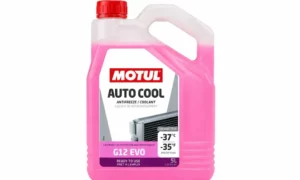
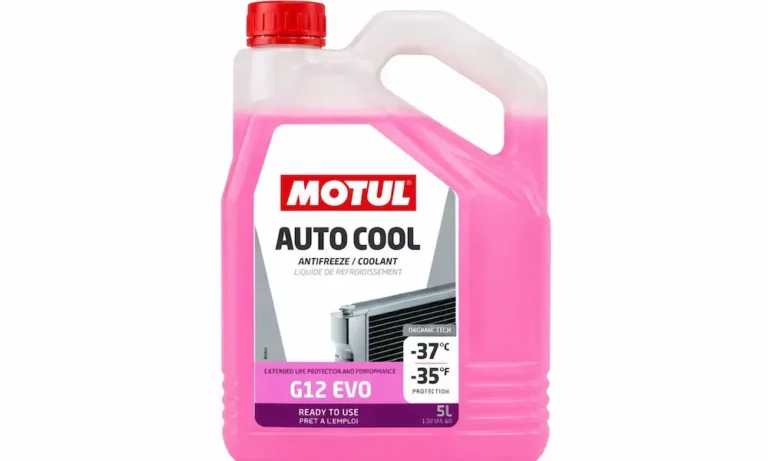
Motul Auto Cool G12 Evo
Motul’s Auto Cool G12 Evo carries VW TL 774-L approval globally. Motul also produces an “Ultra” version with a higher boiling point for performance applications.
Full Comparison Table of Approved Equivalents
| Brand | Product Name | Spec Status | Market |
|---|---|---|---|
| Valvoline (Zerex) | HT-12 Pink | TL 774-L Approved | North America |
| BASF (Glysantin) | G65 | TL 774-L Approved | Europe / Global |
| Motul | Auto Cool G12 Evo | TL 774-L Approved | Global |
| Liqui Moly | KFS 12 Evo | TL 774-L Recommended | Global |
| Shell | Premium Antifreeze G12 Evo | TL 774-L Compliant | Global |
| Febi Bilstein | G12evo Concentrate | TL 774-L Compliant | Global |
| Ravenol | ETC Protect C12evo | TL 774-L Compliant | Global |
| Eurol | Coolant G12 Evo | TL 774-L Compliant | Europe |
| MPM | Premium Longlife G12evo | TL 774-L Compliant | Europe |
| Kemetyl | GlycoCool G12 Evo | TL 774-L Compliant | Europe |
Every product on this list is free from nitrites, amines, borates, and 2-ethylhexanoic acid — the compounds that can degrade modern silicone gaskets and nylon components inside the cooling circuit.
Can You Mix G12 Evo With Older Coolants?
The short answer: yes, but only for topping off — not as a long-term strategy.
G12 evo is miscible with G12, G12+, G12++, and G13 in any ratio. You won’t get the brown sludge reaction that made mixing G12 with G11 so catastrophic. However, as the NHTSA technical service bulletin on identifying and mixing Volkswagen coolants points out, mixing dilutes the inhibitor package and can reduce corrosion protection over time.
The rule of thumb:
- Top-off in an emergency? Mixing G12 evo with G12+, G12++, or G13 is safe.
- Replacing a water pump, radiator, or doing scheduled maintenance? Flush the system completely and refill with fresh G12 evo only.
The G11 Color Warning
If G12 evo (pink) mixes with G11 (blue-green), the fluid turns dark brown. The coolant isn’t necessarily ruined, but that brown color looks exactly like oil contamination or severe rust to any technician doing a visual check. It makes diagnosis a nightmare. Avoid mixing these two generations entirely.
How to Mix and Fill G12 Evo Correctly
Getting the dilution wrong is one of the most common and avoidable mistakes in coolant maintenance.
Concentrate vs. Ready-Mix
- Ready-mix — Use it straight from the bottle. Never dilute it further. Adding water drops the inhibitor concentration below the minimum needed to prevent corrosion.
- Concentrate — Mix with distilled or demineralized water. A 50/50 split provides freeze protection down to approximately -36°C. In extreme cold climates, a 60/40 concentrate-to-water ratio protects down to about -52°C.
Water Quality Matters More Than You Think
Hard tap water contains calcium and magnesium minerals. These react with the silicates and organic acids in G12 evo, causing them to drop out of suspension as scale. That scale insulates metal from the fluid — the opposite of what you want — and can block narrow passages over time.
Use distilled or demineralized water. If tap water is all you have, make sure it’s below 35 degrees French hardness and has chloride and sulfate levels under 500 parts per million, as Motul’s technical sheet for Auto Cool G12 Evo Ultra specifies.
Service Intervals: Is G12 Evo Really “Lifetime” Fluid?
Manufacturers sometimes describe G12 evo as “lifetime” coolant — which sounds great until you think about what it actually means.
“Lifetime” refers to the fluid’s chemical stability in a perfectly sealed system. Real cooling systems aren’t perfect. They experience minor evaporation, micro-leaks, and thermal stress over years of use.
The practical recommendation from Shell’s technical data sheet for Premium Antifreeze G12 Evo is a replacement interval of every five years or 250,000 kilometers for passenger vehicles.
When refilling, modern VAG cooling systems often require a vacuum filling tool to pull air out before drawing in fresh coolant. Skipping this step leaves air pockets that cause localized overheating or airlocks in the heater core — a particularly common issue after a silica bag removal.
G12 Evo in Electric and Hybrid Vehicles
G12 evo isn’t just for combustion engines. It’s the specified thermal management fluid in models like the Audi e-tron and Volkswagen ID series.
In these vehicles, the coolant flows through plates adjacent to battery cells — what’s called indirect cooling. G12 evo works here because of its low electrical conductivity and long-term thermal stability. The inhibitor package needs to stay effective for the full battery warranty period, often eight to ten years.
For hybrids, G12 evo’s fast-healing silicate technology is particularly valuable. The combustion engine switches on and off dozens of times per commute, stressing aluminum surfaces with sudden temperature spikes. The silicates re-passivate those surfaces almost instantly every time the engine fires up.
What to Look for on the Label
When you’re standing in an auto parts store with three different bottles in your hands, here’s exactly what to check:
- ✅ VW TL 774-L listed as an approved or compliant specification
- ✅ Pink or violet-pink color
- ✅ Si-OAT or PSi-OAT listed as the technology type
- ✅ Free from nitrites, amines, borates, and 2-ethylhexanoic acid
- ✅ Monoethylene glycol base (not glycerin-dominant)
- ❌ Don’t accept “G12 compatible” as a substitute for “TL 774-L approved”
“Compatible” is marketing language. “TL 774-L approved” or “TL 774-L compliant” means the formula was actually tested against VW’s standard. The difference matters when you’re protecting a turbocharged aluminum engine.