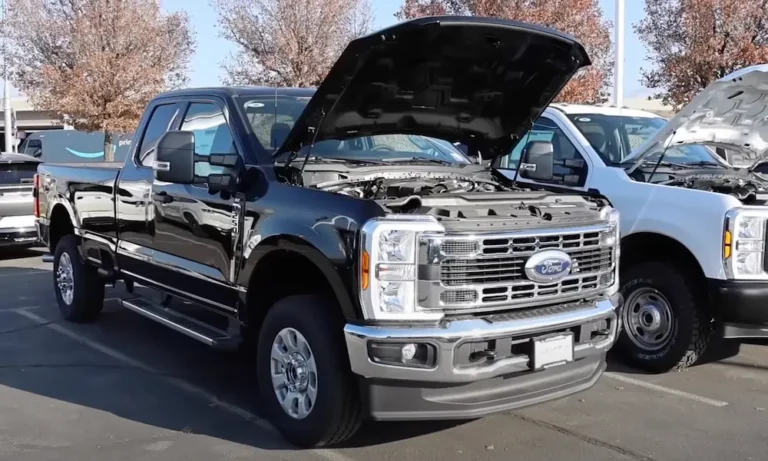
The Ford 7.3 Godzilla V8 sounds like a dream engine — big, beefy, and built for serious work. But if you own one (or you’re thinking about buying one), there are some real Ford 7.3 gas problems that could cost you thousands. Read on, because knowing this stuff ahead of time makes all the difference.
What Makes the 7.3 Godzilla Special — And Where It Falls Short
Ford launched the 7.3L Godzilla V8 in 2020 to replace both the 6.2L V8 and the 6.8L Triton V10. It’s an old-school pushrod engine with a cast iron block and aluminum heads — a deliberate throwback designed for tough, heavy-duty work.
Here’s a quick snapshot of what’s under the hood:
| Spec | Detail |
|---|---|
| Displacement | 7.3L (445 cubic inches) |
| Block | Cast iron, deep-skirt |
| Heads | Aluminum |
| Valvetrain | OHV, 2 valves per cylinder |
| Fuel System | Port fuel injection |
| Crankshaft | Forged steel |
| Power | 430 HP @ 5,500 RPM |
| Weight | 580 lbs |
The port fuel injection is actually a smart move here. It avoids the carbon buildup on intake valves that plagues modern direct-injection engines. Simple to fix in the field. Easy to maintain.
But simple doesn’t mean problem-free. The Godzilla has a few specific weak spots you need to know about.
The Biggest Ford 7.3 Gas Problem: Lifter and Camshaft Failure
This is the one that keeps mechanics up at night.
The 7.3L engine uses hydraulic roller lifters that ride on the camshaft lobes. Under normal conditions, that relationship works fine. But when lubrication drops off, the roller surface starts to pit and flake — a process called spalling or delamination.
Once spalling starts, metal flakes circulate through the oiling system. Those flakes attack bearings and the oil pump. The cam lobe gets wiped. Valve lift drops. Misfires appear. And you’ll hear a ticking or clacking sound that gets louder over time.
Here’s what makes this failure especially painful: it often happens on low-mileage engines. Reddit mechanics have documented low-km Godzillas with destroyed lifters and cams, and the pattern keeps repeating.
Who’s Most at Risk?
Engines in high-idle applications take the hardest hit:
- Ambulances
- Utility service trucks
- Delivery vans
- Motorhomes at idle
If your engine sits at idle for hours powering equipment or waiting on crews, you’re in the danger zone.
Why the Oil Pump Is the Root Cause
Here’s where Ford 7.3 gas problems get technical — but stick with it, because this explains everything.
The Godzilla uses a variable displacement oil pump (VDOP). Ford designed it to run at lower pressure during idle and light loads to save fuel. Smart idea on paper. Brutal reality in practice.
At low oil pressure, the lifter rollers don’t get enough lubrication during sustained idle. That’s when spalling kicks in. Ford essentially traded valvetrain life for a slightly better EPA fuel economy number.
Ford acknowledged this with Customer Satisfaction Program 24B27, a PCM software update that recalibrates the oil pump to run at higher pressure during idle. It’s a fix that works — but only if you get it done before the damage starts.
| Oil Pump Setting | Original (Pre-24B27) | Updated (Post-24B27) |
|---|---|---|
| Idle Oil Pressure | ~15 PSI (user reported) | Increased (software calibrated) |
| Priority | Fuel efficiency | Valvetrain protection |
| Risk | Lifter spalling, cam pitting | Minimal fuel economy impact |
| Applies To | 2020–2022 early models | 2023+ and reprogrammed units |
Bottom line: If you own a 2020, 2021, or 2022 model, call your dealer today and ask about CSP 24B27. It’s free. Don’t wait.
Spark Plug Wire Failures: The Most Common Roadside Breakdown
The second-biggest Ford 7.3 gas problem is far less catastrophic — but it’ll still leave you stranded.
The Godzilla doesn’t use coil-on-plug ignition. It uses a coil-near-plug design with short high-tension leads running from each coil to the spark plug. Those wires sit close to the exhaust manifolds. Under heavy towing or high ambient heat, the insulation breaks down. High voltage arcs to the engine block instead of firing the plug.
The result? A sudden misfire under load, a flashing check engine light, and the truck going into limp mode where power gets severely restricted.
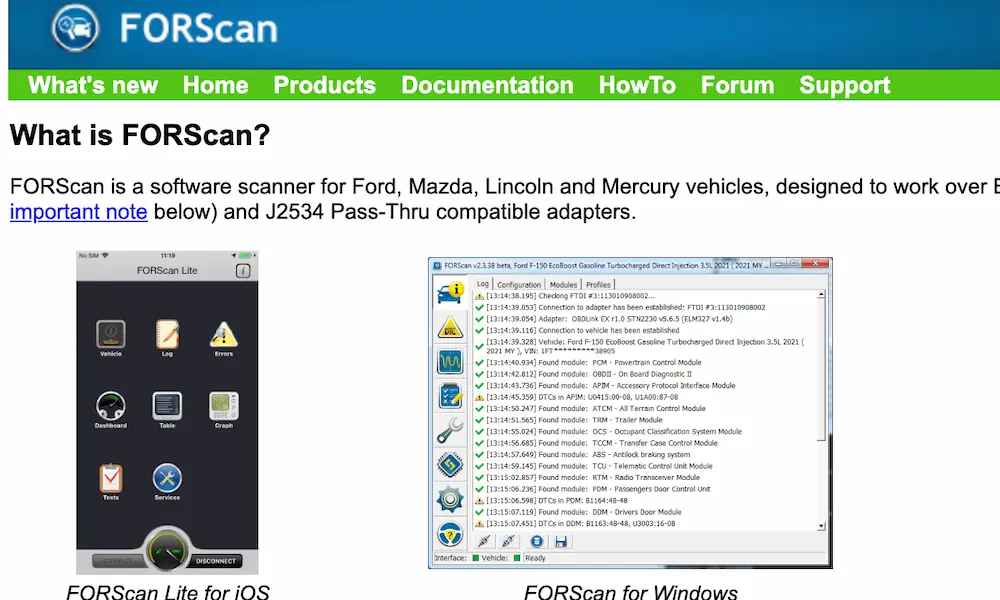
Ford issued TSB 20-2370 for the F-53 Motorhome Chassis, mandating replacement of all eight wires and improved engine bay baffling. Super Duty owners have seen multiple revised wire versions from Ford, but aftermarket options with better heat shielding — like Top Street Performance’s 8.5mm wire set — remain popular for owners who tow hard.
Diagnostic Trouble Codes to Watch For
| DTC | What It Means | Likely Cause |
|---|---|---|
| P0300 | Random/multiple cylinder misfire | Spark plug wires or ignition coils |
| P0301–P0308 | Specific cylinder misfire | Failed wire, damaged plug, or lifter failure |
| P0316 | Misfire on startup | Wire carbon tracking |
| P0217 | Engine overtemperature | Low coolant or thermostat failure |
| P2138 | Accelerator pedal sensor error | Electrical interference or connector corrosion |
If you see P0300 or P0316, check the wires first. Look for burn marks, arcing scars, or cracked insulation near the exhaust.
Transmission Trouble: The 10R140 TorqShift
The Godzilla pairs with Ford’s 10-speed TorqShift automatic (10R140). It’s a capable unit, but early versions had real issues.
Owners reported harsh shifts, clunking engagements, and torque converter problems. Ford addressed torque converter overheating through Customer Satisfaction Program 20B27, another PCM software update that adjusts the torque converter lock-up strategy to prevent thermal stress.
Beyond that, early shift logic was erratic. Many owners noticed major improvements after a dealer software flash or after the transmission completed its “adaptive learning” cycle. If your truck shifts weird, ask your dealer to check for pending transmission software updates before assuming anything is broken mechanically.
Engine Heat and Safety Recalls You Should Know About
Packaging a 580-pound, 7.3-liter engine creates serious thermal management challenges — especially in enclosed van applications.
Ford issued NHTSA Recall 20V788 for E-Series cutaway vans. Mispositioned insulation on the engine cover (the “doghouse” inside the cab) allowed engine heat to transfer to the cover surface — hot enough to cause burns during long idle periods. The fix involved supplemental insulation patches and a PCM update to better manage engine temperature when stationary.
For Super Duty owners, the more common thermal concern is the cooling system. Water pumps and thermostats are known weak points. Aftermarket thermostats, in particular, have a reputation for leaking. Stick with OEM Motorcraft thermostats and watch for the orange crusty residue that appears around the thermostat housing when coolant starts to seep.
Fuel System and EVAP Issues
These are less common than the lifter or ignition problems, but they still show up.
Some owners have experienced:
- Fuel pump control module failure — causes sputtering or a no-start condition
- Gas smell in the cabin — traced to fuel rail leaks, injector seals, or EVAP system failures
- Stuck canister purge valve — creates excessive vacuum in the fuel system, warps the fuel tank, and causes erratic fuel gauge readings
None of these are as dramatic as losing a camshaft, but a stuck purge valve left unresolved will cause real problems over time.
How the 7.3 Stacks Up Against Diesel (And Whether It’s Worth It)
Many buyers compare the Godzilla to Ford’s own 6.7L Power Stroke diesel. Here’s the honest picture:
| Factor | 7.3L Godzilla V8 | 6.7L Power Stroke Diesel |
|---|---|---|
| Upfront cost | Significantly lower | High premium |
| Maintenance complexity | Low — no DPF, no DEF, no turbo | High — DPF, SCR, high-pressure fuel system |
| Fuel efficiency | 8–15 MPG | Better, especially loaded |
| Heavy towing | Excellent for a gas engine | Best-in-class torque |
| Critical failure risk | Valvetrain, spark plug wires | Emissions system, fuel system |
The Godzilla wins on simplicity and cost. No diesel particulate filter to regenerate. No DEF fluid to top up. No high-pressure fuel injection system to rebuild. For fleets that prioritize low maintenance costs, the gas engine often makes more financial sense — unless lifter failure wipes out a $9,000+ engine before it hits 100,000 miles.
The Maintenance Plan That Actually Protects Your Engine
Based on real-world failure patterns, here’s what experienced owners and fleet techs actually recommend:
1. Get CSP 24B27 done immediately.
If your truck is a 2020–2022 model, this PCM update is the single most important thing you can do. It tells the oil pump to maintain higher pressure at idle and directly reduces your lifter failure risk.
2. Change your oil every 4,000–5,000 miles.
Don’t trust the oil life monitor. Use a full-synthetic 5W-30 and change it on a shorter schedule. You want fresh anti-wear additives (especially ZDDP) in there constantly. Metallic particles from early-stage wear need to get flushed out fast.
3. Cut idle time where you can.
Every hour of low-load idle is stress on your lifters. If your work requires extended idling, make sure CSP 24B27 is done — and then monitor closely.
4. Upgrade the spark plug wires before they fail.
If you tow regularly or operate in hot climates, don’t wait for a roadside misfire. Swap the factory wires for heat-shielded aftermarket wires before the problem starts.
5. Run oil analysis.
Services like Blackstone Laboratories analyze your used oil for elevated iron content. Rising iron levels signal camshaft wear before it turns catastrophic — potentially saving you from a full engine replacement.
6. Inspect the cooling system regularly.
Check around the thermostat housing and water pump. Catch a slow leak early, and you’re looking at a $50 fix. Ignore it, and you risk an overtemp event and limp mode while towing a trailer up a grade.
Are 2023 and Newer Models Better?
Yes — meaningfully so. Ford incorporated the lessons from 2020–2022 production into later models. The 2023+ trucks came with revised software calibrations from the factory and reportedly tighter quality control on valvetrain components. Ford’s commitment to the platform is also clear: a new 6.8L variant using the same pushrod architecture now powers base-model Super Duty trucks.
The Godzilla isn’t a flawed engine — it’s a capable engine with specific early-production vulnerabilities that are now well understood. Stay on top of the software updates, shorten your oil change intervals, and keep an eye on the ignition system. Do that, and this engine has every reason to reach 200,000+ miles without drama.