Got a P0720 code on your Ford? Your transmission is telling you something important — and ignoring it could mean a dangerous surprise at highway speed. This guide breaks down exactly what causes Ford P0720, which transmissions are most affected, and what it takes to fix it properly.
What Is the Ford P0720 Code?
Ford P0720 is an OBD-II fault code that stands for “Output Speed Sensor Circuit Malfunction.” Your Powertrain Control Module (PCM) stores this code when it detects that the signal from the Output Shaft Speed (OSS) sensor is erratic, missing, or doesn’t match what the computer expects based on engine RPM and gear ratio data.
Think of the OSS sensor as the transmission’s odometer brain. It tells the PCM exactly how fast the output shaft spins — which translates directly to road speed. When that data goes wrong, the PCM can’t do its job.
The PCM cross-references the OSS signal against:
- Engine RPM from the crankshaft position sensor
- Turbine Shaft Speed (TSS) from the input shaft sensor
- Known gear ratios for the current gear
If the math doesn’t add up — or the signal vanishes entirely — P0720 gets stored and your check engine light comes on.
How the Output Speed Sensor Actually Works
Ford uses two sensor technologies depending on the transmission model.
Variable reluctance sensors use a permanent magnet wrapped in a coil. As a toothed ferromagnetic reluctor wheel spins past the sensor tip, it creates an alternating current signal. The frequency increases with shaft speed — the PCM reads that frequency as road speed.
Hall-effect sensors (used in newer units like the 10R80) produce a clean digital square wave. They’re more accurate at low speeds and resist electrical interference better than analog sensors.
| Speed Sensor | Location | Signal Type | What It Tells the PCM |
|---|---|---|---|
| Crankshaft Position Sensor | Engine block/flywheel | Analog or digital | Engine RPM |
| Turbine Speed Sensor (TSS) | Input shaft/torque converter | Analog or digital | Torque converter slip |
| Output Speed Sensor (OSS) | Output shaft/tail housing | Analog or digital | Road speed & gear ratio |
| Intermediate Speed Sensor | Internal gear train | Digital | High-speed ratio (10R80) |
What You’ll Actually Feel With Ford P0720
Ford P0720 doesn’t just trip a light. It changes how your truck or car behaves — sometimes dangerously.
Transmission Behavior
Without a reliable speed signal, the PCM defaults to limp mode — a protective software state that locks the transmission into one gear (usually 3rd or 5th) to prevent internal damage. You’ll notice:
- Harsh or “slamming” gear changes
- Shift hunting — the transmission can’t find the right gear
- Stuck in first gear
- Sudden loss of drive (engine revs, but no power reaches the wheels)
The most dangerous symptom: certain Ford 6R80 transmissions have been known to command an abrupt downshift into first gear at highway speeds when the speed signal drops out. At 65 mph, that causes sudden rear wheel deceleration — and potential loss of control.
Dashboard and Safety Systems
- Speedometer drops to zero or swings wildly
- Cruise control disables immediately
- ABS and Traction Control warning lights illuminate — and both systems may shut off, reducing braking ability in an emergency
- Wrench light appears indicating reduced power mode
| Symptom Category | What You See or Feel | Bigger Risk |
|---|---|---|
| Transmission | Harsh shifts, slipping, stuck gear | Internal clutch wear and heat |
| Speedometer | Zero reading or erratic needle | No legal speed monitoring |
| ABS/Traction Control | Warning lights, systems offline | Longer stopping distance |
| Engine | Stalling, hesitation at stops | Poor fuel economy |
| Fail-safe mode | Wrench light, reduced power | Limited mobility only |
What Causes Ford P0720
The root cause almost always falls into four categories: the sensor itself, the wiring, fluid condition, or the PCM.
Sensor Wear and Metal Contamination
The OSS sensor tip is magnetic. That means it attracts the microscopic steel particles that every transmission sheds during normal operation. Over time, this metallic sludge coats the sensor tip and distorts the magnetic field — which produces a weak or garbled signal the PCM flags as a circuit fault.
The sensor’s internal wire windings can also fail from thermal cycling. Hot and cold cycles expand and contract the metal, eventually breaking the internal coil connection.
Wiring Harness Damage and Corrosion
The transmission harness runs through an area exposed to road salt, exhaust heat, and moisture. Corroded connector pins increase electrical resistance, which degrades the signal voltage. On trucks like the F-150 and Ranger, the harness can also get pinched against the chassis or cut by road debris — causing shorts or intermittent open circuits.
Transmission Fluid Problems
Old or contaminated fluid loses its ability to suspend wear particles. That accelerates metal buildup on the sensor tip. If the fluid level is low or the fluid is aerated (foamy), hydraulic pressure to the clutches fluctuates. The PCM detects the speed mismatch caused by clutch slipping and may blame the speed sensor circuit.
Ford P0720 by Transmission: Each One Is Different
The fix depends entirely on which transmission you have. Each unit hides the OSS sensor in a different spot.
4R75E and 6R80 (F-150, Mustang, Expedition)
The 4R75E (Crown Victoria, E-Series, older F-150) has an external OSS sensor bolted to the driver’s side of the tail housing. It’s easy to reach but exposed to the elements — corrosion is the main enemy here.
The 6R80 moved the sensor inside the transmission as part of a molded lead frame assembly — a plastic circuit board bolted to the valve body that houses the OSS sensor, turbine speed sensor, range sensor, and temperature sensor all in one unit. That internal location protects it from road debris but puts it in constant contact with hot transmission fluid. The 6R80 lead frame has a well-documented failure history and triggered major safety recalls.
10R80 (2018+ Ranger, Newer F-150)
The 10-speed 10R80 uses four separate speed sensors: TSS, Intermediate Shaft Speed A (ISSA), Intermediate Shaft Speed B (ISSB), and OSS. All four mount externally on the driver’s side of the transmission case in a specific sequence. They look identical. Swapping two of them during a repair causes catastrophic shift failures and multiple new fault codes. Position matters — a lot.
The 10R80 also has a known issue where axial movement of the CDF clutch cylinder sleeve creates erratic shaft movement that triggers P0720 even when the sensor itself is fine.
6F35 and 6F50 (Escape, Fusion, Edge)
These transverse-mounted transmissions hide the speed sensors behind a side cover. Getting to them means removing the driver’s side wheel, the air cleaner assembly, and sometimes the battery tray. Replacing the side cover gasket is mandatory — reusing the old one causes leaks. The 6F35 also runs hotter than its GM counterpart, which accelerates internal wiring damage.
| Transmission | Mount Type | OSS Location | Access Method | Common Failure |
|---|---|---|---|---|
| 4R75E | Longitudinal | External tail housing | External bolt | Road salt/corrosion |
| 6R80 | Longitudinal | Internal lead frame | Pan & valve body drop | Lead frame failure (recall) |
| 10R80 | Longitudinal | External case side | External bolt | Multi-sensor swap confusion |
| 6F35 | Transverse | Internal side cover | Side cover removal | Internal heat damage |
| 6F50 | Transverse | Internal side cover | Side cover removal | Connector failure |
The 6R80 Lead Frame Problem and Ford’s Recalls
This is the most serious chapter in the Ford P0720 story.
Between 2011 and 2014, hundreds of thousands of F-150s, Mustangs, Expeditions, and Navigators shipped with 6R80 lead frames prone to internal electrical bridging. When the lead frame failed, the PCM suddenly “believed” the vehicle was stationary — even at 65 mph. Following its logic, the computer commanded an immediate downshift into first gear. The rear wheels locked up. Drivers lost control.
Ford’s initial fix was a PCM software update that changed the computer’s response: if the speed signal dropped out, the transmission would hold the current gear or enter safe limp mode instead of downshifting. That recall remedy addressed the behavior, not the hardware.
Ford then created Customer Satisfaction Program 19N01, which covered a one-time lead frame replacement — typically up to 10 years or 150,000 miles — for affected vehicles displaying P0720. If you own a 2011–2014 F-150, Mustang, or Expedition with the 6R80, check your VIN against this program before spending money on parts.
How to Diagnose Ford P0720 the Right Way
Don’t just swap the sensor and hope. The fix has to match the actual fault.
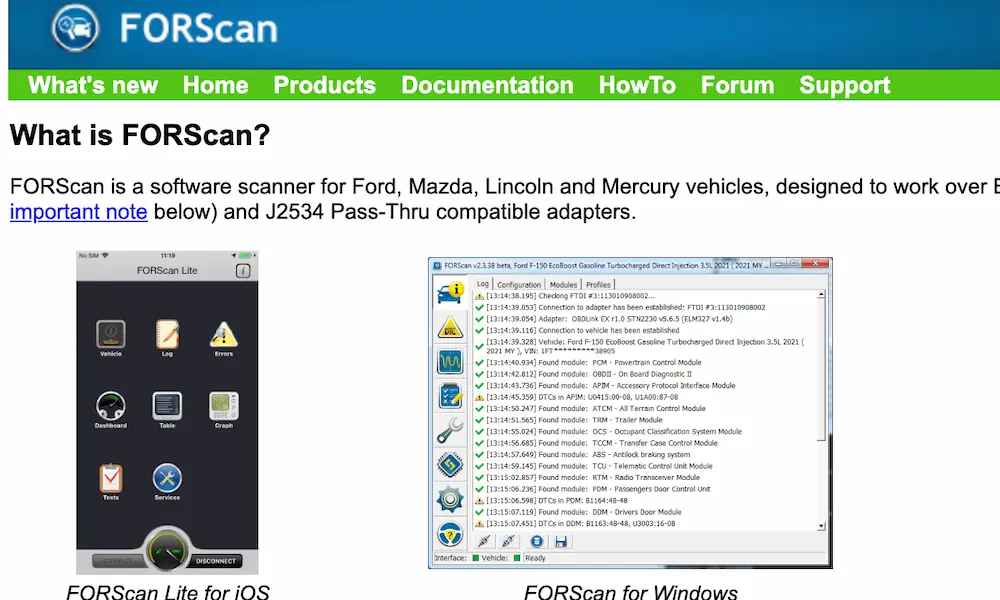
Step 1: Scan and Read Freeze Frame Data
Pull the code and check the freeze frame. If it shows high throttle and engine RPM but zero output shaft speed, the signal dropped out completely. If the OSS reading jumps erratically — say, 20 mph to 80 mph in a fraction of a second — you’re looking at electrical noise, magnetic contamination, or a damaged reluctor wheel.
Step 2: Test the Sensor Electrically
For a two-wire variable reluctance sensor:
- Resistance test: Disconnect the sensor and measure between the two pins. A healthy sensor reads 560–680 Ohms. “OL” (open loop) means a broken internal coil. A reading well below 500 Ohms indicates an internal short.
- AC voltage test: With the engine running, the sensor should produce increasing voltage and frequency as shaft speed rises. A flat reading during rotation means the sensor is dead.
- Continuity check: Test continuity from the sensor connector through the harness to the PCM pins. High resistance in the ground circuit is a frequent cause of intermittent P0720 codes — especially codes that appear only when the vehicle is warm.
Step 3: Inspect the Reluctor Wheel
If the sensor and wiring pass all tests, the problem may be mechanical. Remove the sensor and use a borescope or bright flashlight to inspect the reluctor gear teeth on the output shaft. Chipped, missing, or loose teeth prevent the sensor from ever producing a clean signal — regardless of how new the sensor is.
| Diagnostic Step | Tool Needed | What You’re Looking For |
|---|---|---|
| Code scan | OBD-II scanner | P0720 plus P0715 or P0500 |
| Freeze frame | Advanced scan tool | Speed/RPM mismatch at failure |
| Resistance test | Digital multimeter | 560–680 Ohms |
| AC voltage test | Multimeter (AC mode) | Increasing voltage with speed |
| Signal pattern | Oscilloscope | Clean sine or square wave |
| Reluctor check | Borescope/flashlight | Intact, undamaged gear teeth |
How to Fix Ford P0720
Replacing an External OSS Sensor (Ranger, E-350, 10R80)
This is the straightforward version:
- Lift the vehicle safely on jack stands or a hoist
- Disconnect the sensor’s electrical connector by pressing the locking tab
- Remove the single retaining bolt (usually 8mm or 10mm)
- Pull the sensor straight out and inspect the bore for metal sludge
- Lubricate the new sensor’s O-ring with fresh transmission fluid
- Insert the new sensor and torque the bolt to 9 lb-ft (12 Nm)
On the 10R80, double-check sensor position before you button everything up. Each of the four sensors goes in a specific port — mixing them up will create a new set of transmission codes.
Replacing the 6R80 Lead Frame
This repair opens the transmission, so set aside more time:
- Remove the transmission pan and drain the fluid — inspect for excessive metal particles
- Remove the fluid filter
- Unlatch and pull out the electrical bulkhead connector sleeve
- Remove the valve body bolts and lower the entire valve body assembly
- Unclip the old lead frame from the solenoids and valve body, install the new one
- Reinstall the valve body — aligning the manual shift pin with the internal selector lever is critical. Miss this step and the transmission won’t engage any gear after the repair
Side Cover Sensor Replacement (6F35 / 6F50)
Plan for a half-day job:
- Remove the driver’s side wheel for clearance
- Remove the air cleaner assembly and battery tray if needed
- Drain transmission fluid
- Remove the side cover bolts and pull the cover
- Replace the sensors individually
- Install a new side cover gasket — don’t reuse the old one
- Refill with the correct Ford-spec fluid to the proper level
After the Repair: Don’t Skip This Step
Replacing hardware is only half the job. Modern Ford transmissions require software synchronization after a sensor or lead frame replacement.
Transmission strategy download: If you replaced a lead frame or solenoid body, a scan tool must download the new strategy file into the PCM. Skip this and you’ll get harsh shifting or immediate new fault codes before you leave the driveway.
Adaptive learning drive cycle: Reset the PCM’s adaptive shift values, then run a specific drive cycle — light throttle acceleration through all gears followed by coasting deceleration. This lets the computer recalibrate shift pressures using clean, accurate data from the new sensor. Skipping this often results in complaints of “still shifts rough” even after a perfect repair.
Preventing Ford P0720 From Coming Back
Keeping Ford P0720 from returning is mostly about maintaining what’s inside the transmission case.
- Change the fluid on schedule — or sooner if you tow regularly. Fresh fluid prevents the metallic sludge buildup that fouls sensor tips and protects internal wiring insulation from heat damage
- Keep the transmission cooler clean — excessive heat is the primary killer of lead frames and sensor insulation in Ford’s 6R80 and 6F35 units
- Inspect chassis ground connections periodically — stray voltage from a poor engine-to-chassis ground can find its way through the transmission harness and damage sensitive Hall-effect sensors
Ford P0720 isn’t just a code to clear and forget. It’s a signal that something in your speed sensing system has broken down — and in some Ford transmissions, the consequences of ignoring it are serious enough to cause crashes. Diagnose it properly, fix the right component, and complete the software calibration. Your transmission will thank you with smooth, predictable shifts every time.