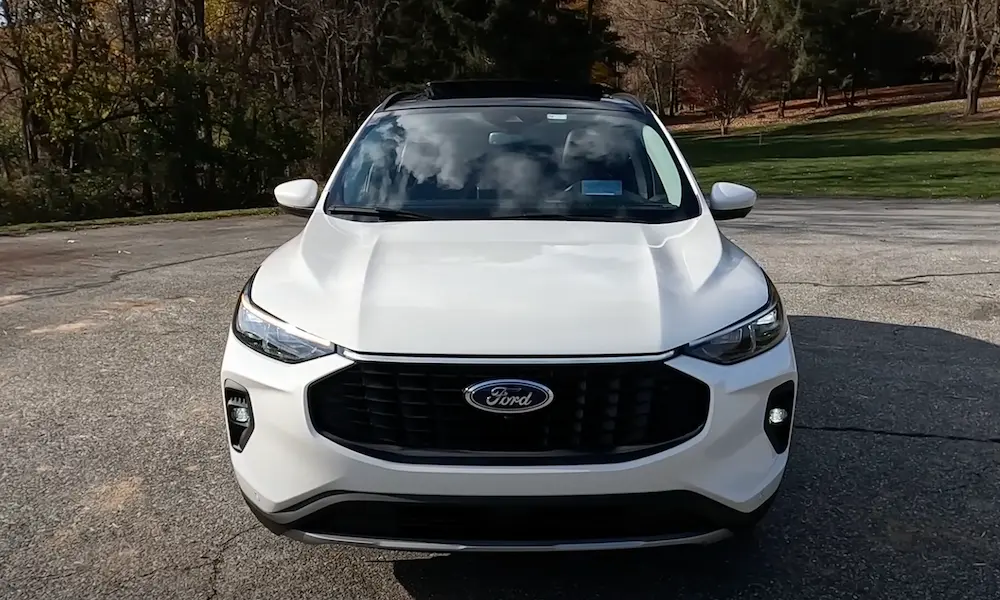
Got a Ford Escape and can’t figure out how to pop the hood? You’re in the right place. Whether you’re checking your oil, topping off fluids, or just curious what’s under there, this guide walks you through every generation — 2001 to 2025. Stick around to the end because the newer models work completely differently than you’d expect.
Why the Hood Release Matters More Than You Think
Opening your hood isn’t just a maintenance task. It’s your access point to everything keeping your engine alive — coolant, oil, brake fluid, and on hybrid models, a high-voltage electrical system that demands respect.
Ford has redesigned the hood release mechanism multiple times across four generations of the Escape. What worked on your 2005 won’t apply to a 2022. Getting it wrong can leave you frustrated in a parking lot — or worse, driving with an unlatched hood.
Here’s a quick overview of how each generation handles it:
| Generation | Years | Hood Release Type | Secondary Latch Location |
|---|---|---|---|
| First | 2001–2007 | Interior lever + manual catch | Center of grille |
| Second | 2008–2012 | Interior lever + manual catch | Center of grille |
| Third | 2013–2019 | Interior lever + offset manual catch | Driver’s side (left of center) |
| Fourth | 2020–2025 | Double-pull interior release | No exterior latch needed |
How to Open the Hood of Ford Escape: First and Second Gen (2001–2012)
These older Escapes use a traditional two-step system. It’s simple once you know the steps.
Step 1: Pull the Interior Release Lever
Sit in the driver’s seat and look toward the lower-left area of the dashboard near the door hinge or kick panel. You’ll spot a lever with a hood icon on it. Pull it firmly. You’ll hear a distinct “pop” — that’s the primary latch releasing.
According to this step-by-step walkthrough for the 2001 Ford Escape, the lever is tucked close to the driver’s door, so it’s easy to miss if you’re looking too far toward the center console.
Step 2: Release the Secondary Safety Catch
Walk to the front of the vehicle. The hood will be slightly raised but still held by the safety catch. Slide your fingers into the gap between the hood and the grille, right near the center where the Ford emblem sits. Feel around for a small lever — push it to the side or lift it upward to release the catch.
Step 3: Prop the Hood Open
Lift the hood fully and locate the metal prop rod attached to the underside. Insert the rod into the designated hole to hold the hood up while you work.
Pro tip: If the secondary latch feels stiff or sticky, a little penetrating oil like WD-40 goes a long way. Road debris and moisture are the usual culprits on older units. For a detailed visual walkthrough of this process, check out this video covering 2001–2007 models specifically.
Common issue on older models: If you pull the interior lever and nothing happens, the cable may have snapped or come loose. A workaround is to insert a hooked wire through the front grille and manually pull the latch release arm — but this is strictly an emergency fix, not a long-term solution.
How to Open the Hood of Ford Escape: Third Gen (2013–2019)
This generation trips up a lot of owners. Ford moved the secondary latch to an offset position, and many people spend way too long searching for it in the wrong spot.
Step 1: Pull the Interior Release Lever
The lever is still in the driver’s footwell area, lower on the dash near the door. Pull it and listen for the pop.
Step 2: Find the Offset Yellow Latch
Here’s where things change. The secondary safety catch on the 2013–2019 Ford Escape is not in the center — it’s on the driver’s side of the hood, roughly halfway between the Ford emblem and the driver-side headlight.
Look for a bright yellow lever. Ford color-coded it specifically so you could find it faster during maintenance. Once you locate it, push it toward the center of the vehicle (to your right as you face the car) while lifting the hood with your other hand.
Step 3: Use the Prop Rod
Same deal as earlier generations — find the prop rod and secure the hood in place.
| Third Gen Detail | Specifics |
|---|---|
| Secondary latch color | Bright yellow |
| Latch position | ~15–20 cm left of center |
| Release direction | Push toward center (right) |
| Hood support | Manual prop rod |
This offset design was intentional. Ford needed the central grille area clear for a larger air intake and sensors for the Active Grille Shutter system, so the latch got bumped to the side. Now you know why — and you won’t waste ten minutes hunting for it.
How to Open the Hood of Ford Escape: Fourth Gen (2020–2025)
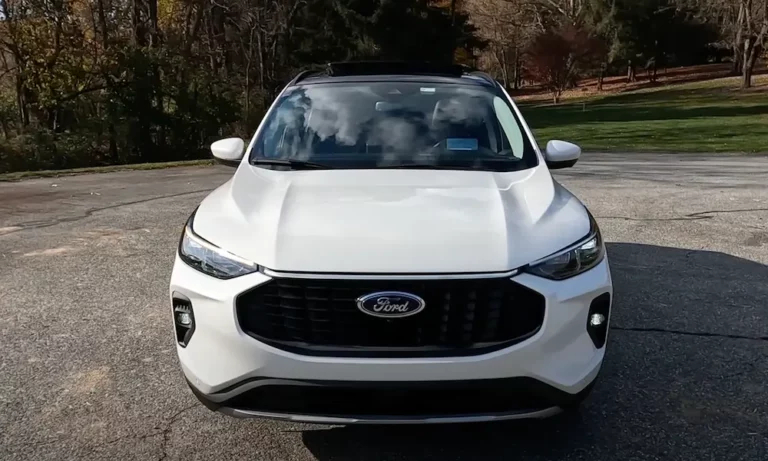
The fourth-generation Escape ditched the exterior latch entirely. Ford calls it the “Double Pull” system, and it changes the process completely.
Step 1: First Pull — Primary Latch
With the driver’s door open, locate the hood release lever in the footwell. Pull it once. The hood pops up slightly to the safety catch position, just like before.
Step 2: Second Pull — Safety Catch Release
Without getting out of the car, pull the same lever a second time. This releases the safety catch mechanically or electronically depending on trim level.
Step 3: Walk to the Front and Lift
That’s it. No searching for a lever under the grille. No yellow tab to push. Just walk to the front and lift the hood. Ford’s official owner manual content confirms this two-pull release sequence for current models.
Important safety detail: On most trims, the release lever sits behind the driver’s door when it’s closed. This means you physically can’t complete the release sequence while the door is shut — which prevents accidental opening while driving. Smart design.
If you open the hood and then get back in and shift into gear, a “Hood Ajar” warning appears on the instrument cluster. The car’s keeping an eye on you.
Opening the Hood on a Ford Escape Hybrid or PHEV
If your Escape is a hybrid (FHEV) or plug-in hybrid (PHEV), the physical release steps above still apply. But there are real safety considerations once you get under there.
Watch for the Orange Wires
The moment you open the hood on a hybrid Escape, look for orange-colored cables and conduits. Those are your high-voltage lines, and they can deliver a lethal shock if damaged or touched carelessly. According to Ford’s Emergency Response Guide for the 2020–2026 Escape Hybrid, these orange components must never be cut or handled without proper training.
Key Safety Steps Before Working Under the Hood
- Turn the ignition completely off before opening the hood for maintenance
- Disconnect the charging cable on PHEV models before touching anything
- Let the car cool down — hybrid inverters and converters run hot
- Use the correct coolant reservoir — hybrids have separate cooling circuits for the battery and electronics. Cross-contaminating them damages the dielectric coolant system
| Hybrid Component | Visual Marker | What to Do |
|---|---|---|
| HV Inverter Cables | Orange insulation | Don’t touch or cut |
| 12V Jump Points | Red/Black caps | Standard jump-start procedure applies |
| Electric AC Compressor | HV warning decals | High voltage present even when engine is off |
| Cooling Reservoirs | Multiple caps | Check owner’s manual for HEV-specific fluid type |
How to Close the Hood Properly
Getting the hood closed correctly matters just as much as opening it. A hood that isn’t fully latched is a major safety hazard at speed.
Ford’s official service guidance recommends the drop-close method:
- Lower the hood until it’s about 8–12 inches above the latch
- Release it and let gravity do the work
- The weight of the hood creates enough force to fully engage both latch stages
Don’t press down on the hood to force it shut. Especially on third and fourth-gen models with aluminum or composite panels, concentrated manual pressure can permanently dent the hood. These panels aren’t built for vertical load — they’re built to be aerodynamic.
Hood Won’t Open? Here’s What to Try
| Symptom | Likely Cause | Fix |
|---|---|---|
| Lever pulls but nothing pops | Broken or detached cable | Wire hook through grille as emergency release |
| Hood pops but won’t lift | Seized secondary latch | Apply penetrating oil, try vibrating the hood |
| Hood won’t latch when closed | Interior lever stuck open | Manually reset the cabin lever to neutral |
| Squeaking when you lift | Dry pivot points | Clean and lubricate latch assembly |
If the secondary latch is seized, try the “banger” method: have one person hold the interior release lever open while another person gives the front edge of the hood a few firm palm strikes. The vibration often shakes the latch free. It sounds rough but it works.
Should You Upgrade to Hood Struts?
Every generation of the Ford Escape ships with a manual prop rod. It’s reliable, but it’s also a nuisance — especially in tight spaces or low light.
Companies like Redline Tuning make bolt-in hydraulic strut kits specifically for the Escape. Their QuickLIFT PLUS kit for 2020–2022 models and QuickLIFT ELITE for 2023+ replace the prop rod with gas-charged cylinders that hold the hood up automatically.
Benefits worth knowing:
- Progressive rate springs slow the hood as it reaches full height — no stress on the hinges
- Hands-free access makes working on the engine bay far easier
- 316L stainless steel hardware resists rust better than factory components
One heads-up: gas struts don’t last forever. Seals degrade over 3–5 years. A failing strut might hold the hood up fine at first, then slowly sag down while you’re working underneath. Check them regularly.
Keep Your Hood Release Working Long-Term
A little maintenance goes a long way here. Run through this checklist twice a year:
- Test the lever: It should feel crisp with no excessive slack before the latch releases
- Clean the latch: Road salt builds up on latch pivot points — rinse it off and apply a light weather-resistant lubricant
- Check the hinges: Bent or stiff hinges put extra strain on the latch mechanism
- Inspect the weatherstrip: A cracked seal along the front of the hood lets moisture drip directly onto the latch hardware and speeds up corrosion
The Ford Escape hood release has come a long way from the simple cable-and-catch setup of the early 2000s. The double-pull system on current models is genuinely clever — and understanding exactly how your generation works makes maintenance faster, safer, and a whole lot less frustrating.