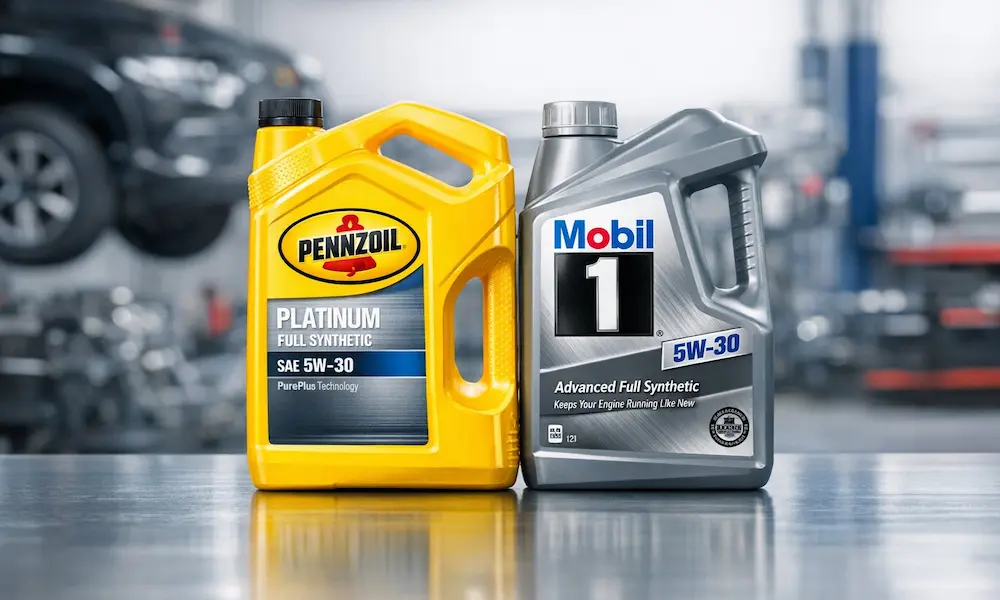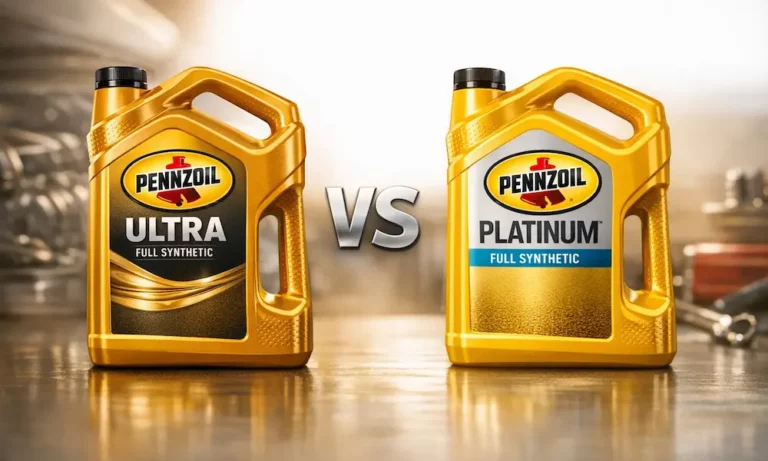
You’re staring at two yellow bottles at the auto parts store, trying to figure out if the “Ultra” version is worth the extra cash—or just marketing hype. Here’s the truth: the difference between Pennzoil Ultra and Platinum isn’t just branding. There are real chemical differences that matter for your engine’s protection and longevity.
What Makes These Oils Different From Everything Else
Both Pennzoil Platinum and Ultra Platinum start with something unique: they’re made from natural gas, not crude oil. While most “synthetic” oils come from heavily refined crude (Group III), Pennzoil uses Gas-to-Liquid (GTL) technology called PurePlus. Think of it as building motor oil molecule by molecule instead of trying to clean up what comes out of the ground.
This process creates oil that’s 99.5% pure—no sulfur, no heavy metals, just uniform molecules that behave predictably under pressure and heat. That’s why both oils resist breakdown better than conventional synthetics and don’t evaporate as quickly when your engine gets hot.
But here’s the catch: both Platinum and Ultra Platinum use the exact same GTL base oil. The performance gap between them comes down to what’s mixed into that base—the additive package.
The Additive Package: Where “Ultra” Earns Its Name
The base oil is like a blank canvas. The additives are what turn it into a protective masterpiece (or a mediocre mess).
Fighting Engine Knock: The Magnesium Switch
Modern turbocharged engines face a nasty problem called Low-Speed Pre-Ignition (LSPI)—basically, the fuel ignites too early and can crack pistons. Research found that calcium-based detergents (common in older oils) can trigger this.
Both Pennzoil Platinum and Ultra Platinum meet the new API SP standard by using magnesium-rich detergent packages instead. So you’re safe from LSPI with either bottle.
But there’s still a difference in cleaning power:
- Platinum: Keeps pistons up to 50% cleaner than industry standards
- Ultra Platinum: Keeps pistons up to 65% cleaner than industry standards
That extra 15% comes from higher concentrations of ashless dispersants—chemicals that grab soot particles and keep them suspended in the oil instead of letting them clump into sludge.
Friction Modifiers: The Real Performance Split
This is where Ultra Platinum pulls ahead.
Molybdenum is the gold standard for reducing friction. Under heat and pressure, it forms microscopic platelets of Molybdenum Disulfide that let metal surfaces slide past each other with less resistance. Ultra Platinum contains significantly more molybdenum than standard Platinum.
What does that mean in real-world terms?
- Quieter valve train operation (less mechanical clatter)
- Better fuel economy from reduced internal friction
- Stronger protection when oil film gets thin (towing, hard acceleration)
Ultra also packs more boron, which works with molybdenum to create a tougher protective film on metal surfaces. It’s like the difference between a single layer of paint and a primer-plus-topcoat system.
Cold Weather Performance: The Shocking Gap
You’d think two oils with the same base stock would flow the same in freezing temps. You’d be wrong.
Independent testing at -40°F revealed something surprising:
| Test Condition | Pennzoil Platinum | Pennzoil Ultra Platinum |
|---|---|---|
| -40°F Flow Test | Finished 4th (slowest) | Finished 1st (fastest) |
| After Heating | Remained slowest | Maintained lead |
Ultra Platinum flowed dramatically faster in Arctic conditions. This isn’t a small difference—it’s the gap between your engine getting instant oil pressure on a January morning or grinding metal-on-metal for precious seconds.
The likely explanation? Ultra uses more advanced pour point depressants or a lighter-fraction GTL blend that stays fluid when everything else turns to syrup. If you live anywhere with real winters (think Minnesota, Alberta, or Maine), this alone justifies the upgrade.
Heat Resistance: Who Survives the Turbo
Modern turbocharged engines run hot—we’re talking 400°F+ in the turbo bearings. When oil gets that hot, it wants to evaporate. The NOACK volatility test measures how much oil boils off at extreme temps.
| Metric | Pennzoil Platinum | Pennzoil Ultra Platinum |
|---|---|---|
| Evaporative Loss | 5.28 grams | 5.00 grams |
| Ranking | Excellent | Superior |
Ultra loses less mass to evaporation. In direct-injection engines (where oil vapors from the crankcase can bake onto intake valves and choke airflow), that lower volatility keeps your valves cleaner over time.
Wear Protection: What the Metal Says
Lab tests using standardized wear testers show how well oil protects under crushing loads. Smaller wear scars = better protection.
| Test Result | Pennzoil Platinum | Pennzoil Ultra Platinum |
|---|---|---|
| Wear Scar Diameter | 7.33 mm | 7.10 mm |
| Protection Level | Competitive | Top tier |
Ultra Platinum’s 3% smaller wear scar directly correlates with its higher molybdenum content. That’s the friction modifier doing its job—creating a sacrificial layer that takes the beating instead of your bearings.
The Price Paradox: Why Ultra Costs Almost the Same
Here’s where things get weird. Despite being the “premium” product, Ultra Platinum typically costs only $0.50 to $1.00 more per 5-quart jug than standard Platinum online.
| Product | Typical Price (5 Qt) | Price Per Quart |
|---|---|---|
| Platinum | ~$25.97 | ~$5.19 |
| Ultra Platinum | ~$26.50 | ~$5.30 |
You’re paying about 2% more for measurably better cold flow, lower volatility, enhanced wear protection, and superior cleaning. That’s an absurd value proposition.
The catch? Ultra Platinum is hard to find in physical stores. Pennzoil floods shelves with standard Platinum but mostly sells Ultra online. It’s a deliberate distribution strategy—Ultra targets enthusiasts who plan ahead and order online, while Platinum serves the “I need oil NOW” crowd at AutoZone.
Stack manufacturer rebates (often $20-25 per jug during promotions), and you can sometimes get Ultra Platinum cheaper than conventional oil. That’s not hyperbole—it’s rebate arbitrage.
What Real Users Notice
Beyond lab data, there’s consistent feedback from thousands of miles logged by enthusiasts:
Engine smoothness: Multiple users report their engines feel “velvety” and run noticeably quieter with Ultra Platinum compared to Platinum or Mobil 1. This matches the science—molybdenum cushions the metal-to-metal impacts in the valve train, damping vibration.
Cleaning high-mileage engines: Owners of engines with existing sludge say Ultra Platinum actively lifts deposits, sometimes turning dark quickly on the first change. That’s the dispersants mobilizing old gunk.
Lower oil consumption: Turbocharged engine owners frequently report using less oil between changes with Ultra, validating the low volatility numbers.
When Platinum Makes Sense
Don’t automatically assume “more expensive equals better for everyone.” Standard Platinum is legitimately excellent for:
- Naturally aspirated engines in moderate climates
- Short-notice purchases when you need oil today from a local store
- Standard drain intervals (5,000-7,500 miles) without severe duty
- Budget-conscious fleet use where small price differences scale up
It meets all the latest OEM specifications, including GM’s strict Dexos1 Gen 3. For most daily drivers, it’s more than adequate.
When Ultra Platinum Is Worth It
Upgrade to Ultra if you check any of these boxes:
You Drive a Turbocharged Engine
The lower volatility directly protects your intake valves from carbon buildup. GDI engines don’t have fuel spray washing the valves—once they carbon up, you’re looking at walnut blasting or chemical cleaning. Prevention is cheaper.
You Live Where Winter Hurts
If you see sustained temps below 0°F, Ultra’s cold flow performance provides genuine protection that Platinum can’t match. Cold-start wear is real wear.
You Tow, Haul, or Track Drive
High loads mean high metal stress. The boosted molybdenum and boron in Ultra create a tougher protective film when your oil film gets squeezed thin. That’s when boundary lubrication matters most.
You Want Maximum Cleanliness
Extending drain intervals? Running severe service duty cycles? The enhanced dispersant package in Ultra keeps sludge at bay longer than Platinum.
You’re an Enthusiast Who Values Peace of Mind
If the idea of running the “best” oil for a negligible price difference appeals to you, Ultra delivers. The smoothness and quietness aren’t placebo—they’re chemistry.
The Bottom Line: Same Foundation, Different Mission
Think of it this way: Platinum is a Honda Accord. Ultra Platinum is a Honda Accord with the turbocharged engine, upgraded suspension, and nicer interior. Same reliable platform, different execution.
Both use revolutionary GTL base stock that outclasses most conventional synthetics. Both meet modern API SP / ILSAC GF-6 standards for LSPI protection. Both will keep your engine clean and protected through their rated drain interval.
But Ultra Platinum doesn’t compromise. Higher molybdenum. Better cold flow. Lower volatility. Enhanced cleaning. For a buck more per change.
| Feature | Platinum | Ultra Platinum | Why It Matters |
|---|---|---|---|
| Base Stock | GTL (PurePlus) | GTL (PurePlus) | Both get the core advantage |
| Piston Cleaning | 50% cleaner | 65% cleaner | Less sludge, longer engine life |
| Cold Flow (-40°F) | Good | Exceptional | Faster oil pressure on cold starts |
| Molybdenum Level | Standard | Boosted | Quieter, smoother, better protection |
| Volatility | Low | Lower | Cleaner intake valves in GDI engines |
| Availability | Everywhere | Mostly online | Plan ahead for Ultra |
| Price Premium | Baseline | +$0.50-1.00/jug | Negligible for the gains |
If you’re buying in-store today and need oil now, grab Platinum without guilt. It’s genuinely good stuff that’ll protect your engine just fine.
But if you’re ordering online anyway? If you drive a turbo car? If you see real winters or tow regularly? Or if you just want the smoothest-running engine possible without spending Amsoil money?
Ultra Platinum isn’t just marketing. It’s measurably better—and the price difference won’t even cover lunch.