
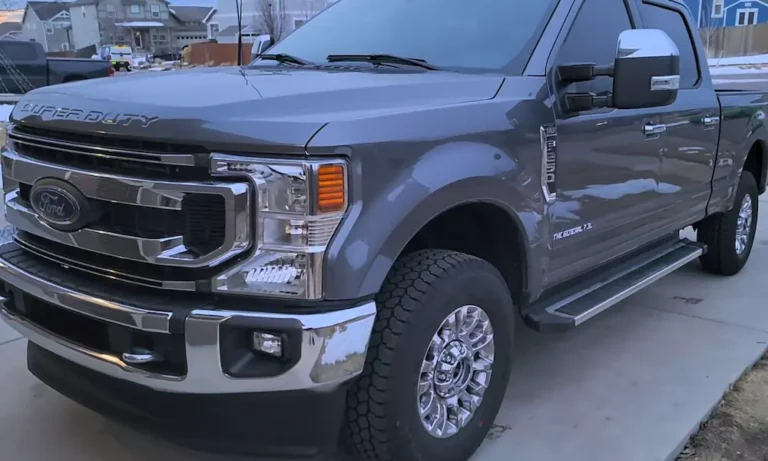
So you’ve got a Ford 7.3 Godzilla, or you’re thinking about getting one — and you’ve heard some things. Maybe a tick here, a harsh shift there. This post breaks down every real 7.3 Godzilla problem you need to know about, what Ford’s actually doing about it, and how to protect your engine before it turns into a very expensive pile of metal.
What Makes the 7.3 Godzilla Special (And Why That Matters for Problems)
Ford brought back the old-school pushrod V8 design with the Godzilla when it launched for the 2020 model year. No turbos, no overhead cams — just a massive 7.3-liter, naturally aspirated V8 with a cast-iron block built for hauling heavy loads day in and day out.
That sounds bulletproof. And honestly, for most people, it is. But “simple” doesn’t mean “perfect.” The Godzilla has a few specific weak spots that show up when you push it hard — especially if you idle a lot, tow heavy, or run a fleet.
Here’s a quick look at what you’re working with across different applications:
| Vehicle Application | Horsepower | Torque | Transmission |
|---|---|---|---|
| 2023+ F-250/F-350 Super Duty | 430 hp | 485 lb-ft | 10R140/10R100 |
| 2020–2022 F-250/F-350 Super Duty | 430 hp | 475 lb-ft | 10R140 |
| F-650/F-750 Medium Duty (2023+) | 335 hp | 468 lb-ft | 6-speed/10-speed |
| E-Series Premium (Commercial) | 325 hp | 450 lb-ft | TorqShift 6-speed |
| E-Series Economy (Commercial) | 300 hp | 425 lb-ft | TorqShift 6-speed |
The lower-output commercial tunes reduce stress, but as you’ll see, certain failure modes show up even at reduced power levels.
The Big One: Camshaft and Lifter Failures
This is the most serious of all the 7.3 Godzilla problems, and it’s the one that’s gotten the most attention from Ford and the truck community.
Owners and technicians started noticing a distinct ticking noise or random misfires anywhere between 30,000 and 80,000 miles. When techs tore these engines down, they found catastrophic spalling and delamination of the roller lifter surfaces. Once the hard coating on a lifter roller breaks down, the metal-to-metal contact between the roller and camshaft lobe destroys everything fast — and sends metal debris through the entire oil system.
In the worst cases, damaged lifters have been known to mushroom inside the block, making removal nearly impossible without specialty tools or a full engine replacement.
Why Does This Happen?
The root cause ties directly to the engine’s variable displacement oil pump (VDOP). This electronically controlled pump saves fuel by running lower oil pressure at idle. The problem? The camshaft and lifters sit at the end of the oil galley — they’re the last components to get pressurized oil.
During long idle sessions — think delivery trucks, motorhomes parked and running, fleet vehicles sitting in traffic — the oil pressure drops low enough that the lifter rollers don’t get a proper oil film. That’s metal rubbing on metal, heat building up, and surface fatigue setting in.
This issue is well-documented in owner communities, especially among motorhome and fleet operators who rack up idle hours faster than highway miles.
Ford’s Fix: Customer Satisfaction Program 24B27
Ford launched Customer Satisfaction Program 24B27 in May 2024, targeting 2020–2024 Super Duty and 2021–2025 Econoline vehicles with the 6.8L or 7.3L engines.
The fix is a Powertrain Control Module (PCM) software update that tells the VDOP to maintain higher oil pressure at idle. For engines that haven’t worn yet, this update can stop the damage before it starts. For engines already showing wear, the software can’t reverse it — mechanical repair is the only option.
If you haven’t had this update done, get to your dealer. It’s free, it’s fast, and it could save your engine.
Spark Plug Wire Failures: The Heat Problem
The second most common 7.3 Godzilla problem hits the ignition system. Specifically, the spark plug wire boots fail from excessive heat — and it tends to hit hardest on F-53 Motorhome Chassis and E-Series vans where engine bay airflow is restricted.
The exhaust manifolds run extremely hot under load. When you’re towing a heavy fifth-wheel up a long grade, manifold temps can exceed the thermal threshold of the factory wire boots. The insulation degrades, cracks, or becomes brittle, and the high-voltage spark starts arcing to the engine block instead of firing the plug.
The symptoms? You get a check engine light, misfires, and DTCs ranging from P0300 through P0308. In bad cases, the truck drops into limp mode — not something you want halfway up a mountain pass with 18,000 pounds on the hitch.
What Ford Did and What the Aftermarket Offers
Ford issued TSB 20-2370 for 2020 F-53 Motorhome Chassis vehicles, instructing dealers to replace all eight spark plug wires and modify the air baffle to redirect cooling air toward the ignition components. Updated wire sets for the F-Series Super Duty followed.
For owners who want maximum protection, the aftermarket has solid options:
- Ceramic-booted wires from Top Street Performance handle up to 2,000°F — manifold heat simply isn’t a concern anymore
- Silicone and fiberglass-sleeved sets from JEGS or Scott Performance add thermal barriers and abrasion resistance
- Higher-output coils with 10% more output over OEM help ensure a clean spark even when there’s minor resistance in the circuit
Inspect your wires every 30,000 miles. Catching early cracking before a misfire develops on the road is worth the five minutes it takes.
Transmission Troubles: The 10R140 CDF Drum Defect
The engine isn’t the only place 7.3 Godzilla problems show up. The 10R140 10-speed automatic transmission paired with most 2020–2022 F-250 and F-350 trucks carries its own documented flaw.
Inside the transmission, a bushing in the CDF clutch cylinder can migrate out of position over time. When it shifts, it blocks oil flow and damages internal Teflon seals, causing hydraulic leaks. The result:
- Harsh, banging shifts when moving from Park to Drive
- Loss of 10th gear, often showing up as DTC P07F7
- Hesitation and slippage during acceleration — especially dangerous when merging under load
Ford redesigned the CDF drum for vehicles built after August 16, 2022, adding a mechanical lip to keep the bushing in place and anodizing the outer shell for a harder surface. If your truck was built before that date and you’re experiencing these symptoms, ask your dealer about TSB 23-2160 or TSB 25-2357 for the CDF clutch cylinder replacement.
The 2025 Model Year Transmission Change: Should You Be Worried?
For 2025, Ford paired the 7.3L in F-250 configurations with the lighter 10R100 instead of the 10R140. The 10R100 hasn’t built the same reliability record under the Godzilla’s full 485 lb-ft of torque, and experienced towers are already raising concerns. If heavy towing is your priority, consider a leftover 2024 model or step up to the F-350, which still gets the 10R140.
Fuel System: The Safety Recall You Need to Know About
A NHTSA safety recall (25V455) covers certain 2021–2023 Super Duty trucks (F-250 through F-450) with the 7.3L engine. The defect involves the low-pressure fuel pump and jet pump inside the fuel delivery module. Pump failure can cause sudden engine stall while driving — a serious collision risk.
Check your VIN on the NHTSA website right now if you own one of these trucks. This isn’t a fix you want to put off.
Additional fuel-related 7.3 Godzilla problems include:
- Clogged fuel filters causing rough idle or hard starts
- Fuel Pump Control Module faults leading to intermittent stalling or no-start conditions
- EVAP system “fuel fill inlet” warnings from faulty sensors or a bad gas cap seal, typically costing $100–$500 to fix out of warranty
Electrical Gremlins: Battery Junction Box and BCM Issues
Two electrical problems round out the 7.3 Godzilla problems list.
Battery Junction Box (BJB) moisture intrusion affects 2020–2022 Super Duty trucks. Water getting into the BJB causes short circuits that produce some genuinely strange symptoms — the engine won’t shut off after you remove the key, the horn stays on, the battery dies overnight, or ABS codes like C0020 pop up. TSB 23-2133 covers this. The fix often involves replacing the BJB cover and ensuring it’s properly sealed during every service visit.
Body Control Module (BCM) miscalibration led to recall 24S27 for certain Super Duty vehicles. The BCM falsely detected a current overload on the rear taillamp circuit, causing the taillights to fail during a drive cycle. A simple software reflash at your dealer resolves this completely.
How to Protect Your 7.3 Godzilla Engine
Now that you know the 7.3 Godzilla problems, here’s what smart owners actually do to stay ahead of them.
Oil changes: Don’t rely purely on the Intelligent Oil Life Monitor. Technicians recommend strict 5,000-mile or engine-hour intervals to keep protective additives fresh. Run a full synthetic 5W-30 like Pennzoil Ultra Platinum rather than the factory synthetic blend. Some owners add ZDDP (zinc-dialkyl-dithiophosphate) for extra anti-wear protection at the lifter-to-cam interface — just don’t overdo it over the long term due to catalytic converter sensitivity.
Idle management: Idle hours hurt this engine more than highway miles because the VDOP runs low pressure when the engine isn’t working hard. If you can’t avoid extended idling, bump the idle RPM using your PTO settings or an aftermarket tuner to get the oil pump working harder. In cold climates, use a block heater to minimize cold-start time.
Transmission fluid: Even though Ford labels the transmission fluid “fill for life,” professional recommendation is a fluid and filter change every 60,000–100,000 miles for any truck that tows regularly. Fresh fluid keeps the valve body solenoids working cleanly.
Here’s a quick maintenance reference:
| Maintenance Item | Recommended Frequency | Why It Matters |
|---|---|---|
| Engine Oil & Filter | 5,000 miles / 250 hrs | Protects lifters from low-pressure wear |
| Spark Plug Wires | Inspect every 30,000 miles | Catches thermal degradation before misfire |
| Transmission Fluid | 60,000–100,000 miles | Prevents solenoid sticking and valve body wear |
| Cooling System | Annual inspection | Checks thermostat and water pump health |
| BJB Cover | Every service | Ensures moisture seal stays intact |
Oil sampling: Services like Blackstone Labs can analyze your used oil for elevated iron, copper, or chrome levels — early warning signs of valvetrain wear before a catastrophic failure happens on the highway.
Is the Godzilla Still Worth It?
Here’s the honest answer: yes — but with clear eyes. The 7.3 Godzilla problems are real, they’re documented, and a handful of them are serious. But Ford has addressed the biggest ones. The August 2022 transmission redesign fixed the CDF drum defect. Customer Satisfaction Program 24B27 fixes the oil pressure calibration. Updated wire sets addressed the ignition issues.
A Godzilla built after August 2022 that’s had the PCM update applied is a meaningfully better engine than the 2020 and 2021 trucks that hit the market first. Add a proactive maintenance routine and you’ve got one of the most capable gasoline V8s available in a heavy-duty truck — just go in knowing what to watch for.













