If your Ford F-150, Mustang, or Super Duty is clunking, lurching, or slipping between gears, you’re dealing with one of the most talked-about mechanical headaches in modern trucks. Ford 10 speed transmission problems have triggered recalls, lawsuits, and thousands of frustrated owners. This post breaks down exactly what’s failing, why it’s failing, and what your real options are.
What Is the Ford 10-Speed Transmission?
Ford co-developed the 10-speed automatic transmission with General Motors back in 2013. The goal was simple: more gears means the engine stays in its sweet spot longer, which means better fuel economy without sacrificing torque.
The result was three main variants:
| Transmission | Vehicles | Torque Capacity | In Production Since |
|---|---|---|---|
| 10R60 | Explorer, Bronco, Aviator | ~600 N·m | 2020 |
| 10R80 | F-150, Mustang, Expedition, Ranger | 800 N·m (590 lb-ft) | 2017 |
| 10R140 | F-250, F-350, F-450, F-550 Super Duty | 1,400 N·m (1,033 lb-ft) | 2020 |
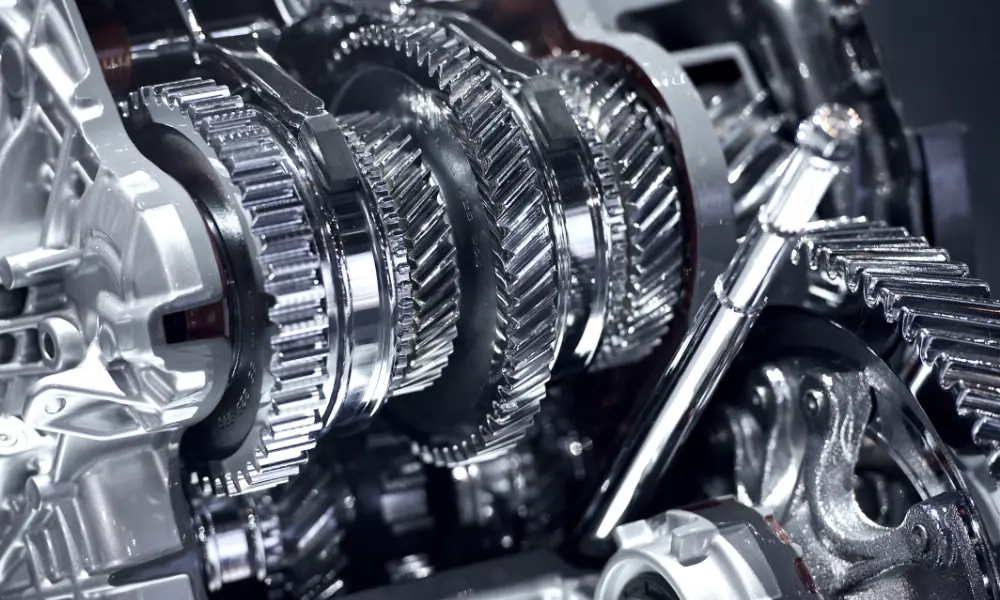
The design uses four planetary gearsets and six clutches. Every gear change requires one clutch to release while another grabs — all within milliseconds. When that timing goes wrong, you feel it hard.
The Biggest Mechanical Failure: The CDF Drum Sleeve
The single most documented mechanical defect in the Ford 10 speed family is what happens inside the C-D-F clutch drum assembly. This drum houses three clutch packs and controls multiple gear ratios. Inside it, there’s a steel sleeve that was originally press-fitted into an aluminum drum body.
Here’s the problem: under heat and pressure cycles, that sleeve walks out of position. It migrates axially — meaning it shifts up or down inside the drum — and when it does, it blocks the oil passages that feed hydraulic pressure to the clutch pistons.
What You Feel When the CDF Sleeve Fails
The symptoms follow a pretty predictable pattern:
- Shift flares — Engine RPM spikes during a 3-4 or 4-5 shift because the clutch can’t engage fast enough
- Neutral-out — The truck loses all drive while you’re moving because the hydraulic circuits drain through the leak
- Harsh clunks — The transmission control module (TCM) senses the slip and slams the clutch closed with maximum pressure to compensate
Ford’s fix? A redesigned CDF drum with a machined internal lip that physically stops the sleeve from moving. This updated part became standard in late 2022 rebuilds and warranty repairs. Earlier units don’t have it — and that’s a big deal if you own a 2017-2022 model.
The F-Clutch “Trash Can” Problem
Technicians call the F-clutch outer shell the “trash can” because of its cylindrical shape. It’s made of aluminum, and the steel clutch plates index into splines on its inner wall.
During high-load shifts — especially if the transmission is already dealing with hydraulic issues — those steel plates hammer against the aluminum splines. Over time, they wear deep grooves into the shell. Once those grooves get deep enough, the clutch plates stick. The clutch can’t release or apply cleanly.
In severe cases, the stress cracks the aluminum shell completely in half. That means internal debris throughout the transmission and a near-total loss of gear function.
The fix here was a hardened, anodized outer shell. Anodizing creates a much harder aluminum oxide surface that resists the steel plate wear. Newer builds include this from the factory.
Valve Body Issues: Warping, Leaks, and Recall-Level Defects
The valve body is the hydraulic brain of the transmission. It routes fluid pressure to the right clutch at the right time. The 10-speed’s valve body is heavily aluminum, and that creates problems.
Thermal Warping
When transmission fluid temps climb above 220°F, the aluminum valve body can warp. That warping creates cross-leaks — pressure meant for one circuit bleeds into another. The result is confused shifting: the truck hunts between gears, two clutches partially grab at once, and friction material wears out fast.
Solenoid Problems and Recalls
The valve body solenoids have their own failure modes:
| Issue | Cause | Symptom |
|---|---|---|
| Sticking solenoid pintles | Metal debris or fluid varnish | Intermittent hard shifts or gear refusal |
| Solenoid retaining clip wear | Vibration flattening the clip | Inaccurate pressure control |
| Casting defects (Recall 23S54) | Porous aluminum in valve body | Stuck poppet valve, loss of rear seal lubrication |
| Machining errors (Recall 25V-164) | Out-of-spec inner dimensions | No reverse, forward movement in neutral |
That last one — Recall 25V-164 — is serious. Ford’s valve bodies were machined incorrectly during production. The error was bad enough that some vehicles moved in the opposite direction of the gear selected. NHTSA issued this recall in March 2025 covering 2024-2025 F-150, Bronco, Mustang, and Explorer models.
Torque Converter Shudder: The Rumble Strip Nobody Asked For
Between 35 and 60 mph, many owners feel a vibration that mimics driving over rumble strips. It’s the torque converter clutch (TCC) slipping and grabbing repeatedly in rapid succession.
Two things cause this. First, Ford’s Mercon ULV fluid is ultra-low viscosity by design. That’s great for efficiency — until it overheats. Once it does, its friction modifiers break down and the lock-up clutch becomes unstable.
Second, the OEM stator inside the converter is often thin stamped steel that flexes under load. That flex raises operating temperatures even further, which accelerates the shudder cycle.
The fix involves both a fresh fluid fill with quality Mercon ULV and, in more serious cases, an upgraded converter with a multi-disc lock-up clutch.
When the TCM Makes Things Worse: Adaptive Learning Gone Wrong
The 10-speed uses Adaptive Learning — the TCM records how long each shift takes and adjusts pressure accordingly. It’s meant to smooth things out over time. But if the transmission is already failing mechanically, the TCM learns the wrong thing.
Say the CDF drum has a hydraulic leak. The TCM notices that the 3-4 shift takes too long and cranks up the pressure to compensate. Now you’ve got a “learned” harsh shift baked into the system — even if you flush the fluid or replace minor components. The harsh behavior stays because the TCM’s memory says that’s how it has to shift.
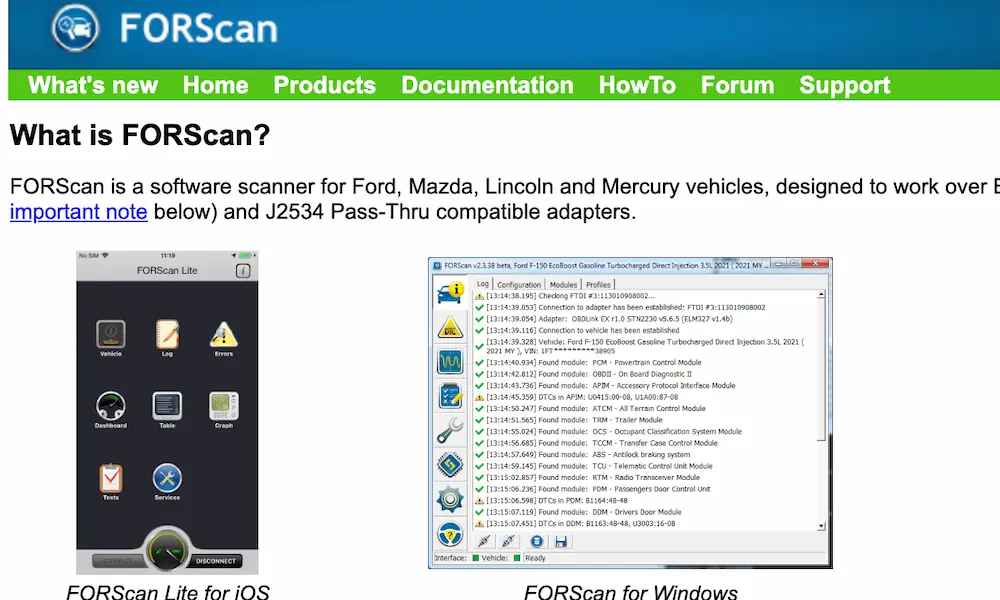
TSB 23-2123 addresses this directly. It tells technicians to clear the Keep Alive Memory (KAM) and run the truck through a specific Adaptive Learning Drive Cycle — a defined sequence of accelerations and decelerations to build a fresh baseline. Some owners have done this themselves using FORScan with solid short-term results. Just know that resetting tables doesn’t fix worn hardware.
ABS Sensors Can Break Your Transmission — Here’s How
This one surprises people. A Reddit case study involving a 2021 F-450 documented brutal downshifts that stumped multiple technicians. The root cause? Faulty ABS wheel-speed sensors.
The TCM uses wheel-speed data to calculate when and how hard to shift. Corrupted ABS data made the TCM think the truck was at a standstill while it was still moving — so it commanded first gear. When the ABS system was disconnected entirely, the transmission shifted perfectly because the TCM defaulted to its backup logic.
It’s a reminder that Ford 10 speed transmission problems don’t always start inside the transmission.
Model-Specific Failures: 10R60, 10R80, 10R140
10R60 (Explorer, Bronco)
The 10R60 is lighter duty and sees fewer CDF drum failures, but it has its own quirks. TSB 22-2411 covers a condition where the A-clutch return spring snap ring pops out of its groove, causing a harsh 7-6 downshift. The fix required a redesigned housing with a deeper groove. Early Explorer models also reported internal cooler cracks that mixed coolant with transmission fluid — a fatal combination.
10R80 (F-150, Mustang)
This is the most widely used unit, and the most litigated. The O’Connor v. Ford class action targets 2017-2020 F-150 models specifically. Common symptoms include a 2-3 shift clunk, delayed reverse engagement, and a dangerous high-speed downshift into first gear — the latter caused by a momentary loss of signal from the output speed sensor, making the TCM think the truck stopped.
10R140 (Super Duty)
The heavy-duty 10R140 runs behind the 6.7L Power Stroke diesel. It’s bigger, uses an anodized drum from the factory, and has higher build quality overall. But it’s not immune. Its biggest weakness is heat during sustained towing — it’s designed to operate between 195°F and 215°F, and it climbs fast under load. Gen 1 units (2020-2023) also use a latch valve system prone to sticking when fluid maintenance slips. Gen 2 (2024+) dropped this design entirely.
Recalls and Lawsuits at a Glance
| Action | ID | Vehicles Affected | Problem |
|---|---|---|---|
| Safety Recall | 25V-164 | 2024-2025 F-150, Bronco, Mustang, Explorer | Wrong machined valve body; unintended movement |
| Safety Recall | 23S54 | 2023 F-150, Explorer, Expedition | Casting defect; park engagement loss |
| Safety Recall | 23S06 | 2022-2023 F-150, Bronco, Mustang | Loose internal bolt; park won’t engage |
| Class Action | O’Connor v. Ford | 2017-2020 F-150 | Shifting defects, lunging, safety risks |
| Class Action | Barcelona v. Ford | 2018 F-150 | MA consumer protection violation |
As of early 2026, the O’Connor case is still active in the Northern District of Illinois. Judge Jeffrey Cummings allowed plaintiffs’ experts to testify on the CDF drum design flaw and denied Ford’s motion to exclude key evidence. Class certification — which would bring in hundreds of thousands of owners — is still being pursued.
Warning Signs You Shouldn’t Ignore
Watch for these symptoms. They often appear together right before something breaks badly:
- Delayed reverse — 2 to 5 seconds of nothing, then a loud thud when you shift to reverse
- 3-5 shift flare — RPMs spike noticeably during the 3rd-to-5th shift
- Low-speed lurching — Feels like someone rear-ended you while you’re slowing down or pulling away gently
- Temperature spikes — Fluid temps consistently above 215°F during normal driving with no load
Maintenance That Actually Matters
Ford’s “Normal Use” service schedule puts transmission fluid changes at 100,000 miles. For towing, hot climates, or hard driving, that interval is dangerously optimistic.
Here’s what actually works:
- Change fluid every 30,000 to 40,000 miles under severe service conditions
- Check for burnt smell or dark, metallic fluid — that means internal debris is already circulating
- Use only Mercon ULV — the wrong fluid type accelerates friction modifier breakdown
- Follow the “two-week rule” — if harsh shifting continues more than 14 days after a dealer reset, software isn’t the problem. It’s mechanical.
Aftermarket Fixes for When Stock Isn’t Enough
A full aftermarket support system has grown specifically around Ford 10 speed transmission problems. Companies like Inglewood Transmission, SunCoast Diesel, and Monster Transmission offer built units that go beyond OEM spec:
| Build Tier | Power Handling | Key Upgrades | Estimated Cost |
|---|---|---|---|
| Stock Plus | Up to 550 HP | Recalibrated valve body, stronger clutches, updated CDF drum | $4,150 – $5,000 |
| Stage 1 Street | Up to 750 HP | Billet backing plates, triple-disc converter, upgraded pump | $6,000 – $7,250 |
| Stage 2 Race | Up to 900 HP | Billet input shaft, race-spec frictions, deep aluminum pan | $9,500 – $11,000 |
Key upgrades in these builds include:
- Billet CDF drums — CNC-machined, eliminating sleeve migration entirely
- Higher line pressure valve bodies — Up to 60 psi more clamping force stops clutch slip before it starts
- Multi-disc torque converters — Kills the rumble strip shudder and handles serious tow loads
- Aluminum deep-sump pans — Add ~2 quarts of capacity and run cooler than the stock plastic pan
If Ford’s OEM remanufactured unit drops the same flawed parts back in — which was common in 2017-2021 era repairs — a built unit from a reputable shop is genuinely the smarter long-term investment.
What TSB 24-2254 Tells Dealers to Do
TSB 24-2254 is currently the primary document guiding dealer repairs for harsh shifting complaints. The diagnostic sequence is:
- Pull trouble codes — look for P0751 (Solenoid A performance) or P0729 (6th gear incorrect ratio)
- Run a hydraulic leak test using the VCMM Pressure Vacuum Transducer kit — slow pressure build confirms internal leakage
- Pull the transmission and inspect the CDF drum for sleeve movement — any migration beyond a few millimeters means the drum gets replaced with the updated lipped version
- Replace only the components that show actual heat damage — discoloration or glazed friction material
The goal is targeted repair, not blanket replacement. But if your truck keeps coming back with the same issues, that approach isn’t working.