Toyota built its reputation on bulletproof reliability. So when CVT transmission problems started showing up in owner forums, Reddit threads, and courtrooms, people took notice. Whether you’re hearing a weird whine from under the hood or shopping for a used Corolla, this guide breaks down exactly what’s going wrong, which models are affected, and what you can do about it.
Not All Toyota CVTs Are the Same
Before you panic, here’s something worth knowing: Toyota actually uses three different types of CVTs, and they don’t all share the same problems.
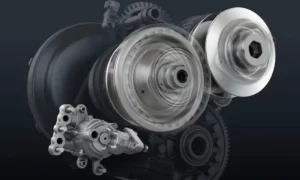
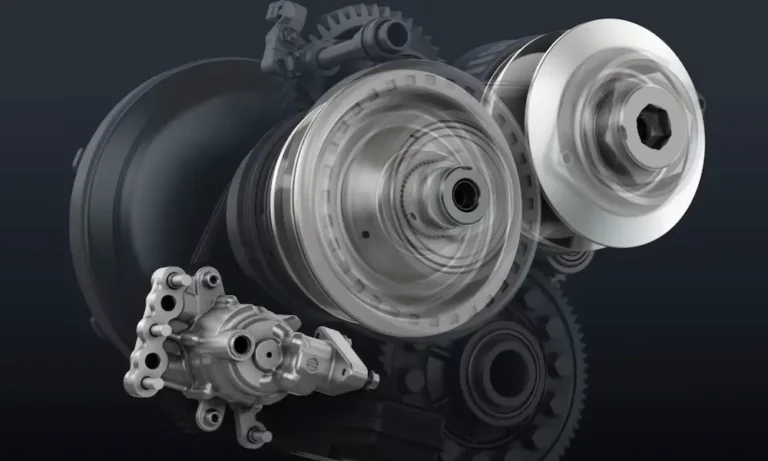
The mechanical K-series CVT uses a steel belt and two variable-width pulleys to change ratios smoothly. You’ll find this in non-hybrid Corollas, the C-HR, and older RAV4s. This is where most Toyota CVT transmission problems originate.
The K120 Direct Shift-CVT is a smarter version. Toyota added a physical launch gear to handle take-off stress, then switches to the belt system at higher speeds. It debuted in the 2019 Corolla Hatchback.
The e-CVT (electronic CVT) in hybrid models like the Prius, RAV4 Hybrid, and Highlander Hybrid works completely differently. There’s no belt, no pulleys — just a planetary gear set and two electric motors. Many of these units surpass 300,000 miles in taxi applications. It’s essentially bulletproof.
So if someone tells you “Toyota CVTs are terrible,” ask which one they mean.
The Most Common Toyota CVT Transmission Problems
Overheating and Fluid Breakdown
Heat is the number one killer of Toyota CVTs. The constant friction between the steel belt and pulleys generates significant heat. When the transmission fluid gets too hot — during towing, steep climbs, or heavy stop-and-go traffic — its protective additives start breaking down.
Once the fluid loses its grip, you get a nasty feedback loop:
- Low fluid pressure → minor belt slip
- Belt slip → more heat
- More heat → faster fluid degradation
- Faster degradation → worse slip, and so on
Symptoms include a burning smell, a check engine light, or the vehicle entering “limp mode” where the transmission limits power to avoid total failure.
Shuddering Between 25–35 mph
This is one of the most-reported Toyota CVT transmission problems. If your car vibrates or judders lightly during light acceleration — especially in that 25–35 mph range — your belt may be slipping on the pulleys. It feels like driving over rumble strips.
Toyota TSB T-SB-0001-11 specifically addresses a transaxle rattle noise between 25 and 35 mph across several front-wheel-drive models.
Hesitation on Take-Off
You press the gas. Nothing happens for a second or two. Then the car lurches forward. This delayed response usually points to:
- Low transmission fluid
- A malfunctioning throttle position sensor
- Software issues in the transmission control module (TCM) that slow hydraulic pressure build-up
Strange Noises
Don’t ignore unusual sounds. Here’s what they typically mean:
| Sound | Likely Cause | Urgency |
|---|---|---|
| High-pitched whine during acceleration | Worn bearings or failing hydraulic pump | High — get it checked now |
| Grinding or rattling at idle | Metal debris in fluid from worn pulleys | Very high — potential full failure |
| Clunking from Park to Drive | Solenoid issues or torque converter damage | Medium — diagnose soon |
Model-Specific Toyota CVT Problems You Should Know About
Toyota C-HR (2018–2020): The Bearing Failure Issue
The non-hybrid C-HR has become a poster child for Toyota CVT transmission problems. Its K114 CVT has a specific internal bearing that wears out prematurely. The first sign is usually a faint whine at city speeds that gradually gets louder.
Here’s the frustrating part: Toyota dealerships don’t rebuild CVTs internally. If that bearing fails, you’re looking at a full transmission replacement costing $10,000–$15,000. In Canada, consumer advocacy pressure pushed Toyota to extend the warranty on 2018–2019 C-HR units to 10 years or 193,000 km. US owners haven’t received the same consistent coverage.
2019 Corolla Hatchback: The Recall You Need to Know
The K120 Direct Shift-CVT launched in the 2019 Corolla Hatchback with a serious flaw. About 3,400 vehicles were recalled under NHTSA recall 18V-894 because the pump impeller blades inside the torque converter could break off during high-load driving.
When those blades detach, the car loses all power to the wheels — instantly. At highway speeds, that’s a genuine safety crisis. Toyota’s fix was a full transmission and torque converter replacement at no cost.
RAV4 and Highlander: The 8-Speed Problem That Isn’t a CVT
Here’s a twist. Many people avoid CVTs and buy a gas-only RAV4 or Highlander thinking they’re getting a more traditional transmission. The UA80/UB80 8-speed automatic in those models has its own growing list of problems.
Multiple class-action lawsuits filed in Texas, New Jersey, and California allege that this transmission runs too hot, shifts harshly, and fails prematurely — partly because the software forces early upshifts to hit fuel economy targets at the expense of durability.
| Model | Transmission | Known Issue | Status |
|---|---|---|---|
| C-HR (2018–2020) | K114 CVT | Internal bearing failure | Canadian warranty extended |
| Corolla HB (2019) | K120 Direct Shift | Torque converter blade failure | NHTSA Recall 18V-894 |
| RAV4 (2019–2025) | UA80 8-speed | Harsh shifting / heat buildup | Active class-action lawsuits |
| Tacoma (2024) | AL80E/F 8-speed | Total failure under 1,000 miles | TSB T-SB-0076-24 |
The “Lifetime Fluid” Myth Is Costing People Thousands
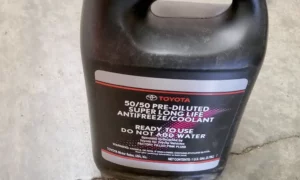
Toyota’s maintenance guides label CVT fluid as a “lifetime” fluid — meaning you technically never need to change it under normal conditions. Under “special operating conditions,” they recommend a change at 60,000 miles.
The problem? “Special operating conditions” includes frequent stop-and-go traffic, short trips, and city driving. In other words, most people’s daily commute qualifies.
There’s no such thing as a truly lifetime fluid in a high-friction environment. The thermal stress inside a CVT slowly tears apart the molecular structure of the fluid. Once the fluid breaks down, metal particles contaminate the system and act like sandpaper on your belt and pulleys.
Independent transmission specialists and Toyota master technicians consistently recommend a fluid drain and fill every 30,000 to 60,000 miles using only Toyota-approved CVT fluid. That $150–$300 service is the cheapest insurance policy you can buy against a $10,000 repair bill.
Read These Diagnostic Trouble Codes Before They Escalate
A scan tool gives you the earliest possible warning. These are the CVT-specific codes to watch:
- P0740 / P2756 — Torque converter clutch actuator failure. Often shows up as shuddering or rough engagement of the launch gear.
- P0745 / P0775 / P2713 — Pressure control solenoid issues. Critical. These mean the system can’t maintain proper belt clamping force, leading directly to slip and heat.
- P0710 — Transmission fluid temperature sensor out of range. This is your first warning that chronic overheating is happening.
- P0840 — Fluid pressure sensor malfunction. Can cause the TCM to run the transmission erratically in a “safe” mode.
For 2014–2017 Corolla owners, TSB T-SB-0150-16 from NHTSA specifically addresses a P2757 code (Torque Converter Clutch Pressure Control Solenoid Performance) and calls for a valve body replacement — not a full transmission.
How Toyota Stacks Up Against the Competition
To be fair, Toyota’s CVTs aren’t the worst on the market. Not even close.
Nissan’s Jatco-built CVTs became notorious for belt degradation, judder, and total failure well before 100,000 miles. Toyota’s Aisin-built units sit clearly above that bar.
Honda’s CVTs are considered highly reliable, possibly the longest-lasting in the compact segment, with programming that largely eliminates the rubber-band feel. Subaru’s chain-driven Lineartronic CVT, used across almost its entire AWD lineup, has improved dramatically in recent years. Consumer Reports currently ranks Subaru just behind Toyota and Lexus in predicted reliability.
The honest verdict: Toyota’s mechanical CVTs are better than most. But they’re not immune.
Repair Costs: What You’re Actually Facing
When a Toyota CVT fails, the bill is rarely small. Here’s a realistic breakdown:
| Repair Type | Estimated Cost | Notes |
|---|---|---|
| Fluid drain and fill | $150–$300 | Best preventative measure available |
| Solenoid replacement | $400–$850 | Works if the belt and pulleys are still healthy |
| Remanufactured CVT | $3,500–$6,000 | Comes with a 3–5 year warranty from most shops |
| New OEM unit | $7,000–$12,000+ | Dealer standard, often exceeds vehicle value |
Dealerships charge labor rates that often exceed $180 per hour and almost always push for a full replacement. Independent transmission specialists can install remanufactured units at a fraction of the cost. Both routes have merit — it depends on your vehicle’s age and remaining value.
One important reality check: if your car has 110,000 miles and the CVT dies outside warranty, a $10,000 repair might cost more than the car is worth. That’s the “throwaway transmission” problem that nobody talks about when you’re signing the purchase agreement.
What About Toyota’s Legal Trouble?
It’s not just forum complaints anymore. Toyota is currently facing multiple class-action lawsuits in Texas, New Jersey, and California over the UA80 and UB80 8-speed automatics. Plaintiffs argue Toyota knowingly sold vehicles with transmission designs that run dangerously hot and fail prematurely — and that the software prioritizes fuel economy over durability.
In Australia, the Williams class action — originally about defective diesel particulate filters — has set a legal precedent for “reduction in value” damages now being applied to transmission defect cases.
The lawsuits claim repair bills regularly exceed $9,000 and destroy resale value. Whether Toyota settles or fights these cases, the pattern of complaints is hard to ignore.
What’s Coming Next for Toyota Transmissions
The good news: Toyota’s long-term direction moves away from mechanical CVTs entirely.
The 2026 C-HR returns as a fully electric vehicle, eliminating the CVT altogether. The RAV4 lineup is increasingly shifting toward hybrid and plug-in hybrid variants that use the reliable e-CVT planetary system. High-output models like the Grand Highlander use a 6-speed automatic paired with a strong electric motor instead of a CVT.
The era of the mechanical belt-and-pulley CVT is winding down. For current owners, that just means taking care of the one you have.
The Single Most Important Thing You Can Do Right Now
Change your CVT fluid. Every 30,000 to 60,000 miles. Use only Toyota-spec fluid. Don’t let a dealer tell you it’s a “lifetime” fluid and walk away.
That’s it. That one proactive step is what separates Toyota CVT owners who hit 200,000 miles from the ones replacing transmissions at 90,000. Everything else — the whines, the shudders, the hesitation — starts with degraded fluid that nobody changed.
If you’re already hearing noises or seeing warning codes, get a scan done today. The earlier you catch a pressure solenoid issue or bearing wear, the more options you have — and the less it costs.