Toyota’s extended warranty sounds simple until you’re sitting in the finance office staring at a quote that makes your eyes water. This guide breaks down what a Toyota extended warranty actually costs, which plan fits your situation, and how to avoid overpaying by thousands. Stick around — the savings tip near the end is genuinely worth it.
What Is a Toyota Extended Warranty, Really?
Toyota doesn’t call it an “extended warranty.” It’s officially a Vehicle Service Agreement (VSA), administered by Toyota Financial Services. Think of it as a second layer of protection that kicks in after your factory warranty fades.
Every new Toyota comes with:
- 3-year / 36,000-mile bumper-to-bumper factory warranty
- 5-year / 60,000-mile powertrain warranty
- 8-year / 100,000-mile hybrid battery warranty (standard states)
- 10-year / 150,000-mile hybrid battery warranty (California emissions states)
Once those expire, a VSA picks up where the factory coverage stops.
The Three Toyota VSA Plans Explained
Toyota structures its VSA into three tiers. Your choice comes down to how much coverage you want and how long you plan to keep the car.
Platinum Protection Plan
This is the top-tier, exclusionary plan. Instead of listing what’s covered, it lists what’s not covered — and everything else is in. That means roughly 85% of your vehicle’s components are protected, including airbags, navigation systems, body control modules, power seat motors, and steering sensors.
If you want maximum protection with minimal fine print, Platinum is it.
Gold Protection Plan
Gold operates on a stated-component basis — it lists exactly what’s covered. It protects about 55% of components, focusing on major mechanical systems: engine, transmission, drive axles, steering, brakes, climate control, and core suspension.
It skips luxury convenience electronics to keep the cost lower than Platinum.
Powertrain Protection Plan
The entry-level option. It covers only the core mechanical parts that move the car: engine block, transmission, drive axle assemblies, torque converters, water pumps, and oil pans. Nothing more.
It’s a smart choice for high-mileage drivers who care about drivetrain reliability over electronics coverage.
| VSA Plan | Coverage Model | Components Protected | Key Exclusions |
|---|---|---|---|
| Platinum | Exclusionary (covers almost everything) | ~85% of components — airbags, nav systems, seat motors, steering sensors | Wear items, brake pads, wiper blades, tires, maintenance fluids |
| Gold | Stated component | ~55% — engine, transmission, AC, brakes, steering | Infotainment screens, trim, cabin convenience computers |
| Powertrain | Stated component | Engine block, transmission, drive axles, water pump, oil pan | All electrical systems, suspension, brakes, diagnostic fees |
What All Three Plans Include
Every VSA tier bundles these benefits regardless of what plan you pick:
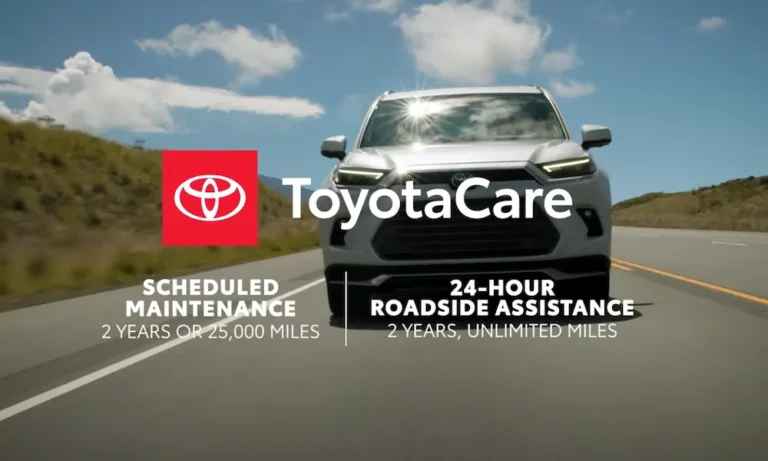
- 24/7 roadside assistance — towing, flat tires, battery jump, lockouts, emergency fuel
- Trip interruption benefits — meals and lodging reimbursed if you break down 150+ miles from home
- Substitute transportation — daily rental car allowance while your car gets fixed
| Plan & Vehicle Type | Rental Car Allowance | Trip Interruption Allowance | Max Duration |
|---|---|---|---|
| Platinum (New Vehicle) | $35/day | $50/day | 5 days per occurrence |
| Platinum (Used Vehicle) | $50/day | $100/day | 5 days per occurrence |
| Gold (New Vehicle) | $35/day | $50/day | 5 days per occurrence |
| Powertrain (New Vehicle) | $35/day | $50/day | 5 days per occurrence |
Toyota Extended Warranty Cost: What You’ll Actually Pay
Here’s the number everyone wants. Toyota extended warranty cost typically runs $1,200 to $4,000 at retail — but that range hides a massive variation based on several factors.
What Drives the Price Up or Down
Vehicle type and size matter a lot. A Highlander VSA costs more than a Corolla VSA because bigger, more complex vehicles have more expensive components to repair.
Mileage at purchase is huge. Prices update on a six-month actuarial cycle. A VSA bought at 500 miles costs less than the same contract bought at 35,000 miles. Buy early.
Deductible choice gives you two options:
- $0 deductible — higher upfront cost, zero out-of-pocket per repair
- $100 deductible — lower upfront cost, but waived entirely if you use the selling dealership for repairs (the “disappearing deductible”)
- $250 deductible — available through online volume brokers, lowest initial price
Coverage term — longer terms cost more. A 10-year / 125,000-mile plan costs more than a 7-year / 100,000-mile plan. Simple.
Why Extended Warranty Coverage Makes Financial Sense
Here’s why the math works in favor of a VSA for long-term owners. These are average out-of-pocket repair costs the VSA would cover:
| Component | Average Repair Cost | Why It’s Expensive |
|---|---|---|
| Automatic / Hybrid Transmission | $3,000 – $5,000 | High-voltage hybrid transaxles need certified technicians |
| Engine Assembly / Overhaul | $2,500 – $4,500 | Modern turbocharged engines have tight tolerances and more sensors |
| Hybrid Traction Battery | $3,000 – $6,000 | Labor-intensive replacement with safety containment protocols |
| Catalytic Converter | $2,278 – $2,426 | Precious metals drive parts cost through the roof |
| Climate Control / AC System | $1,500+ | Integrated with dual-zone climate computers |
| Electrical Modules | $500 – $1,500 | Body control modules and power seat computers aren’t cheap |
One transmission failure can cost more than the entire VSA. That’s the math right there.
The Dealership Markup Problem (And the Fix)
This is where most Toyota buyers leave serious money on the table.
Finance managers at physical dealerships mark up VSA prices significantly — sometimes doubling or tripling the wholesale cost. A Corolla Platinum VSA with a wholesale cost around $1,100 might get quoted to you at $3,999. That’s not a typo.
Here’s the good news: authorized online Toyota dealerships sell the identical VSA — registered directly in Toyota Financial Services’ system — for a thin margin over wholesale. The contract is fully honored at any Toyota dealership across the U.S. and Canada.
| Vehicle | VSA Term | Dealer Retail Quote | Volume Broker Price | Your Savings |
|---|---|---|---|---|
| Grand Highlander (Non-Hybrid) | 10yr / 125K miles, Platinum $0 | $3,300 – $3,400 | $1,795 | $1,505 – $1,605 |
| Grand Highlander (Non-Hybrid) | 8yr / 100K miles, Platinum $0 | $3,246 | $1,145 | $2,101 |
| Highlander | 10yr / 100K miles, Platinum $0 | $4,800 – $4,935 | $1,360 | $3,440 – $3,575 |
| RAV4 / RAV4 Hybrid | 10yr / 100K miles, Platinum $0 | $2,700 | $1,360 | $1,340 |
| Corolla / Corolla Hybrid | 10yr / 100K miles, Platinum $0 | $3,000 | $1,130 – $1,200 | $1,800 – $1,870 |
| Camry | 10yr / 150K miles, Platinum $0 | $3,800 | $2,812 | $988 |
Volume broker platforms like Granger Warranty, Midwest Super Store, and Toyota of Greenfield are the names Toyota owners on Reddit mention most often.
State Restrictions: California, Oregon, and Washington
If you live in California, Oregon, or Washington, the rules change. State insurance regulations require any VSA sold to you to be issued by an in-state licensed administrator through a physical dealership with a local business license. Out-of-state brokers can’t directly sell to you.
Your two workarounds:
- Price match locally — Get a quote sheet from an online broker and hand it to your local finance manager. Many will match it rather than lose the deal entirely.
- Out-of-state address registration — If you have a secondary address in an unrestricted state, you can register the VSA there. Once it’s in Toyota’s system, your car gets serviced anywhere nationwide regardless of the registration address.
Toyota VSA vs. Third-Party Extended Warranty
Companies like Endurance, CarShield, and Olive offer competing products. Here’s how they stack up honestly:
| Feature | Toyota VSA | Third-Party Contract |
|---|---|---|
| Who backs it | Toyota Financial Services (OEM direct) | Independent insurance groups |
| Repair facilities | Any authorized Toyota dealer, U.S. and Canada | Any ASE-certified shop (subject to approval) |
| Parts used | Genuine Toyota OEM parts only | Aftermarket, remanufactured, or used parts permitted |
| Billing process | Direct electronic billing — no upfront payment | Pre-authorization required; sometimes you pay and get reimbursed |
| Purchase window | Within 3 years / 36,000 miles (new vehicles) | Anytime, including high-mileage vehicles |
| Typical pricing | $1,200 – $4,000 retail | Olive: $1,249 / Endurance: $5,141 / Omega: $8,399 |
The biggest practical difference: third-party contracts often authorize aftermarket or salvaged parts. Toyota VSAs mandate OEM parts, and billing runs directly between the dealer and administrator. You just drop the car off and pick it up — no adjusters to argue with.
That said, if your Toyota is already outside the VSA eligibility window, a reputable third-party provider beats nothing.
Who Should Actually Buy a Toyota VSA
Statistically, Toyota’s reliability rankings mean the average driver pays more for the VSA than they’d spend on out-of-pocket repairs. The math favors the house.
But averages don’t cover individual situations. A VSA makes sense if:
- You plan to keep the car 7–10+ years — longer ownership means more time for major failures
- You’re buying a hybrid or high-tech trim level — more electronics means more expensive repairs
- You hate budget surprises — a VSA turns unpredictable repair bills into one fixed cost
Skip it if you’re planning to sell or trade before your factory warranty expires. You’d be paying for coverage you’ll never use.
Three Smart Moves When Buying a Toyota VSA
Don’t roll it into your car loan. Dealers will offer to bundle it into your monthly payments. That sounds convenient, but it means you’re paying interest on your warranty for the entire loan term. Pay for it separately.
Use the 30-day cancellation window. Toyota Financial Services lets you cancel any VSA within 30 days of purchase for a full refund (minus a $50 admin fee in some states), as long as you haven’t filed a claim. If you felt pressured in the finance office, cancel it and buy the same coverage from a discount broker for half the price.
Transfer it when you sell. A Toyota VSA transfers once to a private buyer at no cost. An active warranty makes your car more attractive to buyers and helps hold resale value — it’s a selling point, not a sunk cost.