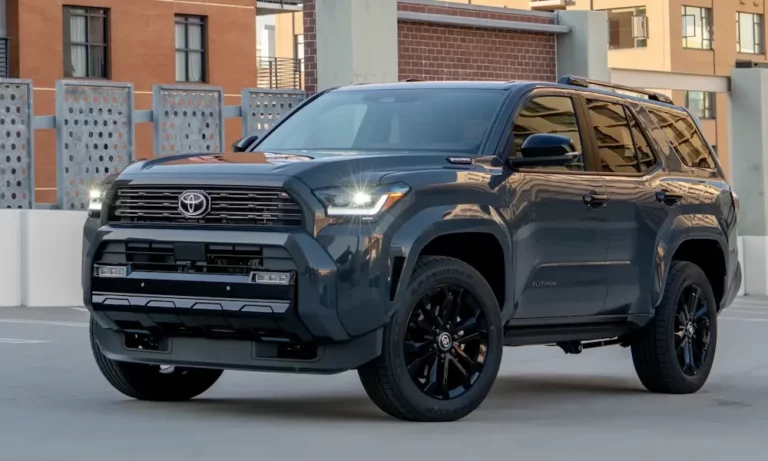
Nine trim packages. One legendary nameplate. Zero patience for buyer’s remorse. This guide breaks down every 2026 Toyota 4Runner trim package so you can figure out exactly which one fits your life — whether you commute on highways or crawl over boulders. Stick around, because the differences between some trims will genuinely surprise you.
Why the 2026 4Runner Is a Completely Different Beast
Before diving into trims, here’s the short version of what changed: Toyota scrapped the old 4.0-liter six-cylinder and its sluggish five-speed transmission. Gone. Done. Finished.
The 2026 4Runner now runs either a 2.4-liter turbocharged four-cylinder (278 hp, 317 lb-ft of torque) or the i-FORCE MAX hybrid (326 hp, a staggering 465 lb-ft of torque). Both pair with a smooth eight-speed automatic.
The frame itself moved to the Toyota New Global Architecture-Frame platform — the same bones under the Tacoma, Tundra, and Land Cruiser. High-strength steel, laser-welded crossmembers, aluminum body panels to trim weight. It’s a genuinely modern truck chassis now.
Towing? Both powertrains pull up to 6,000 pounds when properly equipped. That’s a meaningful upgrade.
Quick Powertrain Snapshot
| Spec | Standard Turbo | Hybrid (i-FORCE MAX) |
|---|---|---|
| Horsepower | 278 hp @ 6,000 rpm | 326 hp @ 6,000 rpm |
| Torque | 317 lb-ft @ 1,700 rpm | 465 lb-ft @ 1,700 rpm |
| Transmission | 8-Speed Auto | 8-Speed Auto |
| Max Tow Rating | 6,000 lbs | 6,000 lbs |
| EPA Combined MPG | 21–22 mpg | 23 mpg |
Now let’s get into the actual Toyota 4Runner trim packages.
The Street-Friendly Trims
These three trims prioritize comfort, daily usability, and on-road handling. They’re not trying to win a rock-crawling competition — and that’s perfectly fine.
SR5 — The Starting Point That Punches Above Its Weight
The SR5 starts around $43,565 and still arrives with a solid feature set. Don’t let “base model” fool you.
Standard gear includes:
- 17-inch alloy wheels
- Full LED headlights and fog lights
- Iconic power roll-down rear window
- 8-inch touchscreen with wireless Apple CarPlay and Android Auto
- 7-inch digital gauge cluster
- Available rear-wheel drive or part-time 4WD
The SR5’s biggest trump card? Optional third-row seating. That bumps passenger capacity to seven — a feature most trims don’t offer. If you’ve got a growing family but still need a truck-based chassis for towing a boat on weekends, the SR5 is your answer.
TRD Sport — The Pavement Performer
The TRD Sport isn’t trying to go off-road. It’s trying to look aggressive and handle confidently on your daily commute — and it nails both.
What sets it apart:
- Sport-tuned suspension — tighter, less body roll, better cornering
- 20-inch machined alloy wheels with low-profile street tires
- Gloss-black honeycomb grille and hood scoop
- Color-keyed overfenders for that wider, planted look
- Upgraded 12.3-inch digital gauge cluster
- Heated front seats and leather-wrapped steering wheel
- Wireless charging pad
The sport suspension swap is the real story here. It eliminates the floaty, wallowy feel typical of tall off-road SUVs and replaces it with something that feels genuinely composed through corners.
TRD Sport Premium — Tech Meets Comfort
Think of the TRD Sport Premium as the TRD Sport with a serious interior upgrade. Same sport suspension, same street-biased setup, but the cabin steps up significantly.
Key additions over the standard TRD Sport:
- SofTex synthetic leather — durable, stain-resistant, feels like real leather
- Heated AND ventilated front seats
- Massive 14-inch Toyota Audio Multimedia touchscreen
- Hands-free power liftgate
- 14-speaker JBL premium audio system
If you spend 90% of your time in stop-and-go traffic and want the cabin to feel luxurious, this trim hits the sweet spot without jumping into luxury-tier pricing.
The Core Off-Road Trims
Here’s where the Toyota 4Runner trim packages start getting serious. These two trims ship from the factory ready to handle dirt, mud, loose rock, and everything the weekend throws at them.
TRD Off-Road — The Trail Machine
The TRD Off-Road is where the hardware fundamentally changes. Street wheels are out. Aggressive capability is in.
Standard equipment includes:
- 18-inch alloy wheels wrapped in 33-inch all-terrain tires
- Bilstein monotube shocks with remote reservoirs — these prevent heat buildup and shock fade on brutal corrugated trails
- Electronically locking rear differential — forces both rear wheels to spin together on uneven terrain
- Multi-Terrain Select — adjusts throttle mapping and traction control for mud, sand, or rock
- Crawl Control — low-speed off-road cruise control that handles throttle and braking so you focus on steering
- Part-time 4WD only
The Bilstein remote reservoir shocks deserve a call-out. On prolonged rough-trail runs, standard shocks overheat and lose damping ability — a phenomenon called shock fade. The remote reservoirs dramatically increase fluid capacity and heat dissipation, keeping the suspension consistent when conditions get punishing.
TRD Off-Road Premium — Best of Both Worlds
The TRD Off-Road Premium keeps every piece of hardware from the standard TRD Off-Road and adds the premium interior and technology package.
Additions include:
- Heated and ventilated SofTex seats
- 14-inch multimedia display
- Multi-Terrain Monitor — exterior cameras show real-time front, side, and rear views while crawling. When the vehicle’s nose points skyward on a steep climb, you can see obstacles the hood is hiding
- Available i-FORCE MAX hybrid upgrade
Choose the hybrid on the TRD Off-Road Premium and you also unlock a 2,400-watt onboard AC power export — effectively turning your 4Runner into a mobile generator for camp gear, air compressors, or power tools in the backcountry.
An important note: the hybrid variant of the TRD Off-Road Premium also makes the Stabilizer Disconnect Mechanism available as an option — more on that below.
The Luxury Tier
Modern buyers want serious towing capacity and trail capability without a spartan cabin. The Limited and Platinum deliver exactly that.
Limited — Refined, Smooth, and Genuinely Premium
The Limited trim completely transforms the 4Runner’s character. It’s less about mud and more about covering ground comfortably and confidently in any conditions.
Standout features:
- Adaptive Variable Suspension (AVS) — continuously adjusts damping in real-time for a smooth highway ride that still firms up during hard braking
- Available full-time 4WD with Torsen center differential — this is a huge deal. Unlike part-time systems that can’t be used on dry pavement, full-time 4WD allows slight rotational differences between axles. You can leave it in 4WD through mixed pavement, ice, and rain without risking drivetrain bind
- Genuine leather-trimmed heated and ventilated seats
- Dual-zone automatic climate control
- Chrome tri-bar grille and 20-inch machined wheels
- Optional third-row seating
For families navigating unpredictable Pacific Northwest winters or mountain passes, the full-time 4WD system alone justifies the Limited’s price premium.
Platinum — The Flagship
The Platinum is new to the 4Runner nameplate — there’s never been one before. It’s designed to go head-to-head with European luxury mid-size SUVs, and it comes loaded accordingly.
Platinum exclusive features:
- i-FORCE MAX hybrid powertrain and full-time 4WD — both standard
- Semi-aniline leather with custom perforation patterns and contrast stitching
- Heated second-row seats — only trim that offers this
- Head-Up Display — projects speed, alerts, and navigation onto the windshield
- Digital rearview mirror — rear-facing camera eliminates blind spots from tall passengers or packed cargo
- Rain-sensing automatic windshield wipers
- Integrated Tow Technology Package
- Starting around $65,655
The Platinum starts near $65,655. That’s real money. But stack it against a loaded BMW X5 or a Volvo XC90 and then factor in the 4Runner’s legendary resale value — KBB’s Best Resale Value Award winner — and the math gets more interesting.
The Halo Off-Road Trims
The TRD Pro and Trailhunter are purpose-built for two very different types of off-road enthusiasts. Both use the hybrid powertrain as standard.
TRD Pro — High-Speed Desert Runner
The TRD Pro is built for drivers who attack terrain fast — desert washes, dunes, washboard roads at speed.
TRD Pro exclusive hardware:
- FOX 2.5-inch Internal Bypass shocks with Quick Switch 3 (QS3) technology — manually adjustable compression damping across three settings directly on the shock body
- Rear piggyback remote reservoirs
- 33-inch Toyo Open Country all-terrain tires on matte-black 18-inch wheels
- Thick aluminum front skid plate
- TRD performance air intake and sport exhaust
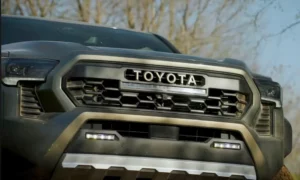
- Heritage “TOYOTA” lettered grille with integrated LED lighting
- Stabilizer Disconnect Mechanism — standard
The QS3 bypass shocks are the crown jewel here. As the shock compresses deeper, internal bypass zones create progressive resistance to prevent bottoming out. Tune the compression setting on the shock body itself before a run. It’s proper enthusiast-grade hardware, factory-installed and fully warrantied.
Trailhunter — The Factory-Built Overlander
The Trailhunter solves a real problem: building a proper overlanding rig from scratch via aftermarket shops is expensive, time-consuming, and voids your factory warranty. Toyota partnered directly with ARB, Old Man Emu, RIGID Industries, and others to build the expedition rig at the factory.
What comes standard on the Trailhunter:
- Old Man Emu 2.5-inch forged monotube shocks — tuned for heavy payload support (rooftop tents, water reserves, steel cargo drawers)
- High-mount air intake (snorkel) routed up the A-pillar — pulls clean air above dust clouds, enables safe river crossings
- ARB roof rack — engineered for heavy gear loads
- Steel rock rails protecting rocker panels
- Factory-installed onboard air compressor in the cargo area — deflate tires for sand/rock traction, then reinflate before hitting the highway
- RIGID Industries color-selectable fog lamps — switch between amber (cuts dust and fog) and white light electronically
- 2,400-watt AC power export via hybrid system
- Stabilizer Disconnect Mechanism — standard
The onboard compressor alone saves you significant cargo space and roughly $400–$600 in aftermarket gear. Deflating 33-inch tires from highway pressure to single digits for beach or rock sections — then reinflating — takes minutes instead of 45 frustrating minutes with a small portable unit.
TRD Pro vs. Trailhunter: Side-by-Side
| Feature | TRD Pro | Trailhunter |
|---|---|---|
| Powertrain | Hybrid (standard) | Hybrid (standard) |
| Engineering Focus | High-speed impact absorption | Heavy payload, long-duration overlanding |
| Shocks | FOX 2.5-inch QS3 Internal Bypass | Old Man Emu 2.5-inch Forged Monotube |
| Unique Hardware | Sport exhaust, aluminum skid plate | ARB roof rack, snorkel, onboard compressor |
| Expedition Lighting | Heritage grille LED elements | RIGID color-selectable fog lamps |
| Stabilizer Disconnect | Standard | Standard |
| Starting Price | ~$68,000+ | ~$68,000+ |
The Stabilizer Disconnect Mechanism — Why It Matters
Both halo trims ship with this system standard. Here’s the quick explanation of why it’s genuinely useful:
A connected front sway bar prevents body roll at highway speeds — that’s its job on pavement. But in off-road situations, it chains your left and right front wheels together, limiting how far each can independently drop into a washout or climb over a rock.
Press a button inside the cabin. The Stabilizer Disconnect Mechanism electronically uncouples the front sway bar, freeing each wheel to articulate independently. One tire drops into a rut, the other climbs a ledge, and the cabin stays relatively level. All four tires stay in contact with the ground. Traction maximized. Getting high-centered becomes much less likely.
Safety Tech Across Every Trim
Toyota Safety Sense 3.0 comes standard on all nine trims — not as an add-on, not as a luxury feature. Every 4Runner ships with:
- Pre-Collision System with Pedestrian and Cyclist Detection
- Full-Speed Range Dynamic Radar Cruise Control
- Lane Tracing Assist and Lane Departure Alert with Steering Assist
- Road Sign Assist
- Proactive Driving Assist
The standard eight-airbag system covers the full cabin. Blind-spot monitoring with rear cross-traffic alert rounds out the passive safety suite.
Higher trims add the Head-Up Display and digital rearview mirror — genuinely useful tools, not just tech theater.
Cargo Space: What You Actually Get
The 2026 4Runner handles cargo well, but a few numbers are worth knowing before you commit:
- Two-row config, rear seats up: 48.4 cubic feet
- Two-row config, rear seats folded: 90.2 cubic feet
- Hybrid models (battery raises the floor): 82.6 cubic feet max
- Three-row config, behind third row: 12.1 cubic feet
That third row is best for occasional use. It’s not a practical daily-haul configuration with luggage.
The 14-inch display on higher trims also serves as the control interface for the Multi-Terrain Monitor’s camera feeds — so cargo management and trail navigation share the same screen real estate.
Pricing at a Glance
| Trim | Starting MSRP | Best For |
|---|---|---|
| SR5 | ~$43,565 | Families, daily drivers, third-row buyers |
| TRD Sport | ~$50,000 | Urban driving, athletic looks |
| TRD Sport Premium | ~$53,000 | Tech-focused daily commuters |
| TRD Off-Road | ~$51,000 | Weekend trail enthusiasts |
| TRD Off-Road Premium | ~$55,000 | Trail capability + premium interior |
| Limited | ~$57,000+ | Luxury daily drivers, mixed-weather commuters |
| Platinum | ~$65,655 | Executive buyers, all-weather touring |
| TRD Pro | ~$68,000+ | High-speed desert/trail runners |
| Trailhunter | ~$68,000+ | Multi-day overlanders, expedition travelers |
Pricing context matters here. The Ford Bronco Raptor pushes past $81,000. The Jeep Wrangler Rubicon 392 approaches similar territory. Against those benchmarks, the TRD Pro and Trailhunter look like relative values — especially when the factory-installed hardware would cost significantly more through aftermarket channels, without the warranty coverage.
Which Toyota 4Runner Trim Package Should You Actually Buy?
Here’s the straight answer based on use case:
You need a family hauler with towing capability → SR5 with the third-row option. Done.
You drive mostly pavement and want a sharp-looking, sporty SUV → TRD Sport or TRD Sport Premium depending on how much tech you want.
You hit trails on weekends but need daily comfort → TRD Off-Road Premium with the hybrid option. The Multi-Terrain Monitor and onboard power export make it incredibly versatile.
You want luxury, smooth ride quality, and all-weather confidence → Limited for the adaptive suspension and full-time 4WD. Bump to the Platinum if you want heated rear seats and the Head-Up Display.
You run desert trails fast and want the best suspension money can buy from the factory → TRD Pro.
You’re planning multi-day wilderness trips and want a turnkey expedition rig → Trailhunter. The snorkel, compressor, ARB rack, and rock rails alone would cost thousands through aftermarket shops — plus you’d lose your factory warranty.
The nine Toyota 4Runner trim packages cover more ground than any previous lineup in the nameplate’s history. Whether your “adventure” means navigating school pickup or a week-long remote trail system, there’s a specific version of this truck engineered for exactly that.