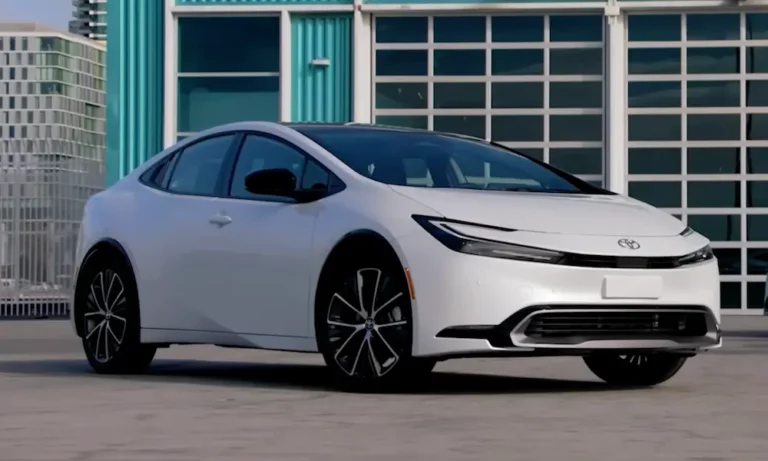
Picking the right trim from the 2026 Toyota Prius trim packages isn’t as simple as “just buy the cheapest one.” Each level trades something — efficiency for style, range for comfort, simplicity for tech. This guide breaks down every trim across both the standard hybrid and plug-in lineups so you can stop guessing and start deciding.
What Makes the 2026 Prius Different From Previous Generations
The Prius used to mean one thing: maximum fuel savings, zero excitement. That era is over.
The fifth-generation platform sits on Toyota’s New Global Architecture, which drops the center of gravity and stiffens the body significantly. The result? A car that actually handles well on winding roads instead of just surviving them.
Under the hood, a 2.0-liter Atkinson-cycle four-cylinder pairs with electric motors to produce either 194 or 220 horsepower depending on which version you choose. Zero to 60 in as little as 6.6 seconds — from a Prius. That used to be unthinkable.
Two powertrain families make up the full lineup:
- Standard Hybrid (HEV): Self-charging, no plug required
- Plug-In Hybrid (PHEV): Charges from an outlet, runs on electricity for up to 44 miles
Each powertrain splits into four trim levels. Eight configurations total. Here’s how they stack up.
Standard Hybrid Trim Packages: LE, XLE, Nightshade, and Limited
LE — The Efficiency King
The LE starts at $28,550 for front-wheel drive and $29,950 with AWD. Add Toyota’s $1,195 destination fee on top of either price.
This trim earns the best fuel economy numbers in the entire Prius lineup. The front-wheel-drive LE hits 57 MPG city, 56 highway, and 57 combined. That’s possible because the LE uses 17-inch aerodynamic wheels with drag-reducing covers, giving it a drag coefficient of just 0.27.
With an 11.3-gallon tank, the FWD LE delivers a theoretical range of over 644 miles on a single fill. That’s genuinely impressive for a compact car.
What you get inside isn’t spartan either:
- 8-inch touchscreen with wireless Apple CarPlay and Android Auto
- 7-inch top-mount digital gauge cluster
- Single-zone auto climate control
- Six USB-C charging ports
- Fabric seating with manual 6-way front seat adjustment
The AWD version drops to 54 MPG combined due to the rear 30-kilowatt electric motor and a slightly smaller 10.5-gallon tank.
Best for: Commuters, fleet buyers, and anyone who wants maximum miles per dollar spent.
XLE — The Smart Middle Ground
The XLE starts at $31,995 FWD and $33,395 AWD. Most buyers end up here, and it’s easy to see why.
The jump from LE to XLE brings 19-inch machined alloy wheels that transform how the car looks. The trade-off is real though — fuel economy drops to 52 MPG combined for FWD and 49 MPG for AWD. That’s a five-MPG hit purely for aesthetics.
Interior upgrades justify the price jump for most people:
- SofTex synthetic leather seating (vegan, spill-resistant, soft)
- 8-way power driver’s seat with power lumbar support
- Heated front seats and heated steering wheel
- Wireless Qi smartphone charging pad
- Rain-sensing variable wipers
- Auto-dimming rearview mirror with HomeLink garage opener
- Front and rear parking sensors with auto-braking (standard)
Optional upgrades on the XLE include a fixed panoramic glass roof, digital key, and the 12.3-inch infotainment display — features normally reserved for the Limited trim.
Best for: Buyers who want a noticeable comfort upgrade without paying flagship prices.
Nightshade Edition — Style Over Everything
The Nightshade Edition builds on the XLE foundation and adds a full blackout treatment. Pricing starts at $32,800 FWD and $34,200 AWD.
Every piece of chrome disappears. Black-painted 19-inch wheels, black badges, black door handles, black window trim, black shark-fin antenna — it’s a cohesive dark aesthetic that makes the Prius look considerably more aggressive. Inside, black SofTex seats with gray contrast stitching and simulated carbon-fiber dashboard accents complete the look.
The Nightshade also unlocks exclusive paint options. Karashi — a sharp, aggressive yellow — looks striking against all the blacked-out trim pieces.
Mechanically? Identical to the XLE. Same 52 MPG combined, same horsepower, same suspension. You’re paying for the visual package, nothing more.
Best for: Style-driven buyers who want a Prius that doesn’t look like a Prius.
Limited — The Flagship Hybrid
The Limited tops out the standard hybrid range at $35,565 FWD and $36,965 AWD. At this price, it starts competing with entry-level luxury vehicles — and it mostly holds its own.
Standard features that set it apart from every other trim:
- Fixed panoramic glass roof
- 12.3-inch high-resolution touchscreen (standard, not optional)
- 8-speaker JBL premium audio system
- Ventilated front seats
- Driver’s seat memory (stores two profiles)
- Power liftback
- Digital key capability
The 12.3-inch screen alone is a meaningful upgrade. It supports split-screen views and makes the navigation maps genuinely easy to read at a glance.
Best for: Buyers who want every feature Toyota offers and don’t want to compromise.
Standard Hybrid Trim Comparison
| Trim | FWD MSRP | AWD MSRP | EPA Combined MPG (FWD) | Key Additions |
|---|---|---|---|---|
| LE | $28,550 | $29,950 | 57 MPG | 17-inch aero wheels, 8-inch screen, fabric seats |
| XLE | $31,995 | $33,395 | 52 MPG | 19-inch wheels, SofTex leather, heated power seats, wireless charging |
| Nightshade | $32,800 | $34,200 | 52 MPG | Blackout 19-inch wheels, black exterior trim, carbon-fiber accents |
| Limited | $35,565 | $36,965 | 52 MPG | Glass roof, 12.3-inch screen, JBL audio, ventilated seats, power liftback |
All prices exclude Toyota’s $1,195 destination and handling fee.
Plug-In Hybrid Trim Packages: SE, XSE, Nightshade, and XSE Premium
The plug-in hybrid lineup mirrors the standard hybrid’s structure but adds a 13.6-kWh battery that lets you drive on electricity alone. The system produces 220 horsepower total and accelerates from 0-60 in 6.6 seconds.
One important note: plug-in models are front-wheel drive only. The battery takes up the space where the AWD rear motor would sit. If you need AWD, you’re looking at the standard hybrid trims.
SE — Maximum Electric Range
The SE starts at $33,775 and focuses entirely on efficiency. Its 17-inch wheels and aerodynamic priority deliver 44 miles of EV range and 127 MPGe — the best numbers in the plug-in lineup.
That 44-mile range matters more than it sounds. Most American daily commutes fall under 40 miles round-trip, meaning SE owners who charge overnight can drive all week without burning gas. When the battery depletes on longer trips, the car switches to hybrid mode at 52 MPG combined.
Inside, you get black fabric seats with red accents, an 8-inch touchscreen, and the same safety suite found on every other trim.
Best for: Commuters with short-to-medium daily drives who want to minimize fuel costs.
XSE — The Plug-In Sweet Spot
The XSE starts at $37,025 and trades four miles of electric range for a much better interior. The 19-inch wheels drop EV range from 44 to 39 miles and efficiency to 114 MPGe, but most analysts consider this the optimal balance for typical buyers.
You gain heated SofTex seats, an 8-way power driver’s seat, auto-dimming mirror, and wireless charging. The optional 12.3-inch display costs $610 extra — a worthwhile upgrade that doesn’t require stepping up to the Premium trim.
Best for: Buyers who want plug-in EV capability with a premium interior feel.
Nightshade Edition (Plug-In)
The plug-in Nightshade starts at $37,795 and applies the same blackout package from the standard hybrid version. Black 19-inch wheels, darkened badges, black door handles — the aggressive aesthetic arrives on the plug-in body.
The Karashi yellow and Midnight Black Metallic paint options look especially sharp with the blacked-out trim. Efficiency is identical to the XSE at 39 miles EV and 114 MPGe.
Best for: Style-conscious plug-in buyers who want the darkened exterior treatment.
XSE Premium — The Full Package
The XSE Premium starts at $40,470 and includes nearly everything Toyota offers on this platform as standard equipment: 12.3-inch screen, JBL audio, ventilated front seats, seat memory, panoramic glass roof, and power liftback.
Two optional packages push capability further:
- 185-watt solar charging roof ($610): Trickle-charges the traction battery in sunlight. Also ventilates the cabin while parked. It’s a modest real-world energy gain, but a compelling feature for EV-minded buyers at this price point.
- Advanced Technology Package ($1,085): Adds a surround-view camera array and a hands-free parking system that handles steering, acceleration, and braking autonomously in tight spaces.
Additional options include heated rear seats ($350) and a digital rearview mirror ($200), pushing fully loaded versions into the mid-$40,000 range.
Best for: Buyers who want every available feature and don’t mind paying for it.
Plug-In Hybrid Trim Comparison
| Trim | Starting MSRP | EV Range | Combined MPGe | Key Features |
|---|---|---|---|---|
| SE | $33,775 | 44 miles | 127 MPGe | 17-inch wheels, 8-inch screen, max electric range |
| XSE | $37,025 | 39 miles | 114 MPGe | 19-inch wheels, SofTex heated seats, wireless charging |
| Nightshade | $37,795 | 39 miles | 114 MPGe | Blackout wheels and trim, carbon-fiber style accents |
| XSE Premium | $40,470 | 39 miles | 114 MPGe | 12.3-inch screen standard, JBL audio, ventilated seats, optional solar roof |
The Wheel Size Trade-Off Nobody Talks About Enough
Every time you move up from 17-inch to 19-inch wheels in these Toyota Prius trim packages, you give up real fuel economy. Here’s what that costs you over five years.
A driver covering 15,000 miles annually in a FWD LE at 57 MPG uses roughly 263 gallons of fuel per year. The same driver in an XLE at 52 MPG uses about 288 gallons. At $3.50 per gallon, that’s roughly $87 more per year — or $435 over five years. Add that to the $3,445 purchase price jump between LE and XLE, and the math is clear: you’re paying a premium for appearance, not performance.
That said, Toyota’s own market research suggests most buyers make this trade willingly. And the XLE’s interior upgrades — heated seats, power lumbar, wireless charging — deliver daily comfort that the LE simply doesn’t offer.
Plug-In Hybrid: Only Worth It If You Actually Plug It In
This point deserves emphasis. The plug-in Prius is a smart financial decision only when you charge it consistently at home.
A buyer who charges their XSE every night using a standard 120V outlet — Level 1 charging takes about 11 hours for a full charge — can cover most daily driving entirely on electricity. For a 30-mile daily commute, that means months of driving on grid electricity instead of gasoline.
A 240V Level 2 home charger reduces charge time to roughly four hours.
However, if you never plug it in, you’re driving a heavy hybrid that achieves 48 MPG combined in hybrid mode — less efficient than the standard XLE’s 52 MPG — while having paid a significant premium for the larger battery. The plug-in Prius rewards disciplined charging habits and punishes neglect.
Safety: Every Trim Gets the Full Suite
Toyota Safety Sense 3.0 comes standard on every single 2026 Prius — from the base LE to the XSE Premium. You don’t have to pay more to get meaningful safety features.
Every trim includes:
- Pre-Collision System with Pedestrian Detection (autonomous emergency braking)
- Full-Speed Range Dynamic Radar Cruise Control (adaptive, handles stop-and-go traffic)
- Lane Departure Alert with Steering Assist
- Lane Tracing Assist
- Automatic High Beams
- Blind Spot Monitor with Rear Cross-Traffic Alert
- Safe Exit Alert
- Proactive Driving Assist
The differences between trims involve parking assistance. Front and rear parking sensors with auto-braking are optional on the LE but standard from the XLE up. The surround-view camera and hands-free Advanced Park system are available only on the Limited (standard hybrid) and XSE Premium (plug-in).
The IIHS awarded the Prius “Good” ratings in both Small Overlap Front and Side Impact tests, confirming strong structural protection across all configurations.
Efficiency vs. Range: The Numbers That Actually Matter
| Configuration | EPA Combined MPG | Tank Size | Max Theoretical Range |
|---|---|---|---|
| Standard HEV LE (FWD) | 57 MPG | 11.3 gal | ~644 miles |
| Standard HEV LE (AWD) | 54 MPG | 10.5 gal | ~567 miles |
| Standard HEV XLE/Limited (FWD) | 52 MPG | 11.3 gal | ~587 miles |
| Standard HEV XLE/Limited (AWD) | 49 MPG | 10.5 gal | ~514 miles |
| Plug-In SE | 52 MPG (hybrid mode) | 10.6 gal | ~595 miles combined |
| Plug-In XSE/Premium | 48 MPG (hybrid mode) | 10.6 gal | ~547 miles combined |
Interior Realities: What the Specs Don’t Tell You
The aggressive roofline that gives the 2026 Prius its sporty look creates real-world compromises inside. Rear headroom is measurably tighter than older Prius generations. Taller passengers should sit in the back before committing.
Cargo space also varies by trim:
- LE (standard hybrid): 23.8 cubic feet behind the rear seat
- XLE, Nightshade, Limited, and all plug-in trims: 20.3 cubic feet
That 3.5-cubic-foot difference comes from the 19-inch wheel packaging on upper standard hybrid trims and the battery placement on plug-in models. All trims include a 60/40 split-folding rear seat for flexibility.
The 7-inch gauge cluster sits unusually high on the dashboard near the windshield base — closer to a head-up display position than a traditional instrument panel. You’ll want to position the steering wheel lower than usual to keep the screen visible.
Which Toyota Prius Trim Package Should You Actually Buy?
Here’s a quick guide based on what matters most to you:
- Lowest fuel costs, longest range: Standard Hybrid LE (FWD)
- Best daily comfort without overspending: Standard Hybrid XLE
- Want it to look great and stand out: Nightshade Edition (either powertrain)
- Want every feature available: Standard Hybrid Limited or Plug-In XSE Premium
- Short daily commute, home charging access: Plug-In SE or XSE
- Live in snow country: Standard Hybrid XLE AWD or Limited AWD
The 2026 Toyota Prius trim packages cover an unusually wide range of buyer needs — from pure efficiency to near-luxury. The key is knowing exactly what you’re trading when you move up a level, and making that trade deliberately rather than automatically.