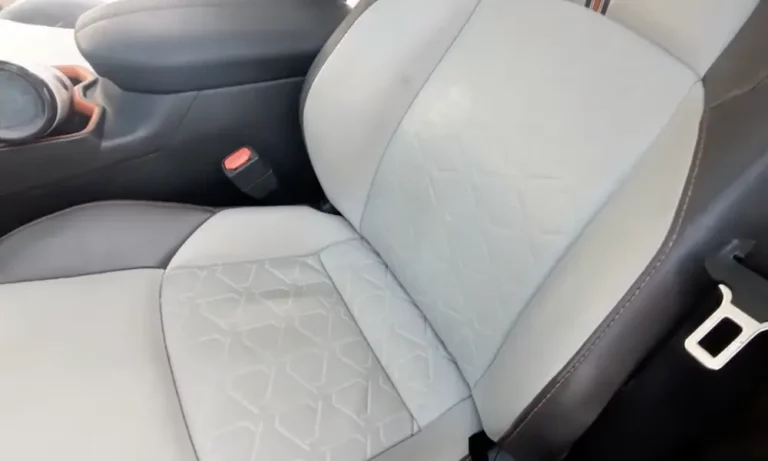
Your Toyota’s interior is peeling, cracking, or bubbling — and the dealership is blaming you. Sound familiar? This guide breaks down the real Toyota SofTex problems owners face, what’s causing them, and how to fight back. Stick around — there’s a lot worth knowing before your next warranty conversation.
What Exactly Is Toyota SofTex?
SofTex is Toyota’s proprietary synthetic upholstery. It’s made from thermoplastic polyurethane (TPU) — a material engineered to feel like leather but weigh about half as much. Toyota markets it as eco-friendly too, with its manufacturing process producing approximately 85% fewer CO2 emissions than conventional synthetic leather.
It sounds impressive — and in many ways, it is. But TPU has some real weaknesses that Toyota hasn’t been transparent enough about.
| Material Property | Toyota SofTex (TPU) | Genuine Leather | Traditional Vinyl (PVC) |
|---|---|---|---|
| Primary Base | Thermoplastic Polyurethane | Animal Hide | Polyvinyl Chloride |
| Weight vs. Leather | ~50% | 100% (Baseline) | ~70–80% |
| Breathability | Engineered (Perforated) | Natural Porosity | Low |
| UV Resistance | Integrated Coatings | Dries/Cracks | High Brittleness Risk |
| CO2 Emissions | ~15% of Conventional | High | High |
| Chemical Sensitivity | Moderate–High | Low–Moderate | Low |
The Seat Bolster Problem: “Bolster Syndrome”
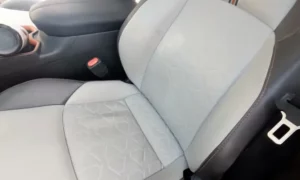
This is the most common Toyota SofTex problem owners report. The driver-side seat bolster starts peeling, cracking, or delaminating — often within the first year of ownership.
Here’s what’s happening mechanically: tall vehicles like the 4Runner, Tacoma, and Tundra force you to slide across the outer bolster every time you get in or out. Do that thousands of times and the shearing force eventually tears the TPU top layer away from its woven backing. Reddit’s r/4Runner community has documented this extensively, with owners reporting failures as early as six months in or before 30,000 miles.
The degradation usually follows this pattern:
- A small scuff or shiny patch appears on the bolster
- The matte surface becomes wrinkled or discolored
- The top layer fully delaminates, revealing a white or gray fabric underneath
Toyota markets SofTex as durable as leather. The bolster data says otherwise.
Steering Wheel Peeling: The Controversy That’s Headed to Court
If the seat bolster problem frustrates owners, the steering wheel issue genuinely angers them. Reports of steering wheels on the 2021–2025 Prius, RAV4, and Corolla peeling apart or bubbling within the first year have triggered a class-action investigation.
The chemistry explains why. TPU reacts badly to:
- Human skin oils (sebum) — they act as a plasticizer, softening the polymer and breaking adhesion
- Hand sanitizers — alcohol aggressively strips the protective top coat
- Sunscreens and moisturizers — these can chemically swell the TPU, causing that characteristic bubbling
The kicker? Toyota dealerships frequently deny these warranty claims by citing “outside influence” — essentially blaming your hands for touching a steering wheel. One Motor1 investigation found owners being pushed out of warranty coverage within months of purchase over this exact issue.
The legal argument against Toyota is straightforward: a steering wheel is designed to be touched by human hands. If the material can’t survive normal contact, that’s a defect — not user error.
Climate Makes It Worse
Your location plays a huge role in how fast Toyota SofTex problems develop. In hot, sunny regions — think Southern US, Australia, or the Middle East — UV radiation causes photo-oxidation in the polyurethane chains. That breaks chemical bonds within the TPU, making the surface brittle.
Once it’s brittle, regular use causes micro-cracks. Those cracks let in moisture and skin oils, which then break down the material further through hydrolysis. The result? Bubbling and peeling that happens much faster than it would in a temperate climate.
Even the breathability issue worsens with heat. SofTex doesn’t wick moisture the way natural leather does, so during long drives it can feel clammy or sticky — especially in trims without ventilated seats. If your perforations get clogged with dust or debris, that breathability drops further.
The 2022–2024 Tundra’s Specific Design Flaw
Tundra owners face a double problem. The plastic side-shield on the seat cushion cracks under normal use, creating a sharp edge that then snags and punctures the SofTex upholstery nearby. Toyota acknowledged this by issuing Technical Service Bulletin T-SB-0007-24, which covers replacement of the broken shield with an updated design.
The problem? The TSB doesn’t automatically cover the resulting SofTex damage. Unless you can prove the broken plastic directly caused the upholstery tear, many dealers won’t cover it. That puts owners in a frustrating grey zone — a structural failure causes cosmetic damage, but you’re stuck arguing about which part of the repair falls under warranty.
How SofTex Compares to Rival Synthetics
Toyota isn’t alone in using synthetic upholstery, but how does SofTex stack up against the competition?
| Brand | Material | Durability vs. SofTex | Known Weakness |
|---|---|---|---|
| Mercedes-Benz | MB-Tex (vinyl-based) | Significantly higher | Stiffer feel, less breathable |
| BMW | Sensatec/Sensafin | Slightly higher | Occasional texture wear |
| Lexus | NuLuxe (TPU-based) | Higher | Very few reported issues |
| Subaru | StarTex (TPU-based) | Comparable | Similar bolster cracking at ~80–100k miles |
The Lexus comparison is particularly telling. NuLuxe uses the same TPU base as SofTex, yet many Lexus owners report flawless interiors after nearly a decade. That suggests Toyota’s mass-market SofTex may cut corners in manufacturing tolerances or coating quality that Lexus doesn’t. Meanwhile, MB-Tex has kept Mercedes interiors looking new for 20–30 years — making it the undisputed durability benchmark in the synthetic seat game.
How to Actually Clean and Protect SofTex
Most SofTex damage is accelerated by the wrong cleaning products. Here’s the correct process Toyota recommends:
Step-by-step cleaning:
- Vacuum first — remove grit that could scratch during wiping
- Mix mild soap with water (~1% dilution) — apply to a microfiber cloth, not directly to the seat
- Wipe gently in circular motions on soiled areas
- Remove residue with a clean, damp cloth
- Air dry or pat with a dry microfiber towel
Things you must never use on SofTex:
- Alcohol or ammonia-based cleaners — they dissolve the top coat
- “Interior cleaning wipes” with high solvent content
- Leather conditioners containing oils like mink or lanolin — they don’t penetrate TPU and create a greasy film that accelerates thermal breakdown
- Harsh wet wipes marketed as “all-purpose”
Protect against UV damage: Toyota’s built-in UV coating degrades over time. Apply a water-based UV protectant like 303 Automotive Protectant monthly if your car parks outdoors regularly. Think of it as sunscreen for your seats — a sacrificial layer that takes the UV hit so the TPU doesn’t have to.
How to Fight a Denied Warranty Claim
If a dealer tells you your peeling SofTex isn’t covered, don’t accept that as the final word. Here’s your escalation path:
Step 1: Contact the Toyota Brand Engagement Center at (800) 331-4331. Provide your VIN, mileage, and a clear explanation of why the failure doesn’t match normal wear. Per Toyota’s 2025 Warranty & Maintenance Guide, this is your first formal escalation point.
Step 2: If that doesn’t resolve it, request the Dispute Settlement Program through the National Center for Dispute Settlement (NCDS). You’ll need to fill out a customer claim form — check the Owner’s Warranty Rights Notification booklet in your glove box, or reference Toyota’s warranty documentation for the form details.
Step 3: Document everything. Take dated photos of the damage progression, note your mileage, and save all dealer communications. If your failure looks like the ones described in the active class-action investigation, legal firms are actively collecting complaints from 2021–2025 model owners — especially for steering wheel deterioration.
The core legal argument: Toyota systematically denying warranty claims for a material that fails under ordinary human contact may violate consumer protection laws. Enough owners filing complaints creates the paper trail that pushes manufacturers toward accountability.
One More Safety Note Worth Knowing
While Toyota SofTex problems are mostly cosmetic, the seat itself has seen some genuine safety concerns. A 2025 recall covering nearly 55,000 Sienna Hybrid vehicles found improperly welded second-row seat rails that could fail in a collision. That’s a mechanical issue, not upholstery — but it’s a reminder that the seat frame and the seat cover are part of the same system. If you own a 2022–2025 Sienna, check whether your VIN is included in that recall.
The aesthetic frustration of peeling SofTex is real. But always make sure your seat’s structural components are sound too — that’s the part that actually protects you in a crash.