Wondering if your car is on a thief’s wish list? The answer might surprise you. Auto theft in America isn’t random — thieves follow patterns, target specific models, and use surprisingly sophisticated methods. This post breaks down exactly which cars get stolen most, why they’re targeted, and what you can do about it. Stick around — your car’s safety depends on it.
The Big Picture: Auto Theft in 2025
Here’s some good news first. Vehicle theft dropped 23% in 2025, following a 17% decline in 2024. That’s the largest two-year drop in decades.
In total, 659,880 vehicles were reported stolen in 2025. Sounds like progress — and it is. But don’t get too comfortable. A car still gets stolen every 48 seconds somewhere in the US.
And theft isn’t spread evenly. It clusters in specific cities, states, and — most importantly — specific vehicle models.
Where Do Most Car Thefts Happen?
Geography matters a lot here. California alone accounted for 136,988 thefts in 2025 — that’s more than 20% of all US vehicle thefts from one state.
| Rank | State | 2025 Total Thefts |
|---|---|---|
| 1 | California | 136,988 |
| 2 | Texas | 75,269 |
| 3 | Illinois | 28,327 |
| 4 | Florida | 27,142 |
| 5 | New York | 24,206 |
| 6 | Ohio | 20,628 |
| 7 | Pennsylvania | 20,568 |
| 8 | North Carolina | 20,395 |
| 9 | Washington | 18,039 |
| 10 | Missouri | 17,496 |
At the city level, Los Angeles tops the list with 53,911 thefts. New York and Chicago follow. But when you adjust for population size, San Francisco ranks first with nearly 478 thefts per 100,000 people.
On a brighter note, some states crushed it in 2025. Washington cut thefts by 39%, Colorado by 35%, and Tennessee by 31%. Targeted law enforcement operations and manufacturer software updates made a real difference.
What Are the Most Stolen Cars in the US by Volume?
When people ask what are the most stolen cars in the US, they usually want the straight numbers. Here they are.
| Rank | Make & Model | 2025 Total Thefts |
|---|---|---|
| 1 | Hyundai Elantra | 21,732 |
| 2 | Honda Accord | 17,797 |
| 3 | Hyundai Sonata | 17,687 |
| 4 | Chevrolet Silverado 1500 | 16,764 |
| 5 | Honda Civic | 12,725 |
| 6 | Kia Optima | 11,521 |
| 7 | Ford F-150 | 10,102 |
| 8 | Toyota Camry | 9,833 |
| 9 | Honda CR-V | 9,809 |
| 10 | Nissan Altima | 8,445 |
The Hyundai Elantra sits at number one, and there’s a very specific reason for that. More on it shortly.
The Honda Accord and Civic have topped these lists for decades. The Chevrolet Silverado and Ford F-150 show up because they’re everywhere — and because thieves know exactly what to do with them.
One interesting stat: the Honda CR-V is the only SUV in this top ten. American thieves still prefer sedans and pickups. That’s a sharp contrast to Canada, where SUVs like the Toyota RAV4 and Jeep Wrangler dominate theft charts — driven almost entirely by overseas export demand.
Most Stolen Cars by Theft Rate (The More Honest Metric)
Raw numbers don’t tell the whole story. A car sold to 10 million people will appear on more theft lists just because it’s everywhere. The Highway Loss Data Institute (HLDI) fixes this by measuring theft claims per 1,000 insured vehicles. A score of 100 equals the national average.
When you look at it this way, the list changes completely.
| Rank | Make & Model | Relative Theft Frequency (100 = Average) |
|---|---|---|
| 1 | Chevrolet Camaro ZL1 | 3,949 |
| 2 | Acura TLX (AWD) | 2,138 |
| 3 | Chevrolet Camaro (Standard) | 1,287 |
| 4 | GMC Sierra 2500 Crew Cab 4WD | 1,023 |
| 5 | Acura TLX (FWD) | 805 |
| 6 | GMC Sierra 3500 Crew Cab 4WD | 742 |
| 7 | Chevrolet Silverado 3500 Crew Cab 4WD | 662 |
| 8 | Dodge Durango (4WD) | 592 |
| 9 | Land Rover Range Rover (4WD) | 540 |
| 10 | Ram 1500 Crew Cab Short-WB 4WD | 524 |
The Camaro ZL1 is stolen at nearly 40 times the national average. That’s not a typo. The standard Camaro runs 13 times the average. Eight of the top 20 vehicles are heavy-duty pickup trucks. These aren’t crimes of opportunity — they’re carefully planned hits by organized networks.
Why Specific Cars Get Targeted
The Hyundai and Kia Problem
The Hyundai Elantra, Sonata, and Kia Optima dominate the volume charts for one simple reason: millions of 2011–2022 models shipped without electronic immobilizers.
An immobilizer is a security chip that communicates with the engine before it starts. Without one, thieves discovered they could remove the steering column cover, bypass the ignition with a USB drive or screwdriver, and drive away. The technique went viral online. Thefts exploded.
Hyundai and Kia launched a free software upgrade in February 2023 to patch the flaw. Vehicles that got the update saw a 52% drop in theft claims. Their share of total US thefts fell from 21% in 2023 to 14% in 2025.
But there’s a catch: many eligible vehicles still haven’t received the update. And here’s the frustrating part — upgraded vehicles saw a 61% spike in vandalism claims. Thieves still try, break windows and damage columns, then leave empty-handed. If you own an eligible Hyundai or Kia, get the update immediately.
The Camaro Anomaly
The Camaro ZL1’s theft rate is extraordinary. It has modern immobilizers and alarm systems. So how does it top the chart?
Organized syndicates cracked the OBD-II port vulnerability. The theft surge tracks almost perfectly with the 2016 model year — when GM introduced keyless push-button starts across the lineup. Thieves plug a programming device into the diagnostic port under the dashboard, wipe the existing key codes, and register a blank fob they brought themselves. Within minutes, they drive away with a car that recognizes their key as legitimate.
GM has released software patches for affected vehicles. If you own a sixth-generation Camaro, visit a dealer and confirm your body control module is updated.
Heavy-Duty Pickup Trucks
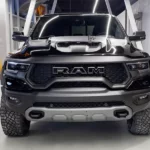
The GMC Sierra 2500, Silverado 3500, and Ram 1500 appear all over the high-risk list. These trucks retail for serious money and carry high-value diesel drivetrains. Thieves use relay attacks to clone key fob signals, steal the truck without breaking anything, and move it across state lines before morning. Many end up in shipping containers headed overseas.
Lower-level thieves also target these trucks for catalytic converters. The high ground clearance makes the job fast and easy.
Honda Accord, Civic, and Toyota Camry
These cars have topped theft lists for 30 years. The reason isn’t the modern versions — it’s the older ones. Pre-2001 Civics lacked immobilizers entirely. Older Accords and Camrys are easy to hotwire. Once stolen, they go straight to chop shops.
The math is simple: a dismantled older Accord can yield up to three times its market value in parts. Engines, transmissions, airbags, and body panels all sell fast. The demand doesn’t stop, so the thefts don’t either.
New-generation Hondas and Toyotas are much harder to steal. Thieves mostly ignore them and hunt for older models.
Luxury Targets: Acura TLX, BMW X7, Mercedes S-Class
The Acura TLX ranks second and fifth on the relative theft chart, depending on drivetrain. At roughly $46,000, it hits a sweet spot for organized theft rings. It’s premium enough to command high prices in overseas black markets but common enough to find without much effort.
The BMW X7 and Mercedes-Benz S-Class show up too. These vehicles are almost never taken by joyriders. They’re stolen to order for buyers in regions where import taxes on luxury cars are enormous, creating massive margins for smugglers.
How Thieves Steal Modern Cars
Relay Attacks
Your keyless fob broadcasts a low-power signal continuously. Thieves use two devices — one held near your house to capture the signal, another held next to your car. The car thinks the key is present and unlocks. No broken glass, no noise, under 60 seconds.
This method is most common with high-end trucks and luxury SUVs parked in residential driveways overnight.
Fix it: Store your keys in a Faraday pouch or a signal-blocking metal box. This blocks the fob’s radio signal so there’s nothing to amplify.
OBD-II Port Exploitation
The OBD-II port under your dashboard exists so mechanics can run diagnostics. It’s also how dealerships program new key fobs. Thieves bring their own programming hardware, plug in, and register a blank fob in minutes.
This technique drives the extreme theft rates of Camaros and heavy-duty GM trucks.
Fix it: Install a physical OBD-II port lock. Billet aluminum versions for GM vehicles use proprietary anti-tamper screws that require custom tools to remove — stopping thieves before they can access the port.
The Vehicles Least Likely to Get Stolen
Electric vehicles, especially Teslas, are practically immune to theft. The Tesla Model 3 and Model Y have relative theft frequencies of just 1-2% of the national average. That’s remarkable.
| Rank | Make & Model | Segment |
|---|---|---|
| 1 | Tesla Model 3 (AWD) | Electric midsize |
| 2 | Tesla Model Y (AWD) | Electric SUV |
| 3 | Tesla Model 3 (RWD) | Electric midsize |
| 4 | Toyota RAV4 Prime (AWD) | Plug-in hybrid SUV |
| 5 | Tesla Model S (AWD) | Electric luxury |
| 6 | Volvo XC90 (AWD) | Luxury SUV |
| 7 | Ford Mustang Mach-E | Electric SUV |
| 8 | Volkswagen ID.4 | Electric SUV |
Why are EVs so hard to steal?
- Real-time GPS tracking built into the car lets owners pinpoint location instantly via their phone
- Pin-to-Drive requires a passcode before the car moves — a key fob alone isn’t enough
- Garage charging habits mean EVs park inside overnight, away from street-level thieves
- No parts market exists yet — battery packs are software-locked to the original car, making them useless in chop shops
How to Protect Your Car Right Now
You don’t need to spend thousands. A layered approach works best:
Software first:
- Own a 2011–2022 Hyundai or Kia? Get the free theft-deterrent software update from a dealership now
- Own a sixth-generation Camaro or late-model GM truck? Confirm your body control module is patched
Hardware additions:
- Install an OBD-II port lock if you own a GM vehicle, especially a Camaro or heavy-duty truck
- Use a bright, visible steering wheel lock — many thieves skip secured cars for easier targets
- Add a hidden aftermarket GPS tracker for fast recovery if the worst happens
Daily habits:
- Never leave your car running unattended — even for a minute
- Park in well-lit, visible areas or a locked garage
- Keep your fob in a Faraday pouch at home
- Lock doors, close windows, take your keys — every single time
The data is clear: the most stolen cars in the US aren’t random. Thieves follow patterns, exploit specific weaknesses, and target predictable models. Knowing which vehicles they want — and why — puts you one step ahead.