Buying a car is a big financial decision — and depreciation can quietly cost you thousands. Whether you’re buying new or used, knowing what cars have the best resale value protects your money. This guide breaks down every segment, from compact cars to heavy-duty trucks, so you can make a smarter buy.
Why Resale Value Matters More Than You Think
Most people focus on sticker price. Smart buyers focus on what the car’s worth five years later.
The average vehicle loses around 45% of its value over five years. That’s nearly half your investment — gone. But not every car depreciates at that rate. Some hold their value remarkably well. Others crater fast.
Several key factors drive a car’s resale value:
- Mileage and usage — Lower miles mean higher value. Highway miles beat city stop-and-go driving in wholesale valuations
- Service history — Documented maintenance builds buyer confidence and preserves asset value
- Accident history — A single reported accident can slash thousands off your price. Around 50% of used car shoppers filter out cars without a clean report
- Color — White, grey, and black account for nearly 70% of new car sales. Stick to neutral colors and your car stays more liquid on the secondary market
- Brand reliability — Buyers of five-to-ten-year-old cars prioritize mechanical longevity above everything else
Toyota and Lexus: The Undisputed Kings of Resale Value
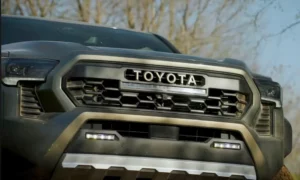
If you want to know what cars have the best resale value, the answer starts — and often ends — with Toyota and Lexus.
Kelley Blue Book named Toyota the Best Resale Value Brand for 2026 — the sixth consecutive year they’ve claimed the title. Lexus grabbed Best Resale Value Luxury Brand for the fifth straight year. The JD Power ALG Residual Value Awards for 2026 told the same story.
Why? Toyota keeps production disciplined and avoids flooding the market with rental fleet vehicles or heavy cash incentives. That strategy protects wholesale prices, which directly boosts your resale value as an owner.
Best Resale Value: Compact and Midsize Cars
Don’t overlook sedans and hatchbacks — they offer some of the softest depreciation curves in the market.
Compact Cars
| Vehicle Model | 5-Year Resale Value |
|---|---|
| Honda Civic | 77.3% |
| Honda Civic Hatchback | 76.8% |
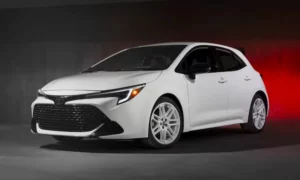
| Toyota Corolla Hatchback | 74.3% |
| Toyota Corolla | 72.6% |
| Subaru Impreza | 70.5% |
| Subaru WRX | 70.2% |
| Kia Rio | 68.4% |
| Hyundai Accent | 67.0% |
The Honda Civic retains 77.3% of its value after five years — a full 10%+ above the compact car average. Its practical design, 31 mpg fuel economy, and rock-solid reliability keep demand strong on the used market.
The Subaru WRX and Impreza punch above their weight here too. Subaru’s standard all-wheel-drive makes these cars especially desirable in snow-prone regions, and the enthusiast base keeps secondary demand steady.
Midsize Cars
The Honda Accord leads this segment, retaining 69.7% of its value — about 10% above the midsize car average. The Toyota Camry follows closely at 68.9%. Both are practically synonymous with reliable, cost-effective transportation, which is exactly why the used market snaps them up.
Further down, the Subaru Legacy holds 64.2%, the Mazda6 manages 60.7%, and the Kia K5 retains 60.2%. Domestic options like the Chevrolet Malibu sit at 54.2% — still respectable, but trailing the Japanese competition.
Best Resale Value: Sports Cars and Performance Vehicles
Performance vehicles play by different rules. Scarcity, enthusiast loyalty, and driving purity slow depreciation dramatically.
Mainstream Sports Cars
The Toyota GR86 is a standout — it retains a staggering 86.0% of its value after five years. It’s one of the last truly affordable, rear-wheel-drive, manual-transmission sports cars available. The Subaru BRZ (its mechanical twin) holds 76.1%.
American muscle remains a strong bet:
- Chevrolet Camaro coupe — 78.9%
- Ford Mustang coupe — 77.9%
- Dodge Challenger — 66.0%
The Mazda MX-5 Miata holds 69.2%, proving that lightweight roadsters with devoted fanbases rarely crash in value.
Luxury Sports Cars
The Porsche 911 is in a class of its own. The 911 coupe retains 92.2% of its value after five years — the highest of any widely tracked vehicle. A five-year-old model still commands nearly $161,000. The 718 Cayman follows at 90.5%.
The mid-engine Chevrolet Corvette punches back hard with 83.2% retention — beating most European exotics at a fraction of the price.
- Porsche 911 convertible — 80.7%
- Toyota GR Supra — 76.1%
- Lexus RC F — 74.9%
- BMW M2 — 67.8%
Best Resale Value: SUVs
SUVs dominate American car sales — and the best ones protect your investment extremely well.
Small and Subcompact SUVs
| Vehicle Model | SUV Category | 5-Year Resale Value |
|---|---|---|
| Toyota C-HR | Subcompact | 75.6% |
| Toyota RAV4 | Small | 75.0% |
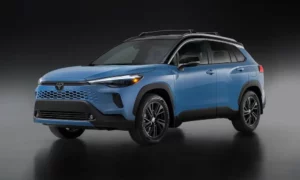
| Toyota Corolla Cross | Small | 73.3% |
| Honda HR-V | Subcompact | 71.3% |
| Subaru Crosstrek | Subcompact | 71.2% |
| Honda CR-V | Small | 71.1% |
The Toyota RAV4 dominates the small SUV space. It retains 75.0% of its value and balances 37.5 cubic feet of cargo space with 30 mpg — a combination that keeps it perpetually in demand. The Honda CR-V at 71.1% is another perennial favorite that buyers consistently seek out on the used market.
Midsize, Large, and Three-Row SUVs
The Toyota 4Runner is an outlier by almost any metric — it holds 74.6% of its value. Its body-on-frame construction, nearly indestructible powertrain, and cult following among overlanders and off-road buyers make it practically immune to normal depreciation.
Other strong performers:
- Toyota Grand Highlander — 69.6%
- Jeep Wrangler — 68.0%
- Toyota Land Cruiser — 68.9%
- Toyota Sequoia — 67.7%
Domestic large SUVs depreciate faster. The Chevrolet Tahoe holds 53.5%, the GMC Yukon retains 52.4%, and the Ford Expedition manages 47.4%. Still reasonable, but they can’t match Toyota’s grip on value retention.
Best Resale Value: Pickup Trucks
Trucks earn their keep — and they hold their value better than almost any other vehicle category.
Midsize Trucks
The Toyota Tacoma is legendary for a reason. It retains 80.1% of its value after five years and consistently tops Kelley Blue Book’s overall Top 10 Best Resale Value lists. Secondary buyers simply can’t get enough of them.
The Ford Ranger holds a solid 70.0%, and the Jeep Gladiator retains 67.7% thanks to its lifestyle appeal and off-road credibility.
Full-Size and Heavy-Duty Trucks
| Vehicle Model | Category | 5-Year Resale Value |
|---|---|---|
| Ram 3500 | Heavy Duty | 82.6% |
| Ford F-350 Super Duty | Heavy Duty | 80.4% |
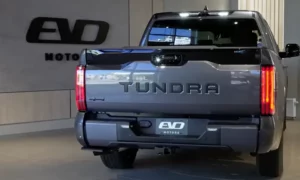
| Toyota Tundra | Full-Size | 78.6% |
| Ford F-450 Super Duty | Heavy Duty | 77.7% |
| Ram 1500 | Full-Size | 62.2% |
| Ford F-150 | Full-Size | 62.1% |
The Ram 3500 leads the entire truck segment at 82.6% retention. Heavy-duty trucks command astronomical prices new — and commercial buyers chase them hard on the used market, keeping values sky-high. The Toyota Tundra holds 78.6% and continues winning segment awards from JD Power year after year.
The F-150 and Ram 1500 sit around 62% — lower than their heavy-duty siblings, but high production volumes explain that gap.
The Hybrid Resale Value Boom
Here’s one of the biggest financial stories in today’s car market: hybrids are holding their value exceptionally well.
While standard gas vehicles lose around 45% over five years, hybrids are only dropping about 35% — meaning they retain roughly 65% of their original value. That’s a massive difference.
Used hybrid prices have surged as buyers want fuel savings without the headaches of pure EV ownership — no range anxiety, no charging infrastructure issues. The hybrid premium is now a legitimate financial hedge against fuel price volatility.
Top Retaining Hybrids
| Vehicle Model | Category | 5-Year Resale Value |
|---|---|---|
| Porsche 911 Hybrid Coupe | Luxury Sports Car | 89.0% |
| Chevrolet Corvette Hybrid | Luxury Sports Car | 80.0% |
| Toyota Tacoma Hybrid | Midsize Truck | 76.8% |
| Toyota Tundra Hybrid | Full-Size Truck | 75.3% |
| Toyota RAV4 Hybrid | Crossover SUV | 74.8% |
| Toyota 4Runner Hybrid | Midsize SUV | 71.4% |
| Toyota Sienna Hybrid | Minivan | 71.0% |
| Toyota Corolla Hybrid | Compact Car | 70.2% |
| Toyota RAV4 Prime (PHEV) | Plug-in Hybrid SUV | 70.0% |
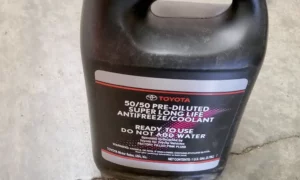
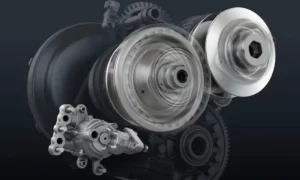
One caveat worth knowing: documented thermal management maintenance — specifically battery cooling fan and inverter coolant loop upkeep — directly affects a used hybrid’s value. Buyers are increasingly aware of what analysts call the “battery anxiety zone”, and a clean service record keeps you well clear of it.
The Electric Vehicle Depreciation Problem
Pure EVs tell a different story — and it’s not a comfortable one for current owners.
EVs lose an average of 57-60% of their value over five years. Luxury EVs can drop 60-70%. Compare that to the 35% average for hybrids and 45% for standard gas cars — the gap is enormous.
Three forces drive this:
- Rapid technology evolution — New EVs with longer ranges and better software make older models obsolete fast
- Government incentives — Tax credits on new EVs artificially drag down used EV prices
- Off-lease flood — Between 400,000 and 500,000 EVs will return from leases in 2026 — a 25.7% inventory increase that crushes secondary market prices
| Vehicle Model | Category | 5-Year Resale Value |
|---|---|---|
| Toyota bZ4X | Electric SUV | 57.6% |
| Porsche Taycan Wagon | Luxury Electric | 53.1% |
| Lexus RZ 450e | Luxury Electric SUV | 52.5% |
| Ford F-150 Lightning | Electric Truck | 47.6% |
| Tesla Model 3 | Luxury Electric Car | 45.5% |
| Tesla Model S | Luxury Electric Car | 37.9% |
| Mercedes-Benz EQS SUV | Luxury Electric SUV | 35.2% |
Tesla won the JD Power ALG premium brand residual value award for 2026 — largely because Tesla avoided the heavy incentive structures that other EV brands leaned on, protecting resale prices in the process.
One silver lining: the average used EV price now sits within $1,400 of a comparable gas car. If you have home charging and want a deal, buying a heavily depreciated three-year-old EV is actually a smart move right now. Early data also suggests vehicles with lithium-iron-phosphate battery chemistry age more slowly — worth checking when you shop.
Luxury Cars: Where Depreciation Gets Painful
Most luxury cars bleed value fast. High purchase prices, complex maintenance costs, and expiring warranties combine to drive steep depreciation on the secondary market. The secondary market prices complex luxury vehicles based on anticipated repair costs — and those costs scare buyers away.
Luxury cars worth buying for resale value:
- Lexus RC 300 — 73.8% (tops the luxury small car segment by 16%)
- Lexus RC 350 — 73.0%
- Lexus IS 350 — 67.9%
- Lexus ES 350 — 64.2%
- Lexus RX 350 — 67.0%
- Mercedes-Benz G-Class — 65.3% (its iconic status protects it)
Luxury cars that hurt your wallet:
- BMW 7 Series — just 38.2% after five years, dropping from $124,000+ new to about $42,000 used
- Land Rover Range Rover — 38.3%, notorious for long-term maintenance costs that the secondary market prices in aggressively
- Audi A8 L — 42.2%
- BMW 5 Series — 44.1%
The pattern is clear: Lexus consistently sidesteps the luxury depreciation trap by building on proven mechanical platforms that buyers trust beyond the warranty period.
The Bottom Line on Cars With the Best Resale Value
The data from 2026 makes the answer to “what cars have the best resale value” pretty straightforward.
Go with Toyota or Lexus if long-term asset protection is your priority. Their discipline around production, fleet sales, and incentives directly translates into higher residual values across every segment.
Choose a hybrid over a pure EV if you’re buying new and care about resale. The 10-percentage-point depreciation advantage hybrids hold over standard gas cars is significant — and the gap versus EVs is even wider.
Heavy-duty trucks and iconic sports cars are the outliers that rewrite normal depreciation rules. If you own a Ram 3500, a Toyota Tacoma, or a Porsche 911, the secondary market essentially refuses to let your investment tank.
Avoid complex luxury vehicles from German and British manufacturers unless you’re buying used — in which case, their steep depreciation makes them genuinely great deals for informed buyers.
The smartest move in any car purchase is treating it like an asset decision. Pick the right platform, keep up with maintenance, and the secondary market will reward you.