Ever wondered if paying extra for synthetic oil is just throwing money down the drain? You’re not alone. With synthetic oil costing 30-85% more per change than conventional, it’s natural to question the value. But what if that premium price actually saves you money in the long run while giving your engine better protection? Let’s cut through the marketing hype and examine the real value of synthetic oil.
The Real Cost Comparison: Synthetic vs. Conventional
When you look at the price tag at your local shop, synthetic oil seems significantly more expensive. But this surface-level comparison misses the bigger financial picture.
According to AAA research, switching to synthetic costs the average driver only about $64 more annually—roughly $5.33 per month. But here’s where it gets interesting: when you factor in the extended change intervals, synthetic often costs LESS per year.
Here’s the breakdown:
- Conventional oil: $152 annually (4 changes at $38 each)
- Synthetic oil: $140 annually (2 changes at $70 each)
- Annual savings with synthetic: $12
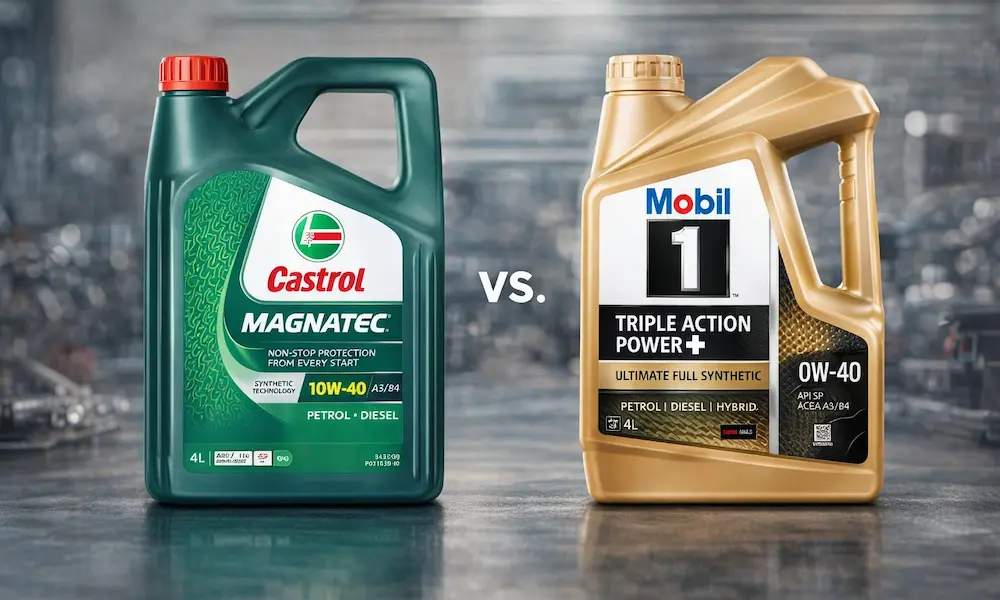
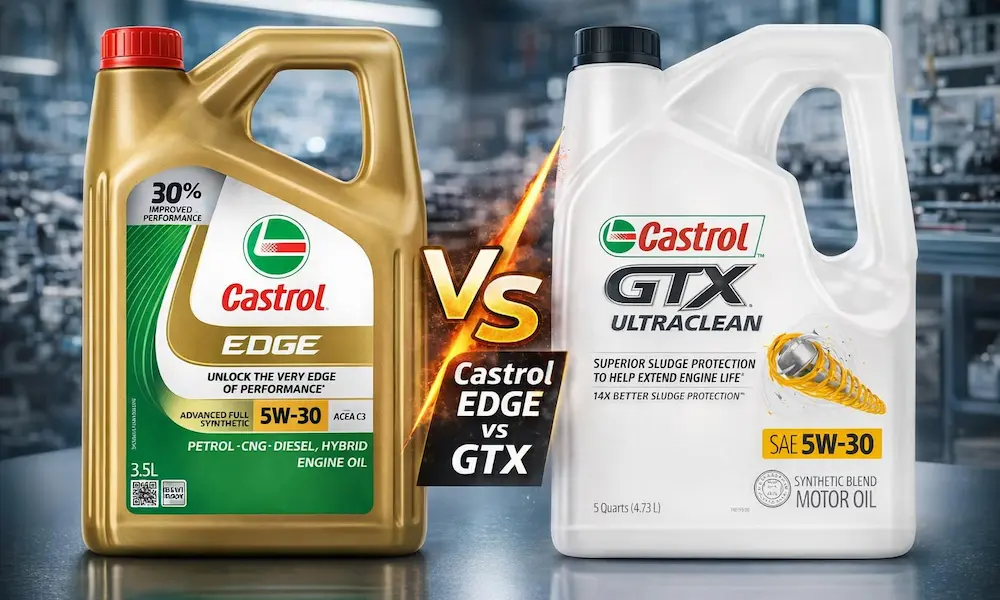
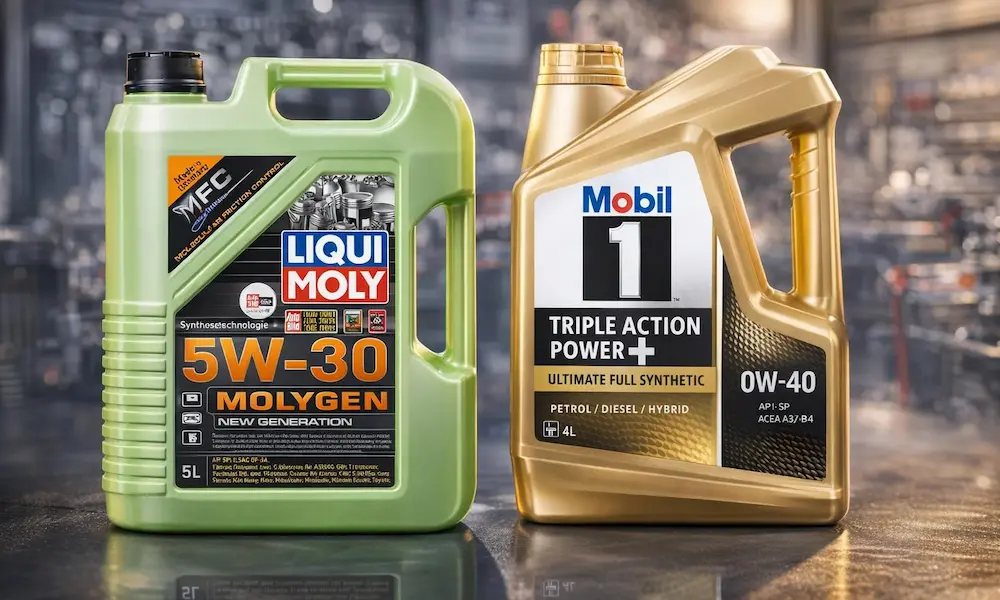
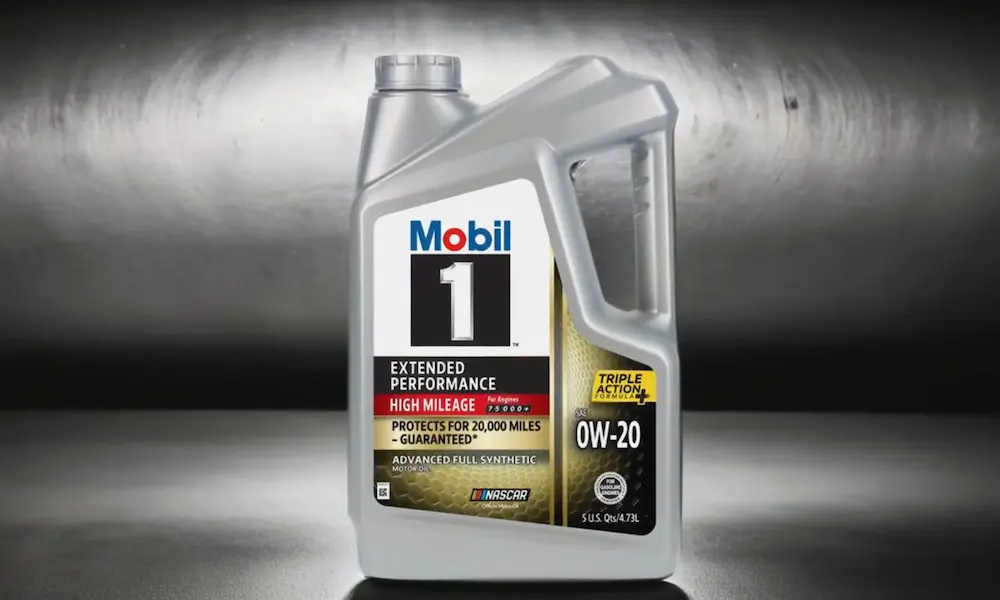
Premium synthetic oils stretch these savings even further. Products like Mobil 1 Extended Performance can last up to 15,000 miles, while some Castrol EDGE formulations claim intervals up to 25,000 miles.
Performance Advantages: Not Just Marketing Hype
Synthetic oil isn’t just more expensive—it’s fundamentally different at the molecular level. Independent testing by AAA found synthetic oils outperformed conventional oils by an average of 47% across critical performance measures.
The science backs up these claims with three key advantages:
-
Lower friction coefficients: Synthetics reduce internal engine friction, delivering measurable horsepower gains and improved fuel economy. This is why racing teams universally choose synthetic lubricants.
-
Superior temperature stability: Conventional oils thin excessively when hot and thicken dramatically when cold. Synthetics maintain consistent viscosity from -40°F to over 300°F, ensuring protection during critical cold starts.
-
Better heat management: Synthetic oils provide up to 40% of engine cooling while maintaining lubricating effectiveness under extreme temperatures.
These aren’t just theoretical benefits. In standardized testing, synthetics showed:
- 50% better deposit control
- 40% improved high-temperature protection
- 40% better oxidation resistance
- 35% superior cold-weather flow
- 35% enhanced wear protection
When Synthetic Oil Delivers Maximum Value
While synthetic oil benefits virtually all vehicles, it provides the greatest return on investment under demanding conditions.
Severe Driving Conditions That Warrant Synthetic Oil
Your daily driving probably qualifies as “severe” even if you don’t realize it. Any of these common scenarios make synthetic oil worth the investment:
- Stop-and-go traffic: Prevents oil breakdown from frequent heat cycling
- Extreme temperatures: Maintains protection in both scorching summers and freezing winters
- Heavy towing or hauling: Resists viscosity breakdown under high loads
- Turbocharged engines: Essential for protecting high-heat turbocharger components
- Short trip driving: Flows immediately during cold starts when most engine wear occurs
Modern Engines Demand Better Protection
Nearly 70% of 2019 model year vehicles came factory-filled with synthetic or synthetic-blend oil. This isn’t just manufacturers trying to seem premium—it’s necessity.
Modern engines run hotter, with tighter tolerances and higher pressures than older designs. Turbochargers, direct injection, and variable valve timing systems all place greater demands on motor oil. Many luxury and performance vehicles now void warranties if conventional oil is substituted.
Choosing the Right Synthetic Oil
Not all synthetic oils offer equal performance. Lab testing shows meaningful differences between price tiers.
Top-Performing Synthetic Oils
Based on independent testing and industry certifications, these consistently rank at the top:
- Amsoil Signature Series: 25,000-mile intervals, premium PAO base stocks
- Castrol EDGE Advanced: Fluid Titanium technology, excellent high-pressure performance
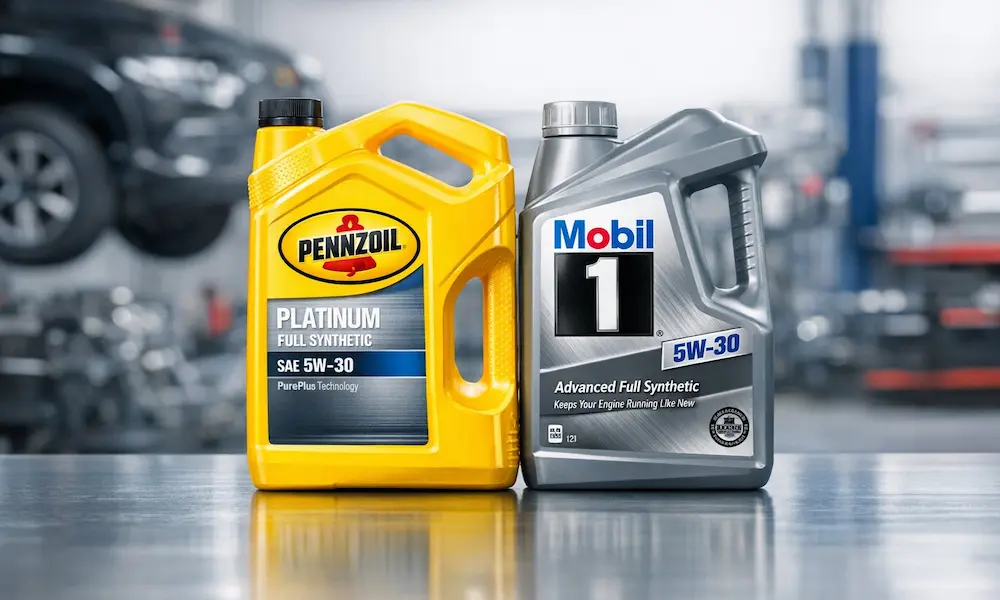
- Mobil 1 Extended Performance: 15,000-mile protection, proven track record
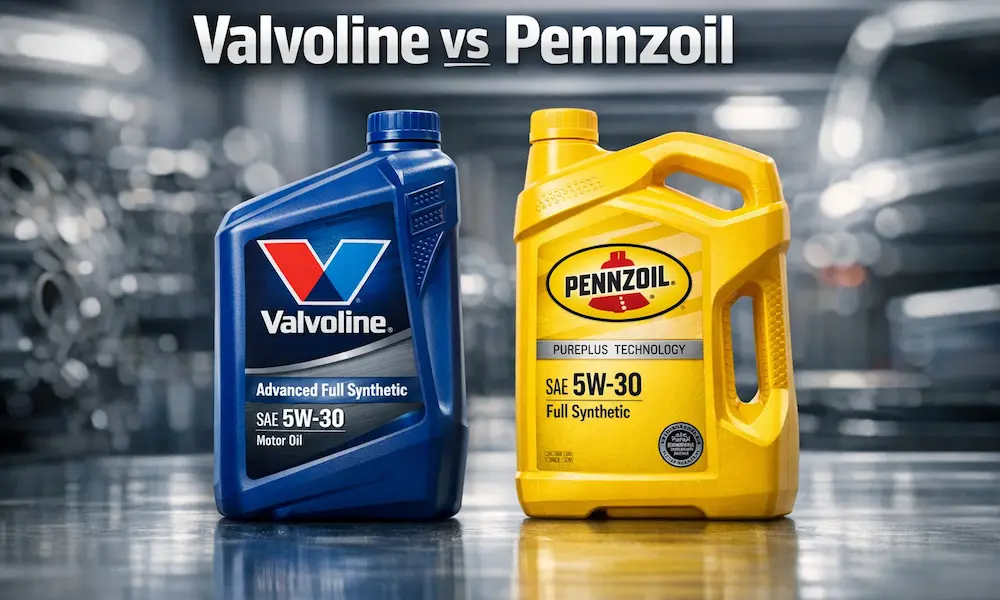
- Pennzoil Ultra Platinum: Natural gas-derived base oils, exceptional cleanliness
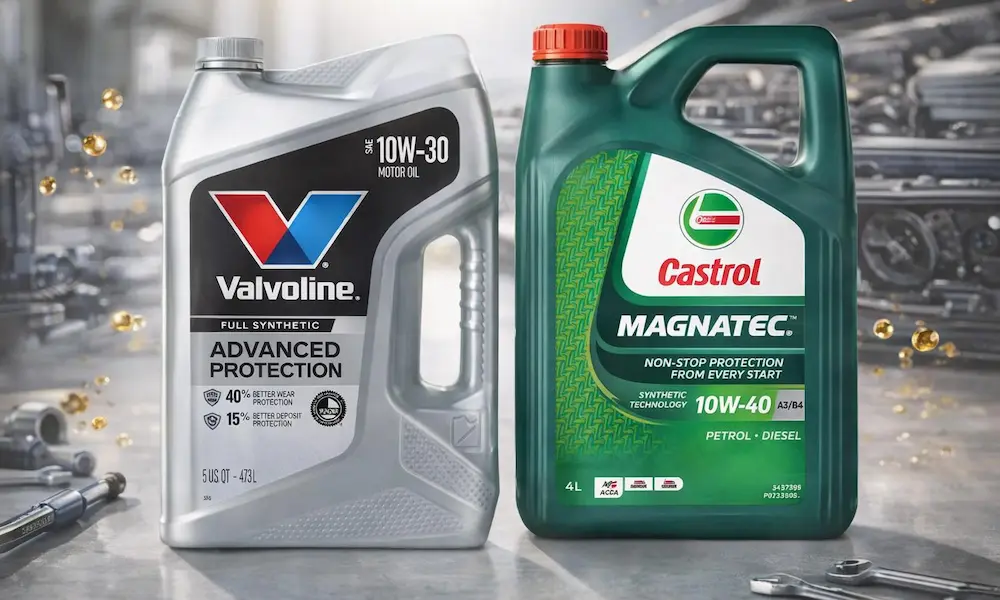
- Valvoline Advanced Full Synthetic: Strong anti-wear additives, wide availability
Budget-Friendly Options That Still Perform
If you’re cost-conscious but want synthetic benefits:
- Amazon Basics Full Synthetic: Meets industry standards at lower cost
- Super Tech Full Synthetic (Walmart): Quality protection under $19 per 5-quart jug
Premium synthetics ($45-65 per change) demonstrate 25-45% better protection in high-stress conditions versus budget options ($25-35 per change), but even budget synthetics outperform conventional oils.
Vehicle-Specific Recommendations
Your vehicle’s age and mileage should influence your oil choice.
Newer Vehicles (0-50,000 miles)
For newer vehicles, full synthetic oil is often mandatory to:
- Maintain warranty compliance
- Meet manufacturer specifications
- Protect sophisticated engine components
- Extend service intervals to 7,500-10,000 miles
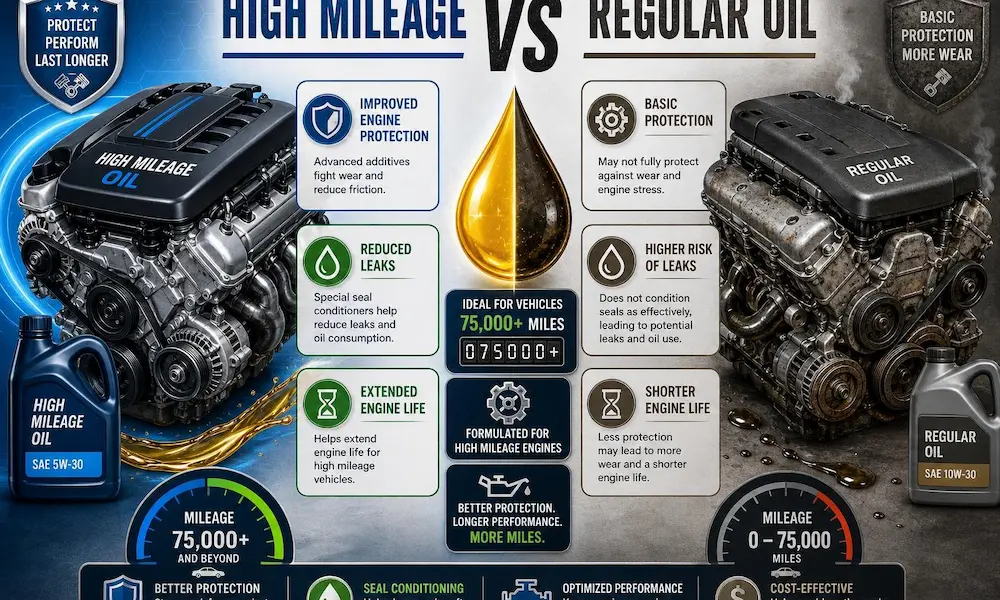
High-Mileage Vehicles (75,000+ miles)
As engines age, they benefit from specialized formulations:
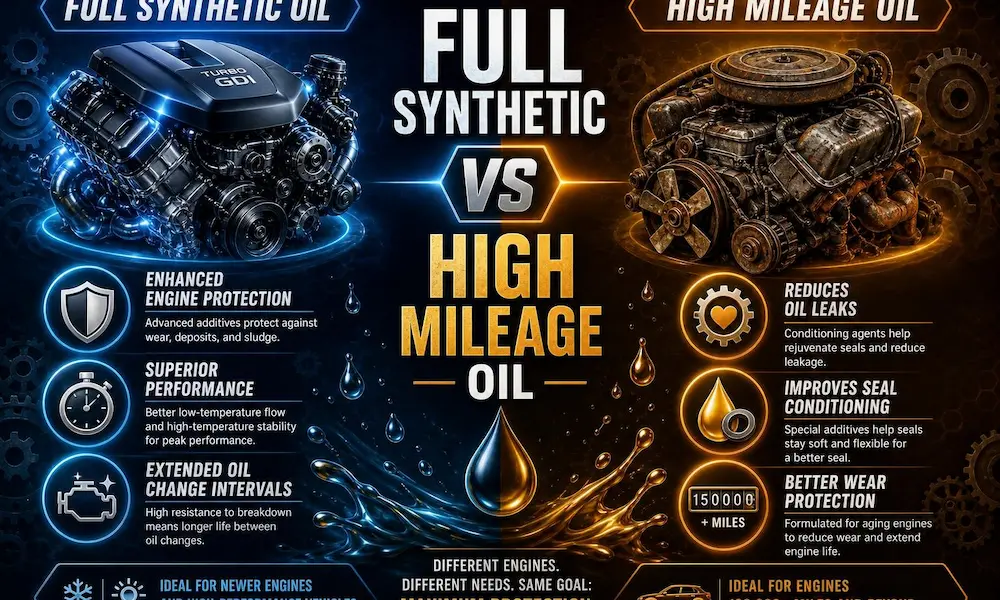
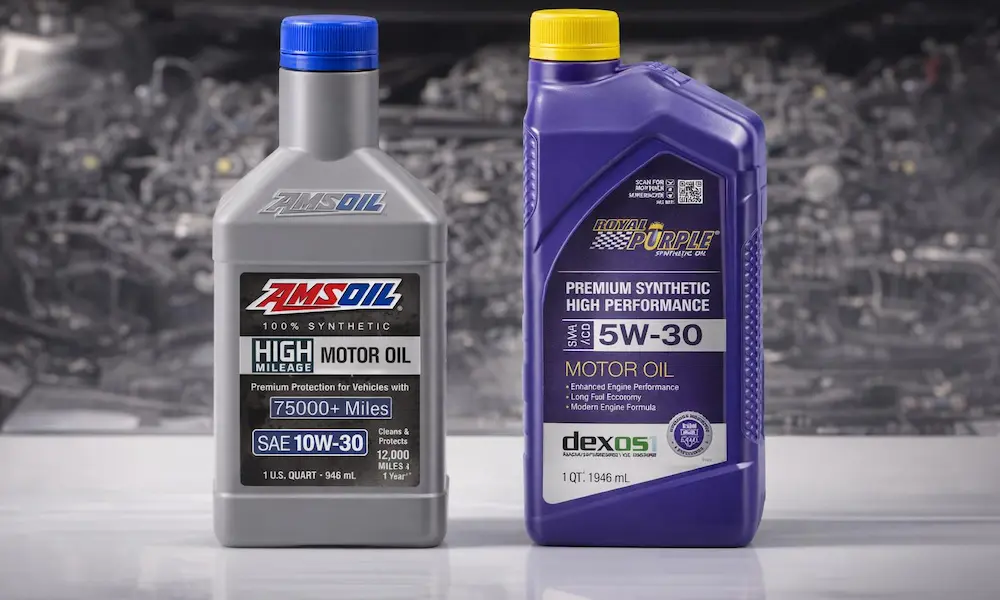
- High-mileage synthetic oils contain seal conditioners
- These prevent leaks in aging gaskets
- They reduce oil consumption and burn-off
- Brands like Castrol EDGE High-Mileage and Mobil 1 High Mileage are specifically formulated for older engines
Classic/Vintage Vehicles (Pre-1990)
Older vehicles require special consideration:
- Modern synthetic oils are generally safe for older engines
- Avoid early ester-based formulations that may affect seals
- Consider starting with conventional or high-mileage oils initially
- Monitor for leaks during transition period
Environmental and Efficiency Benefits
Beyond protecting your engine, synthetic oils deliver environmental advantages:
- Reduced oil consumption: Less evaporation means fewer emissions
- Extended drain intervals: Reduces waste oil generation by 50-75%
- Improved fuel economy: 2-4% efficiency gains reduce your carbon footprint
- Longer engine life: Prevents premature engine replacement and associated environmental impact
Long-Term Economic Impact
The true value of synthetic oil becomes most apparent when considering your vehicle’s entire lifespan.
Independent analysis suggests synthetic oil can extend engine life by 50,000-100,000 miles through superior wear protection. With engine replacement costs ranging from $15,000-25,000, this alone represents thousands in avoided repairs.
The 2-4% fuel economy improvement from reduced friction can save $50-150 annually in fuel costs for average drivers. And maintenance records showing synthetic oil usage enhance vehicle resale value by demonstrating superior care.
The Bottom Line: Is It Worth It?
For most drivers, synthetic oil delivers clear return on investment through:
- Lower annual maintenance costs ($12+ savings)
- Reduced engine wear and repair expenses
- Improved fuel efficiency
- Enhanced convenience through longer intervals
- Superior protection during severe conditions
| Factor | Conventional Oil | Synthetic Oil |
|---|---|---|
| Annual cost (average) | $152 | $140 |
| Change interval | 3,000-5,000 miles | 7,500-15,000 miles |
| Cold-start protection | Poor to adequate | Excellent |
| High-temp stability | Fair | Excellent |
| Engine deposit control | Adequate | Superior |
| Environmental impact | Higher waste volume | Reduced waste |
Exception Cases: Conventional oil may make sense for:
- Very high-mileage vehicles near end-of-life
- Vehicles driven under 5,000 miles annually
- Extreme budget constraints with newer engines under warranty
- Vehicles specifically requiring conventional oil per manufacturer
The evidence overwhelmingly supports synthetic oil as a worthwhile investment. While the $30-50 premium per oil change seems significant, the combination of extended intervals, superior protection, fuel savings, and reduced long-term repair costs makes synthetic oil the economically rational choice for most vehicle owners.
At just $5 monthly additional cost, synthetic oil represents one of the most cost-effective automotive maintenance upgrades available according to AAA research.
Making the Switch to Synthetic
If you’re convinced synthetic is worth it, the transition is simple:
- You can switch at your next oil change—no special procedure needed
- Follow manufacturer recommendations for oil weight and specifications
- Consider starting with a high-mileage synthetic if your vehicle has over 75,000 miles
- Keep your receipt as proof of proper maintenance for warranty purposes
Synthetic oil isn’t just an upgrade—it’s smart economics. The initial price premium pays dividends through better protection, extended change intervals, and improved efficiency. For most vehicles on the road today, synthetic oil isn’t just worth it—it’s the financially responsible choice.