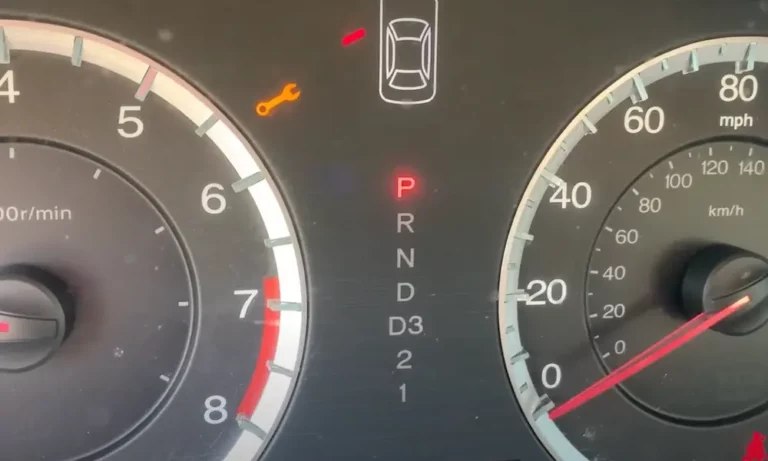
That little amber wrench on your Ford’s dashboard just lit up. Now you’re wondering if you’re about to drop $1,000 at a dealership — or if it’s just an overdue oil change reminder. Good news: this guide covers both scenarios. Stick around, because knowing the difference could save you a serious headache.
What Does the Ford Wrench Light Actually Mean?
The wrench light isn’t the same as your check engine light. Ford designed it to cover two very different situations:
- A routine maintenance reminder — usually an oil change alert
- A genuine powertrain fault — think throttle body failure, transmission issues, or electrical problems
The check engine light (federally mandated) handles emissions faults. The wrench light handles everything else — mechanical faults, drivetrain issues, and scheduled service reminders. That dual role is exactly why it confuses so many Ford owners.
So before you do anything, ask yourself: Did I just skip an oil change? If yes, the reset is simple. If the light appeared suddenly while driving, it deserves a closer look first.
Common Reasons the Ford Wrench Light Turns On
Here’s a quick breakdown of what typically triggers it:
| Trigger | What’s Happening | Urgency |
|---|---|---|
| Oil life at 0% | Maintenance reminder from oil algorithm | Low — reset after oil change |
| Throttle body fault | Sensor voltage mismatch or carbon buildup | High — check immediately |
| Transmission issue | Solenoid failure, shift slipping, fluid sensor error | High — limp mode possible |
| Weak or failing battery | Voltage drop confuses sensors | Medium — test battery first |
| Transfer case fault | 4WD/AWD motor or sensor failure | High — stop driving in 4WD |
Electronic Throttle Issues
Ford switched from cable-operated throttles to a drive-by-wire system. Your accelerator pedal sends an electrical signal to the throttle body, which opens the air valve electronically. If those signals don’t match up — say, a carbon-clogged throttle plate or a failed position sensor — the wrench light fires immediately. The computer may also cut engine power to prevent runaway throttle.
Transmission Problems
The transmission control module watches input/output shaft speeds constantly. If a gear slips, a solenoid sticks, or fluid temps spike, the wrench light comes on. In serious cases, the vehicle locks into third gear and caps your speed around 40 mph — that’s limp mode doing its job.
Battery and Electrical Faults
A weak battery or corroded terminal creates voltage drops that confuse sensors. The computer might misread a voltage dip as a sudden throttle change. This is one of the most commonly misdiagnosed causes of the wrench light.
What Is Limp Mode — And Are You In It?
When the powertrain control module detects a serious fault, it activates limp mode (fail-safe operation). You’ll know you’re in it when:
- Engine RPM won’t go past 2,000–3,000
- Vehicle speed caps around 35–40 mph
- Transmission feels stuck in one gear
- Acceleration feels sluggish no matter how hard you press the pedal
Limp mode isn’t a glitch — it’s intentional. The system is protecting your engine and transmission from further damage. Don’t try to push through it. Get the vehicle scanned and find the root cause first.
Why Your OBD-II Scanner Might Show “No Codes Found”
Here’s something that trips people up constantly. You grab a cheap OBD-II scanner from the auto parts store, plug it in, and it shows zero codes — even though the wrench light is staring you in the face.
That’s not a malfunction. Generic OBD-II scanners only read emissions-related codes (the P0xxx range). Ford’s wrench light often stores proprietary manufacturer codes in separate modules — the transmission control module, body control module, or hybrid powertrain module — that generic tools can’t access.
To actually read these codes, you need one of the following:
| Tool | What It Reads | Best For |
|---|---|---|
| Generic OBD-II Scanner | Emissions codes only | Basic check engine light |
| Advanced Handheld Scanner | Some ABS/SRS codes | Intermediate DIY diagnosis |
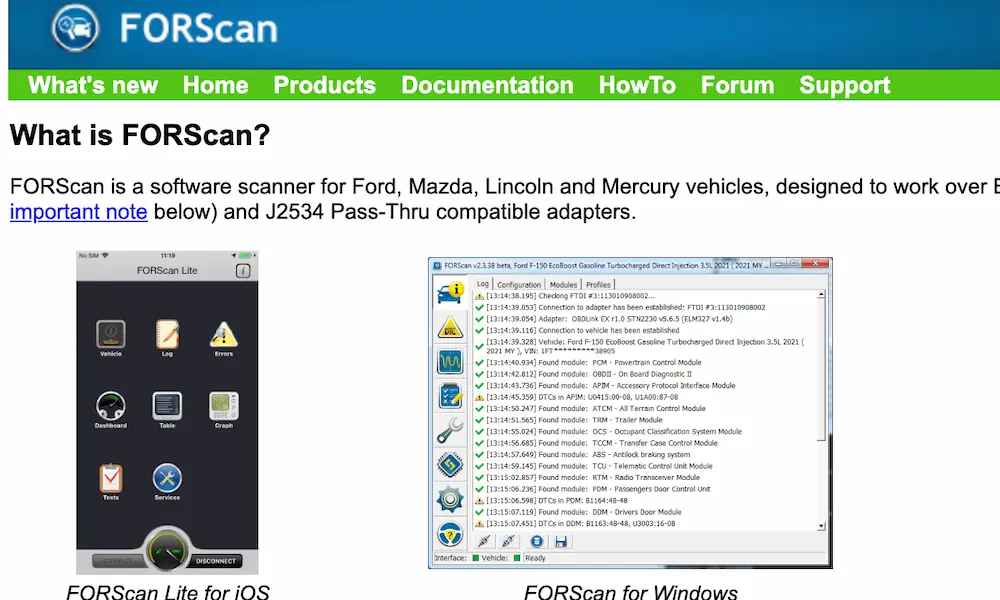
| FORScan + OBD Adapter | Full Ford module access, live data | DIY deep diagnosis |
| Ford IDS (Dealership Tool) | Everything, including reprogramming | Professional repair |
FORScan is a solid middle-ground option. Pair it with a compatible OBD-II Bluetooth or USB adapter, and you can read real Ford-specific codes on a laptop — codes that actually explain why the wrench light turned on.
How to Do a Ford Wrench Light Reset for Oil Life (Maintenance Reminder)
Already changed the oil? Good. Now reset the maintenance monitor. The method depends on your specific model and trim level.
Method 1: Dual-Pedal Reset (Focus, Fiesta, Escape, Transit, Base F-150, Ranger)
This method works on vehicles without a digital information display or steering wheel controls.
- Make sure the vehicle is parked and all doors are closed
- Turn the ignition to “ON” without starting the engine
- Key vehicles: rotate to the last position before cranking
- Push-button vehicles: press the button once without touching the brake pedal
- Wait for the dash lights to fully illuminate
- Press both the accelerator and brake pedals fully to the floor — at the same time
- Hold both pedals down for 20–30 seconds
- Watch for the message center to display “Reset Complete”
- Release both pedals, turn the ignition off, and open the driver’s door to fully power down the modules
If it doesn’t work on the first try, lock the vehicle with the key fob, wait a few minutes for the modules to sleep, then try again with a steady, deliberate pedal application.
Method 2: Steering Wheel Menu Reset (Explorer, Edge, Maverick, Late-Model F-150, Fusion)
Vehicles with a digital instrument cluster use the steering wheel directional pad instead.
- Turn the ignition to “ON” without starting the engine
- Clear any warning prompts using the “OK” button on the steering wheel
- Use the directional arrows to navigate to Settings or Vehicle
- Scroll to Vehicle Maintenance or Oil Life
- Select Oil Life Reset
- Press and hold “OK” until the progress bar completes and the display confirms 100% oil life
For older models with physical dashboard buttons labeled “Setup,” “Info,” and “Reset”: press “Setup” until the display shows “Oil Life,” then hold “Reset” until it confirms the change.
How to Reset the Wrench Light After a Real Powertrain Fault
If the wrench light appeared because of an actual fault (throttle body, transmission, sensor), changing the oil won’t fix it. You need to address the root cause first, then clear the stored codes.
Clear Codes with a Scan Tool
After completing the repair, reconnect your scan tool and send a command to wipe the stored diagnostic trouble codes from the powertrain control module. The module will immediately start polling the new sensor or component. If the repair was successful, the light stays off.
Keep Alive Memory (KAM) Reset via Battery Disconnect
No scan tool? You can force a hard reset by cutting power to the control modules. This clears all stored codes and adaptive learning data — so use it as a last resort.
- Turn the ignition completely off and remove the key
- Disconnect the negative battery terminal using a hand wrench
- Wait 10–15 minutes — capacitors inside the modules need time to drain fully
- Optional: connect the two isolated cable ends together with a jumper wire to speed up discharge
- Reconnect the battery terminal securely
Keep in mind: this wipes everything — radio presets, adaptive transmission data, idle calibrations. The vehicle returns to factory baseline.
The Idle Relearn Procedure (Don’t Skip This)
After a battery disconnect or throttle body replacement, your engine may idle rough, surge, or stall. The computer lost its learned idle strategy. Here’s how to relearn it:
- Park on a flat surface, parking brake engaged, accessories off
- Start the engine and let it warm up fully to normal operating temperature
- Let it idle undisturbed for 1 full minute — no throttle input
- Turn on the A/C and blower fan to max — idle another 1 minute
- Keep A/C on, hold the brake, and shift into Drive — idle for another 1 minute
- Shift back to Park and shut the engine off
- Drive normally for 10–30 miles so the transmission and fuel trims can relearn dynamically
Skipping this step is why so many people replace a throttle body and still experience a rough idle afterward.
Battery Monitoring System (BMS) Reset
If you replaced a worn-out battery, you also need to reset the Battery Monitoring System. Without it, the computer still applies charging profiles for the old battery — potentially shortening the life of the new one and triggering electrical faults again.
Manual reset sequence (works on many Mach-E, Maverick, and late-model Escape models):
- Turn the ignition to “ON” — engine off
- Within 10 seconds, flash the high beams 5 times using the lighting stalk
- Immediately press and release the brake pedal 3 times
- Watch the dashboard — the red battery icon should flash 3 times to confirm the reset
- Turn the ignition off to finalize
If the battery icon doesn’t flash, your timing was off. Aim for about one second between each input and try again.
Ford Wrench Light and Safety Recalls Worth Knowing
Some wrench light triggers aren’t just maintenance issues — they’re documented safety concerns. Certain Ford hybrid and electric models experienced high-voltage contactor failures that caused sudden loss of power. In those cases, the wrench light appeared alongside a “Stop Safely Now” message.
If your wrench light shows up on a hybrid or EV — especially alongside any red warning messages — check Ford’s active recall list and your VIN before attempting any DIY reset. The NHTSA recall database is a good starting point to verify whether your vehicle is affected.
One Last Thing Before You Reset
The Ford wrench light reset isn’t complicated once you know what triggered it. If it’s an oil reminder, the dual-pedal or menu method clears it in under a minute. If it’s a real fault, scan the vehicle properly with a tool that can actually read Ford-specific codes — a generic scanner won’t cut it. Fix the root cause, clear the codes, and run through the idle relearn if you’ve touched the throttle body or battery. That sequence handles the vast majority of wrench light situations without a dealership visit.