Your F-150’s transmission might be hiding a ticking time bomb — and Ford has known about it for years. This guide breaks down every recall, what’s actually failing, and what it means for your wallet.
What’s the Ford F-150 Lead Frame Recall About?
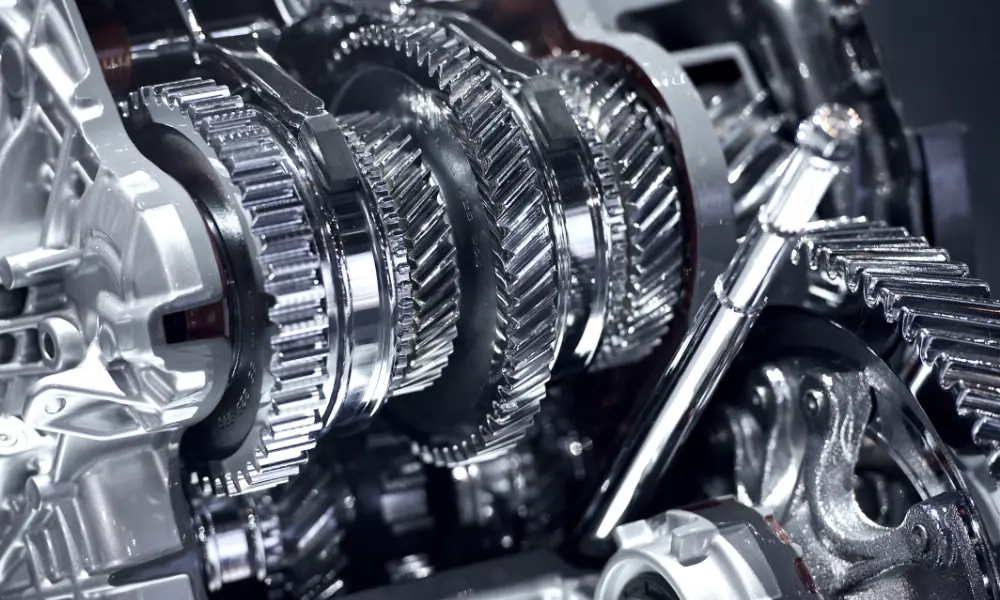
If you own a 2011–2017 Ford F-150, there’s a real chance your truck’s 6R80 six-speed automatic transmission has a defective molded lead frame — an internal wiring component buried inside the transmission itself.
When this part degrades, your truck can suddenly slam into first or second gear at highway speeds. No warning. No mercy. Just instant, violent deceleration that can lock your rear wheels and send you into a skid.
This isn’t a minor inconvenience. It’s a genuine safety hazard that’s triggered multiple federal investigations, millions of vehicles recalled, and over a decade of regulatory back-and-forth between Ford and the National Highway Traffic Safety Administration (NHTSA).
What Is the Molded Lead Frame — and Why Does It Fail?
The molded lead frame sits inside your transmission, fully submerged in hot transmission fluid. It’s essentially the central wiring harness for the entire transmission, connecting critical sensors directly to your truck’s Powertrain Control Module (PCM).
It houses three key sensors:
- Output Shaft Speed (OSS) Sensor — tells the PCM how fast the output shaft is spinning, which it uses to calculate your road speed and time gear shifts
- Transmission Range Sensor (TRS) — reports what gear position your shifter is actually in
- Transmission Fluid Temperature Sensor — monitors fluid heat to adjust shift behavior
The problem? The lead frame uses a rigid plastic shell around metallic conductive tracks. Every time your transmission heats up and cools down, those two materials expand and contract at different rates. Do that thousands of times over years of driving, and the internal electrical connections crack, corrode, or deform.
Add highway vibration from a heavy-duty truck, and the degradation accelerates. The specific failure modes identified by Ford engineers and the NHTSA include:
- Cracked solder joints on the OSS sensor circuit board (mainly 2011–2012 models)
- Electrical shorts to ground within the lead frame
- Pin swaging — deformation of the connector pins that link the lead frame to the external harness
- Contamination and corrosion from metallic debris suspended in degraded transmission fluid
Because every sensor is permanently molded into one rigid assembly, a single failed sensor means replacing the entire unit — a job that requires dropping the transmission pan, draining the fluid, and detaching the valve body.
Why Is a Sensor Failure So Dangerous?
Here’s where things get serious.
Your PCM trusts sensor data completely. If the OSS sensor momentarily loses its signal while you’re cruising at 70 mph, older PCM software doesn’t recognize it as a sensor fault. It reads the sudden drop in speed data as proof that your truck has instantaneously stopped — and commands a shift into first gear.
It hasn’t stopped. It’s doing 70 mph on the freeway.
The result is catastrophic:
- Massive engine braking slams the drivetrain
- Rear wheels lock up or lose traction as deceleration forces spike
- The vehicle skids or yaws laterally — especially dangerous in turns, wet roads, or traffic
For 2015–2017 models, the TRS failure triggers a 6th-to-2nd gear downshift instead of 6th-to-1st — still violent enough that Ford’s own track evaluations confirmed extreme loss-of-vehicle-control risk.
The rear wheels keep sliding until forward momentum naturally slows the truck to a speed compatible with the lower gear. That’s a long, terrifying slide.
How to Spot a Failing Lead Frame: Symptoms to Watch For
Don’t wait for a highway scare. These warning signs often appear before a full failure event:
- Check engine light or wrench symbol on the instrument cluster
- Speedometer drops to zero while you’re still moving (OSS failure)
- Transmission enters limp mode — locked into one gear, harsh shifts, sluggish acceleration
- No-crank, no-start condition — the PCM can’t confirm Park position, so the starter won’t engage
- Intermittent normal operation — the truck drives fine after a restart, then fails again later
When a dealership connects Ford’s Integrated Diagnostic Software (IDS), these specific Diagnostic Trouble Codes (DTCs) confirm which sensor is failing:
| Failure Mode | Diagnostic Trouble Codes | What It Means |
|---|---|---|
| Output Shaft Speed (OSS) | P0720, P0722, P0731, P1500 | Intermittent or total loss of speed signal → 1st gear downshift |
| Transmission Range Sensor (TRS) | P0705, P0706, P0707 | Corrupted gear selector data → 2nd gear downshift or no-start |
Critical point: If these specific codes aren’t stored in your PCM, dealers won’t approve a free hardware replacement under the recall programs — even if you’ve experienced symptoms.
The Full Recall Timeline: How Ford Got Here
The Ford F-150 lead frame recall story didn’t happen overnight. It unfolded over 14 years, with Ford repeatedly recalling larger and larger populations as evidence mounted.
Recall 12C23 (2012): The First Hint
The earliest signs surfaced in 2012. Ford initiated Recall 12C23 (NHTSA 12V-190), targeting a faulty TRS within the lead frame. Parts were so scarce that technicians had to call a Special Service Support Center for authorization before touching a single transmission pan.
Recall 16S19 / NHTSA 16V-248 (2016): The First Major Action
By 2016, a clear pattern of sudden first-gear downshifts pushed Ford to file Safety Recall 16V-248, covering roughly 153,581 U.S. vehicles across tight production windows:
- 2011–2012 F-150: Built August 19, 2011 – March 9, 2012
- 2012 Ford Expedition: Built August 19, 2011 – December 19, 2011
- 2012 Ford Mustang: Built August 19, 2011 – February 21, 2012
- 2012 Lincoln Navigator
The fix was a two-step process: update the PCM software for everyone, but only replace the physical lead frame if the failure codes were already present.
Recall 19S07 / NHTSA 19V-075 (2019): The Massive Expansion
Complaints kept rolling in from vehicles outside the 2016 recall window. After the NHTSA opened Recall Query RQ17-010 in December 2017, Ford’s own engineers concluded the degradation wasn’t limited to a bad supplier batch — it was systemic across the entire production run.
The result was a massive 2019 recall covering 1,263,051 vehicles:
| Model Year | Vehicles Covered |
|---|---|
| 2011 F-150 | 311,382 |
| 2012 F-150 | 315,215 |
| 2013 F-150 | 636,454 |
| Total | 1,263,051 |
The remedy was again a PCM software update — no automatic hardware replacement.
Recall 19S19 / NHTSA 19V-433 (2019): The Software Error Fix
Within months, Ford discovered the PCM calibration used on 2013 F-150s with 5.0L and 6.2L engines was incomplete — it didn’t actually prevent the downshift. A supplemental recall forced those owners back to the dealer for a corrected flash.
Recall 24S37 / NHTSA 24V-444 (2024): The 2014 Gap Closes
The 2014 F-150 was inexplicably left out of every prior recall despite sharing the identical 6R80 transmission. After the NHTSA opened Recall Query RQ24-005 in March 2024 and provided Ford with 86 owner complaints, Ford finally filed Safety Recall 24V-444 on June 14, 2024, covering 552,188 vehicles built between June 17, 2013 and December 23, 2014.
Recall 26S28 / NHTSA 26V-237 (2026): The Biggest One Yet
The 2015–2017 generation brought a redesigned aluminum body to the F-150 — but the same 6R80 transmission. The first warranty claim in this generation was recorded in April 2015. A formal recall didn’t happen until April 2026. That’s an eleven-year gap.
By the time Ford filed Safety Recall 26V-237, the NHTSA had documented 444 warranty claims, 316 owner complaints, two injuries, and one accident. The recall covered 1,392,935 vehicles — the largest single action in this entire saga.
The Software Fix vs. The Real Fix: What You’re Actually Getting
Here’s the part Ford doesn’t advertise loudly.
Every major recall remedy has centered on a PCM software update, not a physical lead frame replacement. The software introduces an “OSS signal plausibility check” — essentially teaching the computer to recognize an impossible reading as a sensor failure rather than an actual stop.
If your speedometer suddenly reads zero at 70 mph, the updated PCM says “that’s physically impossible” — blocks the downshift, lights up the check engine light, and keeps you moving safely.
This is genuinely effective at preventing the dangerous downshift. But it doesn’t fix the broken sensor. The lead frame is still degrading inside your transmission.
Physical hardware replacement only happens when:
- Your PCM stores the specific failure DTCs listed above
- You’re still within the Customer Satisfaction Program (CSP) coverage window
Customer Satisfaction Programs: The Fine Print That Costs You Money
Ford runs two parallel programs — Safety Recalls and Customer Satisfaction Programs (CSPs). The difference matters enormously to your wallet.
- Safety Recalls cover the PCM software update. They don’t expire.
- CSPs cover the physical lead frame replacement. They have strict limits.
CSP 16N02 and CSP 19N01 both extended the lead frame warranty to 10 years or 150,000 miles from the original warranty start date.
Do the math on a 2014 F-150: by 2024, that 10-year window has already closed. If your lead frame fails after the CSP expires, you’re looking at an out-of-pocket repair that frequently runs $1,000–$1,800 at dealer labor rates — and that’s before you factor in any secondary transmission damage from earlier downshift events.
What Used F-150 Buyers Absolutely Need to Know
Don’t rely on an NHTSA VIN lookup showing “recall completed” as a clean bill of health.
“Completed” only means the PCM was reprogrammed. It tells you nothing about whether the physical lead frame was ever replaced. You could buy a truck with a freshly flashed PCM and a lead frame that’s weeks away from leaving you in limp mode on the highway.
If you’re buying a used 2011–2017 F-150, insist on:
- Full service records showing whether a lead frame replacement was performed
- A pre-purchase inspection with a transmission scan for stored DTCs
- VIN verification at Ford’s recall lookup to confirm which specific actions have been completed
If the truck has more than 100,000 miles and no record of a lead frame replacement, price that repair into your offer.
Check Your VIN Right Now
If you own a 2011–2017 Ford F-150, check your recall status immediately. Enter your VIN at the NHTSA recall database or Ford’s owner portal to see which campaigns apply to your truck.
If you’re within a CSP window and your truck shows any of the symptoms above — speedometer dropping, limp mode, wrench light, no-start — get to a dealer before those codes clear themselves on a restart. Stored DTCs are your ticket to a free hardware fix. Don’t lose them.