Not sure what transmission is hiding under your car? You’re in the right place. Whether you’re ordering parts, checking fluid specs, or just curious, knowing your exact transmission matters more than you’d think. Stick around — by the end of this post, you’ll know exactly how to figure it out without guessing.
Why Getting This Right Actually Matters
Here’s the thing: two vehicles from the same year, same model, and same trim can have completely different transmissions. One might have a 4L60E. The other? A 4L80E. They look similar from the outside, but they have different fluid requirements, different internal components, and different torque ratings.
Use the wrong fluid or order the wrong rebuild kit, and you’re looking at expensive internal clutch damage and serious downtime. So let’s get this right from the start.
Start Here: What Type of Transmission Do You Have?
Before you dig into model numbers, figure out which category your transmission falls into. You can do this without leaving the driver’s seat.
Manual vs. Automatic: Check Your Pedals
This one’s simple. Look at your footwell.
- Three pedals (left to right: clutch, brake, accelerator) = manual transmission
- Two pedals (brake, accelerator) = automatic transmission
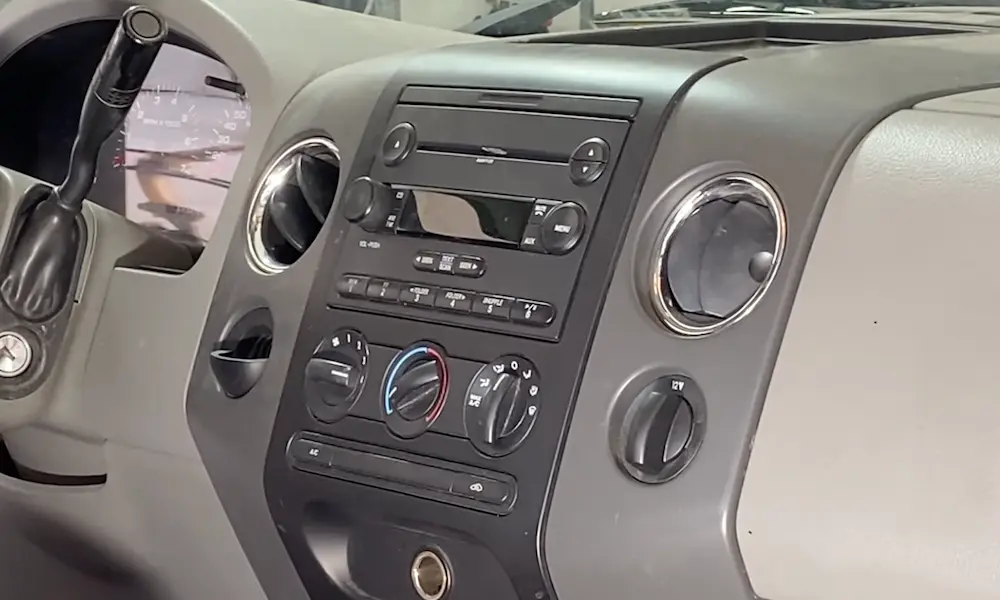
A manual gearshift also shows a numbered shift pattern on the knob — usually gears 1 through 5 or 6, plus reverse. An automatic uses letters: P, R, N, D.
Does Your Automatic Feel Seamlessly Smooth? It Might Be a CVT
A continuously variable transmission (CVT) uses belt-and-pulley mechanics instead of fixed gear ratios. It has no real “gears” to shift through.
Here’s an easy test: accelerate moderately and watch your tachometer.
- Traditional automatic: RPMs climb steadily, then drop noticeably with each gear change
- CVT: RPMs rise and hold steady while speed keeps climbing — no shift shock, just a smooth pull
Some newer CVTs mimic traditional gear shifts with programmed “step points,” but the underlying smoothness gives them away.
Method 1: Decode Your VIN
Your VIN (Vehicle Identification Number) is the most reliable starting point for answering “how do I know what transmission I have.” It’s a 17-character string stamped on a metal plate visible through your lower driver-side windshield corner.
The NHTSA mandated this standardized format for all U.S. vehicles starting with the 1981 model year. Characters 4 through 8 (the Vehicle Description Section) often encode your transmission type alongside engine and trim details.
Here’s what each part of your VIN tells you:
| VIN Position | What It Encodes |
|---|---|
| Characters 1–3 | Country of origin, manufacturer, vehicle type |
| Characters 4–8 | Engine, body style, transmission spec |
| Character 9 | Math-based check digit (fraud prevention) |
| Character 10 | Model year (letter or number cycle) |
| Character 11 | Assembly plant code |
| Characters 12–17 | Unique production serial number |
To decode it, plug your VIN into the NHTSA vPIC decoder. This pulls manufacturer-supplied data and often returns your exact transmission model — no wrench needed. Older or heavily modified vehicles may still need physical inspection, but this is always your first move.
Method 2: Check the Door Jamb Sticker
Open your driver’s side door and look at the door latch pillar or door edge. You’ll find a Safety Compliance Certification Label — a federal requirement on every U.S. vehicle.
This sticker lists tyre pressure, weight ratings, paint codes, and often a dedicated transmission code field. What you’re looking for depends on your brand.
Ford Vehicles: Look for “TR” or “TRANS”
Ford uses alphanumeric shorthand on its compliance label. Here are some common ones:
| Ford “TR” Code | Transmission |
|---|---|
| 6 | 6R80 or 6F35 (6-speed automatic) |
| G | 10R80 (10-speed automatic) |
| T | 5R110W TorqShift (5-speed, diesel trucks) |
| P | 6R140 (6-speed, heavy-duty trucks) |
Cross-reference these with Oregon Performance Transmission’s Ford ID guide for the full list including classic units like the C4, C6, AOD, and E4OD.
If your sticker is missing or damaged, Marti Auto Works maintains licensed access to Ford’s factory production database from 1967 to 2021 and can reproduce your original build sheet.
Chrysler, Dodge, Jeep, and Ram: Find the 3-Character Sales Code
Stellantis vehicles use a 3-character sales code printed on the body code plate or compliance label. Some key ones:
| Sales Code | Transmission |
|---|---|
| DFE | 8HP70 (8-speed automatic, RWD) |
| DG7 | 68RFE (6-speed automatic, Ram 2500/3500) |
| DG2 | 62TE (6-speed transverse, FWD vehicles) |
| DEH | NSG370 (6-speed manual, Jeep Wrangler) |
The full Mopar transmission sales code chart covers every variant. Getting this right matters — an 8HP70 and a 68RFE have completely different fluid specs and shift adaptations.
Toyota: Read the C/TR/A/TM Block
Toyota’s label uses a compact data matrix. The “TM” section identifies your transmission family. Toyota names its units systematically:
- A-series: Rear or front-wheel drive automatics (e.g., A340E, A750)
- U-series: Transverse automatics for FWD/AWD (e.g., U660E)
- W and R series: Manual transmissions for cars and trucks
- P-series: Hybrid transaxles (Prius, hybrid crossovers)
For a complete list of Toyota transmission families, Wikipedia’s Toyota transmission index is surprisingly thorough and well-organized.
Method 3: Find the GM RPO Code
General Motors uses a system called Regular Production Option (RPO) codes to document every factory option installed on a specific vehicle. Transmission RPO codes always start with the letter “M.”
You’ll find this list on the Service Parts Identification (SPID) label — usually inside the glovebox door, the spare tyre well, or the centre console lid.
| GM RPO Code | Transmission |
|---|---|
| M30 | 4L60E (4-speed automatic, light-duty) |
| M32 | 4L65E (4-speed, heavy-duty internals) |
| MT1 | 4L80E (4-speed, maximum capacity) |
| MYC | 6L80 (6-speed, standard RWD) |
| MYD | 6L90 (6-speed, max towing capacity) |
| M5U | 8L90 (8-speed automatic) |
Two identical-looking Silverados in the same parking lot might carry an M30 and an M32. The housings look nearly the same. The internal clutch packs and torque ratings? Very different. The RPO code cuts through that confusion fast.
Method 4: Look at the Transmission Pan Shape
When labels are missing or the vehicle has been modified, go under the car. Each transmission family has a distinct fluid pan shape — different geometry, different bolt counts. Experienced techs identify transmissions by pan shape the same way birders identify species.
GM Pan Quick-Reference
| GM Transmission | Pan Bolt Count | Pan Shape |
|---|---|---|
| Powerglide | 14 | Nearly perfect square |
| TH350 | 13 | Square with one chamfered corner |
| TH400 | 13 | Irregular shape with passenger-side bulge |
| 700R4 / 4L60E | 16 | Perfectly rectangular |
Ford Pan Quick-Reference
| Ford Transmission | Pan Bolt Count | Pan Shape |
|---|---|---|
| C4 / C5 | 11 | Simple square |
| C6 | 17 | Large, irregular with rear step-down |
| E4OD / 4R100 | 20 | Massive, deeply rectangular |
| 6R80 | 14 | Distinct hexagonal shape |
The full GM visual breakdown lives at Speedway Motors’ GM transmission identification guide, which includes photos for every unit.
Method 5: Read the Physical Tag or Stamped Code on the Case
Every transmission has a physical ID tag or stamped code directly on the housing. Here’s where to look by brand:
- GM: Early units like the TH350 and TH400 have a partial VIN stamped into the aluminium case near the bellhousing. Modern units (4L60E, 4L80E, 6L80) have a riveted metal tag or high-temp sticker on the bellhousing top showing the plant code, Julian date, and shift sequence.
- Ford: A metal plate is physically riveted or bolted to the side of the housing, showing the transmission’s calibration number — critical for ordering correct internal parts.
- Toyota: Small black riveted plates on the lower case fin display the exact model code (e.g., “U140F”) directly.
Method 6: Plug in an OBD2 Scanner
If your vehicle has a transmission control module (TCM) — which any vehicle with an electronically controlled automatic transmission from the late 1990s onward will have — you can pull its identity electronically.
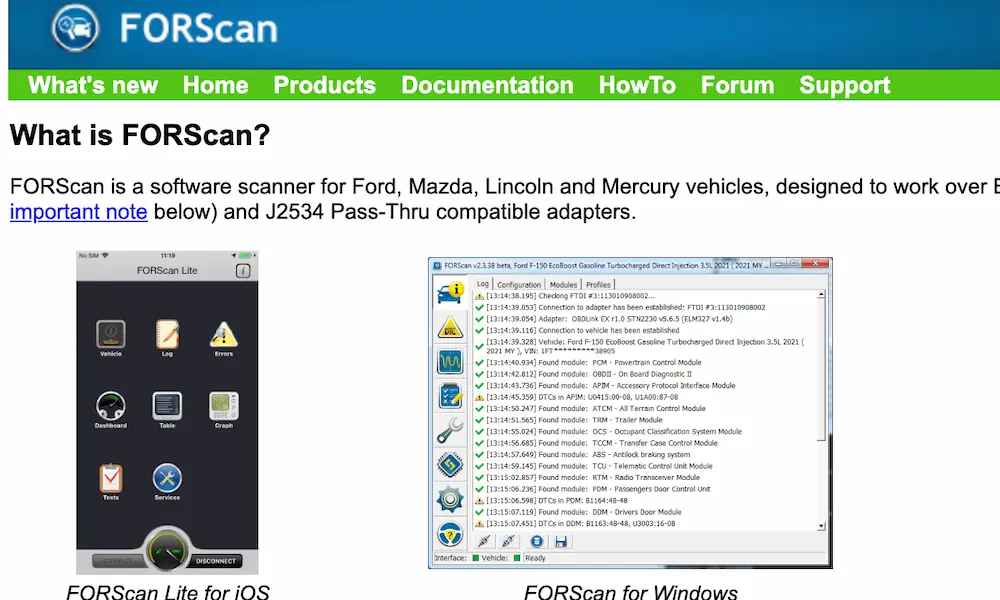
Plug a bidirectional OBD2 scanner into the port under your steering column. Navigate to the transmission system data menu. The scanner retrieves the module’s internal service part number, which maps directly to the transmission model.
For example:
- GM module part number 24236996 = 4L60E
- A module reporting four active solenoids = 4L60E
- A module reporting six active solenoids = 6L80
Advanced scanners also reveal shift strategy codes and adaptive learning history. If you replace a transmission without resetting the TCM’s adaptive parameters, the new unit may shift erratically or drop into limp mode immediately.
You can also check for active diagnostic trouble codes — a P0793 points to an intermediate shaft speed sensor failure, while a U0101 signals total loss of communication with the TCM itself.
Method 7: Cross-Check With Your Owner’s Manual or Window Sticker
Your original window sticker (Monroney label) and owner’s manual both list transmission specifications as sold. If you still have either document, flip to the powertrain or specifications section. The manual often includes fluid type, capacity, and service intervals alongside the transmission model name.
For older vehicles, the original window sticker data is sometimes recoverable through dealer records or third-party databases.
Quick Summary: How Do I Know What Transmission I Have?
Here’s the fast version:
- Check your pedals — two or three tells you manual vs. automatic
- Watch your tach during acceleration — smooth and steady = CVT
- Decode your VIN at the NHTSA vPIC database
- Read your door jamb sticker for brand-specific transmission codes
- Find GM RPO codes on the SPID label inside the glovebox or console
- Inspect the transmission pan — count bolts and note the shape
- Plug in an OBD2 scanner and pull the TCM’s service part number
Pick the method that matches your situation, and you’ll have a definitive answer — no guessing, no wrong parts, no costly mistakes.