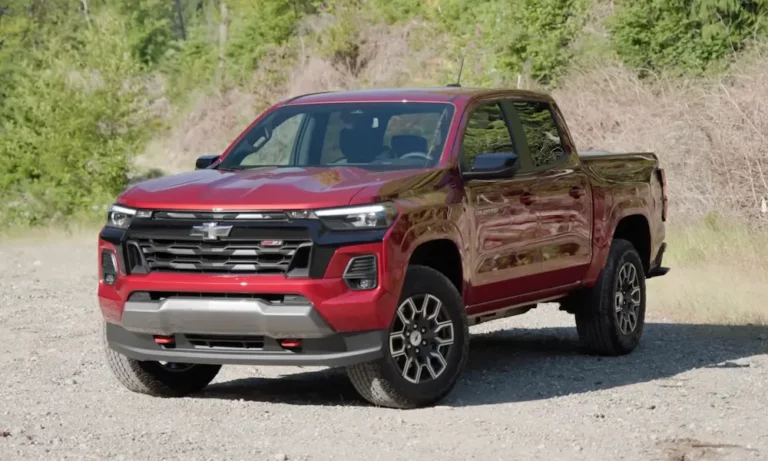
Wondering if your Chevy Colorado can handle that boat, camper, or trailer? The answer depends on your model year, trim, and how you’ve got it configured. Get those details wrong, and you’re either leaving capability on the table—or worse, putting yourself in a dangerous situation. Read this to the end, and you’ll know exactly what your Colorado can pull.
What’s the Max Chevy Colorado Towing Capacity?
The short answer: 7,700 pounds.
That’s the class-leading maximum towing capacity for the Chevy Colorado when it’s properly equipped. But here’s the catch—not every Colorado hits that number. Your trim level, suspension setup, and whether you’ve got the right trailering package installed all determine where your truck actually lands.
Let’s break it down from the ground up.
Chevy Colorado Towing Capacity by Year
The Colorado hasn’t always been a 7,700-pound hauler. It got there through decades of engineering upgrades—better frames, stronger engines, and smarter transmissions.
Here’s how the numbers evolved:
| Model Year | Max Towing Capacity | Peak Engine |
|---|---|---|
| 2004–2006 | 4,000 lbs | 3.5L inline-5 |
| 2007 | 4,000 lbs | 3.7L inline-5 |
| 2008–2012 | 6,000 lbs | 5.3L V8 |
| 2013–2014 | N/A | Generation hiatus |
| 2015 | 7,000 lbs | 3.6L V6 |
| 2016–2022 | 7,700 lbs | 2.8L Duramax diesel |
| 2023–2026 | 7,700 lbs | 2.7L TurboMax |
The leap from 6,000 pounds to 7,700 pounds happened in 2016 when Chevy introduced the 2.8-liter Duramax turbo-diesel. Diesel torque made that jump possible. Then, for the 2023 model year redesign, Chevy pulled off something impressive—they matched the diesel’s 7,700-pound rating using an all-new turbocharged gas engine.
The 2.7L TurboMax Engine: Why It Changed Everything
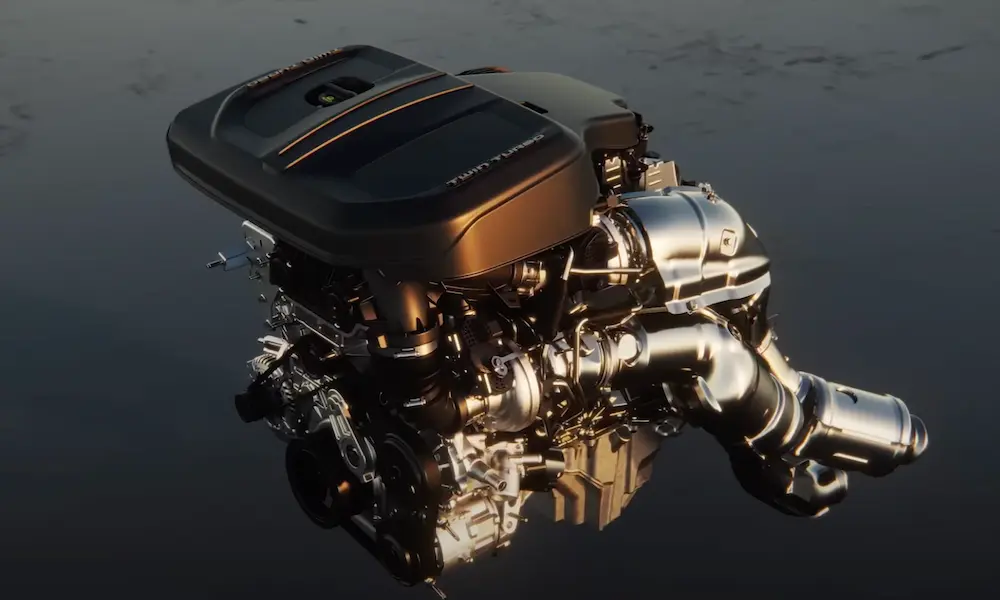
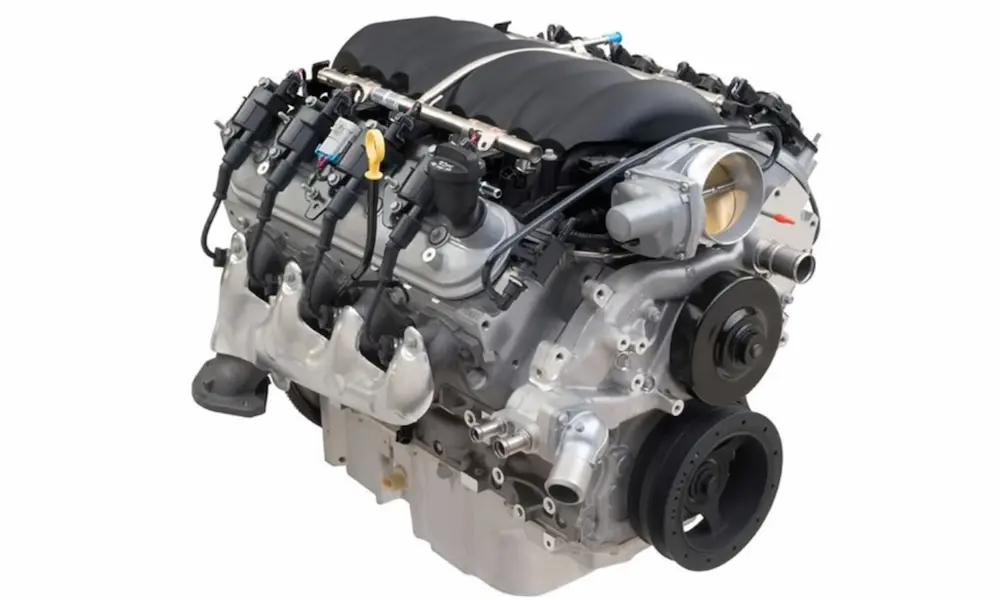
When the third-generation Colorado launched in 2023, Chevy dropped the diesel, the V6, and the base four-cylinder entirely. Every Colorado now runs a single engine: the 2.7-liter TurboMax.
This engine isn’t some stripped-down economy unit. It was originally engineered for the full-size Silverado 1500, which means its internals are overbuilt for the lighter Colorado platform.
Key specs:
- 310 horsepower at 5,600 rpm
- 430 lb-ft of torque at just 3,000 rpm
- Paired with a Hydra-Matic 8-speed automatic transmission
That 430 lb-ft figure is the real story. The TurboMax uses a dual-volute turbocharger that separates exhaust pulses from the cylinders to feed the turbine more efficiently. The result is virtually zero turbo lag—you get full torque almost immediately, whether you’re pulling away from a stoplight with a loaded trailer or climbing a mountain pass.
For the 2026 model year, Chevy standardized the TurboMax across the entire lineup, so every Colorado now comes with the high-output engine as standard.
Chevy Colorado Towing Capacity by Trim Level
Here’s where most buyers get tripped up. The 7,700-pound figure isn’t automatic—it varies by trim, and the difference can be significant.
| Trim Level | Suspension Focus | Max Towing Capacity |
|---|---|---|
| Work Truck (WT) | Street / Commercial | 7,700 lbs |
| Custom | Street / Utility | 7,700 lbs |
| LT | Street / Comfort | 7,700 lbs |
| Trail Boss | Light Off-Road | 7,700 lbs |
| Z71 | Premium Off-Road | 7,700 lbs |
| ZR2 | Extreme Off-Road | 6,000 lbs |
| ZR2 Bison | Overland / Armored | 5,500 lbs |
All figures assume installation of the Advanced Trailering Package.
Why the ZR2 Tows Less
The ZR2 is a purpose-built off-road machine. Its three-inch lift, Multimatic DSSV dampers, and soft suspension calibration are brilliant on rocky trails—but they’re a liability under heavy trailer loads.
Attach 7,700 pounds to a ZR2, and the soft rear springs compress excessively. That squat unloads the front axle, killing steering feel and braking authority. So Chevy caps it at 6,000 pounds for safety.
The ZR2 Bison takes the penalty further. Its heavy boron steel skid plates, steel bumpers, and 35-inch mud tires add significant weight to the truck. That extra mass eats into the payload budget, dropping the ZR2 Bison’s towing limit to just 5,500 pounds.
If maximum towing is your priority, the WT, LT, or Trail Boss trims are your best bets.
The Trail Boss and Z71 Sweet Spot
Here’s something worth knowing: the Trail Boss has a factory two-inch suspension lift and all-terrain tires, yet it still hits the full 7,700-pound max. Chevy’s engineers managed to maintain full towing capability despite the modified geometry. That makes the Trail Boss an excellent option if you want off-road versatility without sacrificing hauling muscle.
Payload Capacity: The Number Most People Ignore
Towing capacity gets all the attention, but payload capacity is just as important—and the two numbers are directly connected.
Payload is the maximum weight your truck can carry in the cab and bed combined. Here’s how it’s changed across model years:
| Model Year | Min Payload | Max Payload |
|---|---|---|
| 2017–2019 | 1,366 lbs | 1,574 lbs |
| 2020 | 1,342 lbs | 1,578 lbs |
| 2021 | 1,367 lbs | 1,550 lbs |
| 2022 | 1,380 lbs | 1,530 lbs |
| 2023 | 1,151 lbs | 1,684 lbs |
| 2024 | 1,423 lbs | 1,836 lbs |
| 2025–2026 | 1,445 lbs | 2,046 lbs |
The Tongue Weight Problem
Tongue weight is the downward force your trailer pushes onto your hitch. It should fall between 10% and 15% of your total trailer weight for safe handling.
If you’re pulling a 7,700-pound trailer, that puts your tongue weight between 770 and 1,155 pounds. And here’s the critical part—that tongue weight counts against your payload capacity.
Say your Colorado has a 1,800-pound payload limit. A 1,000-pound tongue weight leaves you just 800 pounds for passengers, fuel, and bed cargo. Pack too much into the truck while towing near its limit, and you’ll exceed your Gross Combination Weight Rating (GCWR) of 13,250 pounds on standard models.
The 2026 Colorado Trailer Towing Supplement lays out exactly how these numbers interact—worth bookmarking if you tow regularly.
Trailering Packages: You Need the Right One
Without the correct package, your Colorado’s towing capacity defaults to just 3,500 pounds. That’s a massive gap from the 7,700-pound maximum.
Base Trailering Package
This gets you the essentials:
- Frame-mounted 2-inch receiver hitch
- 7-wire harness and 7-pin sealed connector
- Trailer lighting integration
Advanced Trailering Package
This is what unlocks the full 7,700-pound rating. It adds three critical components:
Integrated Trailer Brake Controller — Signals the trailer’s electric brakes proportionally with your foot brake for smooth, controlled stops. Required by law for trailers above certain weight thresholds in most states.
G80 Automatic Locking Rear Differential — When one rear wheel loses traction, the axle locks and forces both wheels to spin at the same speed. This is particularly valuable when backing a heavy boat trailer down a slick, algae-covered ramp.
High-Output Alternator (220 amp) — Powers your trailer’s lighting, electric brakes, and any auxiliary charging systems inside a camper without taxing the truck’s electrical system.
Towing Tech That Makes a Real Difference
The 2023-and-newer Colorado packs a genuinely impressive suite of digital tools that make solo towing far less stressful.
Hitch Guidance overlays predictive steering lines on the infotainment screen when you reverse, showing exactly where the truck will go before you turn the wheel.
Hitch View uses a downward-facing camera to give you a close-up of the hitch ball so you can line up solo—no spotter needed.
In-Vehicle Trailering App (on the 11.3-inch touchscreen) lets you build individual profiles for different trailers, run automated light checks, monitor trailer tire pressure in real time, and walk through a pre-departure checklist.
Trailer Side Blind Zone Alert extends the truck’s radar monitoring rearward based on the trailer’s length, warning you about vehicles in your trailer’s blind spot before a lane change.
These tools don’t replace good driving habits, but they genuinely reduce the workload on long hauls.
Tow/Haul Mode: Use It Every Time
Whenever you hook up a trailer, activate Tow/Haul mode. Here’s what it actually does:
- Holds gears longer before upshifting, keeping the engine in its power band
- Firms up transmission shifts to reduce heat buildup in the clutch packs
- Triggers aggressive downshifts when braking on descents, using engine compression to slow the truck instead of burning through your brake pads
That last point matters most on mountain roads. Engine braking prevents brake fade on steep descents—a critical safety feature when you’re at maximum capacity.
The Colorado also offers Terrain mode for low-speed hill climbing. It auto-brakes when you lift off the accelerator, preventing rollback when you’re ascending or descending steep inclines with a trailer attached.
Trailer Sway: What to Do When Things Go Wrong
Trailer sway is the most dangerous situation you’ll face while towing. It’s triggered by crosswinds, passing semi-trucks, or improper weight distribution.
The Colorado’s StabiliTrak system monitors for trailer sway and autonomously applies asymmetrical braking while cutting engine power to straighten the combo out.
But if sway starts before the system catches it:
- Hold the steering wheel steady — don’t try to steer out of it
- Lift off the accelerator completely
- Manually activate your trailer brakes via the in-cab controller
Don’t hit the truck’s foot brake in the middle of a sway event. That can trigger a jackknife. Let the trailer brakes do the work.
How the Colorado Stacks Up Against the Competition
The 7,700-pound rating isn’t just impressive for a midsize truck—it’s class-leading by a meaningful margin.
| Truck | Max Towing | Peak Torque |
|---|---|---|
| Chevy Colorado | 7,700 lbs | 430 lb-ft |
| Ford Ranger | 7,500 lbs | 310 lb-ft |
| Nissan Frontier | 7,150 lbs | 281 lb-ft |
| Toyota Tacoma | 6,500 lbs | 317 lb-ft |
| Honda Ridgeline | 5,000 lbs | 262 lb-ft |
The Colorado’s torque advantage over the Ford Ranger is 120 lb-ft. That gap shows up when you’re merging onto a highway with a full load, or grinding up a grade with a travel trailer in tow.
The Honda Ridgeline’s 5,000-pound cap reflects its unibody construction, which simply can’t match the structural strength of the Colorado’s body-on-frame architecture. Great commuter truck, limited hauler.
What Can a 7,700-Pound Colorado Actually Pull?
To put that number in practical terms, here’s what comfortably fits within the Colorado’s towing range:
- A 24-foot pontoon boat with trailer
- A large fiberglass wakeboard boat
- A dual-axle travel trailer for cross-country trips
- A flatbed trailer with a compact tractor
- A two-horse slant trailer
- An enclosed trailer carrying multiple ATVs
For anything larger—fifth-wheel campers, three-horse trailers, heavy equipment—you’ll want to look at a full-size truck like the Silverado 1500, which tops out at 13,300 pounds with the right setup.
The Bottom Line on Colorado Towing
The Chevy Colorado towing capacity tops out at 7,700 pounds—but only when you’ve got the right trim, the Advanced Trailering Package, and a properly balanced load. Skip any one of those, and your actual capacity drops fast.
The 2023-and-newer models running the TurboMax engine are the strongest Colorado has ever been. Pair a well-configured LT or Trail Boss with the correct trailering equipment, and you’ve got a genuinely capable midsize hauler that beats every rival in its class by a meaningful margin—without the size and fuel costs of a full-size truck.