Got a failed emissions test because your OBD2 monitors aren’t ready? Or maybe you just replaced your battery and now your scan tool shows a bunch of “incomplete” statuses? Either way, this post breaks down exactly why OBD2 monitors not ready happens, what the monitors actually do, and the step-by-step process to get them ready before your next inspection.
What “OBD2 Monitors Not Ready” Actually Means
Your car’s computer — called the Powertrain Control Module (PCM) — runs a series of self-tests on your emission systems. These tests are called readiness monitors. When they show “Not Ready” or “Incomplete,” it means the PCM hasn’t finished running those tests yet.
Think of it like a checklist the car completes while you drive. Until it ticks every box, it won’t confirm your emissions equipment is working correctly.
This incomplete status most commonly appears after:
- A battery replacement or disconnection
- A jump-start that drained the voltage
- A mechanic clearing fault codes after a repair
All three events wipe the PCM’s memory. Every monitor resets to “Not Ready” — and the car has to re-run its entire test suite from scratch.
The Two Types of Monitors You Need to Know
Your vehicle runs up to 11 or 12 different system tests depending on the make, model, and fuel type. They split into two categories.
Continuous Monitors
These run constantly whenever the engine is on. They check three things:
| Monitor | What It Checks |
|---|---|
| Misfire Detection | Incomplete combustion in any cylinder |
| Fuel System | Air-fuel ratio balance (fuel trim) |
| Comprehensive Component (CCM) | All emission-related sensors and actuators |
The good news? These usually reset quickly. Just driving normally for a short trip often clears them.
Non-Continuous Monitors
These only run once per trip — and only when very specific conditions are met. They’re the ones that cause the most headaches.
| Monitor | What It Tests |
|---|---|
| Catalyst | Catalytic converter efficiency |
| EVAP System | Fuel vapor leaks from tank and lines |
| O2 Sensor | Oxygen sensor response speed and range |
| EGR System | Exhaust gas recirculation valve operation |
| Secondary Air | Air pump function for cold-start emissions |
Non-continuous monitors require a specific mix of city and highway driving to trigger. They won’t run during a quick trip to the grocery store.
Why the PCM Resets Everything After a Battery Disconnect
Your PCM stores monitor results in Keep Alive Memory (KAM). This memory needs a constant trickle of power to hold its data. When the battery dies or gets disconnected, that power vanishes — and so does every monitor result.
This is why so many people hit a wall right after a DIY repair. You fix the problem, disconnect the battery to “reset the computer,” and then show up at the emissions station with every monitor reading “Not Ready.”
There’s another layer to this. When a mechanic clears a Check Engine Light using a scan tool, the “Clear DTCs” command also resets all readiness monitors. This is intentional — it prevents someone from clearing a catalyst code in the parking lot of an inspection station and sneaking through before the code comes back.
So any repair that involves clearing codes needs to be followed by enough driving to let the monitors run again.
How Many “Not Ready” Monitors Can You Have and Still Pass?
Most states build in some tolerance here. The allowance depends on your vehicle’s model year:
| Vehicle Year | Max “Not Ready” Monitors Allowed |
|---|---|
| 1996 – 2000 | 2 monitors |
| 2001 – Present | 1 monitor |
California is stricter. For 2000 and newer gasoline vehicles, the only monitor permitted to be incomplete is the EVAP system. If your catalyst monitor is incomplete, you fail immediately — no exceptions.
New Jersey follows similar rules, with one critical note: continuous monitors (Misfire, Fuel System, CCM) must always be ready for any vehicle to pass, regardless of model year.
The Drive Cycle: Your Path From “Not Ready” to “Ready”
A drive cycle is a specific sequence of driving conditions that triggers the non-continuous monitors. Here’s how a generic OBD2 drive cycle works:
Step 1: Cold Soak (8+ Hours)
Let the car sit overnight with the engine off and keys out. The engine coolant temperature must drop below 122°F and come within 11°F of the outside air temperature. No shortcuts here — this is the foundation of the whole process.
Step 2: Cold Start and Idle (2–3 Minutes)
Start the engine and let it idle in Park or Neutral. Turn on the AC and rear defroster. The extra electrical load helps test the O2 sensor heaters and CCM. Don’t skip this step.
Step 3: Moderate Acceleration — City Driving Phase
Turn off the accessories. Accelerate gently (about half throttle) to 25–35 mph. Make several smooth stops, idling for 30 seconds between each one. This phase targets the Misfire and Fuel System monitors.
Step 4: Highway Cruise (5–10 Miles at 55–60 mph)
Merge onto a highway. Use cruise control if possible to maintain a steady throttle. Hold 55–60 mph for at least 5 to 10 miles. The PCM compares upstream and downstream O2 sensor signals here to evaluate catalyst efficiency.
Step 5: The Coast-Down (No Brake, No Clutch)
Find a long off-ramp. Lift your foot off the accelerator and let the car slow from 55 mph down to 20 mph without touching the brake. This creates high intake vacuum that the PCM uses to test the EGR valve and EVAP purge valve.
Step 6: Final Idle (2 Minutes)
Come to a stop and idle for 2 minutes before turning the car off. Then check your monitors with a scan tool.
If some monitors still show “Not Ready,” repeat the entire cycle. You may need to run it 2–5 times for stubborn monitors.
The EVAP Monitor: The Most Difficult One to Set
The EVAP monitor tests for fuel vapor leaks. It seals the fuel system and checks if it can hold pressure. Modern systems detect leaks as small as 0.020 inches — about the width of a pin.
Fuel level matters more than most people realize. For the EVAP test to run:
- Tank must be between 15% and 85% full
- The sweet spot is half to three-quarters full
- Too empty = too much vapor volume, unstable vacuum
- Too full = no headspace, fuel floods the charcoal canister
Also avoid aggressive cornering or hills during the drive cycle. Fuel slosh creates pressure spikes that confuse the PCM and abort the test.
The most common EVAP culprit? A loose gas cap. Check it first before anything else. A purge valve stuck slightly open (code P0496) is another frequent offender — it lets vapors sneak into the engine at the wrong time and kills the EVAP self-test.
Manufacturer-Specific Quirks You Should Know
Generic drive cycles don’t always work for every car. Here’s what’s different for the big brands:
Ford: Look for the P1000 code — it means the drive cycle isn’t complete. Ford’s EVAP monitor won’t run if temps are outside 40°F–100°F. But if the PCM detects those extreme temps across two separate trips, it bypasses the EVAP requirement and clears the P1000 automatically.
GM: GM vehicles need significant electrical and thermal load to set O2 sensor heaters. The catalyst monitor runs during a second 5-minute highway cruise at 55 mph — not the first one.
Toyota/Lexus: Toyota systems are sensitive to abrupt throttle inputs. For hybrid models like the Prius, you’ll need to activate a specific “Inspection Mode” to keep the gas engine running continuously, since the engine shuts off in normal hybrid operation and aborts the monitors.
Honda/Acura: Honda gives you a visual shortcut. Turn the ignition on without starting the engine and watch the Check Engine Light:
| MIL Behavior (Key On, Engine Off) | Monitor Status |
|---|---|
| Stays on or turns off after 20 seconds | Ready ✅ |
| Blinks 5 times before turning off | Not Ready ❌ |
Honda’s highway phase also runs longer than most — 20 minutes at 50–60 mph, avoiding cruise control during specific portions.
Common Reasons Monitors Refuse to Set
Even after multiple drive cycles, some monitors dig in and won’t budge. Here’s what’s usually behind it:
Pending Codes: A pending code — one that hasn’t triggered the Check Engine Light yet — will stall other monitors. If your O2 sensor has a pending code, the PCM won’t run the Catalyst Monitor because it can’t trust the sensor data. Always check for pending codes first.
Stuck-Open Thermostat: A thermostat that runs slightly cold (P0128) keeps the engine in “warm-up mode” too long. The PCM locks out the Catalyst and EVAP monitors until it sees the engine hit full operating temperature.
“Lazy” O2 Sensor: An oxygen sensor that switches too slowly won’t support the Catalyst Monitor, even if it technically passes its own test. Use Mode $06 data to see the actual test values. If a sensor passed but barely, it’s likely your bottleneck.
Weak Battery or Alternator: Voltage outside the 11–18V range causes the PCM to suspend all non-continuous testing. A shaky electrical system will keep your monitors stuck indefinitely.
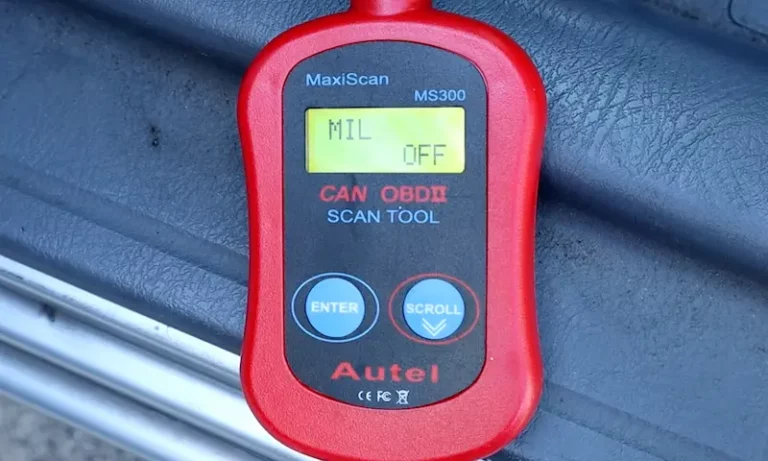
DLC Connection Problems: Sometimes the monitors are ready, but the inspection equipment can’t read them. Check your Data Link Connector (under the dash, driver’s side) for:
- Blown fuse on Pin 16
- Corroded grounds on Pins 4 or 5
- Bent pins from cheap scan tools
- Aftermarket accessories (alarms, remote starters) polluting the CAN bus lines
Quick-Reference: Optimal Conditions for Setting Monitors
| Factor | Target Condition |
|---|---|
| Fuel Level | Half to three-quarters full |
| Ambient Temperature | 40°F – 90°F |
| Cold Soak Time | 8+ hours, keys out |
| Driving Style | Smooth, steady throttle |
| Battery Health | 12.6V static / 14V while charging |
Getting OBD2 monitors not ready back to “Ready” isn’t complicated — it just takes patience and the right conditions. Follow the drive cycle steps, check your fuel level, confirm there are no pending codes, and give the car the time it needs to run its own tests. Most vehicles get there within one or two complete cycles.