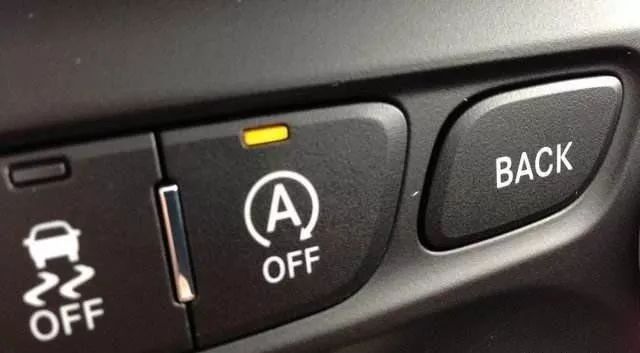
You’re sitting at a red light, and your engine just… stops. No warning, no stall. Then you glance down and see a green letter “A” wrapped in a circular arrow lighting up your dash. Is something broken? Nope. That symbol is one of the most common (and most confusing) icons on modern dashboards. Let’s break down exactly what it means, why your car does this, and what to do if the light changes color on you.
What Does the A With a Circle Around It Mean in Your Car
That icon is your automatic start-stop indicator. It shows up whenever your engine shuts off on its own at a stop, then restarts when you take your foot off the brake. It’s not a warning light in most cases. It’s just your car telling you the fuel-saving system is doing its job.
The tech behind it isn’t new either. Automakers have played with idle-stop ideas since the oil crises of the 1970s. But today’s systems use sensors and microprocessors to make the shutdown and restart feel almost invisible.
The Color Code That Tells You Everything
Car dashboards follow a pretty strict color language. Once you know it, you’ll never panic over a dash light again.
Red means stop now. Something’s seriously wrong. Amber or yellow means “get this checked soon, but you’re okay to drive.” Green, blue, and white just confirm a system is doing what it’s supposed to do.
Here’s how that plays out with the start-stop symbol specifically:
| What You See | Color | What It Actually Means |
|---|---|---|
| A in circular arrow | Green | Engine shut off on purpose to save fuel |
| A in circular arrow | White/Gray | System’s armed, but a condition isn’t met yet |
| A in circular arrow | Amber/Yellow | Something’s wrong; engine won’t auto-stop until fixed |
| A with exclamation point | Amber, flashing | Active fault, common on European and Canadian cars |
| A with a slash through it | White/Amber | You turned the system off yourself |
If the symbol turns amber, don’t panic. Your car will still drive completely fine. It’ll just idle at every red light like older cars used to, until you get it scanned. You might also see a text message pop up saying something like “Auto Stop Not Available” or “Battery Charging.” That’s your car telling you the battery doesn’t have enough juice in reserve for a guaranteed restart, so it’s playing it safe.
Why Your Engine Shuts Off (And Why Sometimes It Won’t)
Your car’s computer checks a long list of boxes before it lets the engine shut down. Miss even one, and it keeps running.
For automatic transmissions, the trigger is simple: speed hits zero, and you keep your foot on the brake. Manual transmissions work a bit differently. You need to be stopped, in neutral, with your foot off the clutch. Push the clutch back down, and the engine fires right back up.
But even when you’re stopped, several things can stop the system from shutting down the engine:
- Cold engine. The oil hasn’t warmed up yet, so the system won’t risk extra wear.
- Heavy electrical load. Headlights, wipers, heated seats, and the stereo all pulling power at once? The engine stays on to keep the battery happy.
- Cranking the AC. On a scorching day with the AC maxed out, the engine keeps running to power the compressor.
- Low brake vacuum. Your brakes need vacuum pressure to work properly. If it’s low, the engine restarts to build it back up.
- Turning the wheel. If you’re mid-parking-maneuver, the system assumes you need steady power steering and won’t shut off.
- Steep hills. An inclinometer keeps the engine on if you’re parked on a slope, so you don’t roll backward during the restart.
None of this is random. It’s your car’s computer weighing dozens of sensor inputs every second you’re stopped.
How Your Engine Survives Hundreds of Thousands of Restarts
Here’s something wild: a normal car might start its engine around 30,000 times over its whole life. A start-stop car in city traffic can rack up 300,000 to 500,000 starts. That’s a massive jump, and engineers had to seriously beef up the hardware to handle it.
Special Bearings Keep Metal From Grinding
Normally, your crankshaft floats on a thin film of oil pumped in by the running engine. Shut the engine off, and that oil film drains away fast. When you restart, there’s a split second of actual metal-on-metal contact before oil pressure builds back up.
To fight this, manufacturers use polymer-coated bearings, like Federal-Mogul’s IROX technology. These coatings act as a dry lubricant during that gap, cutting friction by up to 50% and stretching bearing life to five times longer than standard bearings.
Starter Motors Got a Major Upgrade
Regular starter motors use one solenoid to shove the gear into the flywheel and spin the motor at the same time. That’s fine if the engine’s fully stopped. But what if you take your foot off the brake before the engine finishes spinning down? A standard starter would grind its gears trying to engage a still-moving flywheel.
That’s why start-stop cars use tandem solenoid starters. One solenoid spins the starter motor up to match the flywheel’s speed first. Then a second solenoid engages the gears smoothly, no grinding involved. This trick can shave over a second off restart time.
Pumps Keep Things Running While the Engine’s Off
Modern automatic transmissions rely on hydraulic pressure to stay in gear. Kill the engine, and that pressure drops fast. So carmakers add small electric pumps that keep pressure up while the engine’s off, so the transmission doesn’t have to “catch up” when you accelerate.
Turbocharged engines get a similar fix. Electric water pumps keep coolant circulating through the hot turbo housing even with the engine off, preventing oil from baking inside it.
Your Battery Is Doing Way More Work Than You Think
Every time your engine shuts off, your alternator stops too. Your battery suddenly has to power everything by itself: the AC blower, infotainment screen, seat heaters, and safety sensors. It also needs enough reserve to instantly crank the engine back up.
Regular lead-acid batteries hate this. They’re built for one big burst at startup, then a slow recharge. Ask them to cycle constantly under partial charge, and they’ll build up lead sulfate crystals and die within months.
That’s why start-stop cars use Absorbent Glass Mat (AGM) batteries or Enhanced Flooded Batteries (EFB) instead.
| Battery Type | How It’s Built | Best For | Price Range |
|---|---|---|---|
| Conventional Flooded | Liquid acid, standard plates | Older cars, no start-stop | Low |
| Enhanced Flooded (EFB) | Reinforced plates, some liquid acid | Entry-level start-stop cars | Moderate |
| Absorbent Glass Mat (AGM) | Acid locked in fiberglass mats | Premium cars, heavy start-stop use | $120–$300 |
AGM batteries handle deep, repeated discharges way better and charge faster during short trips. Don’t try to save money by swapping in a regular battery, either. Your car’s electronics are calibrated for AGM behavior, and a mismatch will confuse the charging system and kill the new battery fast.
Dual-Battery Setups Bring Their Own Headaches
Some brands, notably Jeep and Chrysler, use two batteries: a big one for cranking and a small one for accessories during stops. It’s a smart idea on paper, but the small auxiliary batteries tend to fail early. When they do, they act like a drain on the main battery too, since they’re linked in parallel.
The telltale sign? A dashboard message reading “Start/Stop Not Ready, Battery Charging.” If you ignore it, the failing aux battery can eventually kill your main battery too, leaving you with a car that won’t start at all.
The Next Step: 48-Volt Mild Hybrids
Standard 12-volt start-stop systems are considered “micro-hybrids” — the most basic form of electrification. They save fuel at stops but can’t actually help move the car.
48-volt mild hybrids take things further. They swap the regular starter and alternator for a powerful Integrated Starter Generator connected to a small lithium-ion battery. This setup can:
- Capture braking energy and store it instead of wasting it as heat
- Push extra electric torque into the drivetrain during acceleration, called “torque fill”
- Let the engine shut off while cruising at highway speed, not just when fully stopped
- Power accessories like the AC compressor and steering pump electrically, so the engine doesn’t have to work as hard
Basically, 48-volt systems fix the annoying lag people hate about basic start-stop, while squeezing out even more fuel savings.
Does Start-Stop Actually Save You Money
This is where it gets interesting. Real-world testing shows the fuel savings depend heavily on where you drive.
On a typical city driving cycle, start-stop saves about 7% on fuel. But in brutal, stop-and-go traffic like New York City, savings jump to 26%.
But what about the cost of replacing all that fancy hardware? Argonne National Laboratory ran the numbers over a 10-year vehicle life:
| Driving Pattern | Stop Frequency | Idle Length | 10-Year Financial Impact |
|---|---|---|---|
| Heavy urban traffic | Low-moderate | Long (2+ min) | +$400 net savings |
| Frequent short stops | High (12-20/day) | Short (under 1 min) | -$600 net cost |
| Highway commuting | Very low | Minimal | Basically no impact |
The bottom line: whether you save or lose money, it amounts to just cents per day. The technology’s real impact is on nationwide emissions, not your personal wallet.
Why This Tech Exists in the First Place
Start-stop didn’t spread because drivers were demanding it. It spread because of a regulatory quirk. In the early 2010s, the EPA offered automakers “off-cycle credits” for start-stop tech, letting them boost their official fuel economy numbers without redesigning entire engines. It was way cheaper for automakers than building new powertrains, so adoption jumped from under 1% of new cars in 2012 to nearly 70% today.
That changed recently. The EPA eliminated those credits, with Administrator Lee Zeldin calling the tech a “climate participation trophy” that annoys drivers and wears out batteries without real pollution benefits. Without the financial incentive, automakers have less reason to force the feature on American buyers. Expect start-stop to stick around in Europe (where fuel costs and emissions rules are stricter) but slowly disappear from U.S. non-hybrid models.
When Start-Stop Goes Wrong
Here’s the scary part. The whole system depends on the engine restarting instantly, every single time. When it doesn’t, you can end up stalled in the middle of an intersection.
That exact scenario triggered a major federal investigation. The National Highway Traffic Safety Administration opened an inquiry into roughly 2.2 million Honda and Acura vehicles, covering popular models like the Pilot, Odyssey, Passport, Ridgeline, and MDX. Drivers reported the engine shutting off at a stop, then completely failing to restart when they released the brake, leaving them stranded in traffic.
Honda tried fixing it with software updates and, in some cases, replacing the starter and relays entirely. But complaints kept coming, pushing NHTSA to step in directly. If your start-stop system ever stalls unexpectedly instead of restarting smoothly, that’s worth getting checked out sooner rather than later.
Final Thoughts
That green A with a circle around it isn’t something to worry about. It’s just your car saving fuel at a red light. Amber means something needs attention, but you can still drive safely. Behind that simple icon sits a genuinely impressive pile of engineering: reinforced bearings, smarter starters, tougher batteries, and constant sensor monitoring, all working together so your engine can shut off and restart hundreds of thousands of times without falling apart.
Whether this tech sticks around in your next car is honestly up in the air. Regulations are shifting, automakers are rethinking their approach, and 48-volt mild hybrids are already picking up where basic start-stop leaves off. For now, though, if you see that A light up, just know your car’s doing exactly what it’s supposed to.