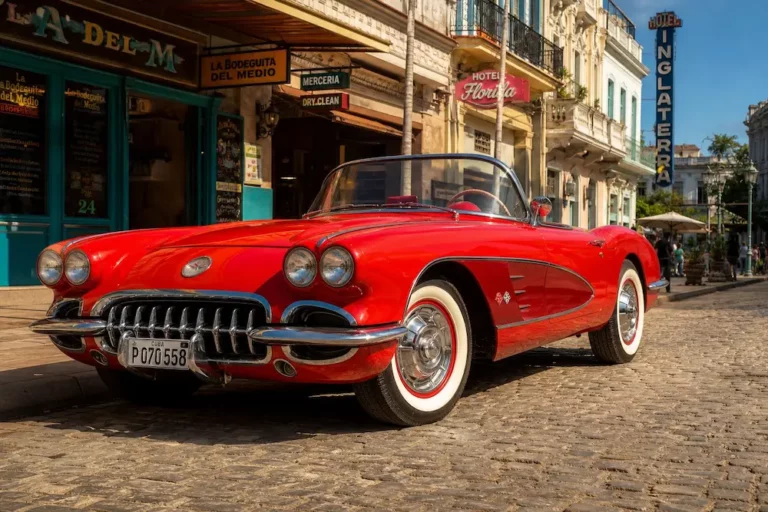
So you’ve got an older car in the garage, and you’re wondering if it qualifies as a classic. Maybe you want cheaper insurance, special license plates, or just bragging rights. The answer isn’t as simple as picking a number. How old a car has to be to be a classic depends entirely on who’s doing the classifying — and the rules are wildly different depending on the source.
There’s No Single Answer — Here’s Why
No federal law declares a car a classic at a specific age. Instead, you’re dealing with a patchwork of state DMV rules, federal import laws, insurance company policies, and private car clubs — each with their own age cutoffs.
Here’s the general breakdown before we dig deeper:
- Insurance companies: 20–25 years old
- Most state DMVs: 25 years old (the most common standard)
- Federal import law: Exactly 25 years from the month of manufacture
- Car clubs: Anywhere from pre-1948 (CCCA) to a rolling 25-year standard (AACA)
The short version? Most sources point to 20–25 years as the baseline — but the details matter a lot.
Classic vs. Antique vs. Vintage: These Words Don’t Mean the Same Thing
People throw these three terms around like they’re interchangeable. They’re not. Each term points to a different era and a different set of rules.
Vintage refers specifically to cars built between 1919 and 1930. That’s the technical definition used by serious collectors and some specialty insurers. Outside of those circles, people use “vintage” loosely to mean anything old — which drives historians crazy.
Antique generally means 45 years or older in collector circles. But many state DMVs and the Antique Automobile Club of America (AACA) use a rolling 25-year rule. So in practical terms, anything 25+ is often called an antique for registration purposes.
Classic is the most flexible term. It typically covers cars between 20 and 40 years old — vehicles that have passed through the depreciation valley and started appreciating again.
What About “Modern Classics”?
A newer category called the modern classic (sometimes called a youngtimer) covers cars roughly 15–25 years old with strong enthusiast demand. Think early Mazda Miatas, Toyota Supras, Acura NSXs, and BMW M5s from the ’90s and early 2000s. States rarely recognize these legally, but insurers increasingly do — provided you’re not driving it to work every day.
Street Rods and Resto-Mods
Not every old car is stock. If yours is modified, the classification changes:
- Street Rod: A heavily modified vehicle originally built before 1949 (or built to replicate one), with a modern engine and suspension
- Resto-Mod: A classic car — often a ’60s or ’70s muscle car — updated with modern performance and safety gear while keeping the original look
These categories need their own registration handling because they blend old aesthetics with new mechanics.
The Federal 25-Year Rule: Classic Car Import Law
If you’re importing a foreign car, the federal government has a very specific answer to the classic car age question: 25 years.
Under the Imported Vehicle Safety Compliance Act of 1988, the NHTSA exempts vehicles 25 years or older from Federal Motor Vehicle Safety Standards. This is the rule that makes Japanese Domestic Market cars like the Nissan Skyline GT-R legally importable.
The 25-Year Clock Is Strict
The clock doesn’t start from the model year or first registration date. It runs from the exact month and year of manufacture. A car built in June 2000 can’t legally enter the U.S. until June 1, 2025. You’ll need factory compliance plates, original sales documents, or statements from recognized historical societies to prove the date.
On entry, importers declare using Box 1 on the DOT HS-7 form.
The EPA Has a Slightly Different Rule
The EPA exempts vehicles over 21 years old from emissions testing — but only if the engine is still the original factory unit. Swap the engine, and you lose the exemption immediately. Since the NHTSA requires 25 years anyway, most importers wait for both thresholds to clear at once.
Tariffs and the Financial Upside
Here’s a bonus: vehicles qualifying under the 25-year exemption fall under a specific Harmonized Tariff Schedule code (9903.94.04), which excludes them from the 25% Section 232 automobile tariff. You only pay the standard 2.5% import duty — a massive saving that’s fueled a booming import market.
| Federal Agency | Exemption Type | Age Required | Form to File |
|---|---|---|---|
| NHTSA | Federal Safety Standards (FMVSS) | 25 years (by manufacture month) | DOT HS-7 (Box 1) |
| EPA | Emissions Testing | 21 years (original engine required) | EPA 3520-1 (Code E) |
| CBP | Section 232 Tariff Exemption | 25 years | CBP 7501 (HTS 9903.94.04) |
State DMV Rules: Where It Gets Complicated
Your state DMV is probably the most important authority in your daily life as a classic car owner. States use classic and antique designations to determine registration fees, tax brackets, safety inspection requirements, and emissions test exemptions. And they don’t agree with each other.
Texas: Two Plates, Two Different Lifestyles
Texas gives you a choice. Both registration types require the car to be at least 25 years old, but the rules after that split dramatically.
- Antique plate: $40–$50 for 5 years. No daily driving — exhibitions, parades, and club events only. No safety or emissions inspections required.
- Classic plate: Standard annual fees. Drive it whenever you want, including to work. Must pass annual safety inspections.
Texas also offers Street Rod and Custom Vehicle registrations for modified builds.
California: Historic Plates Don’t Mean Smog-Free
California qualifies vehicles for Historical Vehicle License Plates at 25 model years old — but getting the plate doesn’t automatically exempt you from emissions testing. California still requires smog checks for any vehicle built in 1976 or newer. So a beautifully restored 1999 Honda S2000 gets the historic plate and the smog test. That disconnect has frustrated California collectors for years.
Florida: The Bar Is 30 Years
Florida raised its minimum age requirement. You now need a car that’s 30 years or older to qualify for an antique plate. Florida also requires that the engine itself be 30 years old or match the original factory specs — a rule designed to prevent owners from dropping newer powertrains into old bodies to dodge road taxes. Qualifying vehicles get a permanent plate that never needs renewal.
New York and Pennsylvania: Northeast Precision
New York issues historical plates to vehicles 25 years or older, but it’s picky about the paperwork. Your insurance card must have the word “HISTORICAL” printed on it — handwritten or photocopied cards get rejected. The registration fee is $28.75. No daily driving allowed.
Pennsylvania runs a two-tier system:
- Classic (15 years+): Permanent plate, emissions exempt, but annual safety inspection required
- Antique (25 years+): Permanent plate, zero safety or emissions inspections, no daily driving
Pennsylvania’s antique designation is one of the most hands-off in the country once you qualify.
Colorado: 32 Years and a Mileage Cap
Colorado sets its threshold at 32 years old and enforces a hard limit of 4,500 miles per calendar year for collector-plated vehicles. Registrations run on a five-year cycle. For vehicles 50 years or older, Colorado offers special Horseless Carriage plates.
Illinois and Michigan: Summer Driving Wins
Both states have smart solutions for collectors who just want to cruise during warm months.
- Illinois: Cars 25+ years old can get an Expanded-Use Antique plate for $45/year. Unrestricted driving from March 1 through November 30. Winter months revert to exhibition-only rules.
- Michigan: Cars 26 years or older qualify for historical plates. Any driving between Memorial Day weekend and Labor Day is legally considered an exhibition — meaning full unrestricted summer use.
| State | Plate Type | Min. Age | Key Rules |
|---|---|---|---|
| California | Historical Vehicle | 25 years | Smog check still applies for 1976+ models |
| Texas | Antique / Classic | 25 years | Antique: restricted use. Classic: unrestricted |
| Florida | Antique | 30 years | Permanent plate; original engine required |
| New York | Historical | 25 years | $28.75 fee; special insurance card required |
| Pennsylvania | Antique / Classic | 25 / 15 years | Antique: no inspections. Classic: safety check required |
| Colorado | Collector | 32 years | 4,500 mile/year cap; 5-year registration cycle |
| Michigan | Historical | 26 years | Unrestricted use Memorial Day through Labor Day |
| Illinois | Expanded-Use Antique | 25 years | Unrestricted use March 1 through November 30 |
| Virginia | Antique | 25 years | $50 one-time fee; 250-mile limit from home |
| Georgia | Authentic Historical | 25 years | $25 manufacturing fee; YOM plates up to 1989 |
Year of Manufacture Plates: The Authenticity Detail
Many states — including Texas, New York, Pennsylvania, Virginia, and Georgia — let you run the actual vintage license plates from the year your car was built. The state links that original alphanumeric sequence to your current registration file. The plates must be legible and retain the original color scheme. It’s a small thing that makes a big visual difference on a restoration.
Classic Car Insurance: What Insurers Actually Require
Insurance companies don’t care about your DMV registration. They have their own rules — and they’re actually more flexible in some ways than the government.
The Age Baseline for Coverage
Hagerty generally covers collector cars 25 years or older, though they’ve historically accepted trucks and SUVs at 15–25 years given how fast utility vehicles gain collector value. State Farm’s Classic+ policy will cover vehicles as young as 10 years old — if they’re clearly collector items.
Classic insurers use agreed value policies. That means if your car is totaled, you get the full agreed amount — not the depreciated actual cash value. For appreciating collector cars, this makes an enormous financial difference.
The Rules That Come With Coverage
Age is just the entry ticket. To qualify for classic car insurance, you generally need to:
- Not use it as a daily driver — every licensed household member needs a separate regular vehicle
- Store it in a locked, enclosed structure — a carport won’t cut it
- Stay within mileage limits — typically 1,000 to 5,000 miles annually (Grundy offers unlimited mileage for pleasure use)
- Have a clean driving record — serious violations in the last three years can disqualify you
Two-door sports cars, convertibles, V8-powered vehicles, and limited-production models often qualify as instant classics even under 20 years old, because insurers track auction data and know what’s appreciating.
What Car Clubs Say: The Cultural Gatekeepers
Government and insurance rules are practical. Car clubs are cultural. They’re the ones who decide what gets on a prestigious show field — and they’re not always in agreement.
Classic Car Club of America (CCCA): The Strictest Standard
The CCCA defines a “Full Classic” as a fine or distinctive automobile built between 1915 and 1948 only. That 1948 cutoff marks the end of separate-fender design and the beginning of mass-market envelope bodies post-WWII. A car from that era also had to be expensive when new — limited production, custom coachwork, top-tier luxury. The CCCA maintains an approved list of specific marques. Most ordinary cars from that era don’t qualify.
Antique Automobile Club of America (AACA): Open to Everyone
The AACA takes the opposite approach — a rolling 25-year rule, open to any factory-built road vehicle. That means 1990s and early 2000s cars now qualify for AACA show fields. Traditionalists grumble, but club leadership sees it as essential for keeping the hobby alive with younger members.
National Street Rod Association (NSRA): The Rule Changed in 2010
The NSRA famously required pre-1949 builds for decades. In 2010, they switched to a rolling 30-year rule to bring in modified muscle cars and custom builds from the 1980s and 1990s. It was controversial, but it kept the organization financially healthy and relevant to younger builders.
Antique Truck Club of America (ATCA)
The ATCA requires commercial vehicles to be at least 25 years old for show field entry. Any newer truck or one with non-period modifications needs prior written approval from the show committee.
The Political Side: Who’s Fighting for Your Rights
Because so much classic car law is written by state legislatures, it can change with a single vote. SEMA actively lobbies to protect classic car owners — they successfully blocked a Connecticut bill that would’ve raised the antique eligibility age from 20 to 30 years. They estimate 12 million pre-1990 classic vehicles are currently on U.S. roads.
The biggest current battle is California’s Senate Bill 1392 — known as Leno’s Law. Backed by Jay Leno and State Senator Dave Cortese, the bill proposes a rolling smog-check exemption starting with pre-1981 vehicles and expanding to pre-1986 models by 2032. Proponents note that classic cars represent less than 1% of California’s vehicle fleet, drive very low miles, and that the old testing equipment needed to smog 1980s cars is rapidly disappearing. The bill recently cleared the Transportation Committee — a real sign of momentum.
So How Old Does a Car Have to Be to Be a Classic?
Here’s where it lands:
- For federal import purposes: 25 years, calculated to the exact month of manufacture
- For most state DMV benefits: 25 years is the dominant national standard, though states range from 15 (Pennsylvania Classic) to 32 (Colorado)
- For classic car insurance: 20–25 years for most insurers, sometimes younger for rare or high-performance models
- For prestigious car clubs: As strict as pre-1948 (CCCA) or as open as 25 years rolling (AACA)
Age opens the door. But what keeps it open is condition, originality, rarity, and the human decision to preserve a machine instead of just driving it into the ground.