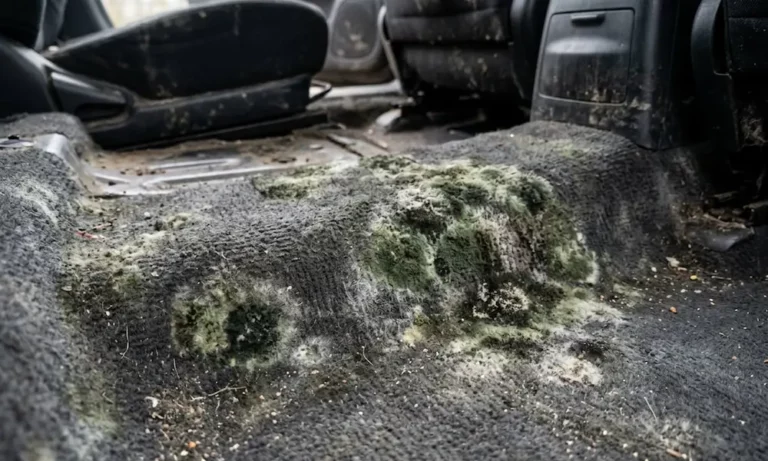
Got a musty smell every time you open your car door? That’s mold, and it’s not going away on its own. This guide walks you through exactly how to clean car carpet mold — from finding the source to killing it for good. Stick around, because skipping even one step means it’s coming right back.
Why Car Carpet Mold Is More Serious Than You Think
Mold isn’t just an eyesore. It’s a living organism actively breaking down your carpet fibers, and it’s pumping microbial volatile organic compounds into the air you breathe every time you drive.
The CDC and EPA both warn that breathing mold spores in a confined space like a car can cause real health problems. We’re talking sneezing, coughing, and itchy eyes at first — then chronic sinus infections and headaches with repeated exposure. People with asthma or compromised immune systems face even bigger risks.
Here’s what makes car mold especially sneaky: the carpet you see might feel dry, but the foam padding underneath acts like a sponge. It can hold gallons of hidden water while the surface feels totally fine. By the time you smell something off, the mold has already set up a full colony.
The 7-to-10-day rule: If your carpet padding stays wet longer than a week, mold embeds so deep into the foam that surface cleaning becomes useless. At that point, the padding needs to come out entirely.
Find the Water Source First — This Step Is Non-Negotiable
Here’s the hard truth: cleaning mold without fixing the leak is pointless. The mold will return within days. Before you grab a single cleaning product, you need to play detective.
Clogged Sunroof Drains
Your sunroof isn’t meant to be perfectly watertight. Water sneaks past the seal, collects in a tray, and drains out through rubber tubes routed down the door pillars. When pollen and tree debris clog those tubes, the tray overflows — and the water runs straight down into your footwells.
Test it yourself: Pour a small amount of water into the corners of the sunroof tray with the glass open. If it pools or drains slowly, you’ve got a blockage.
Fix it carefully: Use a soft, flexible string trimmer line or a specialized drain brush to push the clog out from the top. Never blast compressed air down these tubes — it can blow the rubber tube off its fitting inside the pillar, turning a simple fix into a headliner removal job.
Cowl Vent Drain Blockages
The cowl is that louvered panel at the base of your windshield. Leaves and seed pods collect in there and rot into a dense compost that blocks the weep holes. When it rains heavily, water backs up and floods through the dashboard plumbing onto your front floorboards.
Spot the signs: Front carpets are soaked but rear carpets are dry. Water drips from behind the dashboard near the kick panels.
To fix it, remove the wiper arms and the plastic cowl cover. Clear out all the organic debris manually, then flush the drains with a garden hose until water runs freely underneath the car.
AC Evaporator Drain Clogs
Your air conditioning pulls humidity out of the cabin air, and that moisture needs somewhere to go. A small rubber tube drains it out through the floorpan. When algae and dust clog that tube, condensation overflows onto the passenger-side floor every time you run the AC.
Dead giveaways: A sloshing sound from behind the dashboard during hard braking, wet passenger feet, and a musty smell blowing from the vents.
Fix it by locating the rubber drain tube underneath the car and gently inserting a flexible wire to dislodge the clog.
| Moisture Source | Wet Carpet Location | Key Sign | Fix |
|---|---|---|---|
| Sunroof drain | Footwells, pillar trim | Water pools in tray | Clear with flexible drain brush from top |
| Cowl drain | Front floorboards | Water drips from dash | Remove cowl cover; extract debris |
| AC evaporator drain | Passenger footwell | Sloshing in dash; wet feet | Clear rubber tube from undercarriage |
| Door weather stripping | Door sills, perimeter | Visible tears in rubber | Replace rubber gaskets |
Gear Up: Safety Gear You Actually Need
Disturbing active mold releases millions of spores into the air instantly. In a car cabin, that concentration gets dangerous fast. Don’t skip this.
- Respirator: Wear a NIOSH-approved N95 respirator at a minimum. A cloth mask does nothing against mold spores.
- Eye protection: Use sealed safety goggles with no ventilation holes to keep spores out of your eyes.
- Gloves: Heavy-duty nitrile or rubber gloves protect against both mold and cleaning agents.
- Clothing: Wear long sleeves and long trousers. Strip them off right after and wash in hot water — you don’t want to track spores into your home.
Work outdoors. Park in a shaded, open area with all doors and windows fully open. Cleaning in a closed garage just moves the contamination problem indoors.
Choosing the Right Cleaner — And What to Avoid
Picking the wrong product is one of the most common mistakes people make when learning how to clean car carpet mold.
Never Use Chlorine Bleach
Bleach is the worst thing you can put on car carpet mold. Here’s why it fails every time:
The water in bleach soaks into the carpet fibers and feeds the deep mold roots. The active chlorine stays trapped on the surface, bleaches the mold white so it looks dead — but the roots keep growing. Within days, it’s back. On top of that, bleach permanently strips the dye from your carpet and generates toxic fumes in an enclosed space.
White Vinegar: The Best All-Around Option
Standard distilled white vinegar, at a 5% acetic acid concentration, kills roughly 82% of known mold species. The mild acid actually penetrates porous fabrics and attacks the root structure — something bleach can’t do.
Mix equal parts vinegar and warm water for moderate mold. Use it undiluted for heavy infestations. The critical detail: let it sit for 10 to 60 minutes. Wiping it away immediately makes the whole process worthless. Yes, it smells. The odor disappears once the carpet dries completely.
Hydrogen Peroxide: Great for Stubborn Stains
A standard 3% hydrogen peroxide solution oxidizes and destroys mold cell walls on contact. The fizzing and bubbling you see isn’t just for show — it physically lifts embedded spores and staining out of the carpet fibers. It also breaks down into just water and oxygen, leaving zero toxic residue.
The one caution: test a hidden patch of carpet first. Even 3% peroxide can lighten dark dyes if left too long. Apply to the area under the rear seat, wait 24 hours, and check for fading before going wide with it.
Commercial Encapsulating Products
Products like Concrobium Mold Control work differently. As they dry, they physically crush mold spores and leave behind an invisible shield that prevents new spores from taking root. No harsh chemicals, no fumes, no color damage. They cost more than vinegar but offer residual protection the household options can’t match.

- Eliminates & Helps Prevent Mold: Targets existing mold at the source and leaves behind an invisible barrier that helps prevent future growth.
- EPA-Registered Solution: Registered with the U.S. Environmental Protection Agency for mold control when used as directed.
- Bleach-Free, Odorless, VOC-Free: Contains no bleach, ammonia, or volatile organic compounds, helping maintain healthy indoor air quality.
- Safe on Most Surfaces: Works on drywall, wood, tile, grout, concrete, fabric, and other common building materials.
- Versatile Use: Ideal for bathrooms, kitchens, basements, attics, laundry rooms, vehicles, and outdoor surfaces such as decks and patios.

| Cleaner | How It Works | Dwell Time | Best For | Watch Out For |
|---|---|---|---|---|
| White vinegar (5%) | Acid disrupts cell walls | 10–60 min | Deep penetration into fibers | Pungent smell during use |
| Hydrogen peroxide (3%) | Oxidation destroys cells | 10–15 min | Stain removal + killing mold | May fade sensitive dyes |
| Encapsulating polymers | Physically crushes spores as it dries | Until fully dry | Severe cases + prevention | Higher cost |
| Chlorine bleach | Bleaches surface only | N/A — don’t use it | Nothing | Destroys fabric; toxic fumes |
How to Clean Car Carpet Mold: Step-by-Step
Step 1: Strip and Vacuum Dry
Remove everything from the car — floor mats, child seats, all of it. Toss heavily contaminated rubber mats outside and scrub them separately or replace them.
Now grab a wet/dry shop vacuum with a HEPA filter. This is non-negotiable. A regular household vacuum has no micro-filtration — it’ll suck spores out of the carpet and blast them straight into your face. Vacuum slowly over every inch of affected carpet, hitting the deep crevices around seat tracks, under the pedals, and along the door trim.
Step 2: Apply Your Cleaner and Wait
Spray your chosen antimicrobial solution generously over the contaminated areas. The carpet should look visibly wet — but don’t flood it. Excessive liquid drives water deeper into the foam padding and creates a much bigger drying problem later.
Set a timer. Vinegar needs at least 10 to 60 minutes. Hydrogen peroxide needs 10 to 15. Don’t rush this step — the dwell time is when the actual killing happens.
Step 3: Scrub and Agitate
Once the dwell time is up, use a soft-bristled detailing brush or a clean microfiber towel to scrub in tight circular motions. Keep the HEPA vacuum nozzle close while you scrub to catch dislodged spores immediately. Avoid stiff wire brushes — they permanently fray synthetic carpet fibers.
Step 4: Extract the Liquid
This step determines whether the mold stays gone. You need to pull the dead mold, dirt, and cleaning fluid completely out of the carpet. Leaving it behind gives new spores a food source.
A heated automotive carpet extractor or steam cleaner is the best tool here. Steam near 200°F kills any surviving spores, and the simultaneous suction removes the biological waste. Make one forward pass to inject steam, then take three or four slow backward passes on suction only.
No extractor? Use the wet/dry HEPA vacuum to suck up residual fluid, then lightly mist with clean warm water and vacuum again to rinse the fibers.
Step 5: Dry It Out Completely
This is the most critical step — and the one most people cut short. Introducing moisture during cleaning is fine as long as you remove it entirely afterward. If you close the doors and drive away while the carpet is still damp, the mold returns within 48 hours.
Use all of these together for fastest results:
- Fans: Position shop fans inside the car aimed directly at wet carpets. Keep doors or windows open so humid air can escape.
- Sunlight: Park in direct sun with windows cracked slightly. UV radiation provides a natural mild fungicide, and solar heat vaporizes moisture deep in the padding.
- Dehumidifier: In humid climates, close the windows and run a portable dehumidifier inside the car for 24 to 48 hours.
- The car’s own HVAC: Start the engine, set heat to maximum, turn on the AC compressor simultaneously, and point airflow to the floor vents. Run it for 30 to 60 minutes. Hot, dry air blasting directly at damp carpets works fast.
Once the carpet is bone dry, sprinkle a heavy layer of baking soda over the treated area. Brush it gently into the fibers and leave it overnight to absorb any lingering odors. Vacuum it thoroughly the next day with your HEPA vacuum.
How to Keep Mold From Coming Back
Cleaning car carpet mold once is enough work. Here’s how to make sure you’re not doing it again.
- Spills and wet gear: Extract moisture immediately. Any water left untreated for more than 48 hours puts your carpet at risk.
- Use all-weather rubber mats: Deep-dish rubber mats catch water and prevent it from ever reaching the carpet.
- AC habit: Turn off the AC compressor five minutes before you park but keep the fan running on high. This dries the evaporator core before the car shuts down, starving mold of the moisture it needs to grow in your vents.
- Replace the cabin air filter annually: A clogged filter traps organic debris and moisture, then blows spores directly into your cabin every time the fan runs.
- Crack the windows: When parked in a dry garage, leave windows open about half an inch. This prevents stagnant, humid air from building up inside the cabin.
- Clean the cowl tray twice a year: Clear leaves and debris each spring and fall to prevent the drainage failures that flood your floorboards.