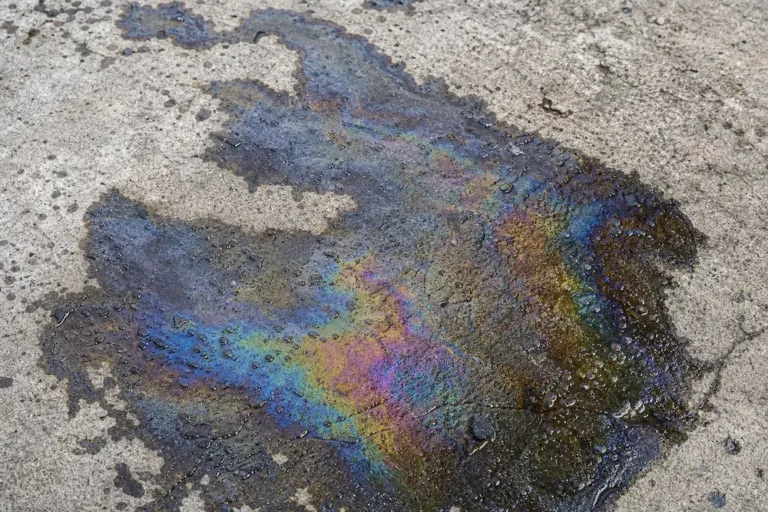
Engine oil on your concrete driveway or garage floor isn’t just ugly — it gets worse the longer you leave it. The good news? You don’t need to be a chemist to fix it. This guide covers every method, from fresh spills to stubborn old stains, so keep reading to find the one that works for your situation.
Why Engine Oil Is So Hard to Remove from Concrete
Concrete looks solid, but it’s actually full of tiny pores and channels. When engine oil hits the surface, capillary action pulls it deep into those microscopic gaps. Once it’s in there, it starts to oxidize and bond with the mineral structure of the concrete.
Here’s what makes it even trickier: engine oil is hydrophobic. It actively repels water. So rinsing it with a hose doesn’t clean anything — it just spreads the problem.
And if you’ve cleaned a stain, watched it disappear, then seen it come back a day later? That’s the “shadow effect.” The surface oil dried up, but the deeper oil wicked back up to the top.
The fix depends entirely on how old the stain is.
Step 1: Fresh Spills — Stop the Oil Before It Sinks
The moment oil hits concrete, your goal is one thing: stop it from going deeper.
Do not pour water on a fresh spill. Water doesn’t mix with oil. It spreads hydrocarbons over a wider area and drives them into new pores.
Use a Dry Absorbent Material First
Grab any of these and pour a generous layer over the spill:
- Non-clumping clay cat litter (no perfumes or additives — they reduce absorption)
- Baking soda (mild alkaline properties, works well on shallow spills)
- Sawdust, cornmeal, or cornstarch (lower capacity, but better than nothing)
- Commercial oil absorbent pads or loose granules (best performance for bigger spills)
Don’t just sprinkle and walk away. Grind the absorbent into the surface using a twisting motion with heavy shoes, or put a piece of cardboard over it and stand on it. This forces the material into the top layer of pores.
Leave it for 30–60 minutes on minor spills, or overnight for larger ones. Once the absorbent looks dark and oily, sweep it up and dispose of it properly (more on that below). Repeat if wet oil is still visible.
Household Methods That Can Actually Work
If you don’t have a commercial degreaser on hand, your kitchen or garage might have something useful. Here’s what works, what doesn’t, and what could make things worse.
Dish Soap or Powdered Laundry Detergent
These contain surfactants — molecules that bind to oil and lift it into water. They work best as a follow-up after dry absorption.
Apply concentrated dish soap or powdered detergent directly to the stain. Mix in a small amount of warm water to form a paste. Scrub hard with a stiff-bristled synthetic brush — never a wire brush, which scratches the surface and causes rust stains later.
Let it sit for 10–30 minutes, then flush with hot water or a pressure washer.
Cola Beverages
Yes, this one actually has some chemistry behind it. Cola contains dilute phosphoric acid and citric acid, which can etch a thin layer off the concrete surface and take the embedded oil with it.
Pour it generously, let it dwell for several hours or overnight, then scrub and rinse.
The catch: it’s destructive to polished, sealed, stamped, or decorative concrete. Use it only on plain, unsealed surfaces.
Penetrating Lubricant Sprays (WD-40, etc.)
These solvents can re-liquefy hardened, oxidized oil — but they’re risky if you skip the next step. You must immediately follow up with heavy dish soap, vigorous scrubbing, and hot water to extract the newly loosened oil. If you don’t, you’ll push it deeper and spread it wider.
Oven Cleaner
Caustic alkaline oven cleaners can break down motor oil effectively. Spray it on, let it sit 10 minutes, scrub hard, rinse. It works.
But the runoff is highly toxic to grass, plants, and groundwater. Keep it away from any landscaping, and don’t let it sit too long or it’ll etch the concrete.
| Household Method | How It Works | Watch Out For |
|---|---|---|
| Dish Soap / Laundry Detergent | Surfactants emulsify surface oil | Needs mechanical scrubbing; won’t reach deep stains |
| Cola Beverages | Acid etches the concrete surface | Damages polished or decorative finishes |
| Penetrating Lubricant Spray | Dissolves hardened oil | Spreads stain if not extracted immediately |
| Oven Cleaner | Caustic alkaline breaks down hydrocarbons | Toxic runoff; risk of surface etching |
Industrial Degreasers for Old, Set-In Stains
Household methods can’t touch oxidized oil that’s been baked into the concrete for months. You need industrial-grade concrete degreasers built for petroleum extraction.
These products are highly alkaline (pH 11–12). Their surfactants have two ends — one grabs oil molecules, the other grabs water. That’s emulsification: the oil breaks into tiny droplets suspended in water so you can rinse them away cleanly.
How to Apply Commercial Degreaser Correctly
Most people apply degreaser wrong and wonder why it didn’t work. Follow this process:
- Sweep the area clean of loose debris.
- If it’s hot or dry outside, lightly mist the concrete first. This stops the porous surface from sucking up your degreaser before it can work.
- Pour the degreaser generously over the stain.
- Scrub vigorously with a synthetic brush for 2–3 minutes.
- Let it dwell for 10–20 minutes. Don’t let it dry — mist the edges if needed.
- Flush with hot water or a pressure washer.
- Let it dry completely, then do the water bead test: drip a little water on the spot. If it beads up, oil is still in the pores. If it soaks in, you’re done. Repeat if needed.
The Poultice Method: For Deep, Stubborn Stains
When liquid degreasers fail, the poultice method is your most powerful option. It combines a solvent with an absorbent medium to create an osmotic vacuum — slowly pulling oil from deep in the slab.
What You Need
- A solvent: acetone, mineral spirits, paint thinner, lacquer thinner, or concentrated degreaser
- A drawing medium: clay cat litter (pulverized), diatomaceous earth, fine sawdust, talc powder, or baking soda
Mix them into a thick paste that resembles peanut butter.
How to Apply It
- Spread the paste ¼ to ½ inch thick over the entire stain, extending slightly beyond the edges.
- Cover with heavy plastic sheeting and tape it down. This forces the solvent down into the concrete instead of evaporating off.
- Leave it undisturbed for 12–24 hours.
- Once it’s dried into a solid crust, remove the plastic and scrape it off.
- Rinse with a light degreaser and water.
The dried poultice now contains the extracted oil. Dispose of it as you would any oily waste.
Tip: Pre-mixed commercial poultice products (like CHOMP Pull It Out) skip the mixing step entirely. They pour on like batter, dry into a powder, and pull the oil up with them.
Bioremediation: The Slow-But-Clean Option
Microbial concrete cleaners don’t just remove oil — they eat it. These products contain living microorganisms that use petroleum hydrocarbons as food. The biological byproduct? Water vapor and carbon dioxide. Nothing toxic, no chemical runoff.
The trade-off is time. Where a degreaser works in an hour, microbes can take days or weeks. They also need mild temperatures — freezing kills them, and intense direct heat dries them out.
For large commercial areas with wide, aged oil staining, this is a cost-effective and environmentally responsible option — if your timeline is flexible.
Pressure Washing: A Rinse Tool, Not a Fix
Here’s a common mistake: blasting an oil stain with a pressure washer and expecting it to disappear. High pressure alone can actually drive oil deeper into the concrete. Use pressure washing only after a chemical degreaser or poultice has already broken the hydrocarbon bonds.
Pressure Washer Settings That Won’t Wreck Your Concrete
| Surface | Pressure (PSI) | Best Nozzle | Notes |
|---|---|---|---|
| Standard Concrete | 2,500–3,500 PSI | 25-degree | Safe for driveways and garage floors |
| Old or Decorative Concrete | Under 2,500 PSI | 25-degree | Weathered concrete etches easily |
| Asphalt | 1,200–2,000 PSI | 25-degree | Higher pressure destroys the tar binder |
Never use a 0-degree nozzle on concrete. It cuts the surface instantly. A 25-degree nozzle gives you the right balance of force and spread.
Hot water pressure washing beats cold water every time on oil stains. The heat melts the grease and accelerates chemical reactions. If you’re cleaning a large area, a rotary surface cleaner attachment gives you consistent, streak-free results without localized etching.
Disposing of Oily Waste the Right Way
Cleaning the concrete is only half the job. Engine oil contains heavy metals and toxic polycyclic aromatic hydrocarbons — it can’t just go in the trash or down the drain.
For homeowners:
- Seal oil-soaked cat litter or absorbents in a leak-proof bag.
- Drop them off at a community household hazardous waste collection event, an auto parts store, or your local transfer station.
- Never pour used oil down a storm drain — it’s illegal everywhere in the U.S. and flows directly into waterways without treatment.
For commercial generators:
- Store oily materials in closed containers labeled “Used Oil” or “Oily Debris.”
- Keep containers inside secondary containment zones in case of leaks.
- If the absorbent material drips oil when squeezed, it’s considered liquid waste — federal and state hazardous waste rules apply.
- California classifies all used oil and oil-soaked absorbents as hazardous waste, full stop. State rules vary significantly, so check your local regulations.
During pressure washing, block all storm drain access with berms or absorbent booms before you start. Direct wastewater to a sanitary drain or vacuum it up — never let it run free across the pavement.
| Waste Type | Correct Disposal Method |
|---|---|
| Residential absorbents | Sealed bag → Household hazardous waste drop-off |
| Commercial absorbents | Assessed for free liquid → state-compliant disposal |
| Liquid engine oil | Licensed recycling or transfer station |
| Pressure washing runoff | Blocked from storm drains; vacuumed or filtered |
Seal the Concrete After Cleaning
Once you’ve removed the stain, protect the surface so it doesn’t happen again. A high-quality penetrating sealer based on silane, siloxane, or fluorocarbon chemistry fills those microscopic pores and creates a barrier that repels both water and oil.
When oil drips onto sealed concrete, it beads up on the surface. You wipe it off with a shop towel. No stain, no drama.
Add a drip tray or absorbent parking mat under any vehicle that leaks. It’s cheaper than cleaning the driveway again. And a light wash with mild detergent every few weeks keeps small drips from hardening into stains you’ll fight for hours.