
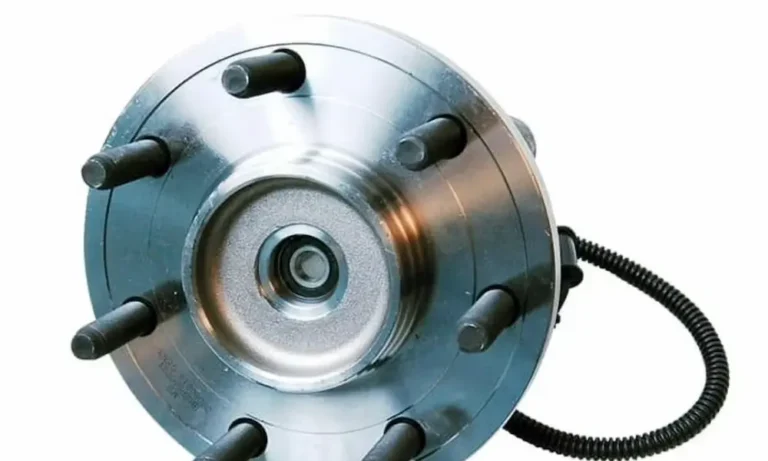
Thinking about grabbing a Mevotech wheel bearing? The answer isn’t a simple yes or no — it depends entirely on which Mevotech product you buy. This post breaks down every tier, real mechanic feedback, and how Mevotech stacks up against the big names. Stick around — this could save you from paying for the same repair twice.
What Is Mevotech and Why Does It Matter?
Mevotech started as a small Canadian family business in 1982. Today, it’s a serious player in the U.S. aftermarket, operating over 700,000 square feet of facilities and focusing exclusively on steering, suspension, and wheel hub components.
Their big selling point? The “Labor Saver” philosophy. Every kit ships with mounting bolts, axle nuts, and torque spec sheets already in the box. No hunting for hardware. No pausing to pull up a service manual. For a busy shop, that’s genuinely valuable.
But here’s the catch: Mevotech sells three very different product tiers under one brand name. Lumping them together is like comparing a budget hotel to a five-star resort because they’re owned by the same company.
The Three Mevotech Tiers Explained
Original Grade: The Budget Option
The Original Grade line is Mevotech’s entry-level offering. It’s priced to compete with the generic white-box parts flooding online retailers.
What you get:
- Standard pressed-in bearing design
- Basic commercial automotive grease
- Minimal sealing technology
- Occasional hardware inclusions
Who it’s for: Older vehicles near the end of their life, short-term fixes, and situations where budget is the only factor.
The hard truth: Mechanics widely report these failing between 10,000 and 30,000 miles. Some users report complete failure in under six months. That’s not a typo.
Supreme: The Mid-Tier Workhorse
The Supreme line steps things up meaningfully. It uses roll-form construction, where the hub’s inner race is physically deformed at the factory to lock internal components at the perfect preload permanently.
Why does that matter? With older designs, a technician sets the preload manually. Too loose = dangerous wheel play. Too tight = the bearing overheats and destroys itself. Roll-forming removes that risk entirely.
Other Supreme upgrades include:
- Quantum sealing — keeps water, road salt, and dirt out
- Abrasion-resistant ABS sensor wiring — protects against road debris cutting the harness
- Full hardware kit included
Who it’s for: Daily drivers, commuters planning to keep their vehicle for several years, anyone who wants reliability without paying premium prices.
TTX (Terrain Tough X-Factor): The Heavy-Duty Line
The TTX line is where Mevotech gets serious. It’s built for working trucks, commercial fleets, emergency vehicles, and SUVs operating under brutal conditions.
Here’s what separates TTX from everything else Mevotech makes:
Generation 3 Orbital Roll-Forming
This advanced version of roll-forming massively increases the structural stiffness of the entire assembly. It reduces microscopic vibrations and rolling resistance under heavy loads — critical when you’re towing or hauling daily.
Advanced Multi-Lip Quantum Seal
Multiple independent sealing layers protect against high-pressure water spray and deep mud immersion. As Mevotech explains, keeping abrasive particles away from internal grease is the single most important factor in bearing longevity.
NanoCeramic Lubricant
Standard grease thins out in heat and solidifies in cold. TTX hubs use a proprietary NanoCeramic lubricant packed with submicroscopic ceramic particles. These particles fill microscopic surface imperfections in the steel raceways, dramatically cutting friction and heat over the bearing’s entire life.
Repel-TEK Anti-Corrosion Coating
For anyone in the U.S. Rust Belt, this coating on the hub body, mounting flange, and wheel studs is a game-changer. It prevents the hub from fusing to the steering knuckle or rotor over time — meaning future repairs won’t require a battle with a grinder.
ADAS-Compliant SecureGuard Sensors
Zero-fault wheel speed signals with heavily insulated routing cables, built to work seamlessly with modern ABS, traction control, and advanced driver assistance systems.
Who it’s for: Commercial fleets, heavy-duty trucks, off-road vehicles, and anyone in a harsh winter climate.
Mevotech Wheel Bearing Reviews: What Real Mechanics Say
The feedback on Mevotech is sharply divided — and it tracks almost perfectly with which tier you buy.
Economy Tier: A Cautionary Tale
On forums like Reddit’s r/RockAuto and r/MechanicAdvice, seasoned technicians actively warn against economy Mevotech bearings for anything beyond a short-term fix.
Common complaints:
- Grinding or humming within 10,000–30,000 miles
- ABS sensors dead on arrival
- Fitment issues — flanges machined incorrectly, parts that won’t seat properly
- One highly documented case where a brand-new hub physically fell apart during installation
The “Labor Penalty” Problem
Here’s something most buyers don’t calculate upfront. Wheel hub replacement involves specialized pullers, significant labor time, and often a full four-wheel alignment afterward.
If a cheap bearing fails at 20,000 miles, you’re paying labor again. And another alignment fee. Mechanics consistently report that the $50–$60 saved on the initial part gets wiped out — and then some — by the second repair. The “buy once, cry once” philosophy exists for a reason.
TTX: Where Mevotech Earns Real Respect
The TTX story is completely different. Users fitting these on Jeep Rubicons, Ram 1500s, and commercial fleets report strong satisfaction with build quality, physical weight of the component, and long-term durability under abuse.
Technicians specifically praise:
- Visible, thick anti-corrosion coating straight out of the box
- High-quality pre-coated mounting hardware
- Robust ABS sensor integration
This stark split suggests Mevotech can engineer excellent components — their premium line proves it — but their entry-level cost-cutting creates serious reliability problems.
Mevotech vs. The Competition
| Feature | Mevotech (Supreme/TTX) | Timken | SKF | Moog |
|---|---|---|---|---|
| Primary Strength | Labor-saving kits, heavy-duty sealing, anti-corrosion coatings | Extreme load capacity, case-hardened steel, shock resistance | Low friction, high-speed precision, European OEM fitment | Massive catalog coverage, historic brand recognition |
| Best Application | Working trucks, fleets, harsh winter environments | Heavy towing, large domestic SUVs, North American trucks | Luxury sedans, high-speed passenger cars, European imports | General passenger vehicles, older domestic cars |
| Mechanic Trust Level | High for TTX; Very Low for Original Grade | Extremely High | Extremely High | Moderate (declining due to outsourcing) |
| Price Point | Budget to Premium | Premium | Premium | Mid-Tier |
Timken: Still the Heavy-Duty Benchmark
Timken invented the tapered roller bearing. Their case-hardened steel construction creates a wear-resistant outer layer while maintaining a tough inner core that absorbs massive shock loads. For heavy towing or off-road abuse, Timken remains the first choice among purists. Mevotech TTX competes here, but Timken’s legacy trust runs deep.
SKF: Precision for Passenger Cars
SKF is a Swedish OEM supplier to BMW, Audi, and Volvo. Their double-row angular contact ball bearings maximize hub stiffness, reduce drag, and improve fuel efficiency. For standard passenger sedans and European imports, mechanics consistently recommend SKF over any Mevotech option below the TTX tier.
Moog: A Fading Giant
Moog was once the undisputed king of North American chassis parts. Not anymore. Community feedback consistently notes that offshore manufacturing shifts have hurt quality control. Today, Mevotech Supreme and TTX are frequently viewed as on par with — or better than — modern Moog offerings. That’s a significant shift in just a few years.
Understanding Mevotech’s Warranty
Mevotech’s warranty structure aligns directly with its product tiers:
| Product Tier | Coverage | Duration |
|---|---|---|
| Original Grade | Economy Hub Assemblies | 5 Years or 60,000 Miles |
| Supreme | BXT Hub Assemblies | 5 Years or 60,000 Miles |
| TTX | Titan-XF Hub Assemblies | Limited Lifetime Warranty |
The Fine Print You Need to Know
The Mevotech warranty excludes:
- Commercial, off-road, or racing use (interesting, given TTX marketing)
- Vehicles operating beyond manufacturer payload limits
- Altered suspension systems (lift kits, lowering springs)
- All labor costs — you cover every penny of reinstallation
That last point is critical. If your bearing fails at 25,000 miles, Mevotech might send you a free replacement. But you’re still paying a mechanic to swap it out.
The RockAuto Return Problem
One widely documented situation involved a Mevotech Gen 3 bearing redesign for Toyota Corollas and Chevrolet Prizms. The redesigned hub included a metal dust cap that prevented proper seating in the steering knuckle — rendering the part useless. Because RockAuto’s automated catalog listed it as a fit, the customer had to pay return shipping costs despite the manufacturer’s design flaw causing the problem. That’s a supply chain failure that lands squarely on the consumer.
How to Install a Wheel Bearing Correctly
Even a premium bearing fails fast with a bad installation. Here’s what matters most.
Diagnosing a Failing Bearing First
The Spin Test: Raise the vehicle on jack stands and spin each wheel by hand. A healthy bearing whispers quietly. A failing one growls, grinds, or hums.
The Shake Test: Grip the tire at 12 o’clock and 6 o’clock, then rock it firmly. Any physical play or clicking means the bearing’s internal tolerances are gone. Don’t test at 9 and 3 — that movement typically points to worn tie rod ends, not a bad bearing.
Never Use an Impact Wrench on the Axle Nut
This deserves its own section. Using a pneumatic impact wrench to tighten the central axle nut is one of the most common — and most destructive — installation mistakes a technician can make.
The violent, percussive force transfers directly into the bearing’s internal steel rollers and races, causing brinelling — microscopic indentations in the metal surfaces. Once that smooth raceway is compromised, the bearing destroys itself within a few thousand miles. Doesn’t matter if it’s a budget Mevotech or a premium Timken.
Mevotech’s own tech tips are explicit: use a calibrated torque wrench to the vehicle manufacturer’s exact foot-pound specification. Every time.
Three More Installation Rules
- Clean the knuckle housing thoroughly. Rust and debris under the hub cause lateral runout — a slight wobble that pulses through the brake rotor and destroys the bearing fast. Wire brush that surface down to clean metal.
- Keep the hub away from magnets. Modern hubs contain magnetic ABS encoder rings. Setting the hub on a magnetic tool tray or near shop speakers can permanently corrupt the encoder, triggering an unfixable ABS fault code immediately after startup. Learn more about proper bearing handling here.
- Don’t add extra grease to sealed units. Mevotech assemblies come pre-greased. Only add grease if the assembly has an external zerk fitting — and even then, stop the moment the dust boot shows any movement.
FAQs About Mevotech Wheel Bearings
How does a failing wheel bearing affect the rest of the suspension?
A bad bearing increases friction, kills fuel efficiency, and introduces wheel play that sends vibrations through the steering knuckle. That accelerates wear on ball joints, tie rod ends, and CV axle joints. In severe cases, the rotor physically contacts the caliper bracket — and in extreme situations, the wheel can separate from the vehicle entirely.
What is false brinelling, and does it happen before installation?
Yes. False brinelling happens during shipping. If a bearing sits in a freight truck experiencing constant vibration without rotating, the rollers slowly wear microscopic indentations into the stationary races. The part arrives damaged without ever touching a vehicle. Quality packaging prevents this — another reason to buy from reputable brands.
Do new wheel bearings need a break-in period?
No. Modern sealed hub assemblies are factory-set to exact tolerances. If a newly installed bearing makes noise immediately, something went wrong — a defective part, improper torquing, or a contaminated mating surface.
How do seasonal temperature swings affect bearing grease?
In sub-zero temps, standard grease thickens and temporarily starves the bearing of lubrication. In extreme heat, it thins out and leaks past the seals. Premium synthetic lubricants — like Mevotech TTX’s NanoCeramic grease — maintain stable viscosity across a much wider temperature range, handling both extremes without degrading.
Does replacing a front wheel bearing always require an alignment?
Not always. If the steering knuckle or tie rod stays completely untouched, alignment isn’t necessary. But if the strut or tie rod must be disconnected to access the hub, get an alignment afterward — otherwise your tires will wear unevenly and handling will suffer.
What’s the difference between a driven and non-driven hub?
A driven hub connects to a drive axle and transmits engine power to the road. A non-driven hub just spins freely. Driven hubs handle far more torsional stress and heat, so they fail more frequently and cost more to replace.


